
 July 5, 2013 at 09:35
Homemade tracking of packages, or There and Back
Surely many who ordered goods from abroad wondered: what happens to parcels from export to import? In what other world do they sometimes spend months traveling? What kind of planes departs to Novosibirsk for departures sent by airmail to Moscow?
To trace how parcels move from abroad to Moscow, more than the official track. To do this, send a device capable of communicating its coordinates.
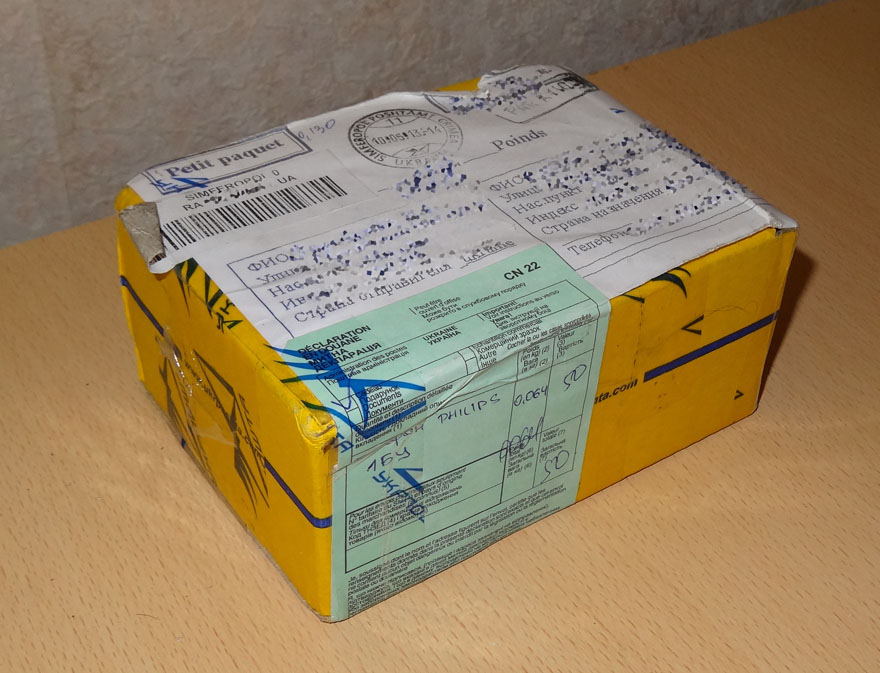
A friend of mine sent by mail to another friend of mine ...
You must select a device that can communicate its coordinates on a schedule and has autonomous power supply for at least a month of such work.
The most obvious solution.
Pros: you can program for almost any behavior, for example, use accurate positioning by satellites, measure acceleration, light, temperature at the same time, but you never know, and immediately report to twitter.
Cons: without the external battery , the delivery time for international mail will not live , but with it it weighs a lot and attracts attention. What if he lingers on the road?
What if we take a battery from a laptop (or a car, depending on the predicted delivery time), a GSM module, an ARM processor, a GPS chip,and put it on Ivan Kuzmich’s nose ... Such a device has all the advantages of a smartphone, and of the minuses only unusual appearance (will they be accepted at the post office?) and the probable price of development and manufacture. Perhaps this will be the next experiment, but for now we decided to limit ourselves to an easier option.
Pros: all the advantages of a smartphone, a long battery life, the ability to disguise, for example, as a brick.
Cons: unusual appearance (will they be accepted at the post office?) And, probably, the price + terms of development and manufacturing.
It should be noted that included devices with rechargeable batteries are generally reluctant to accept shipment. Although all tablets and other iPhones are precisely such devices.
Same as the last item, but already designed and manufactured by someone.
Pros: ready-made special device.
Cons: the price bites . If the package does not reach, it is useless.
UPD: There is a cheaper option: dx.com/p/168496 .
+ Small
+ You can connect an external source, and will work forever
+ Sends SMS immediately with a link to google maps
How to greatly reduce battery capacity requirements? Get in touch less often (being in deep sleep for most of the trip), and use less accurate positioning (over the cellular network, without using GPS / Glonass satellites).
Pros: geolocation on honeycombs, even inside an iron car or hangar, inaccessible to GPS, long life with a small battery.
Cons: low positioning accuracy compared to GPS, low measurement frequency.
And there is such a device that does not attract too much attention!
On the table was a Philips Campaign E102 phone, a well-deserved one that had not worked for a long time, but which met all the requirements: an ultra-high capacity 650mAh battery, the ability to work with one SIM card, and also turn on or off up to four times a day on a schedule. This key feature is rarely seen in the description of the device.
We chose the mode: two communication sessions per day for fifteen minutes (with a margin for searching the network). If just in standby mode the phone worked for five days, then the maximum could be expected 48 times more, or eight months. These figures will be different due to poor reception, the cost of turning on and searching for the network, possible frosts, and self-discharge of the battery (about 3% per month on Wikipedia). In general, there was a good chance that the batteries lasted for the journey.
As part of the preparation of the phone for launch, it was disassembled and reanimated - the contacts of the power button were cleaned in it, which oxidized and did not allow it to turn on.
If the phone could write logs of LAC and Cell ID connections to subsequently process and obtain the location of cells by their identifiers, thenshe would be a grandfather, we could build a map of movements after arrival (if this happens). The phone did not know how to do this, and it was decided to use an external service to control its location. Yes, and online tracking adds interest.
At the station, a SIM card was bought, which was added to the MTS trusted list of a different number, from which the tracking took place. MTS locator can determine the location of the subscriber according to the schedule - what is needed for this project! The only negative is that the service is valid only in Russia, so that the overseas part of the path cannot be traced.

Other
Bearer -Locator and Megafon-Locator have similar services directly from other mobile operators. Right before sending, they charged the phone and checked the silent on and off on a scheduled basis twice a day. They also included the most economical mode. All settings:
Only a sms or a call that arrived late in time could unmask the phone in an opaque box (assuming that the enemy does not know how to direction us on the radio). This phone model does not know how to turn off all signals, there is either a vibrating alert or a melody, but there are several ways:
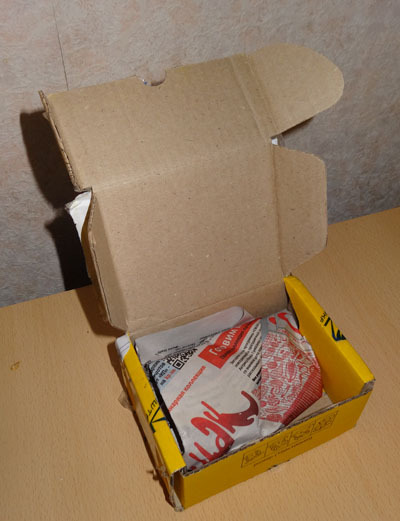
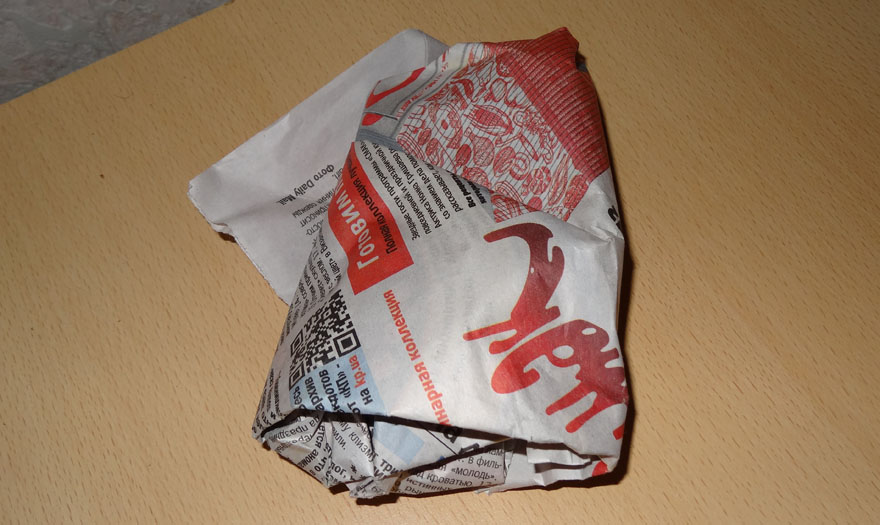
One fine day (hereinafter referred to as day 1), in one resort town the telephone was packed in a box, mail workers, upon request to remove the battery, received assurances that it was turned off (true) and discharged (false), and sent by airmail to Moscow.
Three days after the shipment, the parcel disappeared from the Ukrainian tracking (in the direction of the international postal exchange of Ukraine between Ukraine. Dyakumo, sco scored by our servants), and soon appeared on the radar!
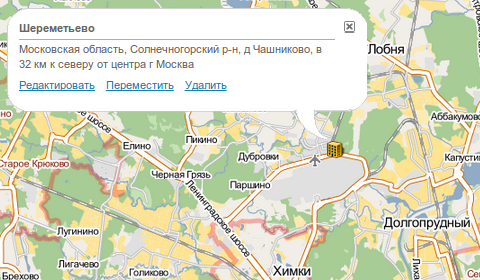
“Locator” does not work in roaming, there is little chance of catching a plane in the air, so this is the expected first point
. This ended the first, and probably the last segment of the flight of the airmail. It seemed that a couple more days - and the journey would end, as predicted by all friends who did not believe in miracles. But there was still a lot of adventure ahead of the small brave phone!
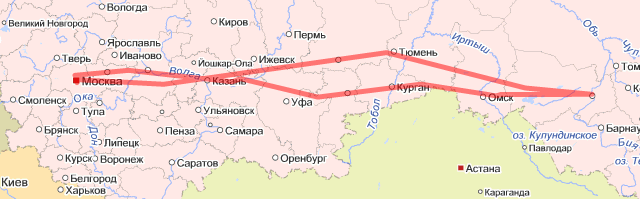
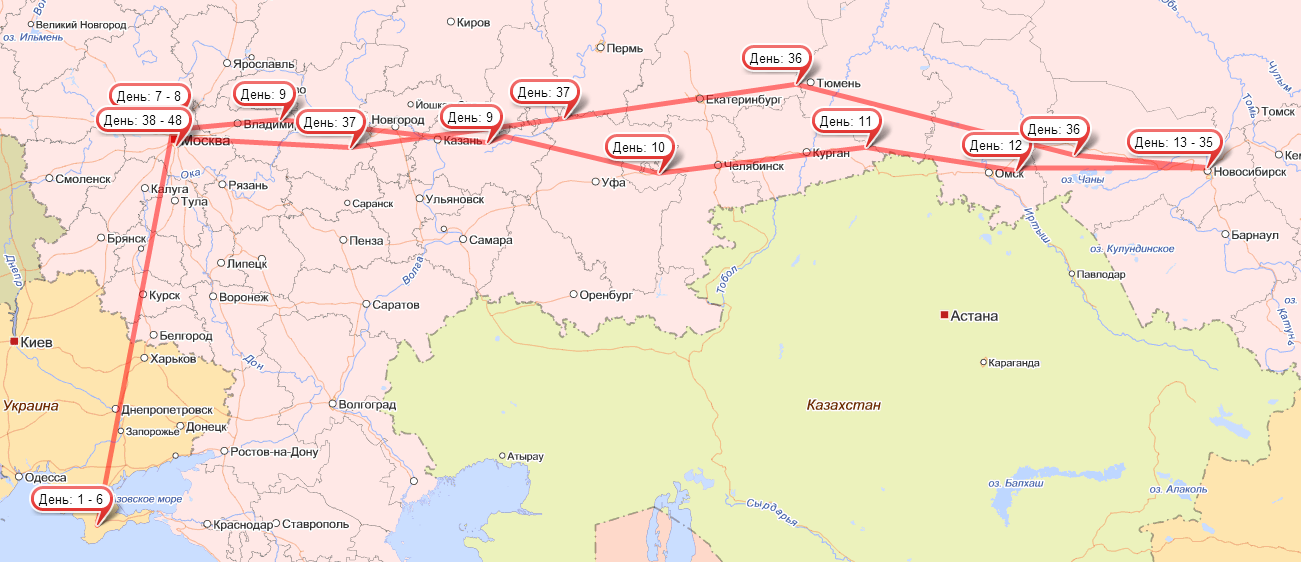
Already on the ninth day, the phone suddenly moved, but not to the destination, but began to steadily move away from Moscow, judging by the points - airmail gave way to railway mail, and on the 13th day - even a mail turtle. At first we thought that the point near Vladimir was a positioning error (you never know how this service works), then - that sorting in a neighboring area was cheaper than in Moscow, at last we had already made bets whether the parcel would reach Baikal, the Pacific Ocean, or will go home to China.
A major stop occurred in Novosibirsk, where the phone lasted until 29 days, regularly communicating twice a day. However, this is not a record delivery time, and we hoped that the batteries last until the end. Only one communication session did not take place (pecked carrier pigeon or no cellular coverage?), Once the configured schedule on the search ended, and once - payment for the “locator” service.
Perhaps during this time the phone made several more flights by airmail ?
On the thirtieth day, the first record of Russian tracking appeared (Import 630982 Novosibirsk PI-2) , the parcel successfully passed customs, and on the thirty-fifth - Processing 630982 Novosibirsk PI-2 left the place of international exchange- the phone went back home. After another five railway days, he ended up at the Kazan station, and did not leave Moscow anymore.
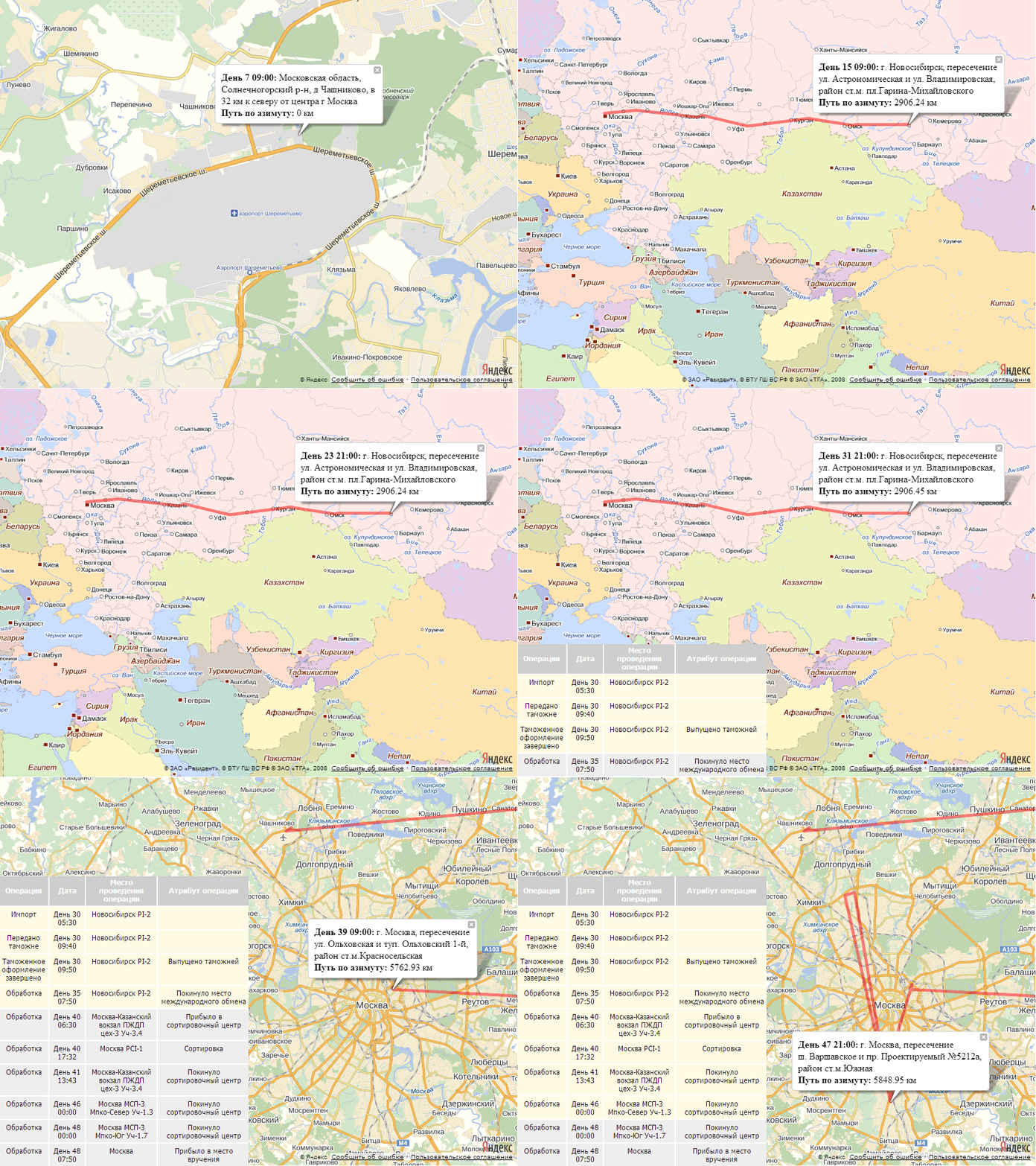
After the Kazan station, the parcel was at a sorting point in the south of Moscow ( Moscow, the intersection of Varshavskoye and Dorozhnaya St., the metro station Yuzhnaya on MTS geocoding). From there, she would finally head to the desired post office, but the postman seemed to fall asleep on the subway along the way:
At least five points were recorded in each place, so it does not look like an error. Moreover, both places are in the official track: 111948 Moscow MSP-3 Mpko- South and 111987 Moscow MSP-3 Mpko-South .
Our answer to this video
On the morning of the forty-eighth day, the long-awaited event happened, the parcel left the South and arrived at the place of delivery. For the purity of the experiment, we waited for a notification (bringing the delivery time to an anniversary of 50 days) and received a persistent tin soldier: The

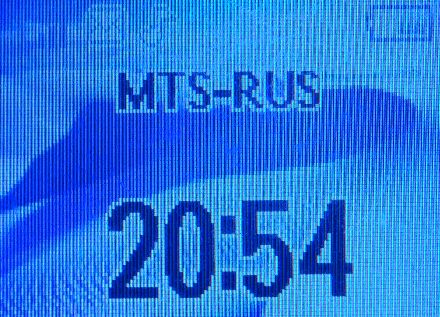
remaining battery power. Enough to travel around the world!
During the journey, the barcode almost flew from the parcel, so the woman on extradition had to drive it in with her hands. Seeing the end of UA, she grunted and said, “Ukraine ...” So a dialogue ensued about how it turned out that the parcel went through airmail for almost 2 months. The woman said that it was necessary to thank first of all the recent changes in the customs system, which now can’t cope with the flow of parcels, and they travel to distant cities in orderly rows to lie there in warehouses waiting for customs, go through customs, and then in most cases return back to Moscow.
Some statistics: the phone spent 48 days on the road, having traveled more than seven thousand kilometers of the required 1300 km with an average speed of at least six kilometers per hour. True, if you count 48 days at 1300 km, generally 1.3 km / h.
Part of the money was returned in the form of a dead phone and a balance in his account, so I consider these costs to be zero.
A phone for a thousand rubles can communicate and entertain the owner for a month and a half.
Suggest in the comments an interesting direction, where else to send this well-deserved phone. However, the experiment is easy to repeat yourself.
UPD : meet on Habré the co-author of the experiment, VValentin !
UPD2 : Added a more visual picture than the GIF
UPD3 :Who can confirm that the lenovo p700i “has a scheduled power on and off function. Is there one on / off point per day and you can’t add more? ” There is an option, like some Fly smartphones, software access to it is in question.
UPD4 : Minute of Glory on TV:www.m24.ru/videos/23489 .
Idea
To trace how parcels move from abroad to Moscow, more than the official track. To do this, send a device capable of communicating its coordinates.
A friend of mine sent by mail to another friend of mine ...
Implementation
You must select a device that can communicate its coordinates on a schedule and has autonomous power supply for at least a month of such work.
Smartphone
The most obvious solution.
Pros: you can program for almost any behavior, for example, use accurate positioning by satellites, measure acceleration, light, temperature at the same time, but you never know, and immediately report to twitter.
Cons: without the external battery , the delivery time for international mail will not live , but with it it weighs a lot and attracts attention. What if he lingers on the road?
Homemade “smartphone”
What if we take a battery from a laptop (or a car, depending on the predicted delivery time), a GSM module, an ARM processor, a GPS chip,
Pros: all the advantages of a smartphone, a long battery life, the ability to disguise, for example, as a brick.
Cons: unusual appearance (will they be accepted at the post office?) And, probably, the price + terms of development and manufacturing.
It should be noted that included devices with rechargeable batteries are generally reluctant to accept shipment. Although all tablets and other iPhones are precisely such devices.
Special trackers
Same as the last item, but already designed and manufactured by someone.
Pros: ready-made special device.
Cons: the price bites . If the package does not reach, it is useless.
UPD: There is a cheaper option: dx.com/p/168496 .
+ Small
+ You can connect an external source, and will work forever
+ Sends SMS immediately with a link to google maps
Optimal option
How to greatly reduce battery capacity requirements? Get in touch less often (being in deep sleep for most of the trip), and use less accurate positioning (over the cellular network, without using GPS / Glonass satellites).
Pros: geolocation on honeycombs, even inside an iron car or hangar, inaccessible to GPS, long life with a small battery.
Cons: low positioning accuracy compared to GPS, low measurement frequency.
And there is such a device that does not attract too much attention!
On your marks!
On the table was a Philips Campaign E102 phone, a well-deserved one that had not worked for a long time, but which met all the requirements: an ultra-high capacity 650mAh battery, the ability to work with one SIM card, and also turn on or off up to four times a day on a schedule. This key feature is rarely seen in the description of the device.
We chose the mode: two communication sessions per day for fifteen minutes (with a margin for searching the network). If just in standby mode the phone worked for five days, then the maximum could be expected 48 times more, or eight months. These figures will be different due to poor reception, the cost of turning on and searching for the network, possible frosts, and self-discharge of the battery (about 3% per month on Wikipedia). In general, there was a good chance that the batteries lasted for the journey.
As part of the preparation of the phone for launch, it was disassembled and reanimated - the contacts of the power button were cleaned in it, which oxidized and did not allow it to turn on.
If the phone could write logs of LAC and Cell ID connections to subsequently process and obtain the location of cells by their identifiers, then
At the station, a SIM card was bought, which was added to the MTS trusted list of a different number, from which the tracking took place. MTS locator can determine the location of the subscriber according to the schedule - what is needed for this project! The only negative is that the service is valid only in Russia, so that the overseas part of the path cannot be traced.
Other
Bearer -Locator and Megafon-Locator have similar services directly from other mobile operators. Right before sending, they charged the phone and checked the silent on and off on a scheduled basis twice a day. They also included the most economical mode. All settings:
- inclusion at 7:50 a.m. and 7:50 p.m.
- shutdown at 8:05 and 20:05
- minimum ringer volume, no vibration
- minimum brightness of the screen backlight
- backlight time - five seconds
- mute greetings
Only a sms or a call that arrived late in time could unmask the phone in an opaque box (assuming that the enemy does not know how to direction us on the radio). This phone model does not know how to turn off all signals, there is either a vibrating alert or a melody, but there are several ways:
- And administrative: enable the prohibition of SMS and incoming from the operator
- P awesome: send without turning off the signals, which was done
- Oh ordinary: download a wap soundless mp3 or midi signal
- F elezyachny: Vibrate unsolder or pull-in speaker (in this Philips it is not soldered and easily removed during disassembly)
One fine day (hereinafter referred to as day 1), in one resort town the telephone was packed in a box, mail workers, upon request to remove the battery, received assurances that it was turned off (true) and discharged (false), and sent by airmail to Moscow.
Journey
Arrival at Sheremetyevo
Three days after the shipment, the parcel disappeared from the Ukrainian tracking (in the direction of the international postal exchange of Ukraine between Ukraine. Dyakumo, sco scored by our servants), and soon appeared on the radar!
“Locator” does not work in roaming, there is little chance of catching a plane in the air, so this is the expected first point
. This ended the first, and probably the last segment of the flight of the airmail. It seemed that a couple more days - and the journey would end, as predicted by all friends who did not believe in miracles. But there was still a lot of adventure ahead of the small brave phone!
Tour in Russia
Already on the ninth day, the phone suddenly moved, but not to the destination, but began to steadily move away from Moscow, judging by the points - airmail gave way to railway mail, and on the 13th day - even a mail turtle. At first we thought that the point near Vladimir was a positioning error (you never know how this service works), then - that sorting in a neighboring area was cheaper than in Moscow, at last we had already made bets whether the parcel would reach Baikal, the Pacific Ocean, or will go home to China.
A major stop occurred in Novosibirsk, where the phone lasted until 29 days, regularly communicating twice a day. However, this is not a record delivery time, and we hoped that the batteries last until the end. Only one communication session did not take place (pecked carrier pigeon or no cellular coverage?), Once the configured schedule on the search ended, and once - payment for the “locator” service.
Perhaps during this time the phone made several more flights by airmail ?
On the thirtieth day, the first record of Russian tracking appeared (Import 630982 Novosibirsk PI-2) , the parcel successfully passed customs, and on the thirty-fifth - Processing 630982 Novosibirsk PI-2 left the place of international exchange- the phone went back home. After another five railway days, he ended up at the Kazan station, and did not leave Moscow anymore.
Moscow tour
After the Kazan station, the parcel was at a sorting point in the south of Moscow ( Moscow, the intersection of Varshavskoye and Dorozhnaya St., the metro station Yuzhnaya on MTS geocoding). From there, she would finally head to the desired post office, but the postman seemed to fall asleep on the subway along the way:
| Day | Location |
|---|---|
| 40 | South |
| 43 | South |
| 44 | Altufevo |
| 45 | Altufevo |
| 46 | South |
| 47 | South |
At least five points were recorded in each place, so it does not look like an error. Moreover, both places are in the official track: 111948 Moscow MSP-3 Mpko- South and 111987 Moscow MSP-3 Mpko-South .
Our answer to this video
Arrived!
On the morning of the forty-eighth day, the long-awaited event happened, the parcel left the South and arrived at the place of delivery. For the purity of the experiment, we waited for a notification (bringing the delivery time to an anniversary of 50 days) and received a persistent tin soldier: The
remaining battery power. Enough to travel around the world!
During the journey, the barcode almost flew from the parcel, so the woman on extradition had to drive it in with her hands. Seeing the end of UA, she grunted and said, “Ukraine ...” So a dialogue ensued about how it turned out that the parcel went through airmail for almost 2 months. The woman said that it was necessary to thank first of all the recent changes in the customs system, which now can’t cope with the flow of parcels, and they travel to distant cities in orderly rows to lie there in warehouses waiting for customs, go through customs, and then in most cases return back to Moscow.
Some statistics: the phone spent 48 days on the road, having traveled more than seven thousand kilometers of the required 1300 km with an average speed of at least six kilometers per hour. True, if you count 48 days at 1300 km, generally 1.3 km / h.
Costs
Part of the money was returned in the form of a dead phone and a balance in his account, so I consider these costs to be zero.
| Philips E102 Phone | 1120 rub | 0p |
| SIM card with 250 rubles in the account | 300 rub | 250 rub |
| Sending parcel | 200 rub | 200 rub |
| MTS Locator | 200 rub | 200 rub |
| Total | 450 rub |
conclusions
A phone for a thousand rubles can communicate and entertain the owner for a month and a half.
Suggest in the comments an interesting direction, where else to send this well-deserved phone. However, the experiment is easy to repeat yourself.
UPD : meet on Habré the co-author of the experiment, VValentin !
UPD2 : Added a more visual picture than the GIF
UPD3 :
UPD4 : Minute of Glory on TV:www.m24.ru/videos/23489 .