September 18, 2012 at 11:42
Test-review of GLONASS / GPS receivers 2012
An important part of any vehicle monitoring system is navigation receivers. Since 2005, in our equipment, these were GPS signal receivers, but since 2009, trackers with GLONASS / GPS receivers intended for state order have gradually begun to appear on our market.
These GLONASS receivers worked worse and cost much more than GPS analogs. But in recent years, GLONASS chip manufacturers have released several generations of their products.
New GLONASS chips were getting closer and closer to normal GPS receivers in the main performance characteristics: accuracy, sensitivity, start time, dimensions, power consumption and even price.
The test review involved:
Compare for yourself:
Board with GLONASS / GPS receiver GEOS -1M (2011) Board
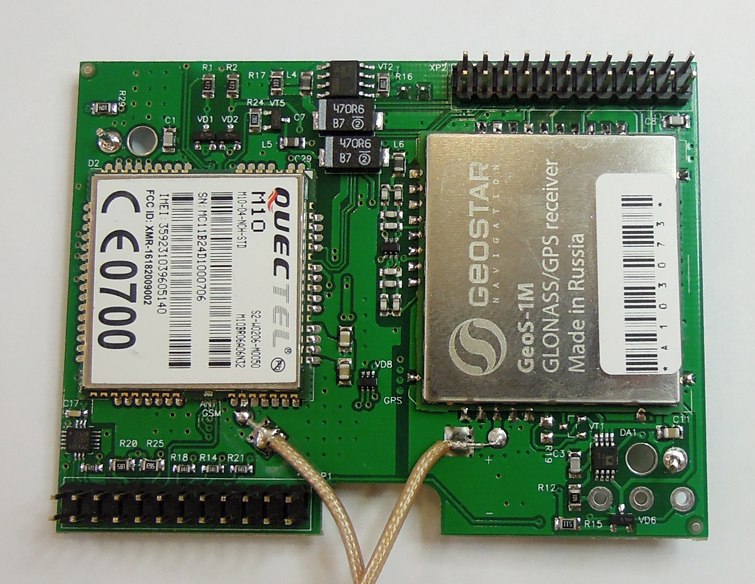
with GLONASS / GPS receiver Telit SL869 (2012)
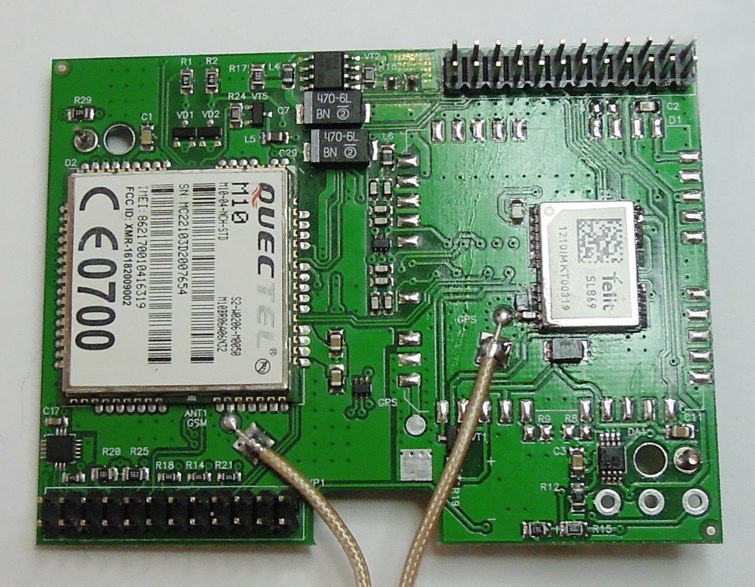
In the photo above, contact pads for the previous generation receiver are visible around the receiver.
In early 2012, several manufacturers immediately offered new GLONASS / GPS chips at a price comparable to GPS. Having calculated the savings from reducing the types of products, it became obvious that it was more profitable to abandon the production of GPS trackers, offering GLONASS / GPS to commercial customers at the price of GPS solutions. But this would be possible only if the new GLONASS receivers were equal in quality to GPS. This was to be found out by our developers during extensive testing and comparison.
Small digression number 1:
By the number of working satellites, GLONASS has already reached the minimum required number (24 pieces). In addition, the use of two navigation systems at once theoretically makes it possible to increase the likelihood of determining a position in a limited sky view. However, our previous experience with various GLONASS / GPS receivers, even in combined mode, talked about serious playback of “pure” GPS.
Our receiver testing technique:
There are quite specific indicators of the quality and reliability of solving the navigation problem, such as the average time of a cold and warm start, the standard deviation of the coordinate error (in meters) and many other important characteristics. Of course, we look at these characteristics in datasheets, but over 7 years of work in this industry, we have developed the main way to determine the quality of the receiver - real long-term operation as part of the monitoring module installed in a real car.
We evaluate this quality very subjectively, carefully looking at the track on the map and trying to find some deviations and strange sections. If they come across even in the break-in mode, questions from customers will be inevitable. Based on the results of the comparison, we assigned subjective ratings to each receiver on a ten-point scale.
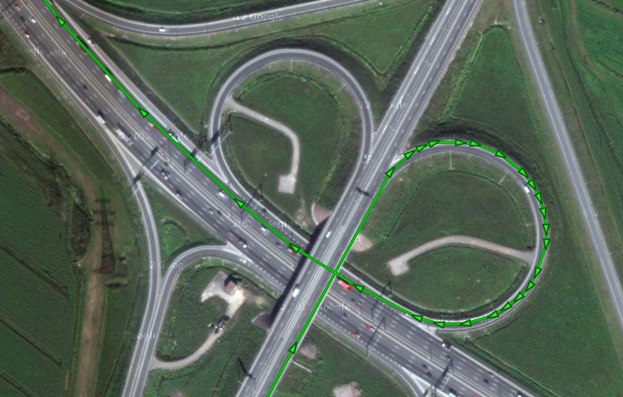
This is how a normal track looks like (GPS receiver u-blox NEO 6, 2011):
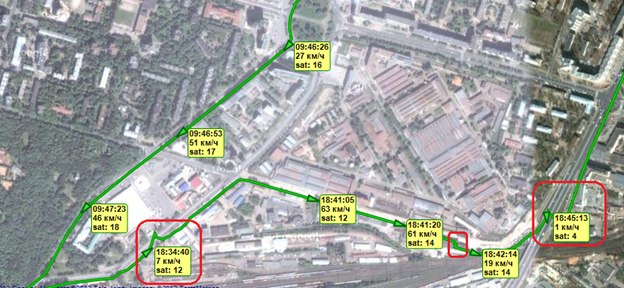
And it looks like a not normal track (GLONASS / GPS receiver of the Izhevsk radio factory MNP-M7, 2011):
Testing was carried out on personal and corporate cars of five employees at for about a week.

On each car from 2 to 6 terminals with different receivers were installed at the same time. GLONASS / GPS antennas were located in the cabin in the same conditions. Power supply for all terminals was also provided from one point, so that the comparison was as correct as possible. The mileage of each car during the test ranged from 50 to 350 km, while places that were difficult to navigate were specially chosen: well-yards, overpasses, dense city buildings.
Small digression number 2:
Almost all the functionality of the navigation receiver and almost all of its characteristics are determined by the processor (or chip) installed inside it. There are not many manufacturers of GLONASS chips: MTK, Mstar, ST, Qualcomm, U-blox and a number of others, including domestic ones (Navis, IRZ, Geostar Navigation). Technical development in the manufacturing industry of navigation receivers, chips and modules at the moment has reached the point that these chips practically do not require strapping. As a result, practically any company can release their own GLONASS receiver. It is enough to have a couple of competent engineers. Finding a contractor who can produce them is also no problem now. Spoiling the results of the chip is also not difficult: if the engineers are not competent enough or the manufacturer saves on external components of the processor strapping (input filter, capacities, etc.). In these conditions, the choice of a GLONASS receiver comes down not so much to the choice of a specific solution, but to the choice of a high-quality chip and a reliable manufacturer. For example, Fastrax IT600, Qualcom L16, Telit SL869 and NAVIA GL8088s share a common platform from STMicroelectronics - the STA8088 chip.
These facts were taken into account when choosing applicants and conducting tests.
The start of work (start) for all receivers is quite high-quality and fast, there were no gaps at the start. In several cases, a small rebound was noticed, which was filtered out in the dispatch software.

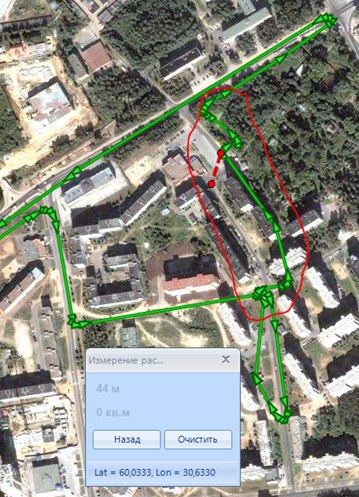
Once U-blox LEA 6N (one of six) within 1.5 minutes after the start gave out coordinates with an offset of 40 meters (the circled line should be lower and to the left).
When driving in traffic jams, all receivers showed stability. With small and not frequent moves to the side:

In general, all receivers showed a very good track in open areas and in traffic conditions around the city.
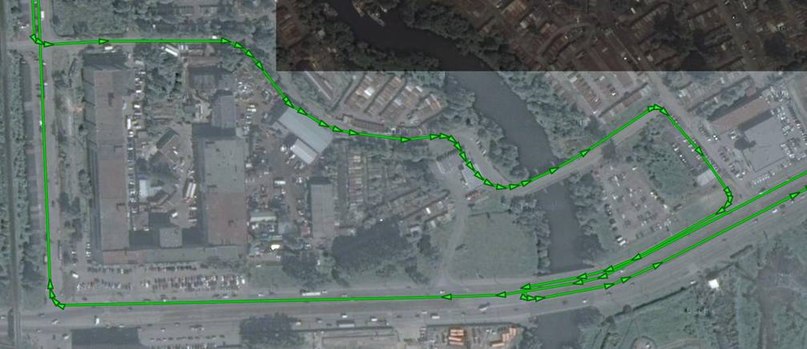
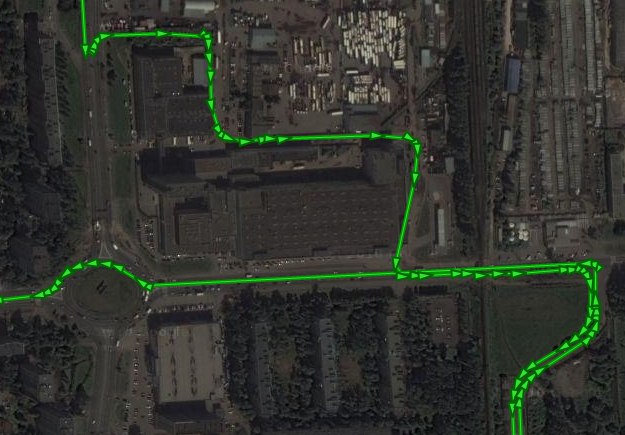
But when working in difficult conditions, the results are already different:


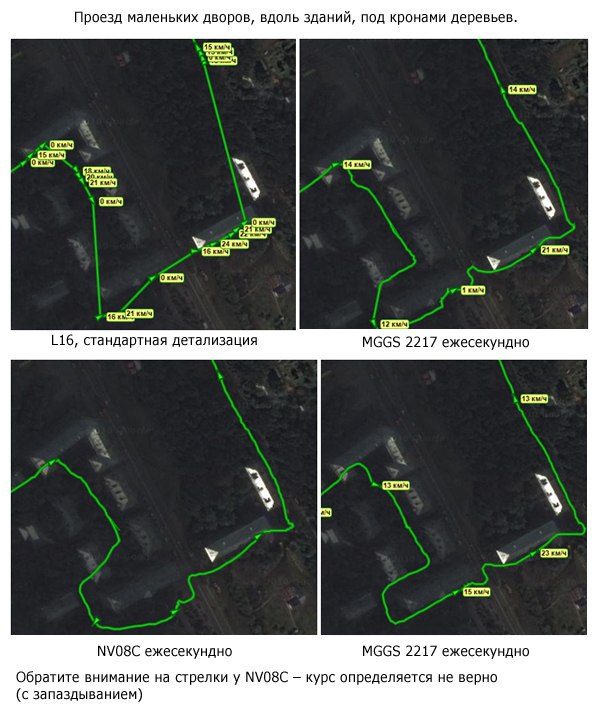
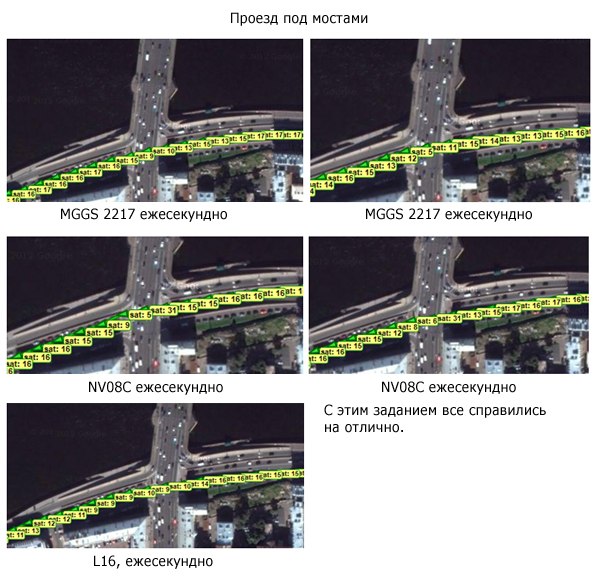


1. In Navis, in general, the tracks are good, especially when placing the antenna on the roof. Of the shortcomings, one can note a certain “delay” of the course and not the best behavior (aside) in the conditions of well-yards.
Score 7
The average number of visible satellites is from 16 to 20.
2. MGGS2217 also has generally good tracks, better than Navis in the courtyards. It works out fine maneuvers well.
Score 8
Of the shortcomings, one can note periodic “non-reception” of data from the receiver by the terminal - there are no points during every second detail. The reason is unknown., Maybe it’s in the terminal, and maybe in the food, because it appeared only on one of the cars. The number of visible satellites averages from 15 to 18.
3. For Quicktel L16, the quality of the track is better than for Navis, but slightly worse in drawing complex sections than for MGGS2217.
Score 7
The average number of visible satellites is from 16 to 20.
4. The Telit SL869 receiver is based on the same chip as the L16 and has the same track quality. Score 7
5. Ublox LEA 6N, despite being tested in GLONASS mode, showed the best track. All maneuvers on the road are visible. If not for one glitch at start, there would be a solid nine.
Grade 8
Some examples:
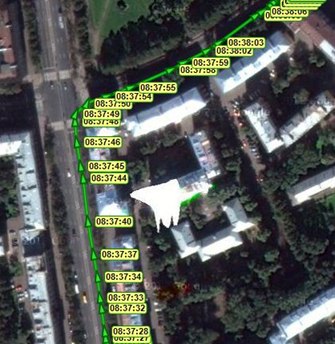
Delayed course on Navis Data
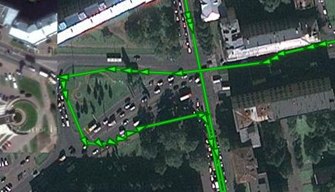
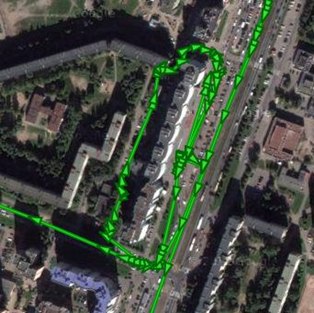

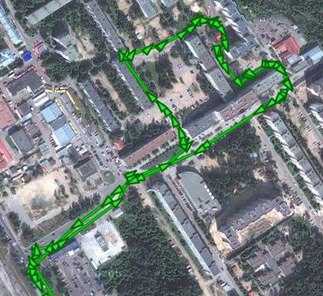
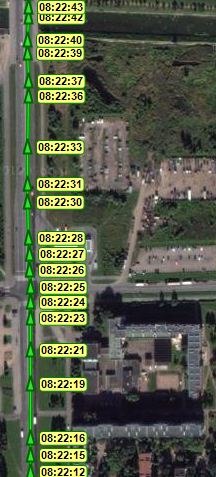
gaps MGGS2217 (every second drilldown)
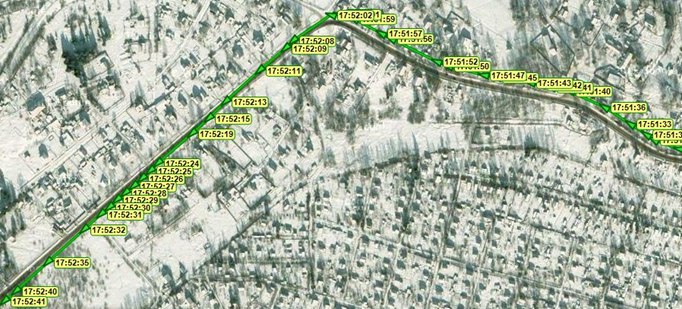
We hope that the presented materials will help respected Habr users. At the same time, we recall that the review only reflects our test results, and is not the ultimate truth.
These GLONASS receivers worked worse and cost much more than GPS analogs. But in recent years, GLONASS chip manufacturers have released several generations of their products.
New GLONASS chips were getting closer and closer to normal GPS receivers in the main performance characteristics: accuracy, sensitivity, start time, dimensions, power consumption and even price.
The test review involved:
- NAVIS NV08C
- MStar MGGS2217
- Quectel l16
- Telit SL869
- Ublox LEA-6N
Compare for yourself:
Board with GLONASS / GPS receiver GEOS -1M (2011) Board
with GLONASS / GPS receiver Telit SL869 (2012)
In the photo above, contact pads for the previous generation receiver are visible around the receiver.
In early 2012, several manufacturers immediately offered new GLONASS / GPS chips at a price comparable to GPS. Having calculated the savings from reducing the types of products, it became obvious that it was more profitable to abandon the production of GPS trackers, offering GLONASS / GPS to commercial customers at the price of GPS solutions. But this would be possible only if the new GLONASS receivers were equal in quality to GPS. This was to be found out by our developers during extensive testing and comparison.
Small digression number 1:
By the number of working satellites, GLONASS has already reached the minimum required number (24 pieces). In addition, the use of two navigation systems at once theoretically makes it possible to increase the likelihood of determining a position in a limited sky view. However, our previous experience with various GLONASS / GPS receivers, even in combined mode, talked about serious playback of “pure” GPS.
Our receiver testing technique:
There are quite specific indicators of the quality and reliability of solving the navigation problem, such as the average time of a cold and warm start, the standard deviation of the coordinate error (in meters) and many other important characteristics. Of course, we look at these characteristics in datasheets, but over 7 years of work in this industry, we have developed the main way to determine the quality of the receiver - real long-term operation as part of the monitoring module installed in a real car.
We evaluate this quality very subjectively, carefully looking at the track on the map and trying to find some deviations and strange sections. If they come across even in the break-in mode, questions from customers will be inevitable. Based on the results of the comparison, we assigned subjective ratings to each receiver on a ten-point scale.
This is how a normal track looks like (GPS receiver u-blox NEO 6, 2011):
And it looks like a not normal track (GLONASS / GPS receiver of the Izhevsk radio factory MNP-M7, 2011):
Testing was carried out on personal and corporate cars of five employees at for about a week.
On each car from 2 to 6 terminals with different receivers were installed at the same time. GLONASS / GPS antennas were located in the cabin in the same conditions. Power supply for all terminals was also provided from one point, so that the comparison was as correct as possible. The mileage of each car during the test ranged from 50 to 350 km, while places that were difficult to navigate were specially chosen: well-yards, overpasses, dense city buildings.
Small digression number 2:
Almost all the functionality of the navigation receiver and almost all of its characteristics are determined by the processor (or chip) installed inside it. There are not many manufacturers of GLONASS chips: MTK, Mstar, ST, Qualcomm, U-blox and a number of others, including domestic ones (Navis, IRZ, Geostar Navigation). Technical development in the manufacturing industry of navigation receivers, chips and modules at the moment has reached the point that these chips practically do not require strapping. As a result, practically any company can release their own GLONASS receiver. It is enough to have a couple of competent engineers. Finding a contractor who can produce them is also no problem now. Spoiling the results of the chip is also not difficult: if the engineers are not competent enough or the manufacturer saves on external components of the processor strapping (input filter, capacities, etc.). In these conditions, the choice of a GLONASS receiver comes down not so much to the choice of a specific solution, but to the choice of a high-quality chip and a reliable manufacturer. For example, Fastrax IT600, Qualcom L16, Telit SL869 and NAVIA GL8088s share a common platform from STMicroelectronics - the STA8088 chip.
These facts were taken into account when choosing applicants and conducting tests.
GLONASS / GPS receivers participating in the test:
NAVIS NV08C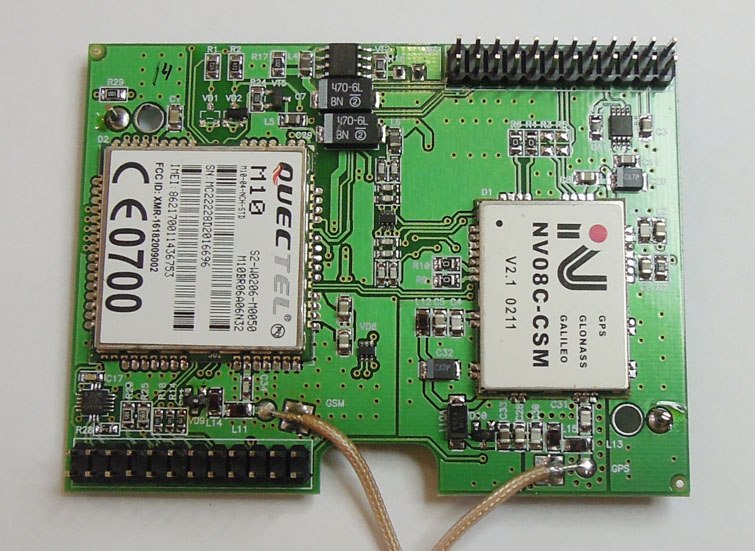 Manufacturer: Russia Number of channels: 32 -160 dBm when tracking -143 dBm when starting Hot start ~ 3s Warm start ~ 25s Cold start ~ 25s Consumption: 180 mW with tracking Number of copies in the test: 3 Note: The figures are for the GLONASS mode / GPS |
MStar MGGS2217 Manufacturer: China Number of channels: 20 (80 for searching) -161 dBm when tracking -144 dBm when starting Hot start ~ 1s Warm start ~ 32s Cold start ~ 34s Consumption: 250 mW at start 215 mW with tracking Number of copies in the test : 3 |
Quectel L16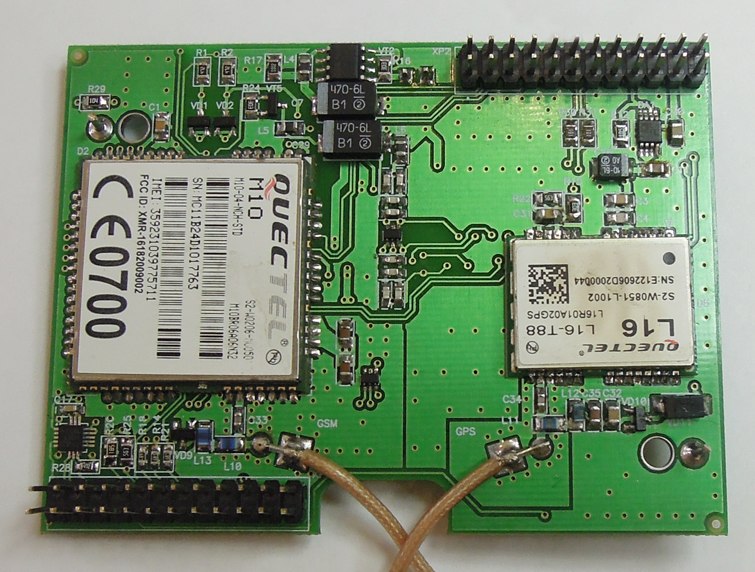 Manufacturer: China Number of channels: 32 -162 dBm when tracking -146 dBm when starting Hot start ~ 2.5s Warm start ~ 24s Cold start ~ 35s Consumption: 363 mW at start 314 mW with tracking Number of copies in the test: 3 |
| Telit SL869 Manufacturer: Italy Number of channels: 32 -162 dBm when tracking -146 dBm when starting Hot start ~ 1s Warm start ~ 35s Cold start ~ 35s Consumption: 323 mW when starting 214 mW with tracking Number of copies in the test: 3 Note: Indicators indicated for GLONASS / GPS mode |
Ublox LEA-6N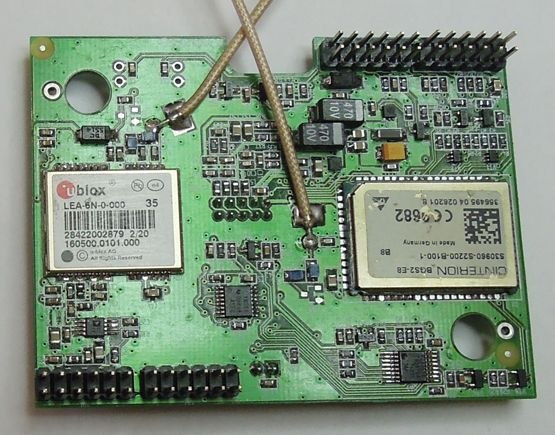 Manufacturer: Switzerland Number of channels: 50 -158 dBm when tracking -138 dBm when starting Hot start ~ 2s Warm start ~ 25s Cold start ~ 36s Consumption: 135 mW at start 120 mW with tracking Number of copies in the test: 6 Note : It does not have a combined GLONASS / GPS mode, therefore it was tested in the "GLONASS only" mode and separately from other participants. |
The start of work (start) for all receivers is quite high-quality and fast, there were no gaps at the start. In several cases, a small rebound was noticed, which was filtered out in the dispatch software.
Once U-blox LEA 6N (one of six) within 1.5 minutes after the start gave out coordinates with an offset of 40 meters (the circled line should be lower and to the left).
When driving in traffic jams, all receivers showed stability. With small and not frequent moves to the side:
In general, all receivers showed a very good track in open areas and in traffic conditions around the city.
Typical sections of the track:
But when working in difficult conditions, the results are already different:
Our findings on receivers:
1. In Navis, in general, the tracks are good, especially when placing the antenna on the roof. Of the shortcomings, one can note a certain “delay” of the course and not the best behavior (aside) in the conditions of well-yards.
Score 7
The average number of visible satellites is from 16 to 20.
2. MGGS2217 also has generally good tracks, better than Navis in the courtyards. It works out fine maneuvers well.
Score 8
Of the shortcomings, one can note periodic “non-reception” of data from the receiver by the terminal - there are no points during every second detail. The reason is unknown., Maybe it’s in the terminal, and maybe in the food, because it appeared only on one of the cars. The number of visible satellites averages from 15 to 18.
3. For Quicktel L16, the quality of the track is better than for Navis, but slightly worse in drawing complex sections than for MGGS2217.
Score 7
The average number of visible satellites is from 16 to 20.
4. The Telit SL869 receiver is based on the same chip as the L16 and has the same track quality. Score 7
5. Ublox LEA 6N, despite being tested in GLONASS mode, showed the best track. All maneuvers on the road are visible. If not for one glitch at start, there would be a solid nine.
Grade 8
Some examples:
Delayed course on Navis Data
gaps MGGS2217 (every second drilldown)
We hope that the presented materials will help respected Habr users. At the same time, we recall that the review only reflects our test results, and is not the ultimate truth.