Can you jump into your spaceship and leave the Earth?
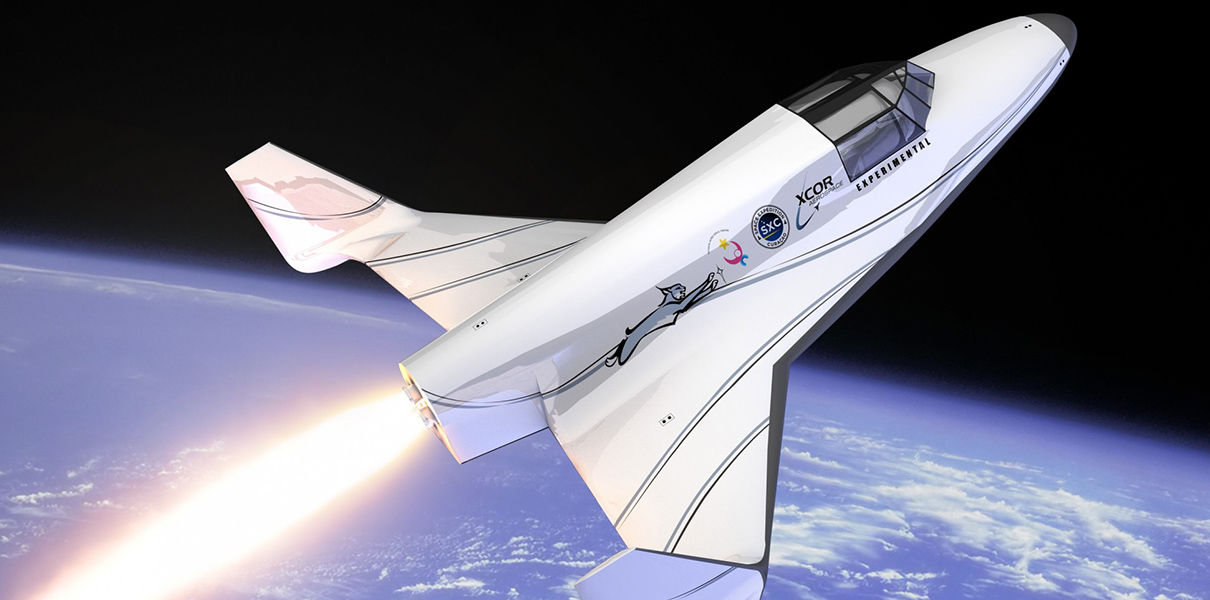
After the appearance of reusable launch vehicles space becomes much more accessible. But the main dream of enthusiasts is still impossible. Did you ever want to have your own spacecraft parked on the lawn at home? So that on it, at the behest of the heel of the left foot, one could fly into orbit, stretch muscles in weightlessness, admire the views of space and the Earth, maybe even visit some cosmic
First you need to find out the characteristic speed (hereinafter ΔV), necessary for a spacecraft to enter Earth orbit. Immediately simplify the task and assume that we live in Florida and fly strictly along the east direction to a circular orbit with a height of 200x200 km. Then the required ΔV will be 9.4 km / s. This figure includes both the set of required 7.8 km / s orbital speed and overcoming aerodynamic, gravitational losses, control losses and, which will be especially convenient for further calculations, back pressure losses (rocket engines at sea level work less effectively than in vacuum).
What engines to install on our spaceship? Consider the only means of launching into orbit that have been mastered at the moment are chemical rocket engines. Starting from the ground, the hydrogen-oxygen engine RS-68A has a specific impulse in vacuum (hereafter simply us) in 409 seconds. But the pressure in the combustion chamber is far from a record one. Raising it to 200 atm. and above, it is entirely possible to get a u. 430 s. (RS-25 and RD-0120 have a UI of 453-455 s., But they are sharpened rather under vacuum and they will have more back pressure losses). According to the formula Tsiolkovsky
 it turns out that a single-stage rocket with such an engine needs to have a mass ratio of 10 to 1 in order to enter orbit, i.e. for every 1 kg of dry weight of a ship, including cargo, there should be 9 kg of hydrogen-oxygen fuel. Difficult, but not impossible, given the recent progress in cryogenic fuel composite tanks. But there is one little problem. The density of the hydrogen-oxygen fuel pair is very low — only 0.3155 g / cm 3 . In this scenario, the size of the spacecraft will be simply huge, you will not pripark it in the backyard of the house. But what size will be optimal?
The canceled project of a single-stage spacecraft was to bring 20 tons to a low orbit, almost a third less than the Shuttle, at comparable sizes
To simplify all further calculations, let's imagine that the spaceship must be in the size of the orbiter of the Space Shuttle system. Yes, the orbiter is somewhat too big for personal transport and can carry 7-8, and not just one person, but in the company of friends and relatives it is much more fun to fly into space, and the dimensions are quite standard for business jets. Since we don’t need to carry cargo, only the crew, we’ll fill its entire cargo compartment with a volume of 300 m 3 with rocket fuel and see if it can go into orbit.
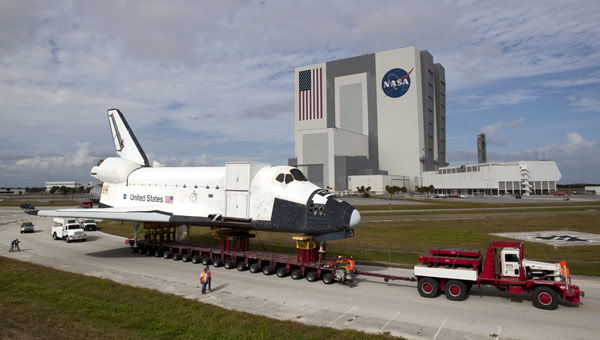
In this picture you can well estimate the size of the orbiter - a large but not huge
mass of the orbiter without cargo, but with fuel for shunting engines is approximately 90 tons. When filled with a hydrogen-oxygen pair, 94.65 tons of fuel are aboard. When u.i. in 430 s. we get by the formula
 m / s To go into orbit, you need more than 3 times more! Can we try a denser fuel? A pair of kerosene-oxygen with a density of 1.036 g / cm 3 and a.i. 337 s. (as in the RD-170/180/190 family) will give
 m / s, a pair of UDMH-AT at a density of 1.185 g / cm 3 and u.i. 318 s. (like RD-264) will give
 m / s Still ΔV shortfall almost doubled!
 But is there a couple of fuel in the world with a much higher density and the best UI? There is, and it is called fluorine-hydrazine - density 1,314 g / cm 3 at u.i. in as many as 402 with.! Fill it with the shuttle orbiter and get
 m / c! Alas, still a shortage of a full third. So is a compact orbital spacecraft impossible and the original answer was correct?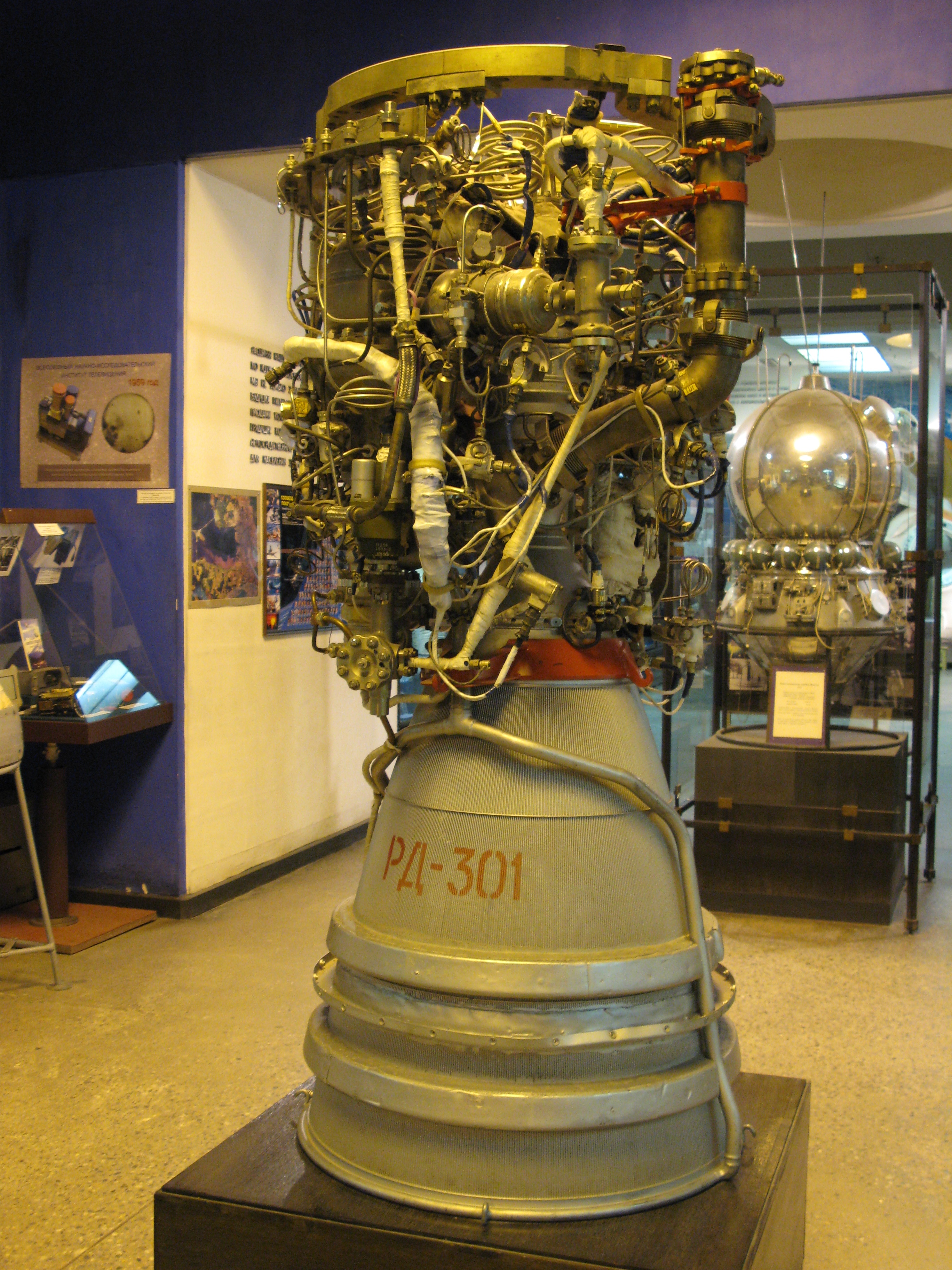
Fluorine-ammonia RD-301 never flew, but proved by testing that rocket engines with fluorine oxidizer are possible
Fortunately, in the previous calculations there is one assumption - the mass of the orbiter is 90 tons. But the yard is far from the 1970s, it is possible to replace aluminum with carbon fiber, reduce the size of the wings, since we do not need a horizontal maneuver by 2,000 km, and the Space Shuttle on-board computer now fits perfectly in the pocket of the pants, if not in a wristwatch. After applying all the above modifications, we reduce the mass of the orbiter by half, to 45 tons. This is quite doable, for doubters it is worth remembering that the Falcon 9FT two-stage kerosene rocket designed in 2010s has half the dry mass per unit mass of fuel than the two-stage Zenit kerosene rocket designed in the 1970s. We recount and get
 m / s, which boldly rounds to 9 km / s. A shortage of just 400 m / s!
 But as is well known “almost” does not count. How do we get the necessary 400 m / s? It may be recalled that the shuttle has shunting engines with a UI. in 316 s. and ΔV 300 m / s, but this is still not enough, and maneuvering in space is necessary. But these 300 m / s are driven for a shuttle with 29.5 tons in the cargo hold! Without them, it will be just 400 m / s - you can go into orbit, but without a reserve for maneuvers. Replace the engines maneuvering on the mini version of the marching fluorine-hydrazine with the same u.i. and, voila, we get 500 m / s - and they went into orbit and 100 m / s remained for maneuvering.

Never say
As a result of all these long calculations, one can almost certainly say that from the point of view of physics, a compact orbital space plan is POSSIBLE! Another thing is that from the point of view of the development and operation of the fluorine-hydrazine engine will be a nightmare, as well as from the point of view of ecology, but this goes beyond the question of physical feasibility, which I wanted to demonstrate in this article.