Fairy tales in the USSR: the story of "child" vinyl
Pleasant crackling from the speakers and the fascinating voice of Nikolai Litvinov :
So begins the audio show " The Adventures of Buratino " from the legendary "Melody". In the era of digital media and the Internet, children's fairy tales on vinyl are mostly spoken only in terms of nostalgia and “warm tube” memories. However, this format of children's audio has become a very important milestone for several generations of children and adults. About how to write the most favorite "vinyl fairy tales", we will tell further.
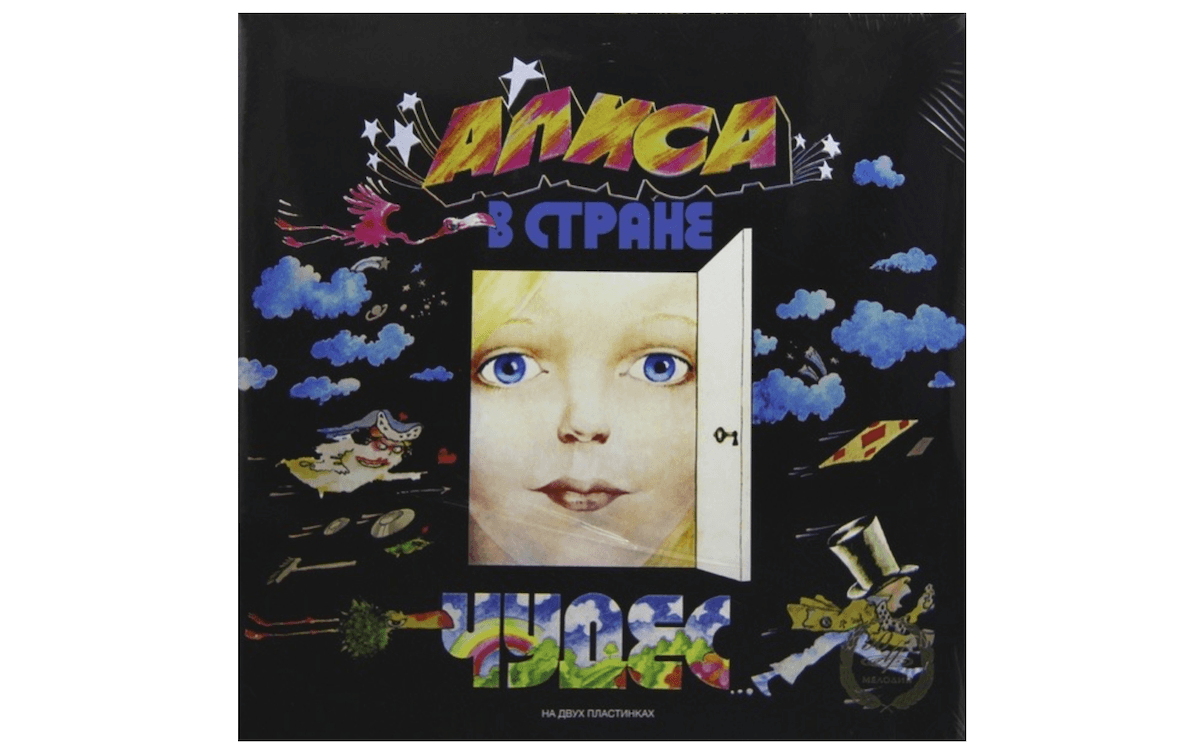
/ "Alice in Wonderland" ( 2 LP )
It is worth making a reservation at once that “vinyl fairy tales” is rather a conditional name, since this product was produced not only on vinyl, but also on flexible records .
In these “vinyl fairy tales”, undoubtedly, music plays a very important, almost main role: through the songs of the main characters, the listener learns about their character, the atmosphere reigning in the play, the plot twists and turns and the general mood. If you leave only the text of the narrator, then the charm will leave the narration.
Although of course it was not always like this: at first, the audio performances on vinyl were simply good performances told by one actor - such things were more like radio fairy tales (for example, the same “Buratino”).
One day, the author of a book about an absurd wizard, the old Hottabych, Lazar Lagin, saw the film Oliver Twist. howNatalya, his daughter, told her father and they were surprised at how harmoniously the songs performed by Dickens’s heroes are woven into the narrative. If at least one of these songs is removed, then an important part of the plot will fall out. Then Lagin thought about how great it would be for Hottabych to perform in such a manner.
Almost forty years after the book was published (it was written in 1938), work began on a funny, ironic and unusual version of the fairy tale called “ Hottabych! ". The music was addressed to the genius Gennady Gladkov, the author of the musical part of “The Bremen Town Musicians”, and the poems for these songs will be written by Yuri Entin. A whole galaxy of loud names is gathered around the talented creators: Mikhail Boyarsky, Lyudmila Gurchenko, Roxana Babayan and many other stars of the USSR, and the fairy tale musical is released in 1979.
It is hardly correct to compare the “vinyl tales” of the mid-20th century with modern audio books: the fact that many of us listened to in childhood from records can be distinguished into a separate musical genre. The eminent pop stars of the USSR were involved in the dubbing: Vladimir Vysotsky, Vsevolod Abdulov and many others.
A lot of attention was paid to this niche: children's records were produced every year and, regardless of the age of the young listeners, all the audio performances were done very high quality. Whether it’s “The Wolf and the Seven Little Kids” or the sparkling “Hottabych!” And “ Ali Baba and 40 thieves, ” the idea of fairy tales, as if something very simple, was completely erased.
In some productions, in addition to traditional fun and fabulous messages, which the children liked so much, there were satirical dialogues, ironic overtones, and even references and parodies, which were intended for a more adult audience.
All songs, dialogues and music were written separately, therefore “vinyl fairy tales” are not dubbing books or plays, they are original, new and rethought works, which, including thanks to the talent and charisma of famous actors and musicians of the USSR, diverged in millions of copies.
So, for example, Zinovy Gerdt, describingthe tale "Ali Baba and 40 thieves," says that it was composed by "dilettantes" - the words were written by actor Veniamin Smekhov, the music was written by scientists Viktor Berkovsky and Sergey Nikitin. A "star" cast provided her eternal longevity: Tabakov, Dzhigarkhanyan, Jurassic ... all the best - to children.
As a result, the version of Scheherazade (which is “why write an oriental tale, if we have a lot of our own?”) Was dubious, according to Melody, sold out in three million copies.
Even Schnittke was offered to write music for this disc, but Yury Vizbor, a good friend of Smekhov, advised “not to torment the actors,” and turn to people who can write light melodies.
So the choice fell on the candidates of natural sciences with a good sense of humor Berkovsky and Nikitin. (“ Eat an orange ” is so funny, brilliant and simple that people still sing the song of Kalym). Julia Taratuta wrote in 2001 about the amazing story of this particular “vinyl tale” .
Carroll’s immortal tale was simply impossible to do otherwise. Like many projects of this genre, Alice in Wonderland has a rather complicated, but interesting creation story. The result was something surrealistic, and someone saw dissident moods in this version of the tale.
He then taught at Vysotsky at the Moscow Art Theater, and, after reading the book, he set about trying to record a record with a performance. Vysotsky himself wrote all the songs for this audioplay, but did not want to perform them, wanting to remain only the author. Nevertheless, some of the songs were so complex that Gerasimov managed to convince the musician.
The project was almost crushed by the USSR censor machine - at the artistic council, the recording studio was accused of "corrupting children with Vysotsky's songs", the responsible editor of Melody, Yevgeny Lozinsky was fired.
We have to admit that in the fairy tale there really was a tough social satire, for example, in the song about the royal procession, Vysotsky writes these lines:
But the tale after the verdict of the artistic council was saved by Bella Akhmadulina, whom Vysotsky could catch literally before leaving abroad. The musician told her about the situation, Akhmadulina wrote about “Alice” in the then-literary “Literary Gazette”, and as a result the record was released in 1976.
In this “vinyl tale”, the loudest names also gathered: Galina Ivanova, Klara Rumyanova, Vsevolod Abdulov, Vsevolod Shilovsky, even Vysotsky, sounded two roles in addition to the songs.
In one material, it is simply impossible to remember all the most beloved fairy tales on the records: there were imperishable “Bremen Musicians”, and children's rock opera “Masha and Vitya against the Wild Guitars”, and “Occurrence in the Country Multi-Pulti”, which turned the head to the traditional idea of children's fairy tales, and much, much more.
The creation of each fairy tale was the story of the creative impulse of adults, talented people who not only wanted to do something for the children, but who themselves wanted to become children for a while.
And what fairy tales do you remember on records from your childhood? Did any of you still have these records?
“When I was small, very, very long time ago, I read one book. It was called "Pinocchio, or the adventures of a wooden doll." Wooden doll in Italian - Pinocchio. I often told my comrades, girls and boys, about the entertaining adventures of Pinocchio. But, since the book was lost, I told each time differently, inventing such adventures, which were not in the book at all ... ”
So begins the audio show " The Adventures of Buratino " from the legendary "Melody". In the era of digital media and the Internet, children's fairy tales on vinyl are mostly spoken only in terms of nostalgia and “warm tube” memories. However, this format of children's audio has become a very important milestone for several generations of children and adults. About how to write the most favorite "vinyl fairy tales", we will tell further.
/ "Alice in Wonderland" ( 2 LP )
Musical in the USSR
It is worth making a reservation at once that “vinyl fairy tales” is rather a conditional name, since this product was produced not only on vinyl, but also on flexible records .
In these “vinyl fairy tales”, undoubtedly, music plays a very important, almost main role: through the songs of the main characters, the listener learns about their character, the atmosphere reigning in the play, the plot twists and turns and the general mood. If you leave only the text of the narrator, then the charm will leave the narration.
Although of course it was not always like this: at first, the audio performances on vinyl were simply good performances told by one actor - such things were more like radio fairy tales (for example, the same “Buratino”).
One day, the author of a book about an absurd wizard, the old Hottabych, Lazar Lagin, saw the film Oliver Twist. howNatalya, his daughter, told her father and they were surprised at how harmoniously the songs performed by Dickens’s heroes are woven into the narrative. If at least one of these songs is removed, then an important part of the plot will fall out. Then Lagin thought about how great it would be for Hottabych to perform in such a manner.
“This is a special genre,” said the father. - It is called "musical", from the English word "musical". Now, if Hottabych in such a performance! It would be interesting, right? ”
- Natalya Lagina
Almost forty years after the book was published (it was written in 1938), work began on a funny, ironic and unusual version of the fairy tale called “ Hottabych! ". The music was addressed to the genius Gennady Gladkov, the author of the musical part of “The Bremen Town Musicians”, and the poems for these songs will be written by Yuri Entin. A whole galaxy of loud names is gathered around the talented creators: Mikhail Boyarsky, Lyudmila Gurchenko, Roxana Babayan and many other stars of the USSR, and the fairy tale musical is released in 1979.
Whole era
It is hardly correct to compare the “vinyl tales” of the mid-20th century with modern audio books: the fact that many of us listened to in childhood from records can be distinguished into a separate musical genre. The eminent pop stars of the USSR were involved in the dubbing: Vladimir Vysotsky, Vsevolod Abdulov and many others.
A lot of attention was paid to this niche: children's records were produced every year and, regardless of the age of the young listeners, all the audio performances were done very high quality. Whether it’s “The Wolf and the Seven Little Kids” or the sparkling “Hottabych!” And “ Ali Baba and 40 thieves, ” the idea of fairy tales, as if something very simple, was completely erased.
In some productions, in addition to traditional fun and fabulous messages, which the children liked so much, there were satirical dialogues, ironic overtones, and even references and parodies, which were intended for a more adult audience.
All songs, dialogues and music were written separately, therefore “vinyl fairy tales” are not dubbing books or plays, they are original, new and rethought works, which, including thanks to the talent and charisma of famous actors and musicians of the USSR, diverged in millions of copies.
So, for example, Zinovy Gerdt, describingthe tale "Ali Baba and 40 thieves," says that it was composed by "dilettantes" - the words were written by actor Veniamin Smekhov, the music was written by scientists Viktor Berkovsky and Sergey Nikitin. A "star" cast provided her eternal longevity: Tabakov, Dzhigarkhanyan, Jurassic ... all the best - to children.
“It was the result of my sloppy skitters and a parody of the most boring Scheherezade,” said Smekhov himself at that time.
As a result, the version of Scheherazade (which is “why write an oriental tale, if we have a lot of our own?”) Was dubious, according to Melody, sold out in three million copies.
Even Schnittke was offered to write music for this disc, but Yury Vizbor, a good friend of Smekhov, advised “not to torment the actors,” and turn to people who can write light melodies.
So the choice fell on the candidates of natural sciences with a good sense of humor Berkovsky and Nikitin. (“ Eat an orange ” is so funny, brilliant and simple that people still sing the song of Kalym). Julia Taratuta wrote in 2001 about the amazing story of this particular “vinyl tale” .
Philosophy, strangeness, censorship and Vysotsky
Carroll’s immortal tale was simply impossible to do otherwise. Like many projects of this genre, Alice in Wonderland has a rather complicated, but interesting creation story. The result was something surrealistic, and someone saw dissident moods in this version of the tale.
“The work on Alice is an incredibly painful, insanely painful, voluptuously painful happiness,” said Oleg Gerasimov, who started to work on the project.
He then taught at Vysotsky at the Moscow Art Theater, and, after reading the book, he set about trying to record a record with a performance. Vysotsky himself wrote all the songs for this audioplay, but did not want to perform them, wanting to remain only the author. Nevertheless, some of the songs were so complex that Gerasimov managed to convince the musician.
The project was almost crushed by the USSR censor machine - at the artistic council, the recording studio was accused of "corrupting children with Vysotsky's songs", the responsible editor of Melody, Yevgeny Lozinsky was fired.
“Professional composers and poets listened to a part of the finished material and said:“ What do you mean? Crazy? We adults did not understand anything. And they want the children to listen ... Close immediately. ” And this was repeated several times, ”said Vsevolod Abdulov.
We have to admit that in the fairy tale there really was a tough social satire, for example, in the song about the royal procession, Vysotsky writes these lines:
No, no, the people have no difficult role:
Kneeling down - what's the problem?
The king is responsible for everything,
But if not the king, well then - the queen!
But the tale after the verdict of the artistic council was saved by Bella Akhmadulina, whom Vysotsky could catch literally before leaving abroad. The musician told her about the situation, Akhmadulina wrote about “Alice” in the then-literary “Literary Gazette”, and as a result the record was released in 1976.
In this “vinyl tale”, the loudest names also gathered: Galina Ivanova, Klara Rumyanova, Vsevolod Abdulov, Vsevolod Shilovsky, even Vysotsky, sounded two roles in addition to the songs.
It sounded like childhood
In one material, it is simply impossible to remember all the most beloved fairy tales on the records: there were imperishable “Bremen Musicians”, and children's rock opera “Masha and Vitya against the Wild Guitars”, and “Occurrence in the Country Multi-Pulti”, which turned the head to the traditional idea of children's fairy tales, and much, much more.
The creation of each fairy tale was the story of the creative impulse of adults, talented people who not only wanted to do something for the children, but who themselves wanted to become children for a while.
And what fairy tales do you remember on records from your childhood? Did any of you still have these records?
- Our " Black Audio " 2017: includes over 50 vinyl editions
- How to care for vinyl: 7 tips for beginners
- Sound shows : very well forgotten old