Sleep is a waste of time or physiological necessity

We, mere mortals, are reminded from time to time how important a full 8-hour sleep is for the body. At the same time, the experience of some representatives of our species, whose name in our view is associated with certain achievements, often indicates the opposite. Many of these people have become and remain famous and successful, giving a minimum of time to sleep. One of the clearest examples is the now-living, charismatic Donald Trump, who does not sleep more than 3-4 hours a day. And, in the opinion of the presidential candidate igniting with his energy, such a distribution of time gives him a tangible advantage over competitors.
Sleep - a waste of time - was deeply convinced by Thomas Edison, who prefers the entire conscious part of life to be interrupted for a short sleep several times during the day. The same opinion and routine, though several centuries earlier, adhered to Leonardo da Vinci, failing in the so-called. "Polymorphic" 20-minute sleep 6 times a day. Nikola Tesla donated no more than 2 hours to sleep from her extremely tight schedule, starting at midnight.
Winston Churchill made it a habit to give a short day to sleep, besides a few hours at night. To this end, he ordered his favorite bed to be transported to the Parliament building, which did not prevent him from subsequently leading his country to victory in the Battle for Britain and being known as one of the greatest diplomats of all time.
In the context of the above, we bring to your attention a curious selection - an infographic consisting of 12 facts about how and how much they spent and continue to spend on sleep some of the personalities included in the history, including those listed.
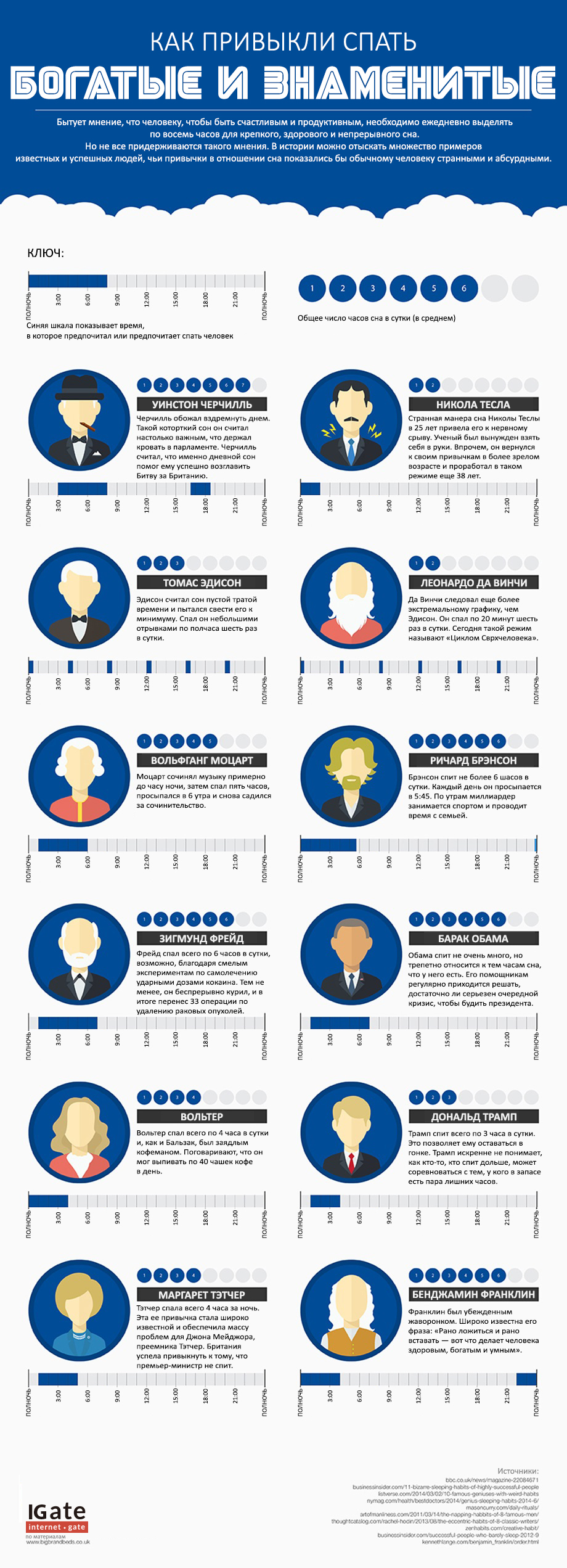
8 hours - a myth or reality?
According to averaged statistics, most of us spend a total of about 24 years on sleeping. Is it a lot or a little? And how to find the golden mean that will allow everyone to extract the maximum benefit from sleep? Let's at least try to get closer to answering these questions by analyzing how bad sleep is that sleep or pouring is harmful, and what happens to our brain when there is not enough time to sleep.
One of the recognized authorities in the scientific world who devoted to the study of the sleep phenomenon of the decade, professor of psychiatry Daniel Kripke, basing himself not only on his own opinion, but also on convincing facts, asserts: “People who sleep 6.5 to 7.5 hours a day live longer. They are more productive and happy. But excessive sleep may well be detrimental to health. And you can feel overwhelmed, slept 8.5 hours, and perfectly rested, slept 5 ".
"... No matter how much each of us wants, there are no single recommendations, and there can be no ... - the professor continues ... - It’s rather, in some approximation, it can be about developing an individual schedule. Everyone should experiment and reduce the sleep time, for starters , up to 7.5 hours, listen to your feelings and feel how such a difference affects the quality of life. If you sleep at night for 6 hours and you feel great during the day, you are lucky and you most likely are hardly needed something else to cut. "
The habit of imitating Edison or Margaret Thatcher and knowingly reducing sleep time to 4 hours a day cannot obviously be considered a plus for most of us, of course, if these 4 hours are not your personal physiological minimum that has been tested and proven over the years of practice after waking up fresh and cheerful, and during the day have time to remake a lot of cases.
Here it is necessary to correctly place accents.: A person who has slept for 4 hours can really concentrate on what is happening and perceive reality as adequately as the one who slept for 7-8 hours. And this fact has been repeatedly confirmed by special tests and exercises. The trap lies in the fact that a person who systematically and artificially limits his minimum sleep limit loses the ability to concentrate when solving even the simplest everyday tasks much faster than a person rather strictly adhering to his natural biological schedule.
According to Professor Kifford Saperfrom Harvard Medical School: "The brain of a sleepy person can work normally, but from time to time something like a power failure occurs at an electrical device." A visual representation of how this happens will allow the illustration below.
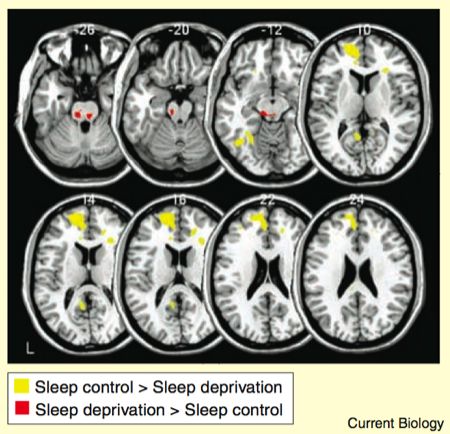
As soon as you lose focus and your attention is dispersed, the processes that activate the focus begin in the brain (the zones in which this happens are marked by yellow areas). In people who do not sleep, such activity is manifested at a minimal level or not at all, but amygdala (red zone) is activated, which is a kind of "alarm center". As a result, the brain is rebuilt into a mode of work under stress, as in the case when a person is in danger. At the physical level, this is manifested by muscle tension, sweaty palms, rumbling in the stomach, an extremely unbalanced emotional state, the inability to perform even the simplest task the first time.
At the same time, the problem is aggravated by the fact that a person who has not slept at such moments does not notice an abrupt decrease in the ability to concentrate and to perform. On the contrary, there is a high probability of developing a sense of correctness and illusion of the effectiveness of the actions performed. The consequences of such a fallout from the “focus of adequacy” can be very serious. That is why, to get behind the wheel without having slept, even having drunk a thermos of coffee beforehand and having felt a surge of cheerfulness, is absolutely not recommended.
As in the case of peresypom, each of us will have to work out our own individual minimum sleep limit on our own. But to take a nap a few minutes in the afternoon with such an opportunity and desire is very useful. Literally 20 minutes will be enough to regain the level of concentration and productivity necessary for adequate perception and solution of current tasks for at least a couple of hours. It is optimal if such a short respite is necessary at a time when the energy deficit is felt especially acutely. Probably Winston Churchill, who regularly adds a two-hour day dosyp to his 5-night sleep hours, gave himself exactly this setting during his lifetime.
Polyphase or single phase?
According to a number of psychologists and physiologists studying the nature of sleep, those who are experiencing certain problems with a night “single-phase” sleep should try for a few days regularly and as needed to nap during the day at the same time for 30 minutes. The body, they argue, will soon get used to such an adjustment, and the quality of perception and productivity during wakefulness will improve significantly.
The nature of “polyphasic” sleep, as an alternative to single-phase (prolonged one-time sleep mainly at night), scientists have studied since the early 20s of the last century. And, nevertheless, unequivocal conclusions based on the evidence base about how harmful or useful multiphase sleep for a man in the long run is still not represented by science. The opinions of recognized authorities are quite different and sometimes quite the opposite.
So the study of the nature of multiphase sleep in groups of subjects of different ages and the analysis of knowledge accumulated by the time of experiments allowed some scientists to conclude: “... polyphasic sleep should be considered the rule rather than the exceptionfor the entire animal kingdom (Campbell & Tobler, 1984; Tobler, 1989). There is little reason to believe that the human sleep / wake system has evolved on a fundamentally different basis. The fact that people often do not show such an organization of sleep in everyday life simply assumes that they have artificial capabilities (often with the help of stimulants such as caffeine or increased physical activity) to overcome the natural tendency to short sleep during the day. "
In the context of the last quotation, it will be curious to recall an alternative example that has gone down in history of outstanding sporting achievements of the past few decades. Indirectly, it will allow us to judge the extent to which some physiological habits that we forcibly develop turn out to be dependent on psychological attitudes adopted by a certain community (or society).
Clifford Young - winner of the first Westfield ultra marathon

The distance of the first Westfield ultra marathon that became famous after one man from Sydney to Melbourne, held in 1983, was 875 km. Start and finish are located in Westfield Parramatta in Sydney and Westfield Doncaster in Melbourne, respectively. Despite the absence of strict requirements for the professional level of the participants, most of them were world-class athletes who spend quite a long time preparing for the competition. The age of most athletes, according to statistics, did not exceed 30 years, and for the opportunity to take part in the competition sponsors, the largest brands competed in sportswear and sneakers.
The more surprising was the day of the start of the ultra marathon, which 61-year-old farmer wished to participate inAlbert Ernest Clifford Young from Beach Forest, who very soon became for many simply Cliff Young. Seeing Cliff at the start, most of the spectators present felt that this person was one of them, but for some reason left the improvised stands. There was every reason to think so, because at the start a man came out in a working overalls and in galoshes, shod over shoes. And, nevertheless, without being embarrassed at all, the colorful, tanned Young went to the table of the panel of judges and demanded for himself the number of the participant in the race. Number found - he was 64th. Having drawn not only the attention of the public, but also the press, Cliff decided to give a short interview to the film crew. A week later, this interview, like the interviewer himself, made history ...
- Hello! Who are you and what are you doing here?
- I'm Cliff Young. We breed sheep in a large pasture near Melbourne.
- Will you really participate in this race?
- Yes.
- Do you have a sponsor?
- Not.
“Then you can't run.”
- No, I can. I grew up on a farm, but only 4 years ago I bought a car. When the storm was approaching, I went out to drive the sheep. We had 2000 of them, they grazed on 2000 acres (8.1 sq. Km). Sometimes it took 2–3 days to catch sheep - it was not easy, but I always managed. I think that I can participate in the marathon, because, according to my calculations, it will be just 2 days longer and will be only 5 days, while I often drove sheep for 3 days in a row ...
The future super marathoner received his first running skills at the age of 57. In preparation for the ultra marathon, Yang took a total of 3 weeks. Preparing for the run with Joe Record, he covered 20 miles daily for the first week, 30 miles for the second, 50 for the third.
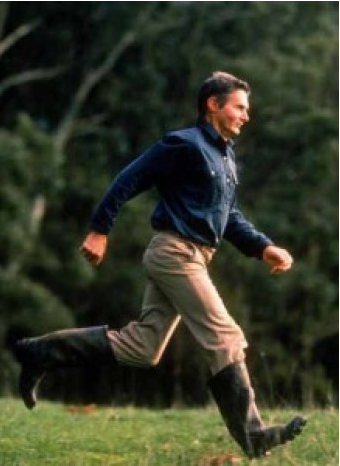
... The marathon began, and soon the professionals left Cliff in his galos far behind. Part of the audience, tracking the development of events since the start penetrated Yang with sympathy, others frankly laughed, and some called on heaven to save the charming 61-year-old farmer's life. According to the recommendations developed by the leading sports institutes of that time, the participants of the race could devote 18 hours a day to their own running and 6 hours to obligatory single-phase sleep at night. Since the professional sports industry and its recommendations were as far from Young as he was from them, nothing was known about the daily rules of the competition.
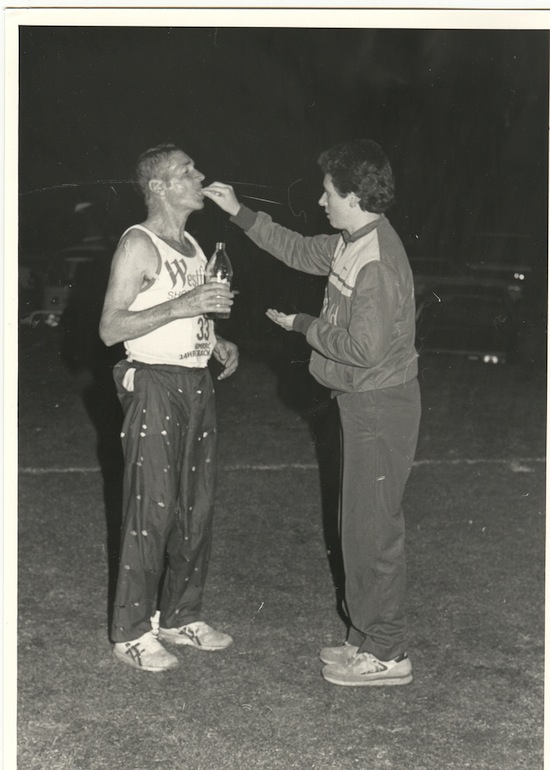
When the next morning came, the fans and the press were surprised to find out that the farmer hardly slept and, stopping for a short rest for a couple of minutes, continued to run all night. In the morning, Young welcomed the residents of Mittagong, who had come out to gawk at the wonder runner in New South Wales. The first sleepless night did not allow Cliff to approach the track and field athletes ahead of him during this time. However, without making 6 hour breaks for sleeping every day, like other participants, armed with recommendations of the sports medical committee and stopping on the way only for a short rest, Young managed to bypass the race leaders from world-class athletes and finish with a record result in the remaining part of the distance. : 5 days, 15 hours and 4 minutes,
So a simple 61-year-old farmer, not being a professional athlete, not familiar with the theory and recommendations of the world's leading sports institutes, and most importantly, not setting for himself artificial psychological barriers that strictly regulate the sleep and wakefulness time as an average athlete’s norm, managed to achieve goals, but also set a world record at this distance. Of course, the level of stress to which Yang's organism has undergone for 5 days can be considered extreme. But professional athletes using a rigid single-phase sleep scheme for 6 hours a day were subjected to extreme loads.
It is noteworthy that after the marathon, 61-year-old Cliff Young got a young 23-year-old wife Mary Howell. The marathon sponsor, Westfild paid for the wedding.
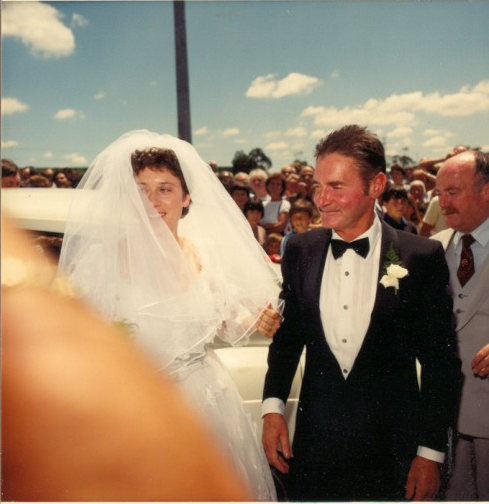
Can Cliff Yang be considered an exception to the general rule, the only one whose body showed extraordinary physical abilities? Or, on the contrary, the example of Cliff once again confirms the conventionality of our ideas about the facets of physical capabilities and needs of the organism, imposed on us from the first days of birth by society in the form of rigid installations? It is quite possible that our ideas about the need for sleep, lasting for 8 hours, are no more than a stable stereotype, comfortable in consciousness, a habit that has been forming for centuries and many generations, as well as the habit of aging and dying at the age of 60-70-80 years , without revealing the potential pledged by nature? This question has yet to be answered.
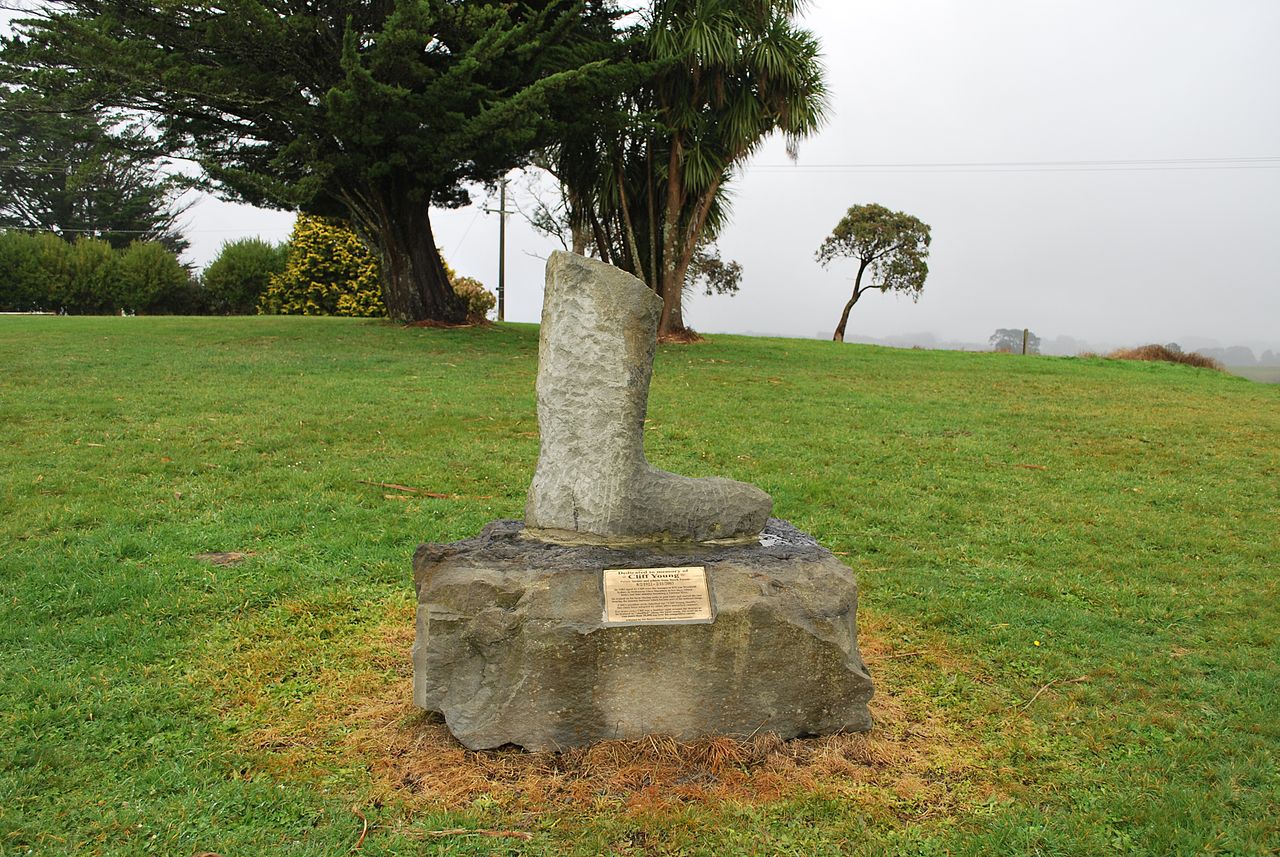
Cliff Young's memorial in the form of a rubber boot. Beach Forest, Victoria
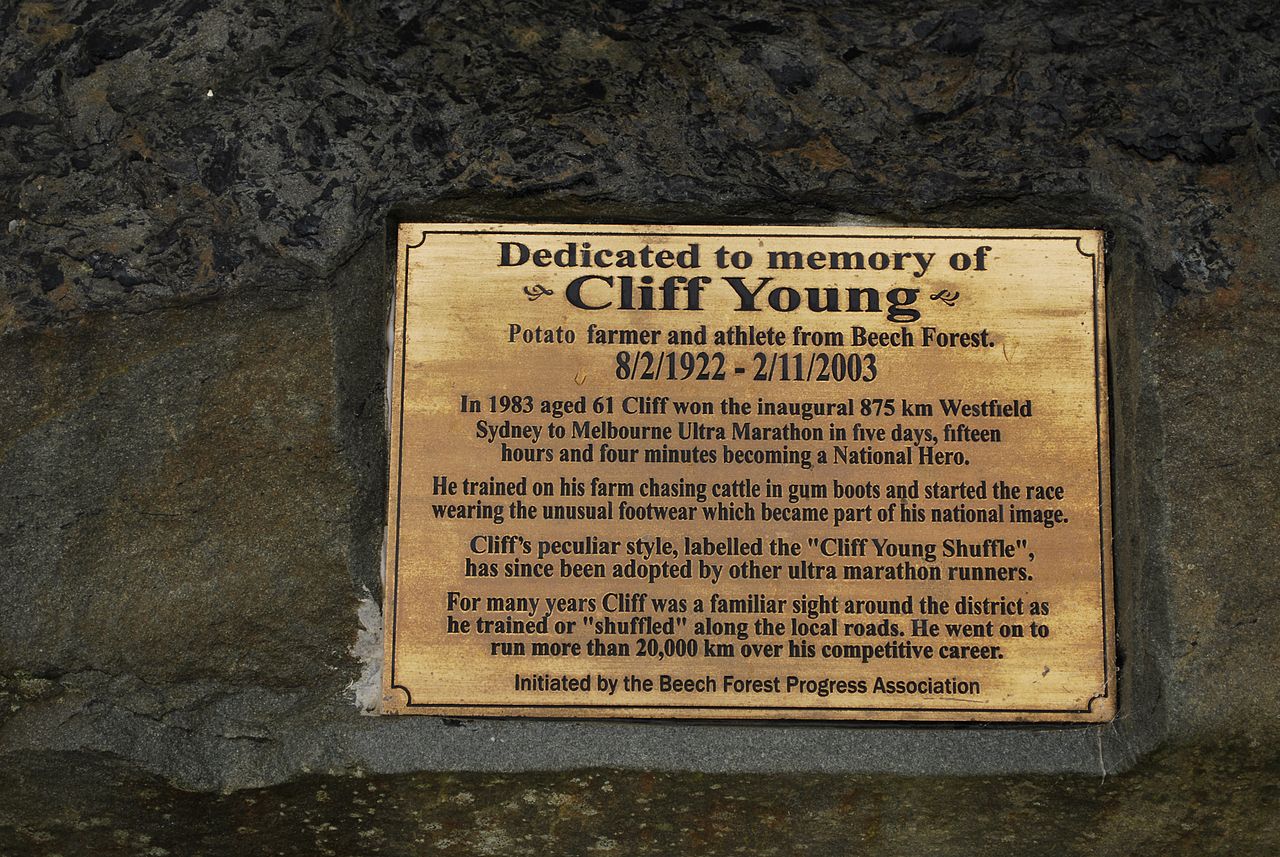
Memorial plaque of the memorial.
Alternative opinion.
The problem of the effectiveness and safety of a polymorphic sleep scheme was also investigated in the armed forces of several countries. One of these studies was conducted with the participation of the crew of Canadian marine pilots.
The results allowed experts to conclude that in extreme conditions, when the daily need of the body for sleep cannot be completely replenished by continuous sleep, short additional nap breaks of 10–20 minutes during the day at regular intervals can maintain the required pilot performance for several days. Nevertheless, the researchers agreed that the level of efficiency with a short "additional" sleep turned out to be consistently and significantly lower than with a systematic prolonged night's sleep in single-phase mode.
A number of modern researchers of polyphasic sleep also do not share the point of view about its naturalness. So Peter Wozniak calls the theory of an abrupt change in the total sleep time by short drowsiness intervals unjustified, arguing thatbrain control mechanisms that allow us to adapt to a multiphase system have not been found to date . He and his associates believe that the body will always have a tendency to consolidate sleep, at least in one long block , and express concern that polyphasic sleep can lead to a decrease in mental and physical activity, increased stress and anxiety, weakened immune system. On the other hand, it is a full-fledged long night sleep, in his opinion, contributes to the natural course of the body's physical recovery processes - growth of muscle mass, restoration of connective tissue, protein synthesis, etc.
Wozniak argues that after analyzing the blogs of polyphases, he came to the conclusion that they had to constantly work in order not to fall asleep, and that a segmented dream in no way contributes to a qualitative improvement in a person’s ability to learn or create. At the same time, artificially and regularly interrupted sleep with time will inevitably lead to metabolic disturbances, hormonal balance and disruptions in the work of the most important systems of the body, the scientist is sure.
"If your night's sleep is less than 6 hours, then you can assume that you are already on the shortest path to the grave," British and Italian scientists are extremely specific. “People regularly spending less than 6 hours on a night’s sleep are 12% more likely to die in a 25-year period than those who sleep 6 to 8 hours.” This opinion is complemented by another researcher of the problem - Professor Francesco Cappuccino, who claims that systematic sleep lasting less than 6 hours increases the risk of developing cardiovascular diseases by 48%!
Like the scientific world that has been studying the problem of sleep for more than a century, we have not come close to a clear and unequivocal answer: how much and how nature has written off to sleep for the average person. And this is not surprising, since each of us is a unique world, with its own rules and regulations. All we can do is listen attentively to the voice of our body, since no one except him will decide how much, when and how we should and allow to spend on sleep.
In conclusion, I would like to give our readers the opportunity to get acquainted with the amazing lecture of Ivan Pigarev, Doctor of Biological Sciences, Chief Researcher of the Information Transmission Laboratory in the Sensory Systems of the IITP RAS, held on February 27, 2014. In accordance with the results of the experiments and the proposed paradigm, sleep is the time allotted for “private communication” of the brain with biological systems and organs of our body, the time allotted for the correction of the “internal” problems accumulated during the day.
Thank you for your attention and time spent with us!
That's all with you was Dronk.Ru. Do not forget to return money for purchases in China and subscribe to our blog , there will be many more interesting things. We recommend: - We save up to 8% on every purchase on AliExpress and other online stores in China - Why do online stores give money for purchases? - Return your money - Choose a cashback service for Aliexpress - The history of Dronk.ru development - from choosing quadcopters to returning money for purchases on AliExpress and not only - Best cashback service or 5 main criteria for evaluating cashback service