Separation of customer and freelancer profiles
From ancient times on the freelance exchanges there are pointed and blunt tips in questions of profiles of customers and freelancers. One and the same person can act in both roles, be both a customer and a freelancer. On some exchanges, a person has two profiles, one for each role, on others the same one profile, multi-account, which allows you to play both roles simultaneously.
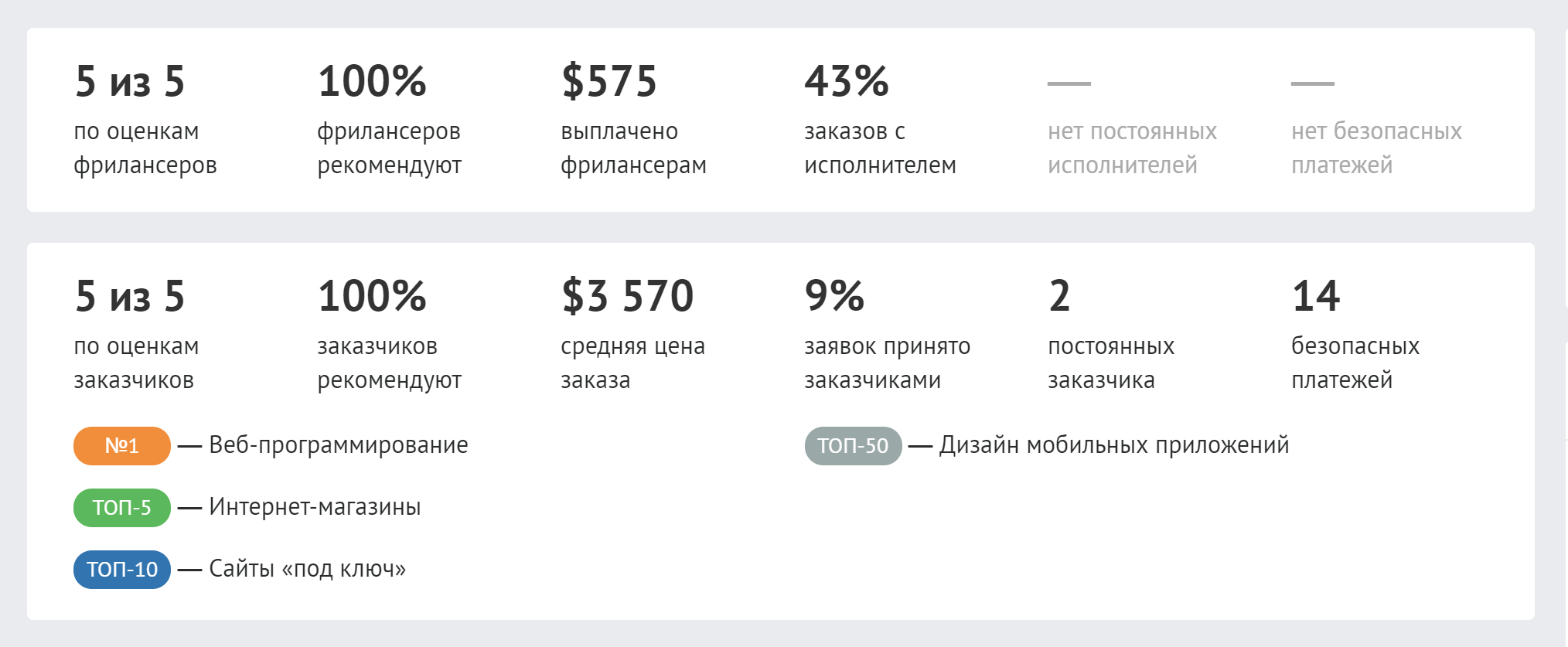
Separate profiles are more unambiguous, it is easier to arrange everything without unnecessary details. There is no confusion with the definition of the role this user is playing.
However, there are unpleasant moments. Often you just need to register twice, fill out information about yourself.
There are also questions about the relationship between the two accounts. This connection is not always present and it is impossible to determine that the user, in principle, plays two roles, although it is useful to know about this connection.
For example, speakers in two roles may be better aware of problems from two sides and be a more convenient counterparty. Or, this user often delegates part of the work - takes a turnkey order for the site, and orders the design here.
In different situations, different people can interpret such information in different ways, the main thing is that there is something to interpret.
If there is a connection between the accounts, then this is better than not having it at all, but there may be inconsistencies like different registration dates or different online times, or even different names in these different accounts.
Because of these reasons, we always had a combined profile and for many years we fought and put up with its shortcomings.
This is how the profile of the combining role before separation looked like:

Let's consider in general terms the blocks in the main part of the page from top to bottom.
Depending on who is looking at this page - the customer or the freelancer, some of the blocks for him will be superfluous. They will overload the page and take away space from more important information.
For example, the customer is primarily interested in the statistics of the freelancer and work in the portfolio, as well as feedback from other customers. And vice versa - it is unlikely that the customer’s portfolio will be the main factor for the freelancer.
To solve this problem, we decided to make two types of profiles of the same user. One reflects his activity as a customer, the other as a freelancer.
When moving from certain points on the site, we probably know who is looking at the page - the customer or the freelancer, and accordingly it is clear what information he is interested in.
These points are the order page and the catalog of freelancers. This is the main move, these paths are mainly taken by users.
The customer goes to the pages of freelancers from the catalog or from the order page, from the list of applications.
A freelancer usually goes to the customer’s page also from the order page, but from the description of this order.
Thus, we know what information to display in such a transition.
On the customer’s page we show:

On the freelancer page, respectively:

We added a switch to the pages of those users who have activity of two types, so you can see what's in a different role.
I had to smash my head with the switch. I did not want it to become the central element of the page, because information about the second role in most cases is additional and of interest is not for everyone. But for those who are interested in this element should still be.

As a result, we settled on the option on the right, there was just a place. Not too noticeable and allowed not to increase the page height. It's nice when the work in the freelancer's portfolio is visible immediately after downloading.
For cases when we do not know what role the visitor is interested in, we try to determine the main role by the reviews. What feedback from the last 10 more, that role and assign. If there are more reviews from freelancers, then we believe that basically the user acts as a customer. And vice versa.
If there are no reviews, then we look at what the user has - orders or work in the portfolio.
We don’t know who is looking at the profile when switching from private messages, from the forum and when switching to the profile from other sites, when there is no context.
The definition of the default role is ambiguous, there were ideas just to give the user a choice, but then there may be situations where the user acts as a freelancer, then stops acting as a freelancer, but acts as a customer. Previously, this was clearly seen in the work of ten years of “freshness” in the profiles of customers. Just as such users do not delete work from the portfolio, they will not switch the main role.
Let there be not so many combining both roles, now their profiles look good.
Separate profiles are more unambiguous, it is easier to arrange everything without unnecessary details. There is no confusion with the definition of the role this user is playing.
However, there are unpleasant moments. Often you just need to register twice, fill out information about yourself.
There are also questions about the relationship between the two accounts. This connection is not always present and it is impossible to determine that the user, in principle, plays two roles, although it is useful to know about this connection.
For example, speakers in two roles may be better aware of problems from two sides and be a more convenient counterparty. Or, this user often delegates part of the work - takes a turnkey order for the site, and orders the design here.
In different situations, different people can interpret such information in different ways, the main thing is that there is something to interpret.
If there is a connection between the accounts, then this is better than not having it at all, but there may be inconsistencies like different registration dates or different online times, or even different names in these different accounts.
Because of these reasons, we always had a combined profile and for many years we fought and put up with its shortcomings.
This is how the profile of the combining role before separation looked like:
Let's consider in general terms the blocks in the main part of the page from top to bottom.
- Customer statistics
- Freelancer Statistics
- Portfolio works
- Last review (no matter who he was from)
- Currently open orders
- Summary
Depending on who is looking at this page - the customer or the freelancer, some of the blocks for him will be superfluous. They will overload the page and take away space from more important information.
For example, the customer is primarily interested in the statistics of the freelancer and work in the portfolio, as well as feedback from other customers. And vice versa - it is unlikely that the customer’s portfolio will be the main factor for the freelancer.
To solve this problem, we decided to make two types of profiles of the same user. One reflects his activity as a customer, the other as a freelancer.
When moving from certain points on the site, we probably know who is looking at the page - the customer or the freelancer, and accordingly it is clear what information he is interested in.
These points are the order page and the catalog of freelancers. This is the main move, these paths are mainly taken by users.
The customer goes to the pages of freelancers from the catalog or from the order page, from the list of applications.
A freelancer usually goes to the customer’s page also from the order page, but from the description of this order.
Thus, we know what information to display in such a transition.
On the customer’s page we show:
- Customer statistics
- Currently open orders
- Latest review from freelancer
On the freelancer page, respectively:
- Freelancer Statistics
- Portfolio works
- Last customer review
- Summary
We added a switch to the pages of those users who have activity of two types, so you can see what's in a different role.
I had to smash my head with the switch. I did not want it to become the central element of the page, because information about the second role in most cases is additional and of interest is not for everyone. But for those who are interested in this element should still be.
As a result, we settled on the option on the right, there was just a place. Not too noticeable and allowed not to increase the page height. It's nice when the work in the freelancer's portfolio is visible immediately after downloading.
For cases when we do not know what role the visitor is interested in, we try to determine the main role by the reviews. What feedback from the last 10 more, that role and assign. If there are more reviews from freelancers, then we believe that basically the user acts as a customer. And vice versa.
If there are no reviews, then we look at what the user has - orders or work in the portfolio.
We don’t know who is looking at the profile when switching from private messages, from the forum and when switching to the profile from other sites, when there is no context.
The definition of the default role is ambiguous, there were ideas just to give the user a choice, but then there may be situations where the user acts as a freelancer, then stops acting as a freelancer, but acts as a customer. Previously, this was clearly seen in the work of ten years of “freshness” in the profiles of customers. Just as such users do not delete work from the portfolio, they will not switch the main role.
Let there be not so many combining both roles, now their profiles look good.