March 2, 2019 at 18:31
The history of Soviet cassette players: the evolution of the Desna, MK-60 made in USA and 70s folk tape recorders
Continuing our cycle about Soviet audio, I wanted to talk about cassette recorders in the USSR. It is known that in the Country of Soviets these devices began to appear a little later than in the west, but disappeared on the contrary earlier (their production was curtailed almost immediately after the collapse of the Union).

I was interested in analyzing how close our developers were to colleagues from Japan, Western Europe and the USA, whether they managed to catch up and overtake, and also to understand why Soviet developments in this area were sometimes in rare or so-called “forced” demand, and most their contemporaries sought to acquire foreign designs.
Due to the fact that the topic is quite extensive, I will divide the material into four parts, in the first two I will talk about the evolution of portable devices, and in the rest I will consider the development and decline of stationary decks.
The history of Soviet cassette tape recorders for a compact cassette standard began 5-6 years later than in the west, which generally coincides with the chronological lag of the country of victorious developed socialism from its “Western partners” in consumer electronics. It is known that the first cassette recorders (with magnetic wire) appeared in the Third Reich in the 1930s, such, in particular, were produced by C. Lorenz AG. The first cassette recorder with magnetic tape was released in 1950, it became Loewe Optaphon.

30s cassette player
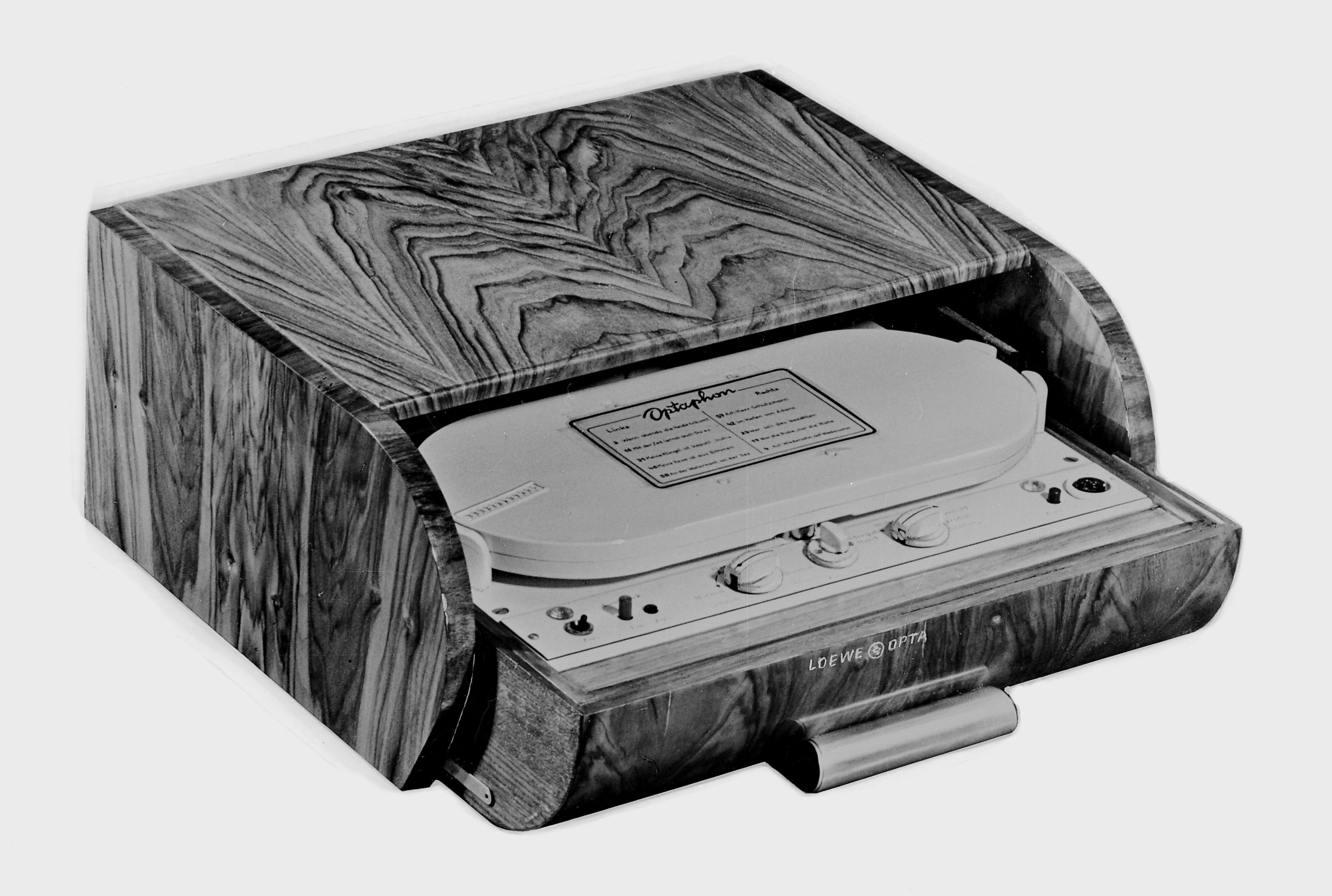
Loewe Optaphon
All this time the cassettes were not given any importance in the USSR and were dispensed with coils, which received the popular name of the reel. In 1963, Philips introduced a compact cassette, and in 1964 one of the first portable devices to play it appeared, it was the Philips EL3300. In the future, it was this portable cassette recorder that served as the prototype for the Soviet firstborn Desna.

EL3300
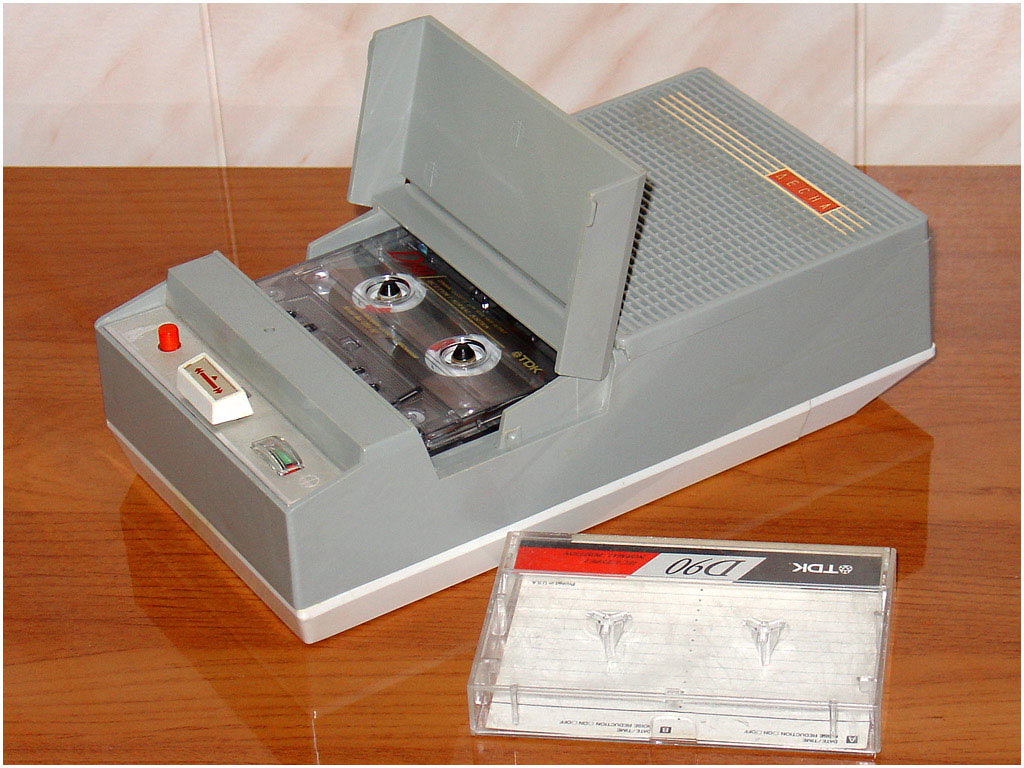
Desna
It should be noted that in the 1960s tape recorders were in great short supply in the Land of Soviets, and before the Desna appeared, there were only bobbin holders. Realizing the lag in this area, Soviet officials set the task for engineers to copy the Philips EL3300. The development (that is, copying the mechanics and adapting the electronics) was entrusted to the Kharkov Proton radio factory, which by 1969 was able to master the serial production of the new product.

The layout, the design of the tape drive, and the case design were identical to the EL3300. Electronics had a number of significant differences and in some places even surpassed the Dutch development. So the amplifier of the Soviet device had five stages (Philips had four), a separate transistor speed regulator was provided for the engine. The elemental base was also different, as the foreign device used seven, and Desna nine germanium transistors. A significant difference was the supply voltage (9 V for Desna, 7.5 for the EL3300), for which Desna needed to increase the number of batteries. This led to an increase in size - the length increased by 26 mm.
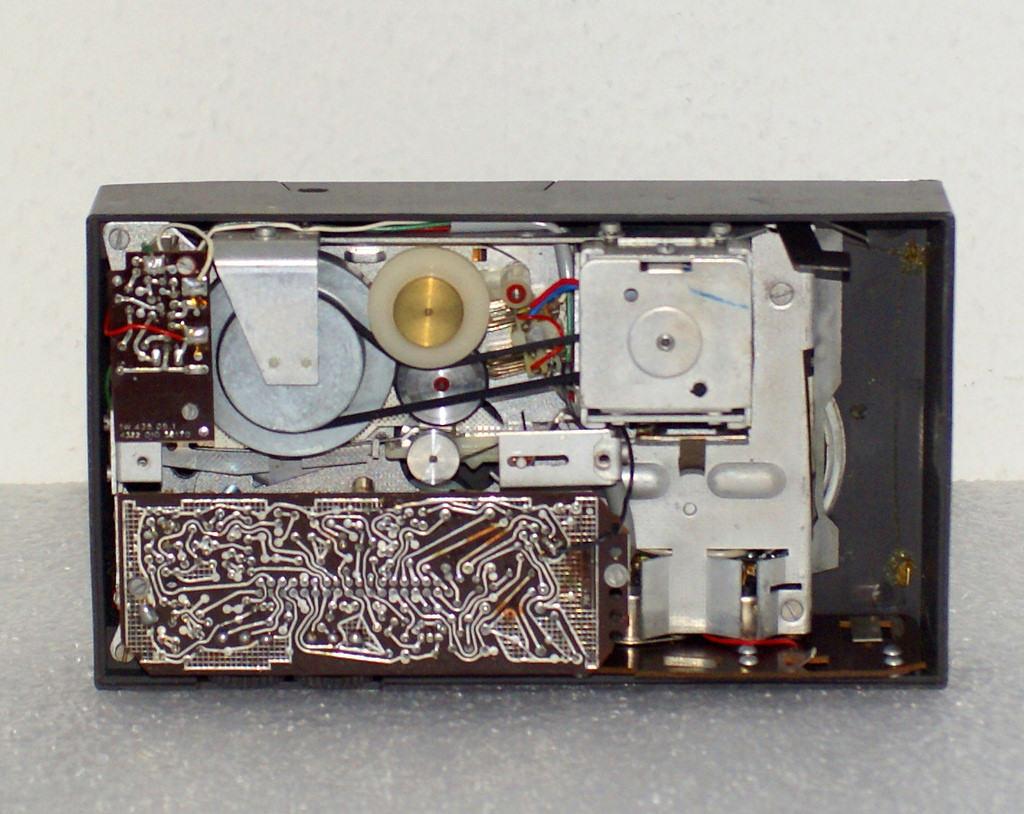
EL3300 inside
In addition to its relatively small size, the recorder did not have characteristic advantages, except for a relatively small size, and there was at least one glaring disadvantage - the price. The gadget cost 220 rubles - about 2 salaries of an experienced engineer. Given the low 4th class of the device, we can assume that the new product was uncompetitive even in the Soviet market, which was starving for technology.
A separate problem was to get cassettes, which at that time were produced in very small runs and were rare. Interestingly, the Proton MK-60 compact cassettes (with a duration of 38, 40 or 60 minutes) were created before Desna appeared.
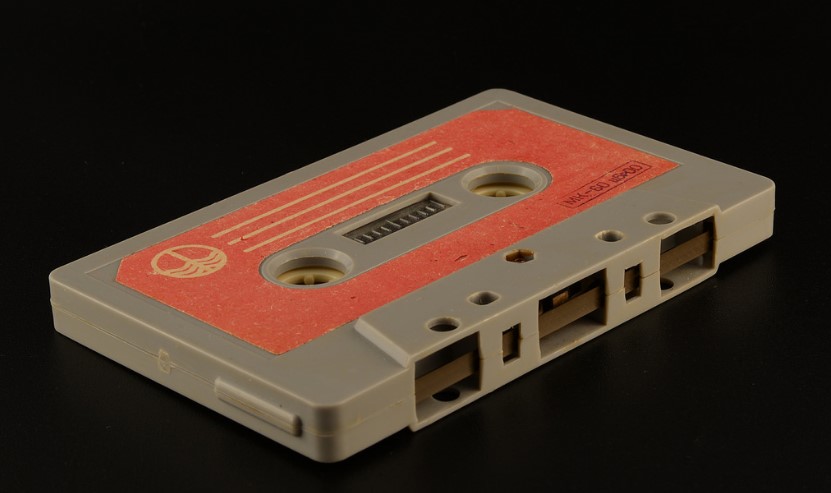
The tape recorder itself was planned to be released on the occasion of the 50th anniversary of the Great October Socialist Revolution, i.e. in 1967, but did not have time, and the first print run of Proton was already born. Copying the media turned out to be easier than adapting a foreign tape recorder for the series.
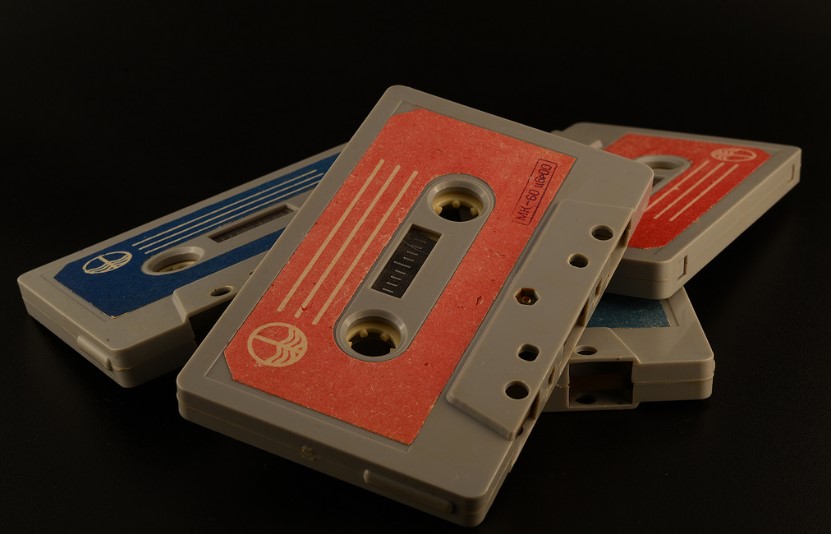
The appearance of Soviet cassettes was extremely ascetic, to say the least, they didn’t bother with design, and the words of this in the Land of Soviets in those years did not know, they were limited to a simple sticker.
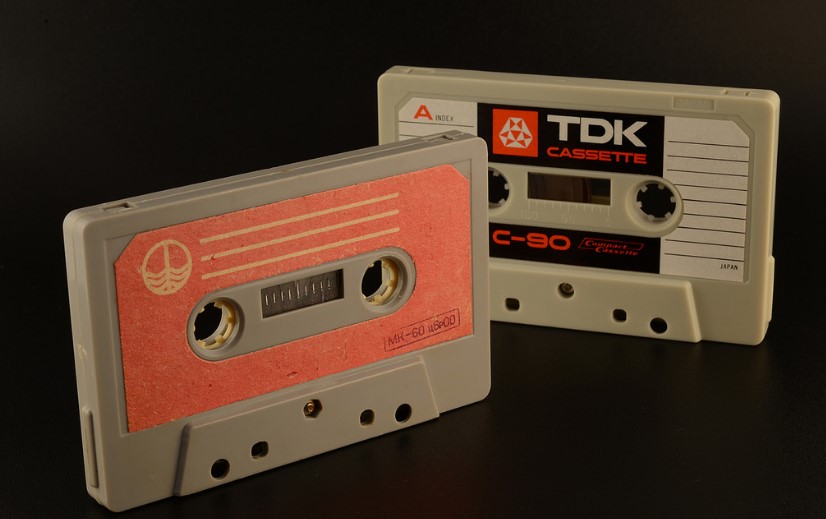
Moreover, until the beginning of the 70s the cassettes were not completely Soviet, the tape for them was produced in the GDR at the Filmfabrik Wolfen enterprise. Since 1971, the release of film for cassettes has been organized at several enterprises of the USSR, in particular, at the Svema factory. Later, cassette production began there.
The price tag, as in the case of the first cassette recorder, was almost space for a Soviet person in the late 60s - 6 rubles per cassette. This, as well as the lack of media, also did not contribute to the popularity of the device.
To this day, there is a legend (https://daxgarth.wordpress.com/2017/08/23/compact-cassette-proton-ussr/) that the first Proton MK-60 could reveal various types of unfinished inscriptions “Made in USA”, and also that they finally disappeared in the early 70's. I could not find confirmation of this, but I fully admit that this could be.
I will be glad to comment, share your thoughts on how the inscription could appear on the cassette (I have several hypotheses).
Despite the comparative failure of the first cassette player, Kharkov engineers praised the modernization potential of their brainchild. Looking ahead, I’ll say that the Soviet “Philips” was upgraded right up to 1982. Having thoroughly worked on the bugs, by 1971 they released Sputnik and Sputnik 401. A year later, the production of the modernized version was mastered by the instrument-making plant in Arzamas. Another modified clone of the “Desna” received the sonorous name “Legend-401”.
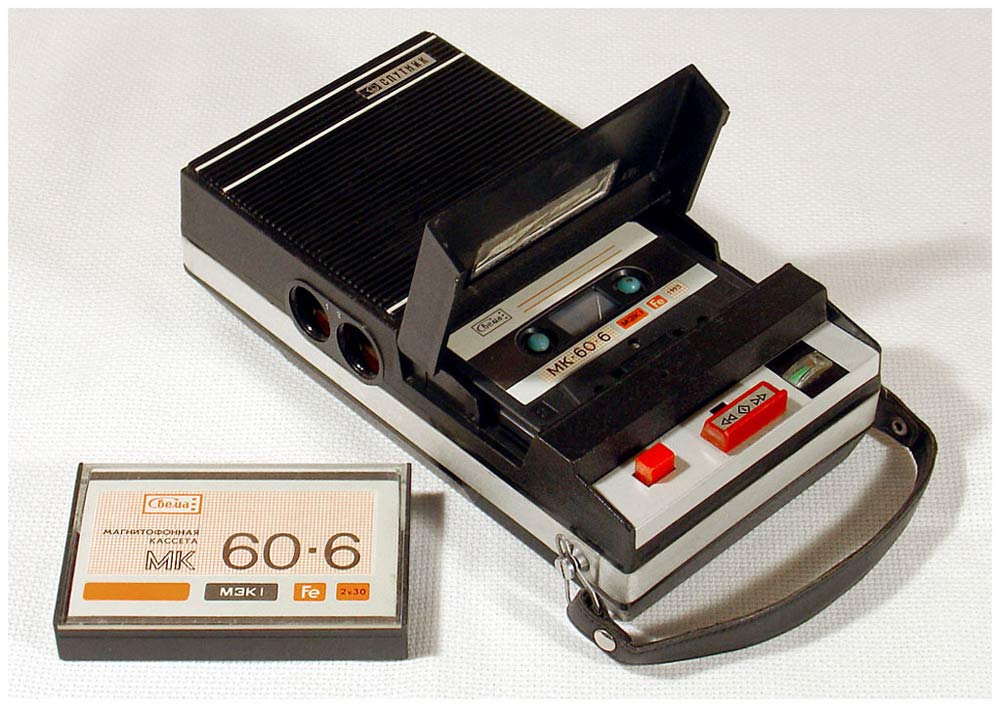
New tape recorders received better sound. The detonation was reduced, the signal-to-noise ratio was improved, the performance of the amplifiers was thoroughly improved, the circuitry solutions for the Sputnik-401 were optimized, they even provided for the use of a second speed of 2.38 cm / s.
Another characteristic difference was the possibility of using the so-called. radio cassettes, inserting which it was possible to turn a tape recorder into a DV radio receiver. They became a kind of prototype of MP3 tapes, which were seriously highpaned a couple of years ago.
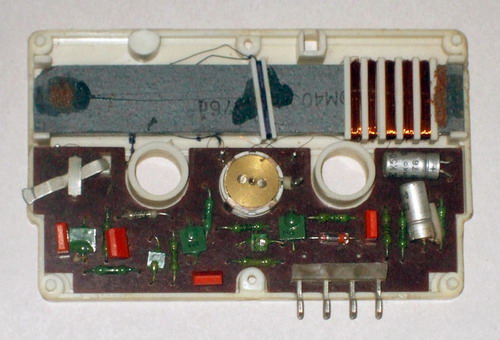
Radio cassette inside

Radio cassette
At the same time, the cost of the devices became lower and amounted to 180 rubles, which, simultaneously with improvements and growth in cassette circulations, qualitatively affected demand.
In 1974 and 76, two more Kharkov modernizations followed, they became the most popular versions of the Desna of that period - Sputnik-402 and Sputnik-403. Models received cosmetic and optimization updates, improved circuitry. The tape drive copied from the Philips first-born remained unchanged.
It can be safely stated that the last device in the Desna family was Sputnik-404, which was released in 1982. From a Dutch ancestor from the 60s, a tape recorder traditionally borrowed tape drive mechanics and a layout scheme.

One of the most iconic and most popular in the 70s and 80s lines of portable tape recorders was a device called “Spring”. They were also created in the Ukrainian SSR, which at that time, along with most of the western republics, served as the all-Union assembly shop. Tape recorders under the Vesna brand were produced at the Iskra Zaporizhzhya enterprise, as well as at the Kiev Communist factory (now Radar).

“Spring-305”
The first cassette recorder of the original design (probably the first Soviet portable recorder of its own design) was planned to be released in 1971. It was supposed to be a device with a two-speed brushless motor BDS with electronic control, which until then had not been produced in the USSR.
The engine became a headache for developers, and Soviet users, tired of the problematic “gums”, clearly needed something new. Then the developers abandoned the sophisticated engine, replacing it with a classic Japanese collector motor.
So the first national cassette player - “Spring-305” - was born. A year later, the people of Kiev finalized a three-phase brushless motor (named BDS-0.2) and the Spring-306 launch was launched in Zaporozhye. The functional difference between the devices was the presence of a flagship with a brushless motor with two operating speeds (4.76 and 2.38 cm / s, respectively).
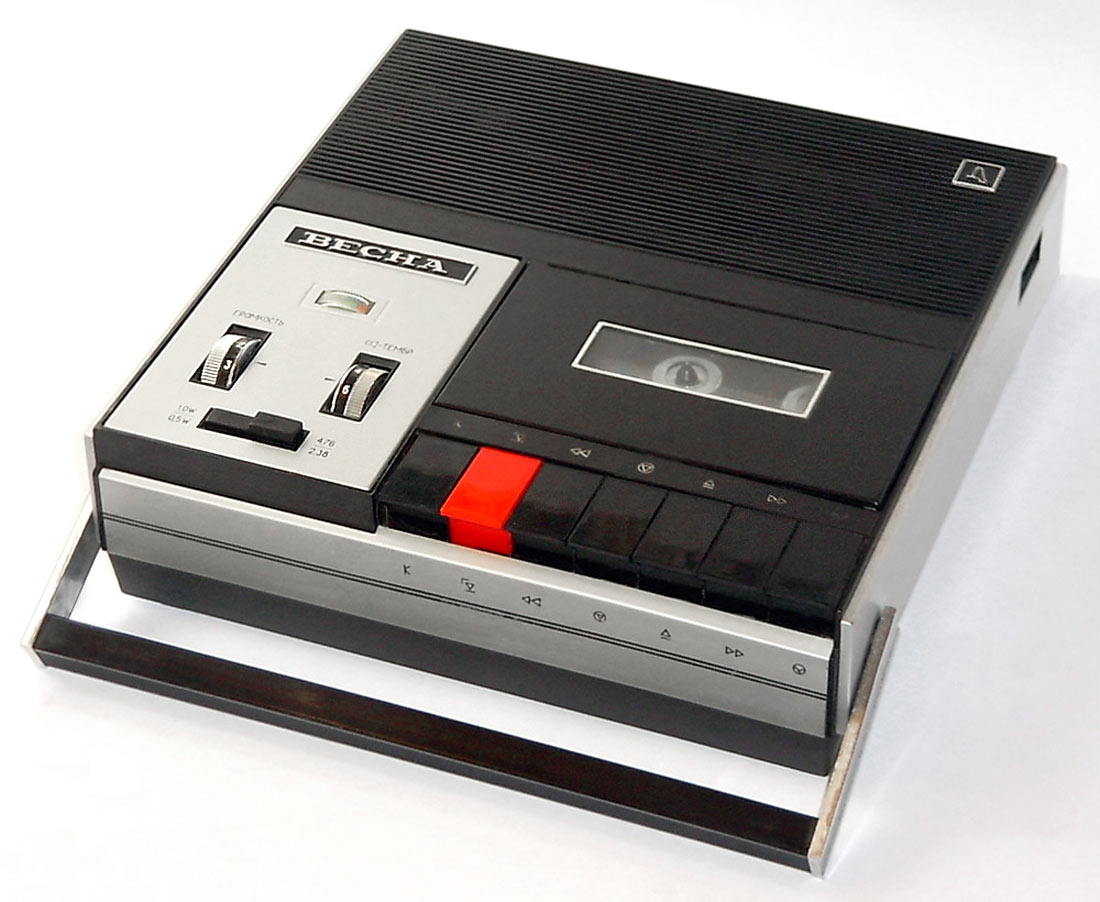
"Spring-306"
Thanks to the new engine, “Spring-306” possessed a large battery life, reduced power consumption, and also created less interference during operation. In this case, the stability of the device’s revolutions was higher, and accordingly, a higher fidelity of reproduction was ensured.
Despite the obvious advantages of the 306 model, users recognized the “Spring -305” as a real people's tape recorder. The fact is that as usual they forgot about the ravines. Lack of experience in the production of brushless AC motors and poor build quality more than compensated for the advantages of the motor. A malfunctioning complex engine with electronic synchronization was often often replaced with a Japanese engine from Vesna-305, slightly reducing quality, but equating tape recorders with operational reliability.

In other words, the tape recorders of this line are not fond of due to the new engine. The most valuable operational advantage of the system was the tape drive mechanism, which, contrary to custom, was not copied from Western models, but created from scratch. It was equipped with two identical flywheels that rotated in different directions and due to the doubled mass significantly increased the stability of the tape broach. This was especially helpful during use while carrying. Since 1976, the full analogues of “Spring 305” and “Spring-306” were manufactured by the Perm Electrical Appliance Plant, they were called “Rhythm-301”.

The stability and reliability of the mechanism made it a universal platform, on the basis of which other Soviet tape recorders Romantic-306, Electronics-311, Electronics-323, and Quasar-303 were created. I think it will not be a mistake to attribute these devices to the “Spring - 305 - 306” family.
Special attention should be paid to the characteristics of the early Viasna tape recorders, which in many respects exceeded the norms of the declared third class:
Models 305 and 306 were produced almost without changes until 1978, in total more than 850 thousand of these tape recorders were produced. If you believe the Wikipedia article, today it’s hard to find workable instances, since the reliable design made it possible to mercilessly expend the operational resource. On the basis of models 305 and 306, functionally improved models “Spring-202” and “Spring-205”, as well as (to some extent) the radio tape recorder “Spring-204” were further developed.
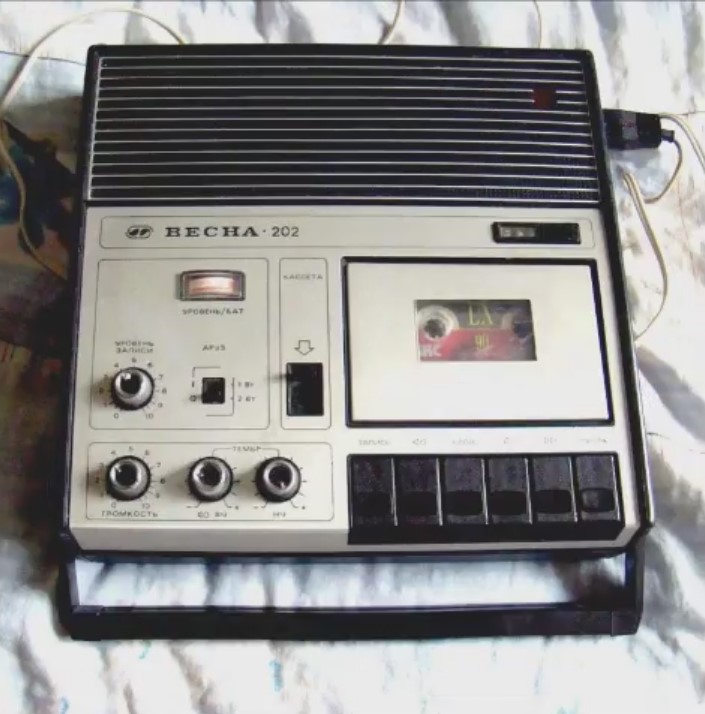
Later Kiev “Communist” and Zaporozhye “Iskra” released portable stereo tape recorders. "Spring-201 stereo" appeared in 1977, in 1978 - an improved version of "Spring-211 stereo", which was equipped with a more powerful amplifier and an additional stereo pair.
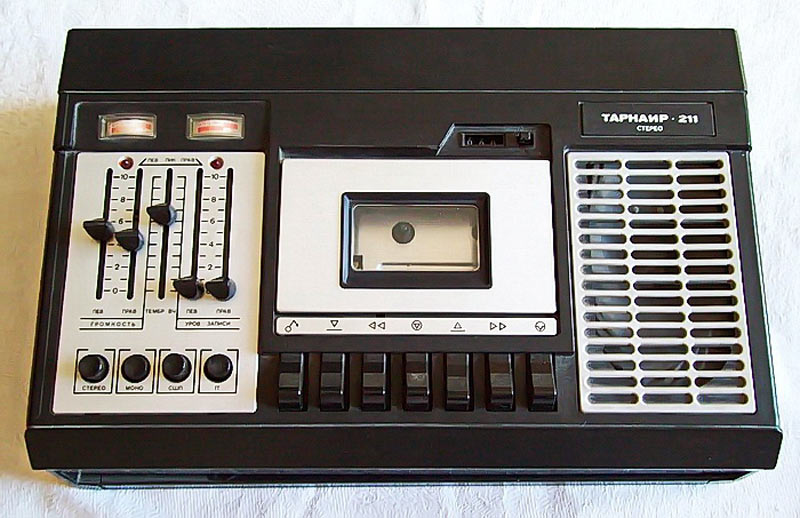
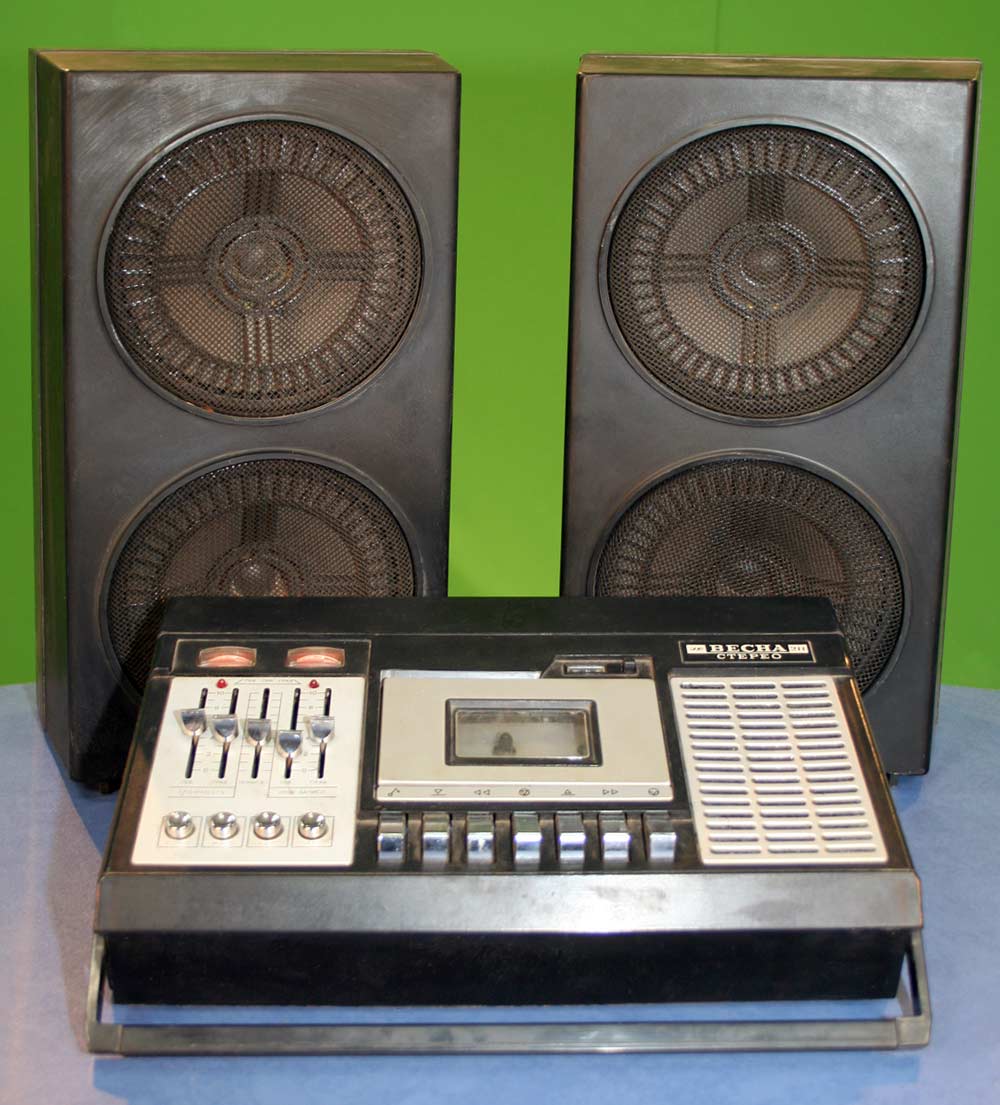
For the Soviet tape recorder in the mid-late 70s, this was not just a breakthrough, but a success and an indicator of serious progress. The next stage for Vesna began in 1985, when the release of the Vesna-310S line began - tape recorders with a fundamentally new layout scheme.

Subsequently, identical devices were successfully copied by the Ryazan Instrument Plant and also came out under the Rus brand.
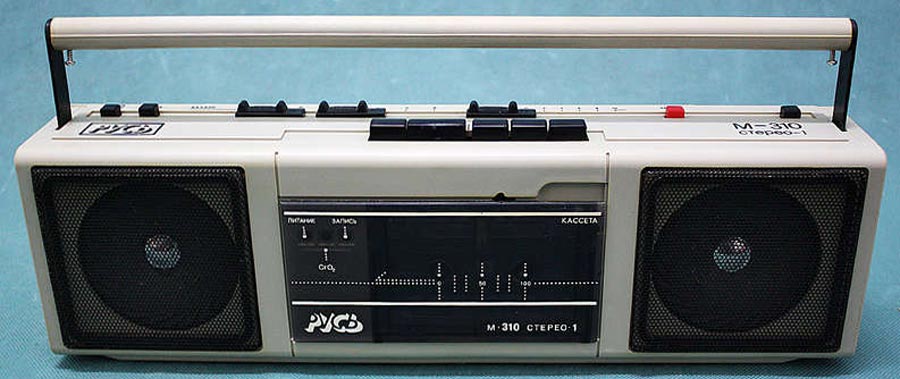
A story about a folk tape recorder would be incomplete without mentioning “Electronics 301” (it is also called “Parus-301”, developed by the Moscow factory “TochMash.”

This tape recorder, like “Spring-305/306”, gained immense popularity among Soviet citizens due to the high reliability combined with tolerable characteristics.Its serial production was launched in 1972. Traditionally, the model was partially copied from the C100L tape player, manufactured by Grundig from 1966 to 1968.
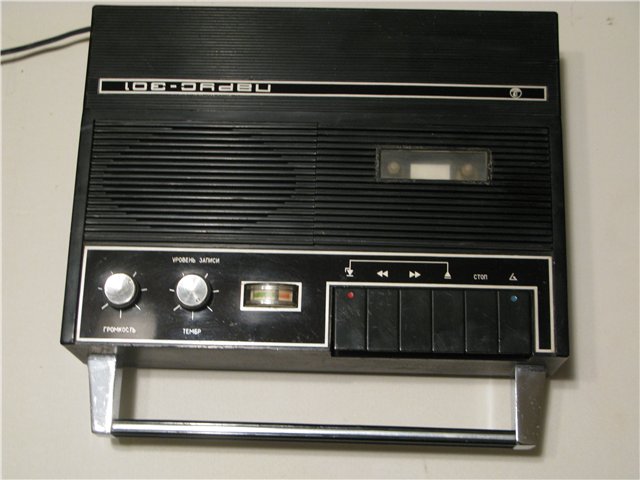
“Sail 301”

Grundig C100L
The tape recorder received a wear-resistant tape drive mechanism, electronic stabilization of speed, as well as a relatively good amplifier on germanium transistors. After 2 years, it was upgraded to the version of “Electronics 302“, with a design as close as possible to the original and the use of a 1GD-40 speaker instead of 0.5GD-30, which improved the fidelity of playback.
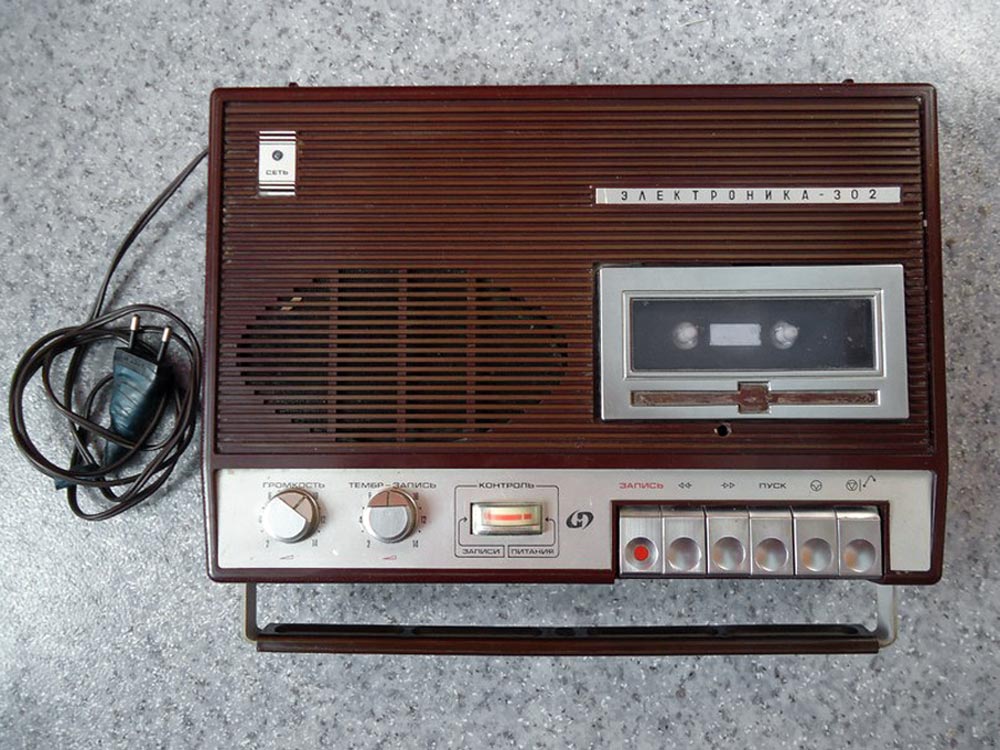
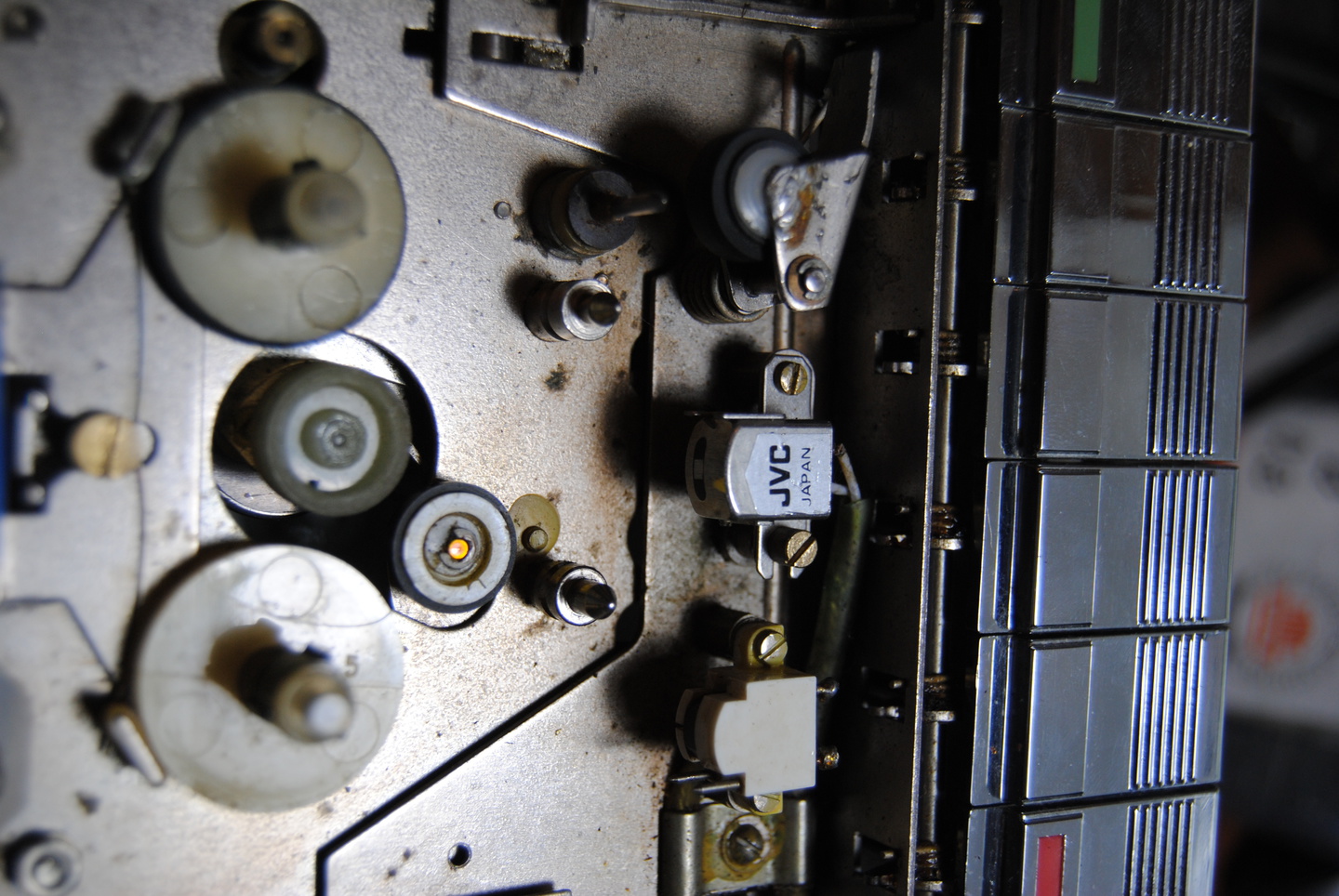
At various times, various components were used in the tape recorder, several versions were received by Japanese JVC heads and SONY engines.
The dawn of the Soviet tape industry can be called a period of frantic search,unscrupulous plagiarism of bold borrowing and skillful adaptations of Western developments. This concerns cassette recorders, perhaps even more than bobbin reels. It should be noted that their own developments were sometimes more suitable for users, because they adapted to their requirements, and were, as they say, unkillable. I think I will not be mistaken if I say that Soviet engineers gave new life to devices that were considered obsolete in the west and were able to effectively use their modernization potential. I would traditionally appreciate your comments. This is far from all, to be continued . Photo
content used:
www.rw6ase.narod.ru
www.flickr.com/photos/41902337@N07
daxgarth.wordpress.com/2017/08/23/compact-cassette-proton-ussr
stereo.ru
forums.balancer.ru/tech/forum/2012/07/t66563_2-- muzej-elektronnykh-raritetov.html
www.radiomuseum.org/r/grundig_c100l.html
igrovoetv.online
(If you are against using your photos in our material - write to us and we will replace them)
Jeans
We sell electronics. In our catalog a wide range of audio and video equipment, accessories, switching.
I was interested in analyzing how close our developers were to colleagues from Japan, Western Europe and the USA, whether they managed to catch up and overtake, and also to understand why Soviet developments in this area were sometimes in rare or so-called “forced” demand, and most their contemporaries sought to acquire foreign designs.
Due to the fact that the topic is quite extensive, I will divide the material into four parts, in the first two I will talk about the evolution of portable devices, and in the rest I will consider the development and decline of stationary decks.
Spirit of 1969 or 26 mm of the original design
The history of Soviet cassette tape recorders for a compact cassette standard began 5-6 years later than in the west, which generally coincides with the chronological lag of the country of victorious developed socialism from its “Western partners” in consumer electronics. It is known that the first cassette recorders (with magnetic wire) appeared in the Third Reich in the 1930s, such, in particular, were produced by C. Lorenz AG. The first cassette recorder with magnetic tape was released in 1950, it became Loewe Optaphon.
30s cassette player
Loewe Optaphon
All this time the cassettes were not given any importance in the USSR and were dispensed with coils, which received the popular name of the reel. In 1963, Philips introduced a compact cassette, and in 1964 one of the first portable devices to play it appeared, it was the Philips EL3300. In the future, it was this portable cassette recorder that served as the prototype for the Soviet firstborn Desna.
EL3300
Desna
It should be noted that in the 1960s tape recorders were in great short supply in the Land of Soviets, and before the Desna appeared, there were only bobbin holders. Realizing the lag in this area, Soviet officials set the task for engineers to copy the Philips EL3300. The development (that is, copying the mechanics and adapting the electronics) was entrusted to the Kharkov Proton radio factory, which by 1969 was able to master the serial production of the new product.
The layout, the design of the tape drive, and the case design were identical to the EL3300. Electronics had a number of significant differences and in some places even surpassed the Dutch development. So the amplifier of the Soviet device had five stages (Philips had four), a separate transistor speed regulator was provided for the engine. The elemental base was also different, as the foreign device used seven, and Desna nine germanium transistors. A significant difference was the supply voltage (9 V for Desna, 7.5 for the EL3300), for which Desna needed to increase the number of batteries. This led to an increase in size - the length increased by 26 mm.
EL3300 inside
In addition to its relatively small size, the recorder did not have characteristic advantages, except for a relatively small size, and there was at least one glaring disadvantage - the price. The gadget cost 220 rubles - about 2 salaries of an experienced engineer. Given the low 4th class of the device, we can assume that the new product was uncompetitive even in the Soviet market, which was starving for technology.
Hasty "Protons"
A separate problem was to get cassettes, which at that time were produced in very small runs and were rare. Interestingly, the Proton MK-60 compact cassettes (with a duration of 38, 40 or 60 minutes) were created before Desna appeared.
The tape recorder itself was planned to be released on the occasion of the 50th anniversary of the Great October Socialist Revolution, i.e. in 1967, but did not have time, and the first print run of Proton was already born. Copying the media turned out to be easier than adapting a foreign tape recorder for the series.
The appearance of Soviet cassettes was extremely ascetic, to say the least, they didn’t bother with design, and the words of this in the Land of Soviets in those years did not know, they were limited to a simple sticker.
Moreover, until the beginning of the 70s the cassettes were not completely Soviet, the tape for them was produced in the GDR at the Filmfabrik Wolfen enterprise. Since 1971, the release of film for cassettes has been organized at several enterprises of the USSR, in particular, at the Svema factory. Later, cassette production began there.
The price tag, as in the case of the first cassette recorder, was almost space for a Soviet person in the late 60s - 6 rubles per cassette. This, as well as the lack of media, also did not contribute to the popularity of the device.
To this day, there is a legend (https://daxgarth.wordpress.com/2017/08/23/compact-cassette-proton-ussr/) that the first Proton MK-60 could reveal various types of unfinished inscriptions “Made in USA”, and also that they finally disappeared in the early 70's. I could not find confirmation of this, but I fully admit that this could be.
I will be glad to comment, share your thoughts on how the inscription could appear on the cassette (I have several hypotheses).
Descendants of the Desna
Despite the comparative failure of the first cassette player, Kharkov engineers praised the modernization potential of their brainchild. Looking ahead, I’ll say that the Soviet “Philips” was upgraded right up to 1982. Having thoroughly worked on the bugs, by 1971 they released Sputnik and Sputnik 401. A year later, the production of the modernized version was mastered by the instrument-making plant in Arzamas. Another modified clone of the “Desna” received the sonorous name “Legend-401”.
New tape recorders received better sound. The detonation was reduced, the signal-to-noise ratio was improved, the performance of the amplifiers was thoroughly improved, the circuitry solutions for the Sputnik-401 were optimized, they even provided for the use of a second speed of 2.38 cm / s.
Another characteristic difference was the possibility of using the so-called. radio cassettes, inserting which it was possible to turn a tape recorder into a DV radio receiver. They became a kind of prototype of MP3 tapes, which were seriously highpaned a couple of years ago.
Radio cassette inside
Radio cassette
At the same time, the cost of the devices became lower and amounted to 180 rubles, which, simultaneously with improvements and growth in cassette circulations, qualitatively affected demand.
In 1974 and 76, two more Kharkov modernizations followed, they became the most popular versions of the Desna of that period - Sputnik-402 and Sputnik-403. Models received cosmetic and optimization updates, improved circuitry. The tape drive copied from the Philips first-born remained unchanged.
It can be safely stated that the last device in the Desna family was Sputnik-404, which was released in 1982. From a Dutch ancestor from the 60s, a tape recorder traditionally borrowed tape drive mechanics and a layout scheme.
Zaporizhzhya “Spring”
One of the most iconic and most popular in the 70s and 80s lines of portable tape recorders was a device called “Spring”. They were also created in the Ukrainian SSR, which at that time, along with most of the western republics, served as the all-Union assembly shop. Tape recorders under the Vesna brand were produced at the Iskra Zaporizhzhya enterprise, as well as at the Kiev Communist factory (now Radar).
“Spring-305”
The first cassette recorder of the original design (probably the first Soviet portable recorder of its own design) was planned to be released in 1971. It was supposed to be a device with a two-speed brushless motor BDS with electronic control, which until then had not been produced in the USSR.
The engine became a headache for developers, and Soviet users, tired of the problematic “gums”, clearly needed something new. Then the developers abandoned the sophisticated engine, replacing it with a classic Japanese collector motor.
So the first national cassette player - “Spring-305” - was born. A year later, the people of Kiev finalized a three-phase brushless motor (named BDS-0.2) and the Spring-306 launch was launched in Zaporozhye. The functional difference between the devices was the presence of a flagship with a brushless motor with two operating speeds (4.76 and 2.38 cm / s, respectively).
"Spring-306"
Thanks to the new engine, “Spring-306” possessed a large battery life, reduced power consumption, and also created less interference during operation. In this case, the stability of the device’s revolutions was higher, and accordingly, a higher fidelity of reproduction was ensured.
Despite the obvious advantages of the 306 model, users recognized the “Spring -305” as a real people's tape recorder. The fact is that as usual they forgot about the ravines. Lack of experience in the production of brushless AC motors and poor build quality more than compensated for the advantages of the motor. A malfunctioning complex engine with electronic synchronization was often often replaced with a Japanese engine from Vesna-305, slightly reducing quality, but equating tape recorders with operational reliability.
In other words, the tape recorders of this line are not fond of due to the new engine. The most valuable operational advantage of the system was the tape drive mechanism, which, contrary to custom, was not copied from Western models, but created from scratch. It was equipped with two identical flywheels that rotated in different directions and due to the doubled mass significantly increased the stability of the tape broach. This was especially helpful during use while carrying. Since 1976, the full analogues of “Spring 305” and “Spring-306” were manufactured by the Perm Electrical Appliance Plant, they were called “Rhythm-301”.
The stability and reliability of the mechanism made it a universal platform, on the basis of which other Soviet tape recorders Romantic-306, Electronics-311, Electronics-323, and Quasar-303 were created. I think it will not be a mistake to attribute these devices to the “Spring - 305 - 306” family.
Special attention should be paid to the characteristics of the early Viasna tape recorders, which in many respects exceeded the norms of the declared third class:
- The working range of sound frequencies at the linear output at a speed of 4.76 cm / s is 63 ... 10 000 Hz, at a speed of 2.38 cm / s - 63 ... 5000 Hz.
- Rated output power: 0.8 watts.
- Supply voltage - 9 volts (six elements 373 or an alternating current network, built-in power supply),
- The tape recorder remains operational when the voltage drops to 5.1 V.
- The dimensions of the tape recorder are 242 × 242 × 68 mm.
- Weight with batteries of 3.7 kg.
- The price at the start of sales reached 195 rubles, by 1978 it had fallen and 165 rubles.
Continuation of "Spring"
Models 305 and 306 were produced almost without changes until 1978, in total more than 850 thousand of these tape recorders were produced. If you believe the Wikipedia article, today it’s hard to find workable instances, since the reliable design made it possible to mercilessly expend the operational resource. On the basis of models 305 and 306, functionally improved models “Spring-202” and “Spring-205”, as well as (to some extent) the radio tape recorder “Spring-204” were further developed.
Later Kiev “Communist” and Zaporozhye “Iskra” released portable stereo tape recorders. "Spring-201 stereo" appeared in 1977, in 1978 - an improved version of "Spring-211 stereo", which was equipped with a more powerful amplifier and an additional stereo pair.
For the Soviet tape recorder in the mid-late 70s, this was not just a breakthrough, but a success and an indicator of serious progress. The next stage for Vesna began in 1985, when the release of the Vesna-310S line began - tape recorders with a fundamentally new layout scheme.
Subsequently, identical devices were successfully copied by the Ryazan Instrument Plant and also came out under the Rus brand.
People's Soviet Grundig or simply “Electronics 301”
A story about a folk tape recorder would be incomplete without mentioning “Electronics 301” (it is also called “Parus-301”, developed by the Moscow factory “TochMash.”
This tape recorder, like “Spring-305/306”, gained immense popularity among Soviet citizens due to the high reliability combined with tolerable characteristics.Its serial production was launched in 1972. Traditionally, the model was partially copied from the C100L tape player, manufactured by Grundig from 1966 to 1968.
“Sail 301”
Grundig C100L
The tape recorder received a wear-resistant tape drive mechanism, electronic stabilization of speed, as well as a relatively good amplifier on germanium transistors. After 2 years, it was upgraded to the version of “Electronics 302“, with a design as close as possible to the original and the use of a 1GD-40 speaker instead of 0.5GD-30, which improved the fidelity of playback.
At various times, various components were used in the tape recorder, several versions were received by Japanese JVC heads and SONY engines.
Total
The dawn of the Soviet tape industry can be called a period of frantic search,
content used:
www.rw6ase.narod.ru
www.flickr.com/photos/41902337@N07
daxgarth.wordpress.com/2017/08/23/compact-cassette-proton-ussr
stereo.ru
forums.balancer.ru/tech/forum/2012/07/t66563_2-- muzej-elektronnykh-raritetov.html
www.radiomuseum.org/r/grundig_c100l.html
igrovoetv.online
(If you are against using your photos in our material - write to us and we will replace them)
Jeans
We sell electronics. In our catalog a wide range of audio and video equipment, accessories, switching.