Sound in games: history and development. Part 1 - The First Slot Machines
Modern games are increasingly starting to look like a movie - realistic graphics, vibrant effects, an epic storyline. An integral part of all games since ancient times has also become their soundtrack, starting with simple sounds of hitting the ball against a racket in Pong and ending with epic soundtracks from modern games. How sound developed in games we will consider in this and subsequent parts of our series.
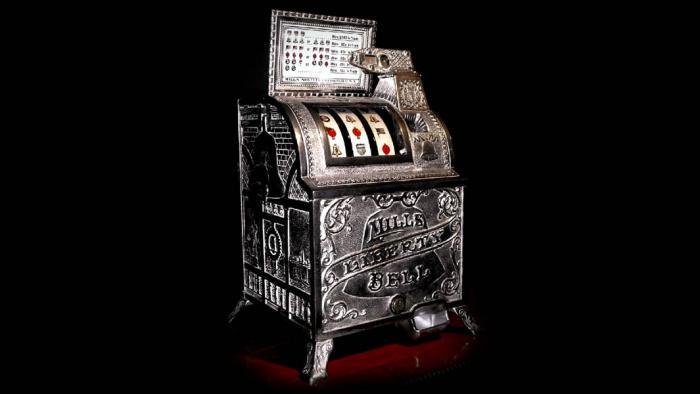
Back in 1895, Charles Fey created the Liberty Bell slot machine, which was a classic slot machine, in 1907 the slot machine was improved and received the name Mills Liberty Bell. By itself, it gained great popularity and was exhibited in almost every casino, but the main and most interesting innovation for us was the appearance of the first ever gaming audio. In case of a win, the machine made a bell sound, attracting outside observers to itself.
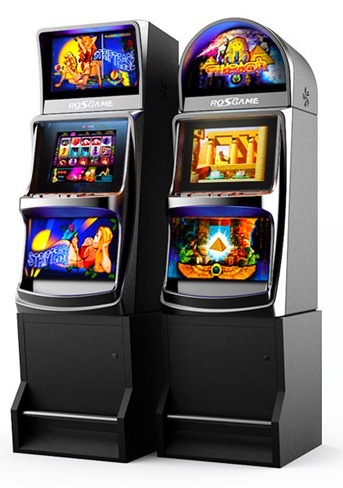
Based on the experience of this innovation, the creators of the slot machines turned their attention to the soundtrack, as it helped to strengthen the feeling of winning, create a unique atmosphere of the game, due to which the influx of people who want to play increased significantly. An interesting fact - in the 1970s and 80s, no more than 15 sounds were used in machines, then with modern devices their number can reach 400.
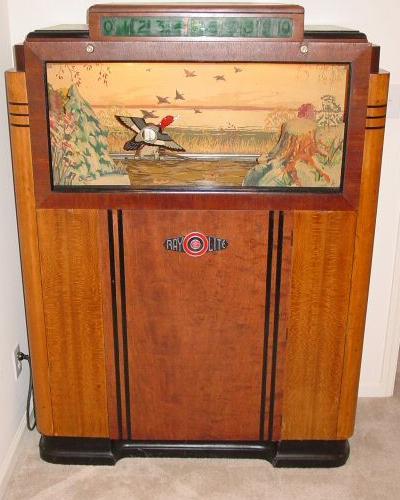
In 1936, Seeburg, which previously specialized in jukeboxes, released the world's first mechanical arcade machine with light Seeburg Ray-O-Lite shotgun. The essence of this machine was to shoot ducks from a special gun, as in the notorious Duck Hunt on NES.
In 1947, inspired by the radars used during World War II, physicists Thomas Goldsmith and Eastle Ray Menn created a simulator of firing rockets. Using a cathode ray tube connected to an oscilloscope and buttons, the player could change the angle and trajectory of light rays, thereby simulating the aiming and firing of combat missiles.

On January 25, 1947, a patent was issued for the Cathode-ray tube amusement device, which was a huge box the size of a closet and made no sounds. This day can be called the official day of the appearance of video games.
In 1970, engineer Nolan Bushnell saw the game Spacewar! at the University of Utah and quickly realized that it was then considered an entertainment for intellectuals, she could gain commercial potential in the arcade version. Bushnell manually assembled the machine, using a black-and-white TV to output the image, naming it Computer Space.
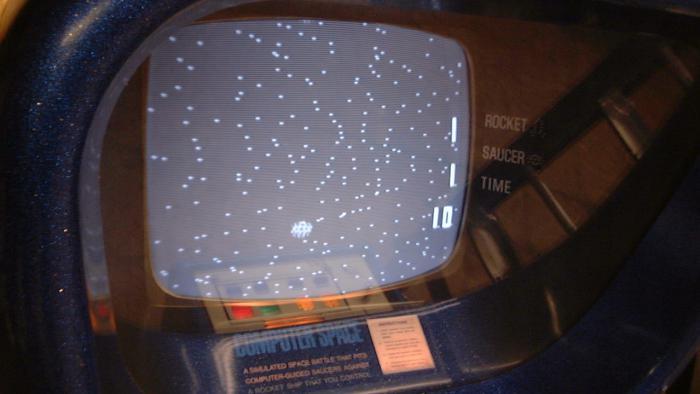
Nutting Associates bought the rights to Bushnell's invention and began to produce machines with this game. They became the first paid slot machines, where a coin had to be lowered to start the game. In the game itself, there were sounds of a rocket engine and shots. In 1971, machines were installed in bars, but did not succeed, as they were too complicated for the average and not always sober client.

But Nolan was not discouraged, along with his friend Ted Dabney created Atari with a starting capital of $ 500. The company became the first organization specializing only in video games. And her first brainchild was the Pong slot machine.

This machine was intended for bars and cafes, in order to attract the public. The creators themselves conducted the first experiment by installing slot machines in a small bar. Every day, they collected $ 100 from the coin acceptors of each machine, which at a machine price of $ 25 meant that Atari attacked a gold mine.
Testing the machine showed that the soundtrack in the game helps the player to navigate more easily and makes the process more exciting. Therefore, Pong included a characteristic soundtrack of discrete sounds "beep" when the ball hit the platform. Sounds were specially developed by engineer Al Elkorn by amplifying the natural sound frequency of a working device microcircuit.
In the first year, the company was able to sell 8.5 thousand units, and by 1975 the company's turnover had reached the level of $ 40 million. Seeing such a strong commercial success of the arcade machine, many competitors began to quickly create their own versions of the legendary Pong.
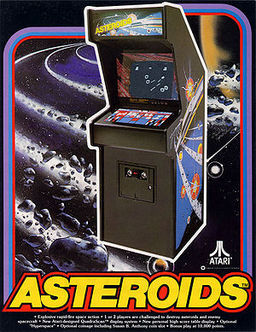
In response, Atari creates the Space Race, which is immediately copied by Midway under the name Asteroids.
From this moment, a new, dynamically developing video game industry is emerging, based on the competition of developers.
At the same time, sound becomes one of the important factors that attract the public. The degree of its importance was equated to the picture itself. But initially, due to the small hardware power of gaming devices and their primitiveness, the sounds were at the level of simple “beeps”, “peeps” and “blips” - even R2D2 is much more talkative.
Nevertheless, even with such restrictions, the developers tried to equate the realism of the sound accompaniment of the picture to the image itself, simulating the movement of the jaws of monsters and the screams of the character of the game. Even then, advertising companies began to use such an expression as “realistic sound”.
Sound programming itself in 1970 was far from a creative activity, engineers had to constantly look for a balance between a high-quality picture, performance and relatively high-quality sound. Until the 1980s, the main sound in games was limited to a short melody at the beginning and at the end, and the number of effects themselves was very limited. And the engineers themselves are usually people without a musical education and knowledge of the specifics of sound reproduction. The process of programming sounds was also very time-consuming, engineers had to solder transistors, capacitors and resistance elements into the circuit, literally adding units and zeros manually, so that the processor began to stop the sound wave in time. Because of these difficulties, the effects were primitive, and musical accompaniment was very rare.

The first games with a constant dynamically changing soundtrack were Space Invaders and Asteroids from Midway and Atari. This was a big step forward, since now the game was constantly accompanied by musical accompaniment, accelerating depending on whether the player won or lost. The sound was processed by the main processor of the device, which caused constant freezes and slowdowns in the game itself.
Only in 1980, manufacturers began to integrate PSG chips, which allowed to synthesize sounds in real time during the game process. These sound chips could synthesize three separate sounds and white noise. The synthesized sound was sent to the envelope generator, where the wave amplitude was formed and subsequently it was processed by simple filters. At the output, we get short percussion sounds of poor quality. For gain output, the signal was encoded in PCM. In addition to PSG, DACs were often used in vending machines. Also, some companies have begun combining these types to create more sophisticated sound effects.
In 1979, the then little-known company NAMCO designed the first world-famous game for slot machines PAC-MAN. The game was a breakthrough!
Firstly, the player received completely new gameplay and gameplay, because at that time space shooters were the main types of games for slot machines. Secondly, the game was perfect for both boys and girls, as there was no violence in it. And finally, especially for the game, composer Toshio Kai wrote various sound effects reproduced using synthesized sounds. It was a background motive of the game itself and musical introductions before the beginning of each level, as well as a catchy theme during the death of the character himself. The game became a unique phenomenon in the gaming industry, it was copied and reprinted, released a bunch of sequels, but no one could get the same popularity as the original. After all, the developers then received more than 1 billion dollars in profit on sales of the popular machine.

By the mid-80s, several sound chips were built in the machines, allowing you to create a more diverse soundtrack, but the manufacturers did not try to increase the polyphony (then it was, as a rule, one - two-voice), the thing is that the devices used their own production facilities , RAM ranged from 5 to 128 KB, and creating realistic effects even in low quality required from 30 to 50 KB. Therefore, the generation of sounds of those times was usually based on FM synthesis - the devices sounded loud, but with low quality.

In those days, voice chips began to appear, for example, TMS5220, the separation of chips for the effects of the soundtrack and voice allowed us to switch to stereo sound, as for example in Atari's 1983 Disks of Tron game.
Slot machines brought good money to manufacturers, but the crisis of the 80s led many companies to ruin. At the same time, demand for consoles rose sharply and many companies were quick to switch to a new business, such as Nintendo.
The era of the huge popularity of slot machines has passed, but they still exist in various amusement parks and public places where you can still touch the history of the gaming industry.

At the moment, to play a much better game sound produced a lot of devices that you can find in the catalog of our store.
And in the next part we will continue the history of games and sound, entering the era of the first home consoles!
List of other parts of the series:
Read the iCover blog as well:
First among equals
Back in 1895, Charles Fey created the Liberty Bell slot machine, which was a classic slot machine, in 1907 the slot machine was improved and received the name Mills Liberty Bell. By itself, it gained great popularity and was exhibited in almost every casino, but the main and most interesting innovation for us was the appearance of the first ever gaming audio. In case of a win, the machine made a bell sound, attracting outside observers to itself.
Based on the experience of this innovation, the creators of the slot machines turned their attention to the soundtrack, as it helped to strengthen the feeling of winning, create a unique atmosphere of the game, due to which the influx of people who want to play increased significantly. An interesting fact - in the 1970s and 80s, no more than 15 sounds were used in machines, then with modern devices their number can reach 400.
In 1936, Seeburg, which previously specialized in jukeboxes, released the world's first mechanical arcade machine with light Seeburg Ray-O-Lite shotgun. The essence of this machine was to shoot ducks from a special gun, as in the notorious Duck Hunt on NES.
In 1947, inspired by the radars used during World War II, physicists Thomas Goldsmith and Eastle Ray Menn created a simulator of firing rockets. Using a cathode ray tube connected to an oscilloscope and buttons, the player could change the angle and trajectory of light rays, thereby simulating the aiming and firing of combat missiles.
On January 25, 1947, a patent was issued for the Cathode-ray tube amusement device, which was a huge box the size of a closet and made no sounds. This day can be called the official day of the appearance of video games.
ATARI - pioneers in the world of slot machines
In 1970, engineer Nolan Bushnell saw the game Spacewar! at the University of Utah and quickly realized that it was then considered an entertainment for intellectuals, she could gain commercial potential in the arcade version. Bushnell manually assembled the machine, using a black-and-white TV to output the image, naming it Computer Space.
Nutting Associates bought the rights to Bushnell's invention and began to produce machines with this game. They became the first paid slot machines, where a coin had to be lowered to start the game. In the game itself, there were sounds of a rocket engine and shots. In 1971, machines were installed in bars, but did not succeed, as they were too complicated for the average and not always sober client.
But Nolan was not discouraged, along with his friend Ted Dabney created Atari with a starting capital of $ 500. The company became the first organization specializing only in video games. And her first brainchild was the Pong slot machine.
This machine was intended for bars and cafes, in order to attract the public. The creators themselves conducted the first experiment by installing slot machines in a small bar. Every day, they collected $ 100 from the coin acceptors of each machine, which at a machine price of $ 25 meant that Atari attacked a gold mine.
Testing the machine showed that the soundtrack in the game helps the player to navigate more easily and makes the process more exciting. Therefore, Pong included a characteristic soundtrack of discrete sounds "beep" when the ball hit the platform. Sounds were specially developed by engineer Al Elkorn by amplifying the natural sound frequency of a working device microcircuit.
In the first year, the company was able to sell 8.5 thousand units, and by 1975 the company's turnover had reached the level of $ 40 million. Seeing such a strong commercial success of the arcade machine, many competitors began to quickly create their own versions of the legendary Pong.
In response, Atari creates the Space Race, which is immediately copied by Midway under the name Asteroids.
From this moment, a new, dynamically developing video game industry is emerging, based on the competition of developers.
At the same time, sound becomes one of the important factors that attract the public. The degree of its importance was equated to the picture itself. But initially, due to the small hardware power of gaming devices and their primitiveness, the sounds were at the level of simple “beeps”, “peeps” and “blips” - even R2D2 is much more talkative.
Nevertheless, even with such restrictions, the developers tried to equate the realism of the sound accompaniment of the picture to the image itself, simulating the movement of the jaws of monsters and the screams of the character of the game. Even then, advertising companies began to use such an expression as “realistic sound”.
Arcade Machine Age Sunset
Sound programming itself in 1970 was far from a creative activity, engineers had to constantly look for a balance between a high-quality picture, performance and relatively high-quality sound. Until the 1980s, the main sound in games was limited to a short melody at the beginning and at the end, and the number of effects themselves was very limited. And the engineers themselves are usually people without a musical education and knowledge of the specifics of sound reproduction. The process of programming sounds was also very time-consuming, engineers had to solder transistors, capacitors and resistance elements into the circuit, literally adding units and zeros manually, so that the processor began to stop the sound wave in time. Because of these difficulties, the effects were primitive, and musical accompaniment was very rare.
The first games with a constant dynamically changing soundtrack were Space Invaders and Asteroids from Midway and Atari. This was a big step forward, since now the game was constantly accompanied by musical accompaniment, accelerating depending on whether the player won or lost. The sound was processed by the main processor of the device, which caused constant freezes and slowdowns in the game itself.
Only in 1980, manufacturers began to integrate PSG chips, which allowed to synthesize sounds in real time during the game process. These sound chips could synthesize three separate sounds and white noise. The synthesized sound was sent to the envelope generator, where the wave amplitude was formed and subsequently it was processed by simple filters. At the output, we get short percussion sounds of poor quality. For gain output, the signal was encoded in PCM. In addition to PSG, DACs were often used in vending machines. Also, some companies have begun combining these types to create more sophisticated sound effects.
In 1979, the then little-known company NAMCO designed the first world-famous game for slot machines PAC-MAN. The game was a breakthrough!
Firstly, the player received completely new gameplay and gameplay, because at that time space shooters were the main types of games for slot machines. Secondly, the game was perfect for both boys and girls, as there was no violence in it. And finally, especially for the game, composer Toshio Kai wrote various sound effects reproduced using synthesized sounds. It was a background motive of the game itself and musical introductions before the beginning of each level, as well as a catchy theme during the death of the character himself. The game became a unique phenomenon in the gaming industry, it was copied and reprinted, released a bunch of sequels, but no one could get the same popularity as the original. After all, the developers then received more than 1 billion dollars in profit on sales of the popular machine.
By the mid-80s, several sound chips were built in the machines, allowing you to create a more diverse soundtrack, but the manufacturers did not try to increase the polyphony (then it was, as a rule, one - two-voice), the thing is that the devices used their own production facilities , RAM ranged from 5 to 128 KB, and creating realistic effects even in low quality required from 30 to 50 KB. Therefore, the generation of sounds of those times was usually based on FM synthesis - the devices sounded loud, but with low quality.
In those days, voice chips began to appear, for example, TMS5220, the separation of chips for the effects of the soundtrack and voice allowed us to switch to stereo sound, as for example in Atari's 1983 Disks of Tron game.
Slot machines brought good money to manufacturers, but the crisis of the 80s led many companies to ruin. At the same time, demand for consoles rose sharply and many companies were quick to switch to a new business, such as Nintendo.
The era of the huge popularity of slot machines has passed, but they still exist in various amusement parks and public places where you can still touch the history of the gaming industry.
At the moment, to play a much better game sound produced a lot of devices that you can find in the catalog of our store.
And in the next part we will continue the history of games and sound, entering the era of the first home consoles!
List of other parts of the series:
- Sound in games: history and development. Part 2 - Early Game Consoles and the Beginning of the PC Era
Read the iCover blog as well: