September 1, 2015 at 21:31
Daytime astronomy
Everyone knows that astronomical observations are carried out under the cover of darkness, preferably away from bright city lights. Nevertheless, in the sky you can see a lot of interesting things even in bright sunlight. And this is not only the sun. The moon is perfectly visible during the day, and with a certain dexterity, you can even see and photograph some of the planets and spacecraft! The article has a lot of daytime photos and videos with various celestial objects.
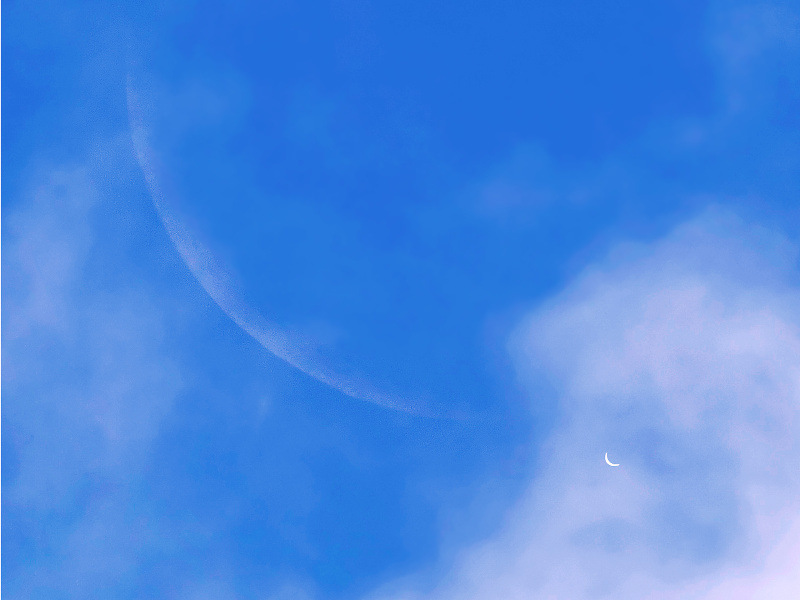
Moon and Venus in the daylight. Source: Astronomy Picture of the Day by David Cortner .
I tried to refer to the authors of all the photographs I found for the article. YouTube video creators are visible on YouTube itself. Where the author is not indicated, my own photos are used.
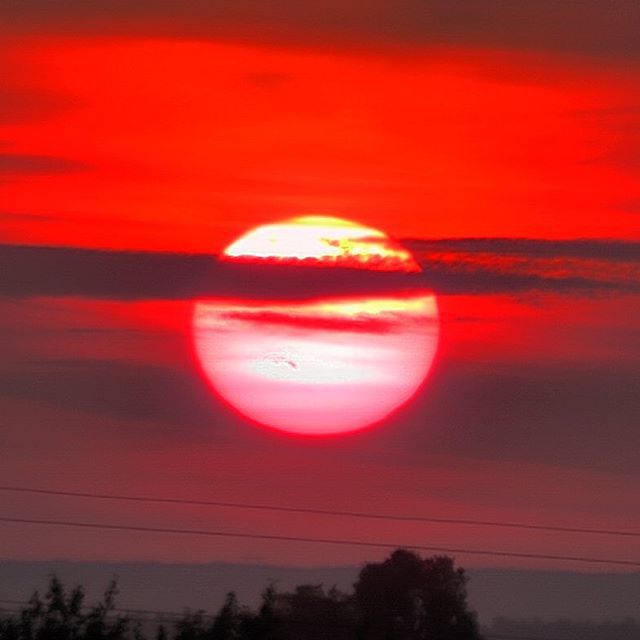
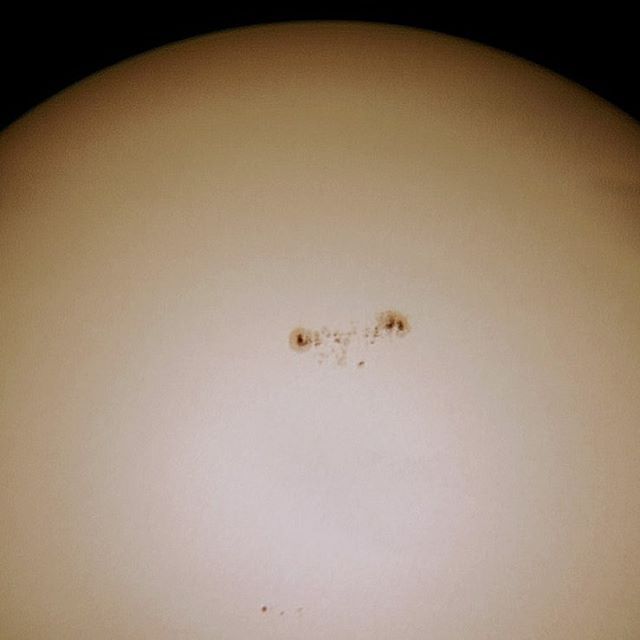
The most obvious object for daytime observation is the Sun, because it is not visible at night. You can look at the Sun only through a dense light filter, otherwise you will ruin your eyesight. You can make a filter yourself using a special film , or buy a ready-made glass filter . In rare cases, atmospheric haze forms a natural filter and large spots can be seen even with the naked eye. In this photo, a group of sunspots AR 2396 is visible below and to the left of the center of the disk .
Well, in a small telescope with a filter, the sunspots look like this:
Using simple manipulations in the graphics editor, torches that are invisible to the eye can be detected- light structures surrounding spots.
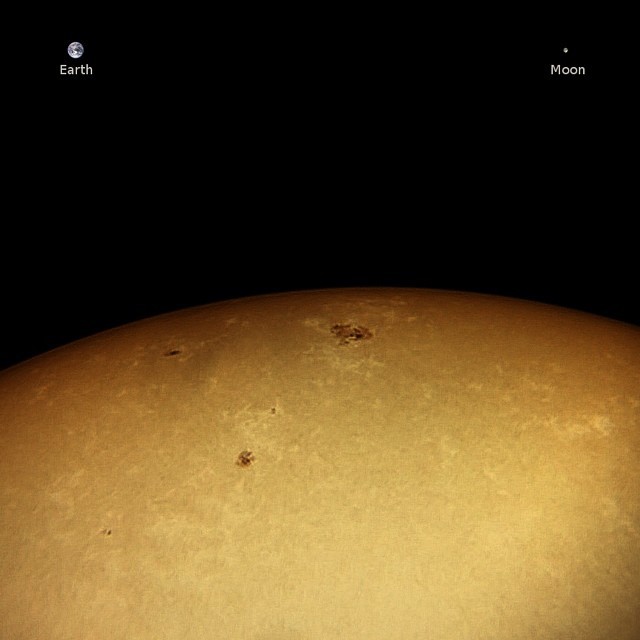
At the top of the image to demonstrate the scale, I added an image of the Earth and the Moon in compliance with all proportions (diameter and relative distance).
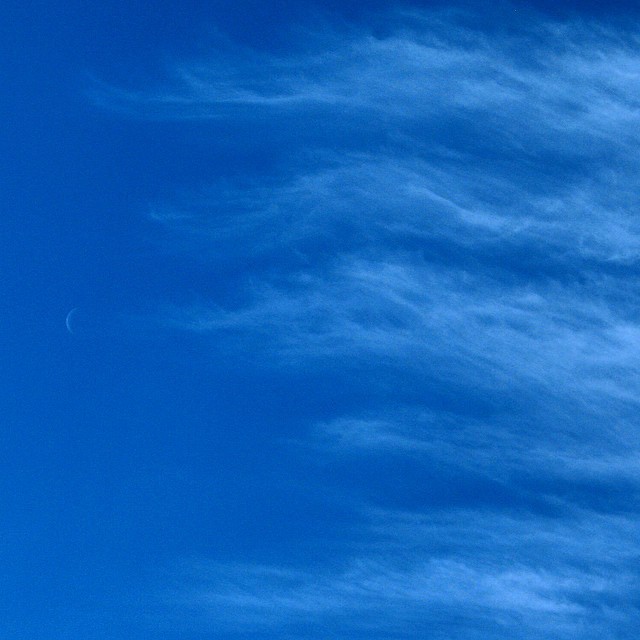
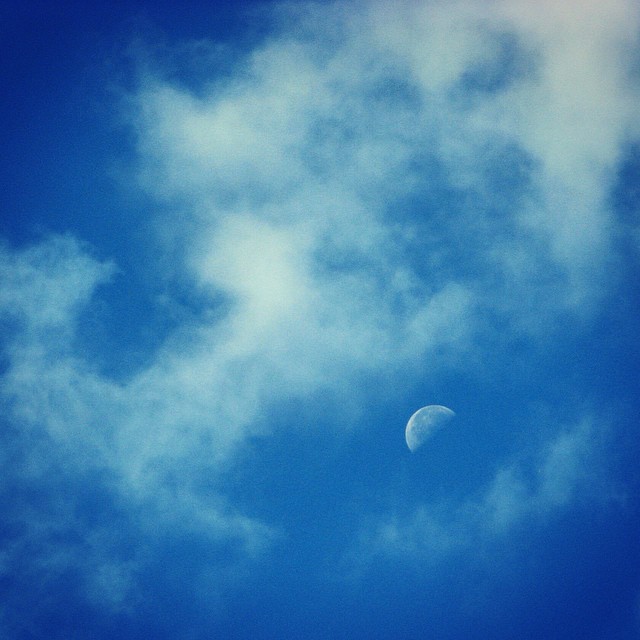
Many do not even realize that the moon is clearly visible in the afternoon. It can be seen almost every day, except for dates close to the new moon and full moon. The growing moon is visible in the afternoon, waning - in the first. Now just the good visibility conditions of the waning moon, you can easily notice it in the morning on the way to work. You can even take a picture of the daytime Moon on your mobile phone:
Or on a digital dust collector: Through the
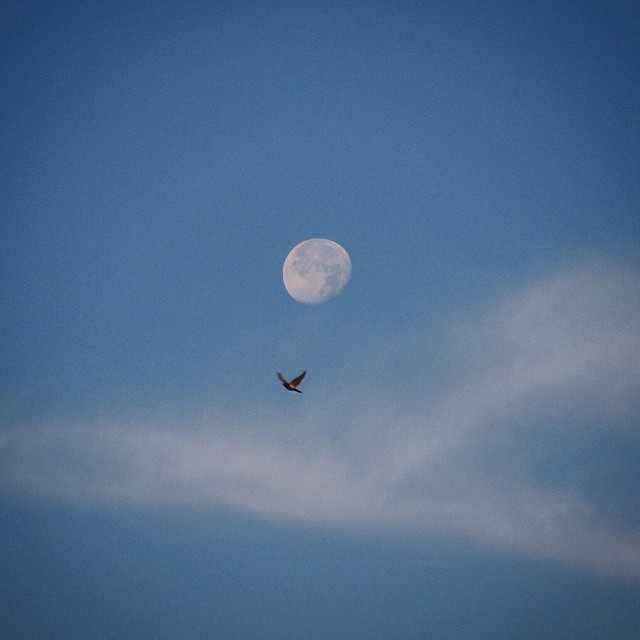
telescope, lunar craters are visible during the day, and photos against the blue sky look even more beautiful than the night ones with a dull black background.
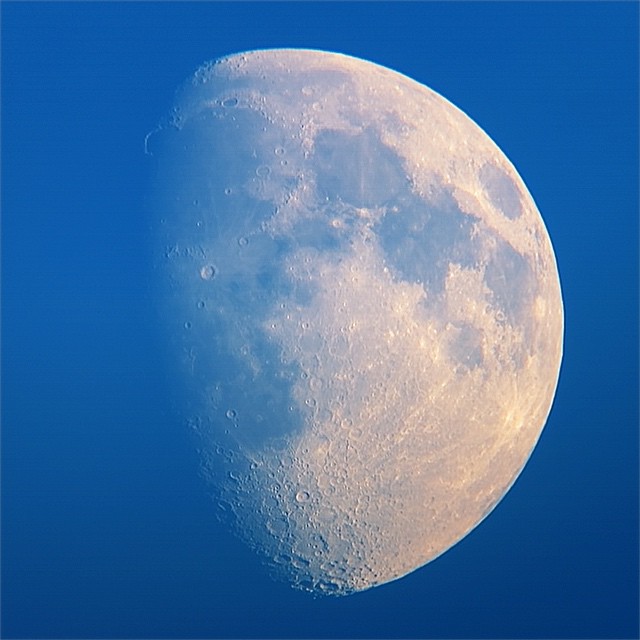
Having made several pictures with an interval of a day, you can see not only the phase change but also the libration .
And here is a record shot of the narrowest lunar crescent, made by photographer Thierry Lego :
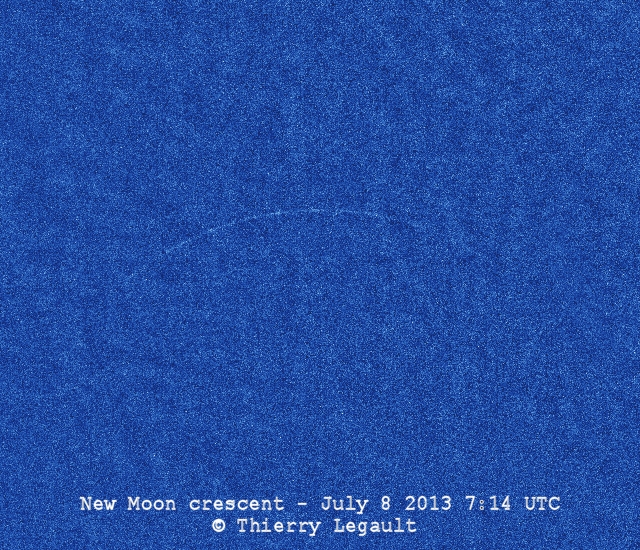
During the shooting, the Moon was only four degrees from the Sun. To protect from exposure to light, the photographer had to build such a device:
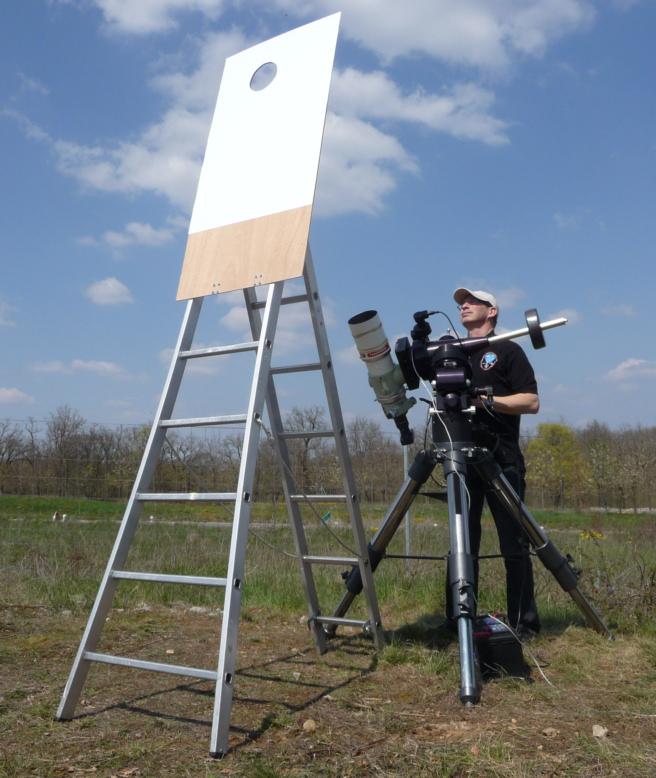
Well, finally, speaking about the Moon, how not to remember the solar eclipses during which the Moon passes in front of our main daylight.
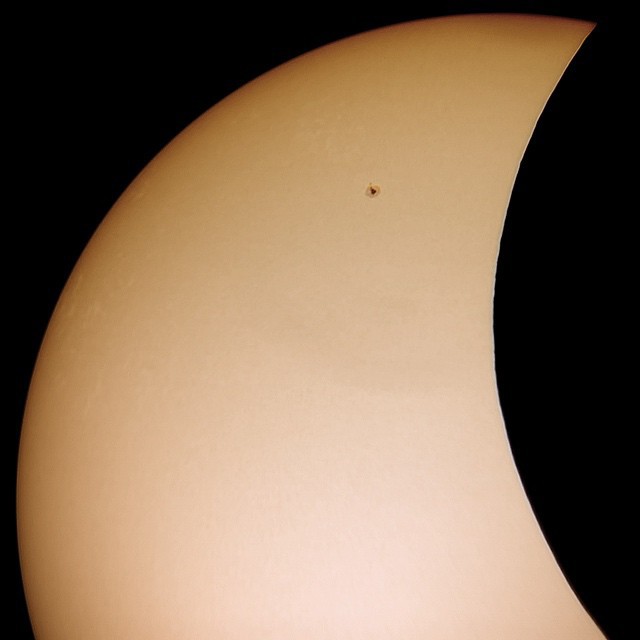
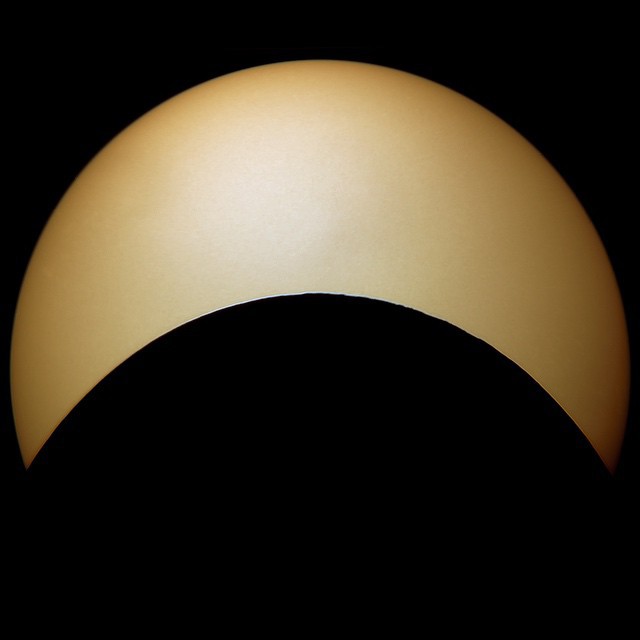
More pictures of the recent eclipse can be found in my article Watching the Solar Eclipse Together .
Daytime Venus is harder to see than the moon. The first photo in the article shows that its surface is much brighter than the surface of the moon, but its size is small and with the naked eye you will only see a white dot. To see Venus in the afternoon, find out its current position in Stellarium or any other planetarium app. In most cases, it will be 20-50 degrees west or east of the Sun. Stand so that some building covers the Sun from you, but leaves visible a portion of the sky where Venus is located. If you want to use binoculars or a telescope, be careful. When searching for a planet, always stay in the shade so you don't accidentally look at the Sun. A few weeks before or after the lower connectionthe sickle of Venus is best seen (and now is such a favorable time).
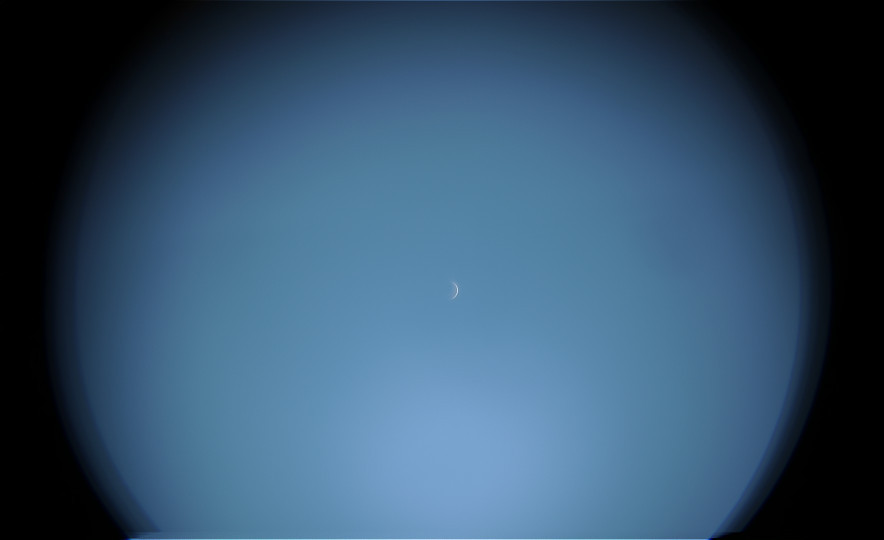
The narrow sickle is so bright that it shines through the light clouds, which is clearly visible in the videos below.
Jupiter is much farther from the Sun. It is incredibly difficult to see it with the naked eye during the day; it is much dimmer than Venus.
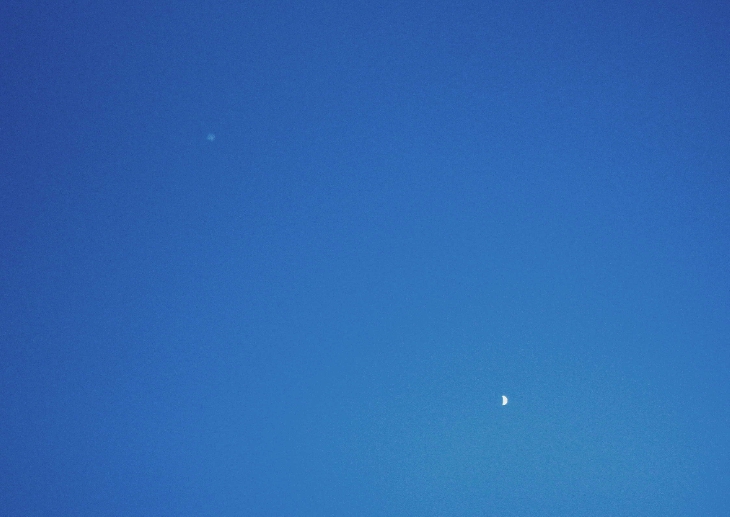
Compound of Jupiter and Venus. Source: spaceweathergallery.com author: Francisco Diego.
By surface brightness it looks more like a crescent moon.
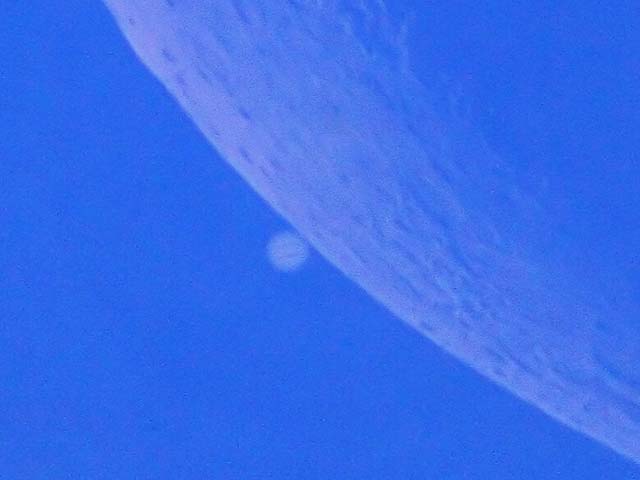
Source: Sky and Telescope , author: Gary Seronik.
Nevertheless, some photographers manage to take a daytime shot that shows details of the surface of Jupiter and even its satellites:
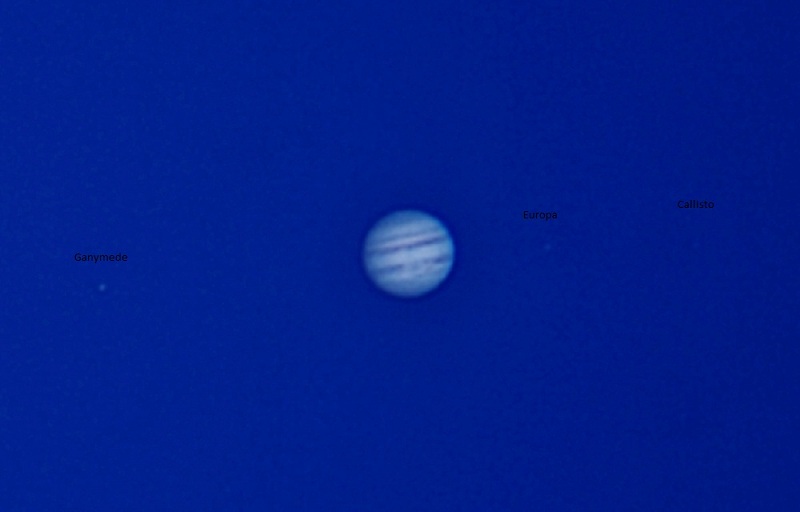
Source: Stargazers Lounge , author: Steve Ward.
Occasionally, during times of great confrontation , Mars shines as brightly asMoon Jupiter. True, during the confrontations, Mars is not visible during the day - it rises with the sunset and sets at dawn. Therefore, during the day it can be detected only in this form:
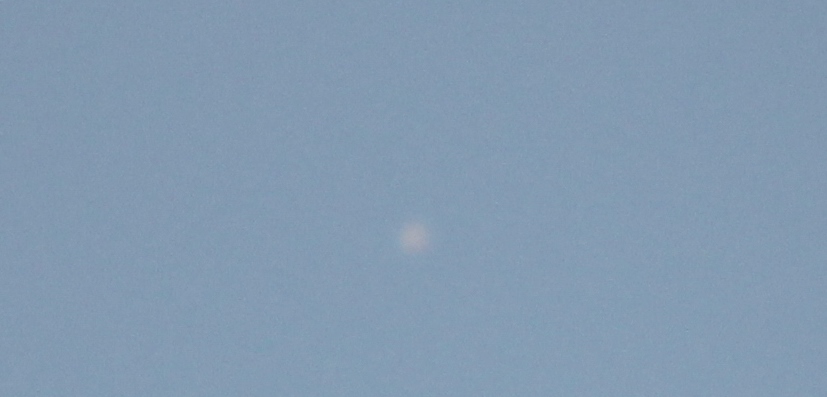
Source: spaceweathergallery.com author: Filip Romanov.
Mercury's observations are complicated by the fact that in the sky it rarely moves away from the Sun at a comfortable angular distance. Try to find Mercury in this picture. Venus and Mercury. Posted by: Emil Ivanov . If it doesn’t work, a larger photo is opened by clicking. A good chance to see Mercury in the afternoon will be May 9, 2016, on this day the planet will pass through the disk of the Sun. An interesting fact is that on July 26, 69163, Mercury and Venus will make a joint transit through the Sun. The previous simultaneous transit was in 373 173 BC. e.
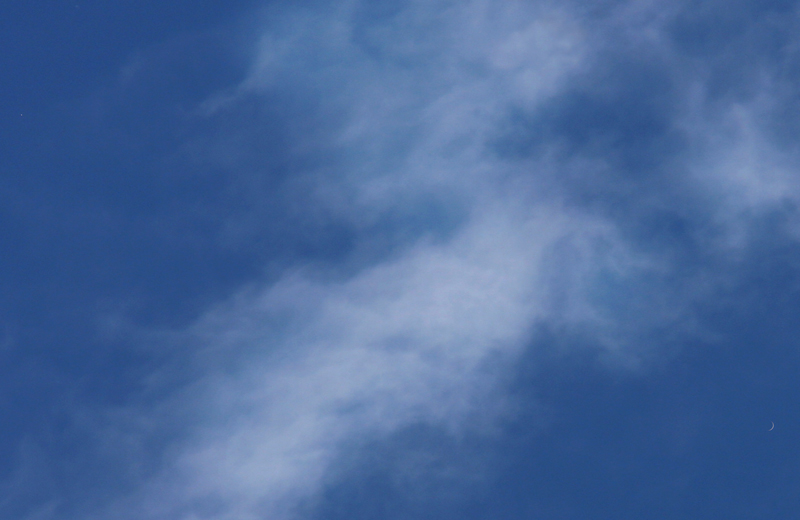
I already wrote that the ISS is not inferior in brightness to Venus, therefore it can also be seen during the day. In the afternoon, it looks like a white dot floating in the blue sky. And if you use a telescope with a motorized mount and special software for tracking satellites, you can shoot it on video in all its glory.
Sometimes the ISS flies close to the moon or even crosses its disk. In this case, to see and photograph it is much easier since the moon will be a noticeable landmark.
And here is a span near Venus:
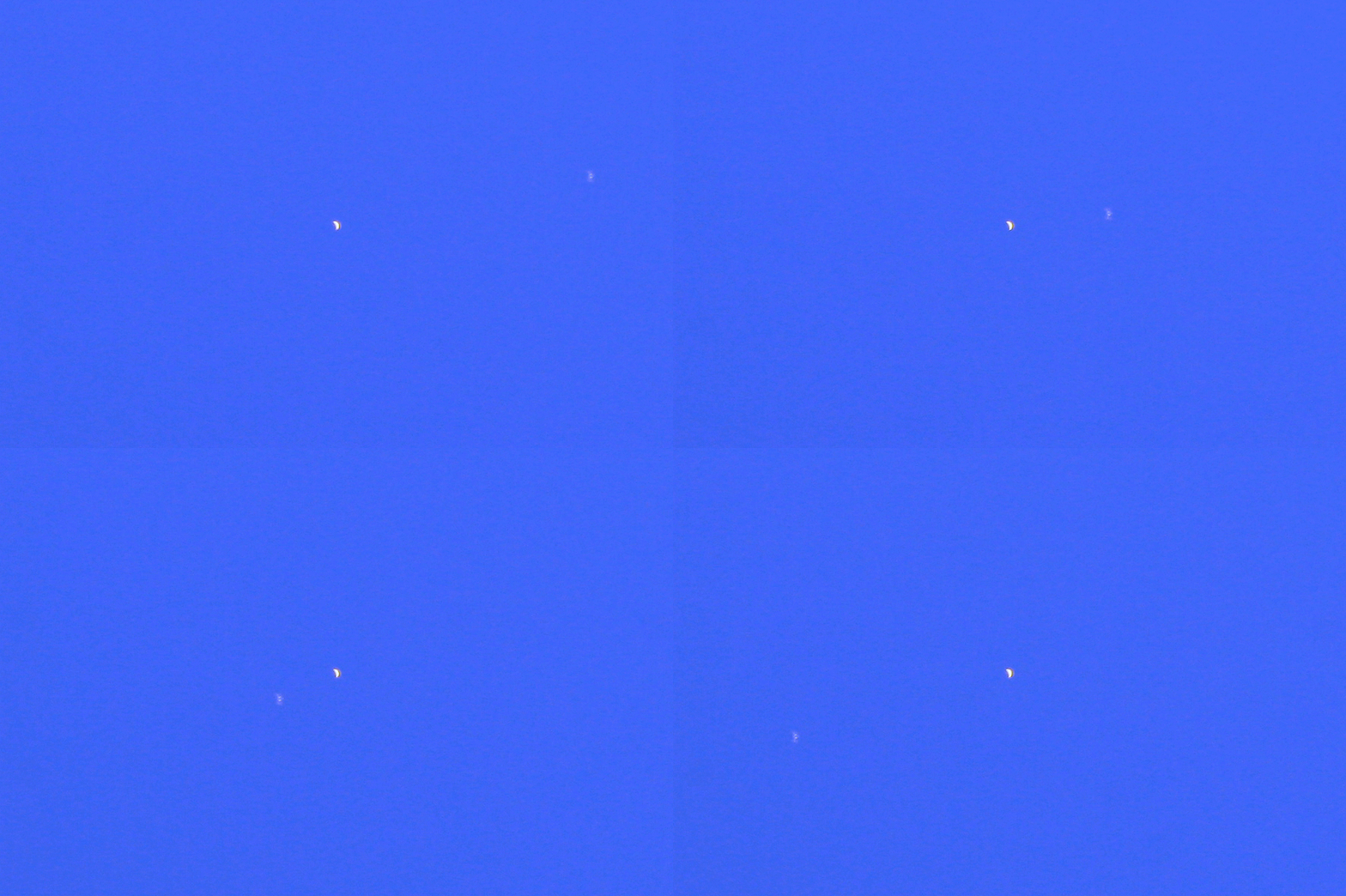
Source: Astronomické události .
If the ISS flies against the background of the solar disk, its dark silhouette can be seen using the same means as for observing sunspots.
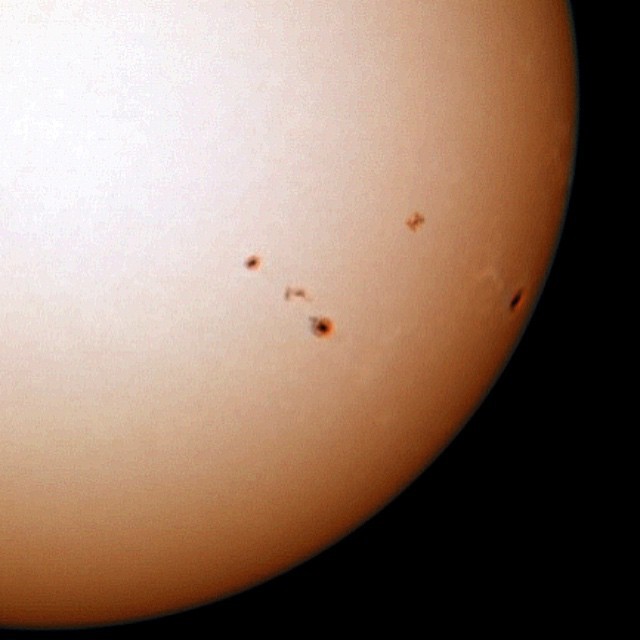
The same span on the video:
Predictions of ISS overflights near other celestial objects are available at calsky.com .
Iridium outbreaks can be several times brighter than the ISS, although they only last a few seconds.
If you didn’t see anything, open the video in full screen.
It seems unbelievable, but using the H-alpha filter, you can photograph a bright nebula in the light of the Sun. I put together an animation from the M42 series of shots . The first picture (the one where the most details are visible) was taken at sunrise, the last - forty minutes after sunrise.
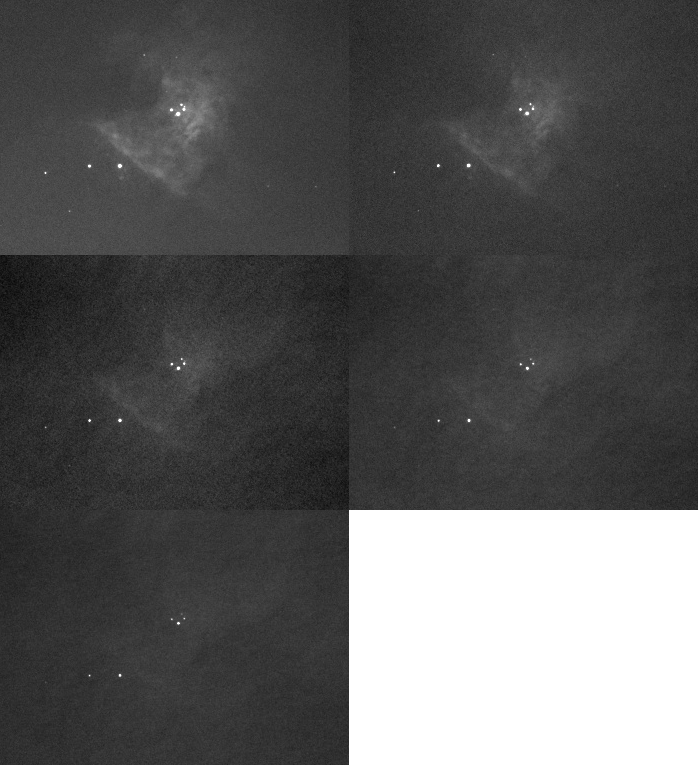
Images themselves made professor at Princeton University by Robert J. Vanderbei , see them separately is possible here - www.princeton.edu/~rvdb/images/NJP/m42daytime.html
Moon and Venus in the daylight. Source: Astronomy Picture of the Day by David Cortner .
I tried to refer to the authors of all the photographs I found for the article. YouTube video creators are visible on YouTube itself. Where the author is not indicated, my own photos are used.
The sun
The most obvious object for daytime observation is the Sun, because it is not visible at night. You can look at the Sun only through a dense light filter, otherwise you will ruin your eyesight. You can make a filter yourself using a special film , or buy a ready-made glass filter . In rare cases, atmospheric haze forms a natural filter and large spots can be seen even with the naked eye. In this photo, a group of sunspots AR 2396 is visible below and to the left of the center of the disk .
Well, in a small telescope with a filter, the sunspots look like this:
Using simple manipulations in the graphics editor, torches that are invisible to the eye can be detected- light structures surrounding spots.
At the top of the image to demonstrate the scale, I added an image of the Earth and the Moon in compliance with all proportions (diameter and relative distance).
Moon
Many do not even realize that the moon is clearly visible in the afternoon. It can be seen almost every day, except for dates close to the new moon and full moon. The growing moon is visible in the afternoon, waning - in the first. Now just the good visibility conditions of the waning moon, you can easily notice it in the morning on the way to work. You can even take a picture of the daytime Moon on your mobile phone:
Or on a digital dust collector: Through the
telescope, lunar craters are visible during the day, and photos against the blue sky look even more beautiful than the night ones with a dull black background.
Having made several pictures with an interval of a day, you can see not only the phase change but also the libration .
And here is a record shot of the narrowest lunar crescent, made by photographer Thierry Lego :
During the shooting, the Moon was only four degrees from the Sun. To protect from exposure to light, the photographer had to build such a device:
Well, finally, speaking about the Moon, how not to remember the solar eclipses during which the Moon passes in front of our main daylight.
More pictures of the recent eclipse can be found in my article Watching the Solar Eclipse Together .
Venus
Daytime Venus is harder to see than the moon. The first photo in the article shows that its surface is much brighter than the surface of the moon, but its size is small and with the naked eye you will only see a white dot. To see Venus in the afternoon, find out its current position in Stellarium or any other planetarium app. In most cases, it will be 20-50 degrees west or east of the Sun. Stand so that some building covers the Sun from you, but leaves visible a portion of the sky where Venus is located. If you want to use binoculars or a telescope, be careful. When searching for a planet, always stay in the shade so you don't accidentally look at the Sun. A few weeks before or after the lower connectionthe sickle of Venus is best seen (and now is such a favorable time).
The narrow sickle is so bright that it shines through the light clouds, which is clearly visible in the videos below.
Jupiter
Jupiter is much farther from the Sun. It is incredibly difficult to see it with the naked eye during the day; it is much dimmer than Venus.
Compound of Jupiter and Venus. Source: spaceweathergallery.com author: Francisco Diego.
By surface brightness it looks more like a crescent moon.
Source: Sky and Telescope , author: Gary Seronik.
Nevertheless, some photographers manage to take a daytime shot that shows details of the surface of Jupiter and even its satellites:
Source: Stargazers Lounge , author: Steve Ward.
Mars
Occasionally, during times of great confrontation , Mars shines as brightly as
Source: spaceweathergallery.com author: Filip Romanov.
Mercury
Mercury's observations are complicated by the fact that in the sky it rarely moves away from the Sun at a comfortable angular distance. Try to find Mercury in this picture. Venus and Mercury. Posted by: Emil Ivanov . If it doesn’t work, a larger photo is opened by clicking. A good chance to see Mercury in the afternoon will be May 9, 2016, on this day the planet will pass through the disk of the Sun. An interesting fact is that on July 26, 69163, Mercury and Venus will make a joint transit through the Sun. The previous simultaneous transit was in 373 173 BC. e.

Artificial satellites
I already wrote that the ISS is not inferior in brightness to Venus, therefore it can also be seen during the day. In the afternoon, it looks like a white dot floating in the blue sky. And if you use a telescope with a motorized mount and special software for tracking satellites, you can shoot it on video in all its glory.
Sometimes the ISS flies close to the moon or even crosses its disk. In this case, to see and photograph it is much easier since the moon will be a noticeable landmark.
And here is a span near Venus:
Source: Astronomické události .
If the ISS flies against the background of the solar disk, its dark silhouette can be seen using the same means as for observing sunspots.
The same span on the video:
Predictions of ISS overflights near other celestial objects are available at calsky.com .
Iridium outbreaks can be several times brighter than the ISS, although they only last a few seconds.
If you didn’t see anything, open the video in full screen.
Deepskay
It seems unbelievable, but using the H-alpha filter, you can photograph a bright nebula in the light of the Sun. I put together an animation from the M42 series of shots . The first picture (the one where the most details are visible) was taken at sunrise, the last - forty minutes after sunrise.
Images themselves made professor at Princeton University by Robert J. Vanderbei , see them separately is possible here - www.princeton.edu/~rvdb/images/NJP/m42daytime.html
Only registered users can participate in the survey. Please come in.
How do you feel about the idea of observing something besides the sun during the day?
- 10.7% is a waste of time, it's better to wait until night 71
- 89.2% there is something interesting 590