January 31, 2017 at 17:50
A fully automated coffee shop opens in San Francisco
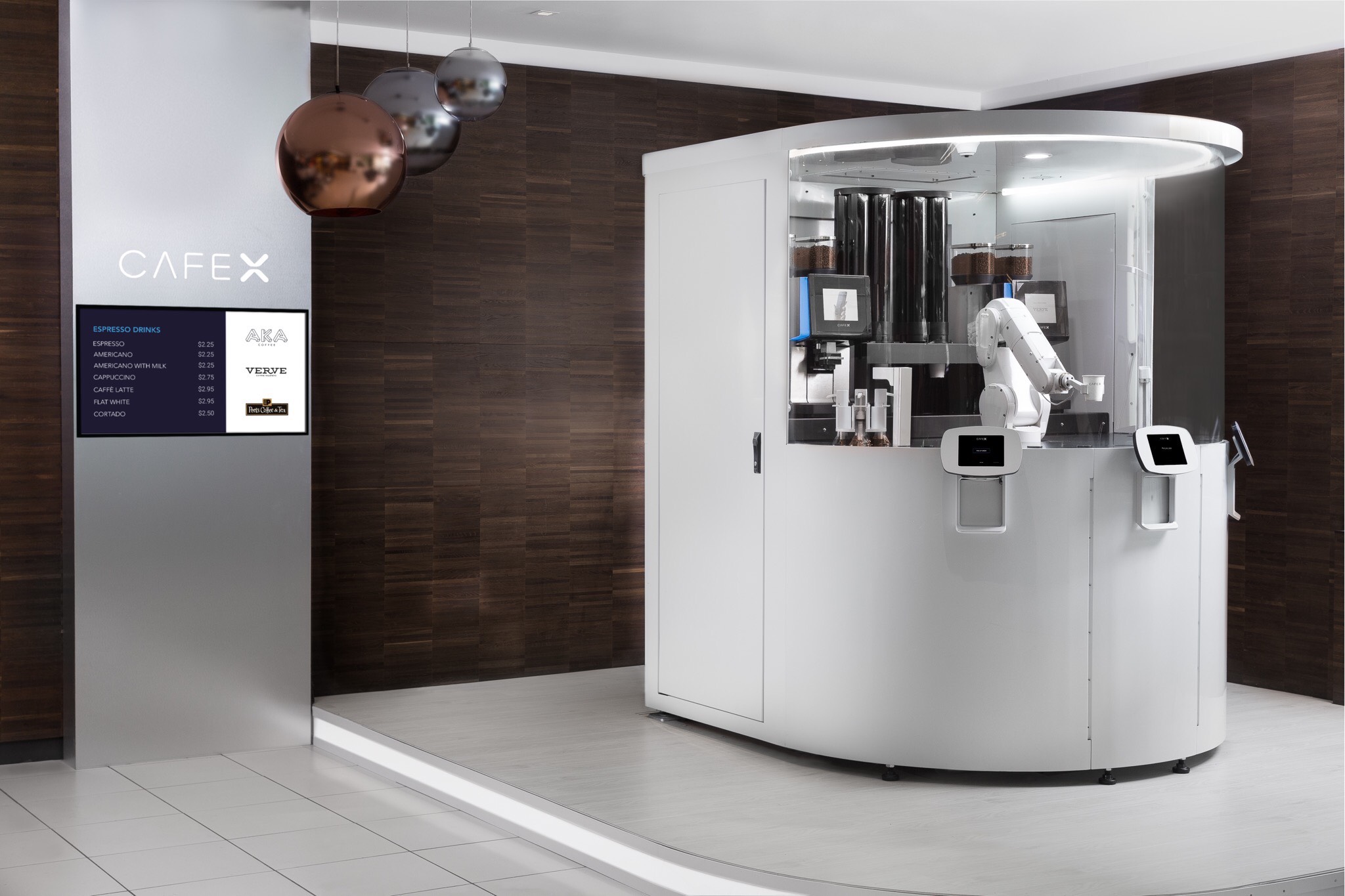
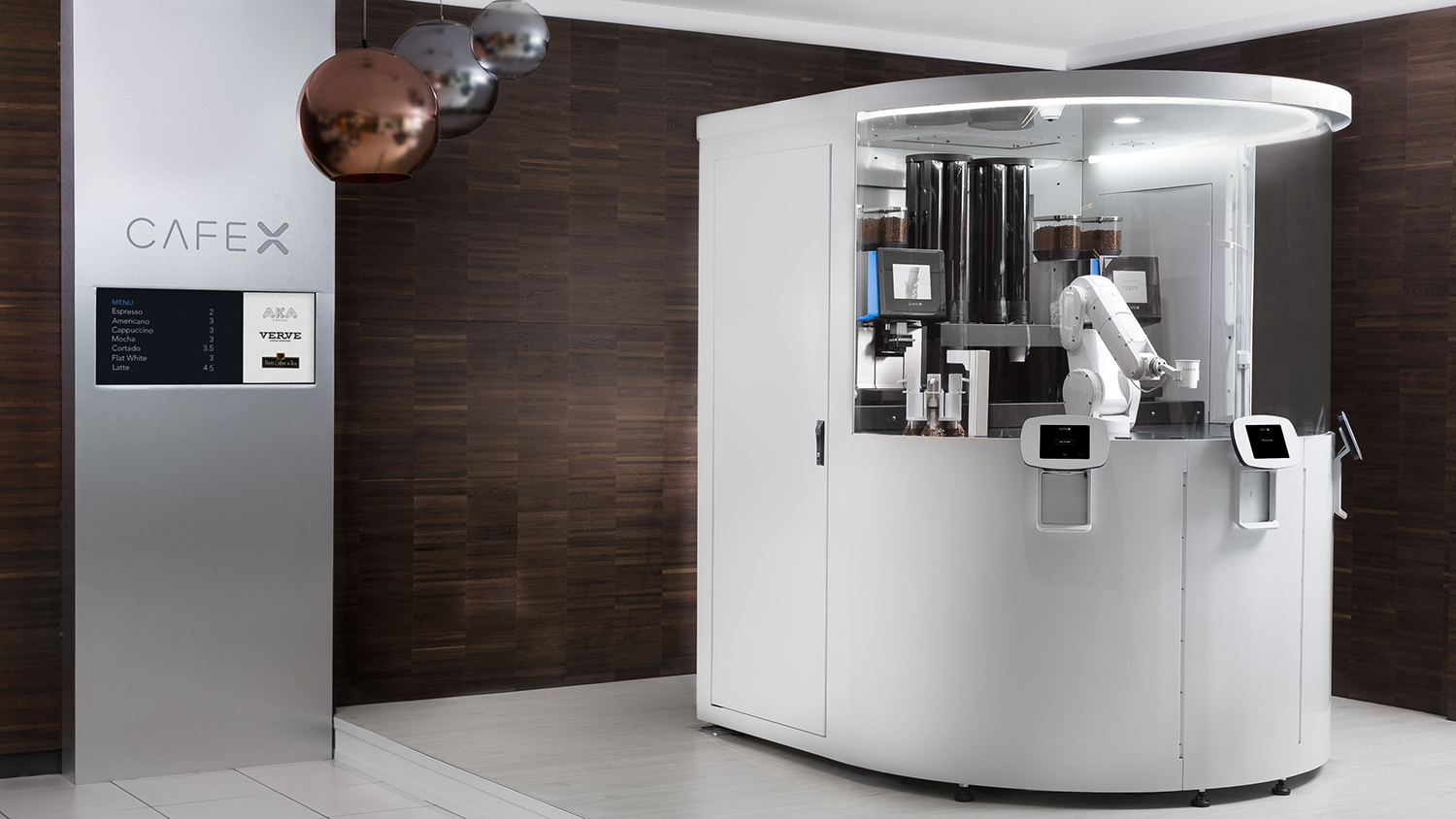
Cafe X - the so-called new coffee shop, which opened the other day in San Francisco. Here visitors are engaged in automation. The coffee shop is very small, but its feature, robots and automation, attracts a large number of visitors. The robot takes orders on a smartphone, although you can use the local terminal. The robot prepares everything, gives the customer an order - also a robot. This cafe looks like a hybrid of a vending machine and a coffee shop. Coffee is made using two WMF coffee machines. Each of the devices can prepare seven drinks of various types, and it is possible to choose one of three varieties of coffee.
If desired, you can add milk or syrups to your drink. The cost of one drink is $ 2-3, which, in principle, is not too expensive for this region. The coffee house is called the same as the company that created it. Cafe X is a startup that has already received $ 5 million from investors. Funding companies include The Thiel Foundation, Social Capital, Khosla Ventures, Jason Calacanis, and Felicis Ventures. Thanks to the investment, Cafe X also opened in Hong Kong. Here, a robotic coffee shop gives customers about 1,000 cups of coffee per week.
Robotic coffee houses are not unique to San Francisco. Another company is also working here, which creates kiosks of a similar design. The Eastsa company is called, however, it serves not coffee, but quinoa - a special kind of cereal. The goal of this company is the fastest and most effective customer service.
As for Cafe X, it has similar goals . “If you need really good coffee, you often have to wait a long time, if you are in a hurry, then this is a problem,” says company founder Henry Hu. “We believe that by automating the process, allowing customers to use mobile devices to order, they can quickly serve visitors by preparing great coffee for them.”
When the order is ready, Cafe X sends a four-digit text message to the customer. This is the confirmation code for the receipt of the order, which must be entered in the kiosk terminal. If everything is correct, a robotic arm (made by Mitsubishi) will remove the cup from the heated stand and provide it to the customer by placing it on a shelf. From here you can pick up a glass and fully enjoy your drink.
The code is necessary in order to eliminate the deception of the robot. The advantage of this type of service is that the barista robot will always hear its client and will never mix anything up. In addition, a miniature coffee shop will not allow someone else to take a glass of latte or other coffee drink.
By the way, the robot will not wait forever - if the client does not pick up his coffee within six minutes, the drink will be disposed of. Moreover, if the client still appears later, he will be given a new drink for free. In the process of making an order, the robot analyzes the location of the client. So, first of all, orders are accepted and given to customers who are nearby. As for the few minutes of waiting and eight coasters with heating, then, according to the developers, there are always enough of them. Customers get everything on time and without crowds even in Hong Kong. At the hour, the barista robot prepares 120 drinks - this is the maximum, the robot is not able to cook faster.
The big plus of the robot is that if you got good coffee from him today, you can try the same drink in a year. In a cafe where barista people work, this will not work. Today, barista can have excellent coffee, tomorrow - worse, and after a year - his place will be taken by a person who almost does not know how to make coffee. Everything is relative, but in most cases it is. In addition, the barista robot does not need to pay wages, the coffee house can be placed on a relatively small area.
Robots are used not only in coffee houses, but also in restaurants, bars and cafes. True, keep such robots, as it turned outnot too profitable. For example, in China, several robotic restaurants have closed. The problem is that such robots have very limited functionality. But the cost of a medium-quality robot-waiter is about 8 thousand US dollars. Plus, you still need to consider several hundred dollars a month, necessary for maintenance and repair. Back in 2015, 170 robots were put up for sale on Taobao, but none of them were bought.