April 23, 2016 at 22:48
From ordinary to smart watches: transition
At the end of the XIX - beginning of the XX centuries, the watch slowly passed from the pockets on the wrist. And already in the 1920s, the first attempt was made to make another device in the same form factor - an analog navigator, and in the second half of the last century, watch manufacturers began to supplement classic devices with new functions. They began to act especially actively after the appearance of the first digital devices of this type.
Let's remember what features we tried successfully (and not so much) to add to a watch, including navigation, calculators, cameras and phones. Share your experiences in the comments.
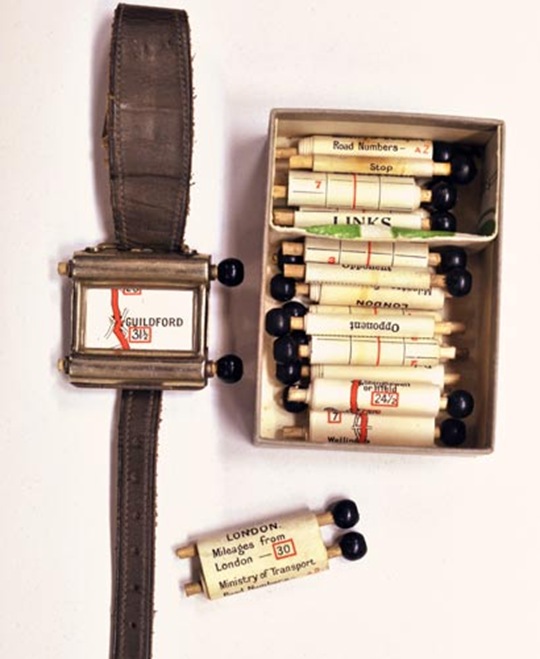
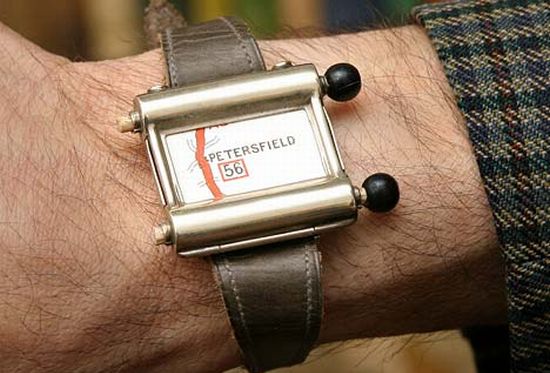
In 1920, the world's first navigator appeared in the clock form factor. It was necessary to insert a special card into the device, and then twist it manually during the trip.
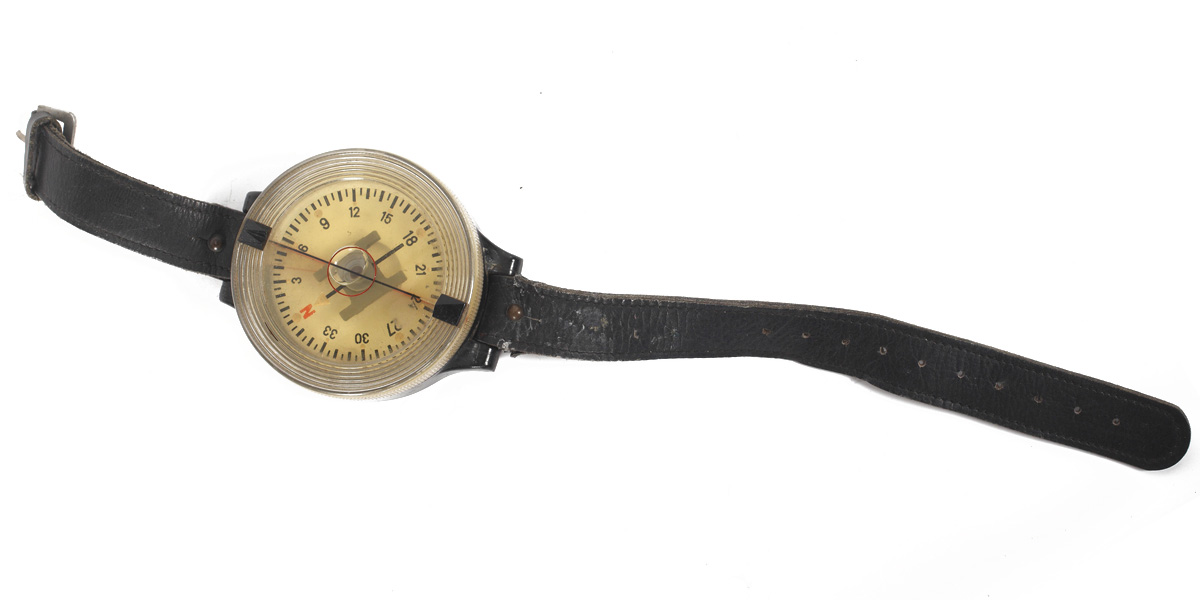
These wrist compasses were used by German pilots during World War II.
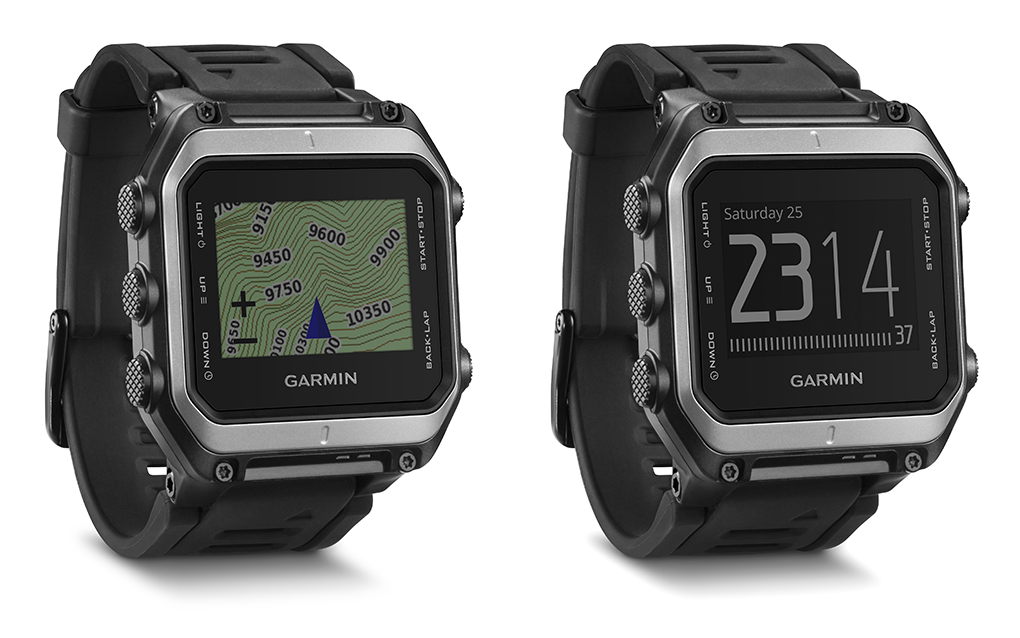
In modern Garmin EPIX with GPS / GLONASS and a topographic map of Russia, no scrolls need to be inserted. But such a watch costs more than 50,000 rubles, but it works without charging for up to 14 weeks.
Casio Prayer Compass was released specifically for Muslims. The compass helps turn towards Mecca. Casio now has six watches in its arsenal , made especially for traveling representatives of this religion.


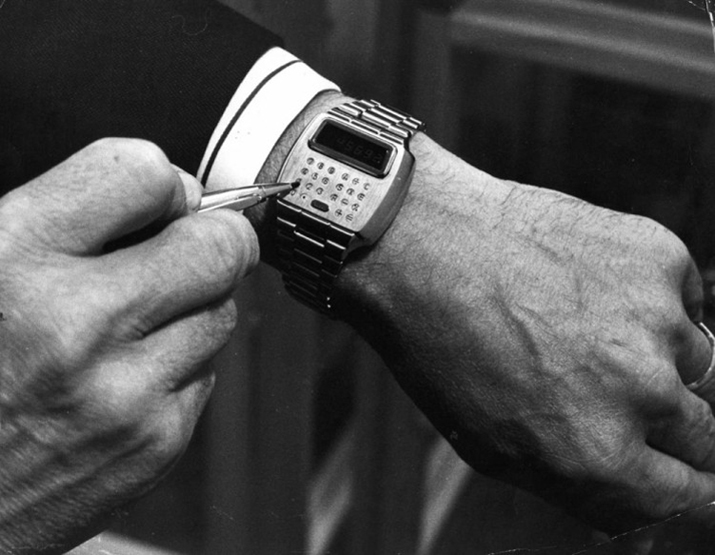
Those of you who are between 30 and 40 years old can remember the school years when a clock with a calculator was considered an amazing thing. But the first hours with a calculator appeared much earlier, in 1975, but in Russia I did not see them. These were the Pulsar.
And even earlier, in the XVII century, China already made bills in the form of a ring.

Around the display of the Citizen 9140A, there are 41 buttons. They helped calculate sine, cosine, tangent and do other mathematical actions. This certainly stylish gadget does not have many users - several hundred such watches have been released.

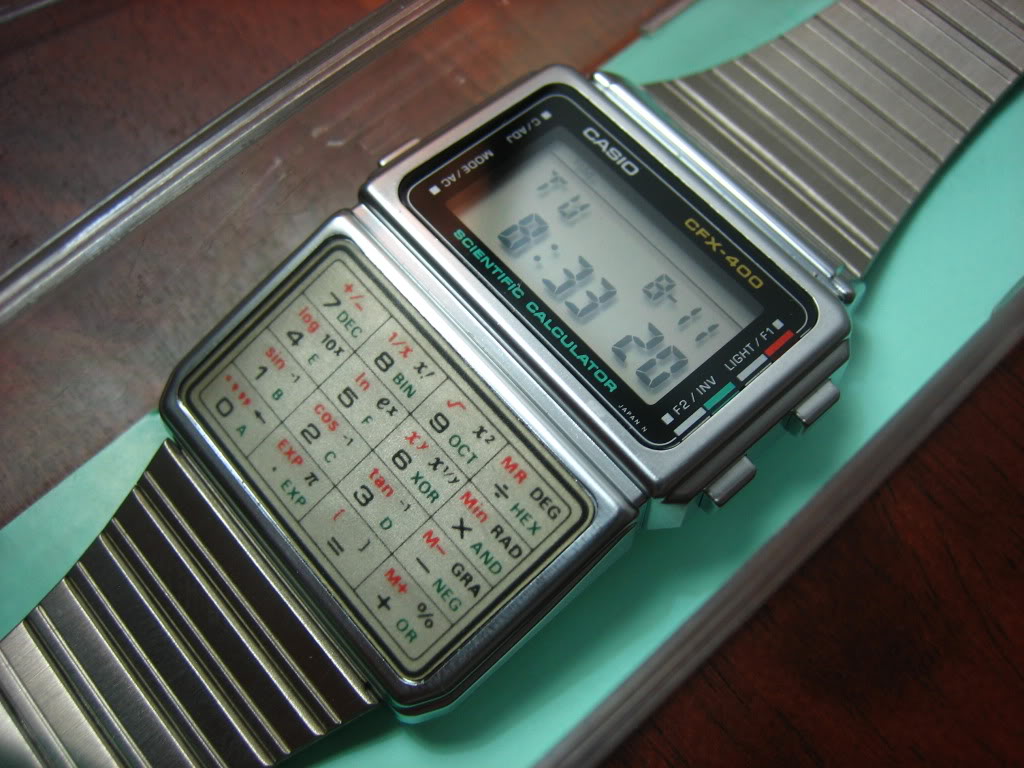
In 1985, Casio launched the CFX-400 - a watch with an engineering calculator.

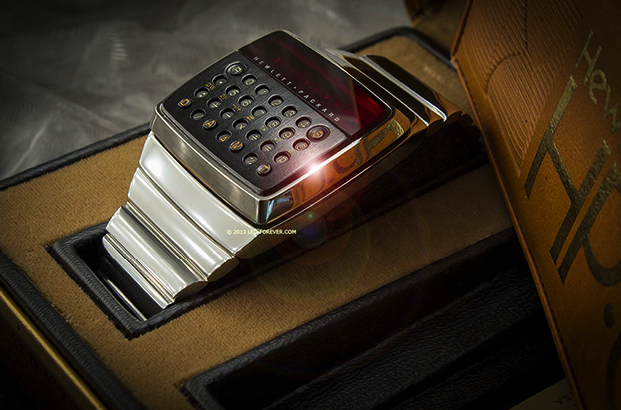
In 2014, you had a chance to buy a prototype watch HP-01with a calculator for only $ 14,500. But you missed him. The watch itself was made in 1977.
Today, advanced smart watches - namely, devices on Android Wear and Apple Watch - are more likely an addition to the smartphone, simplifying some of its functions. Some will say that they satisfy a fictitious need. An important intermediate stage was the watch, which itself served as a smartphone. And the fact that this type of device did not sell well enough led to the current state of the infrastructure of such gadgets.
In 1998, Samsung launched the Samsung SPH-WP10, the first mobile watch. In fact, it was just a small phone that was attached to the hand. One could speak with a wired headset.
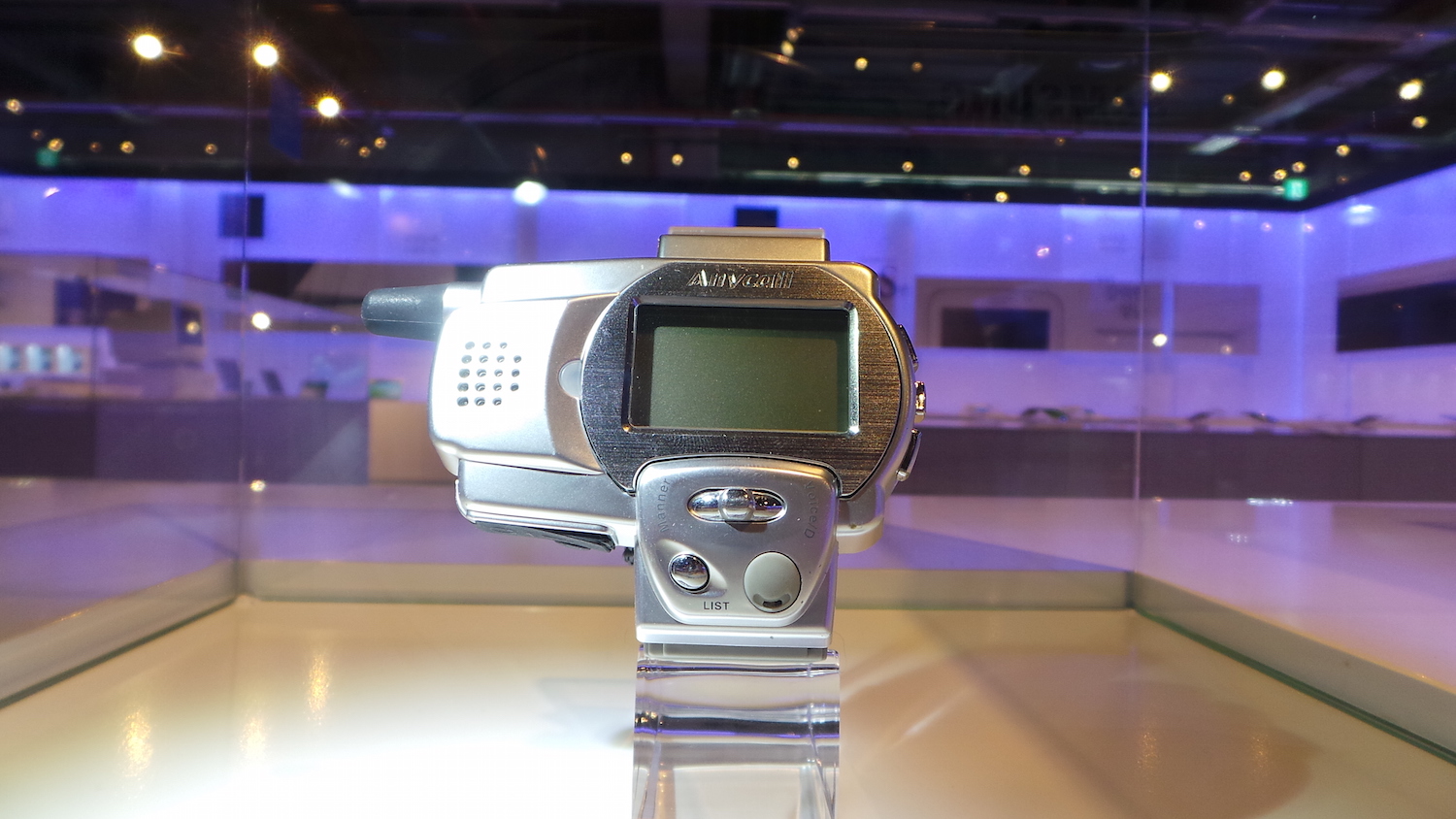
NTT introduced another version of such a device in 1999.

In 2001, Samsung introduced a new phone watch at CES in Las Vegas. They worked hard on the design, but still the company was unable to conquer the market.

But Samsung did not want to give up, and in 2009 began selling the S9110. Again - a mobile phone, not a “mobile assistant.” Again failure.
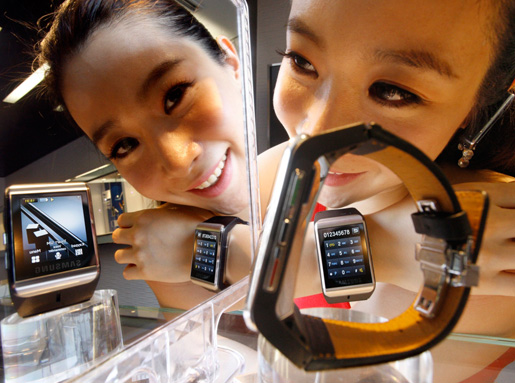
Similar devices were offered by LG. The Watch Phone device with a touch screen had not only a built-in speaker and an MP3 player, but also supported voice activation of the call, it was equipped with a VGA-camera, Bluetooth and eight dial options. The gadget supported 3G +.

Once upon a time, when Motorola had not yet made the Moto 360, and Apple was not thinking about developing smart watches, several eminent manufacturers from the watch world and the software world tried to incorporate wrist devices into the infrastructure of the “smart home”.
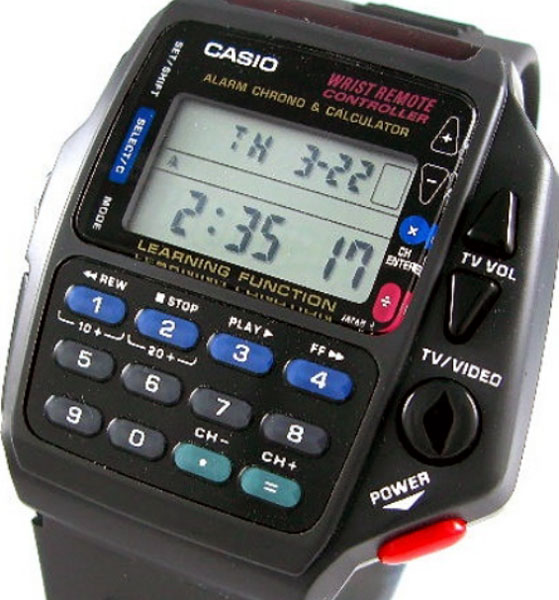
Casio CMD-40 is not only avaluable fur stylish watch, but also a remote control for home appliances. Released in 1995. The photo shows the infrared port in the upper part of the case.
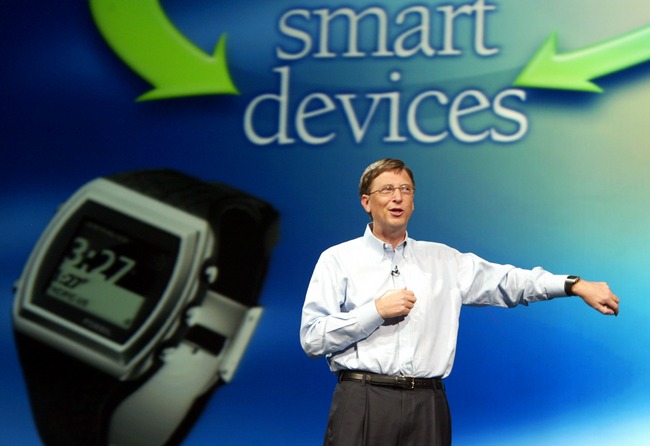
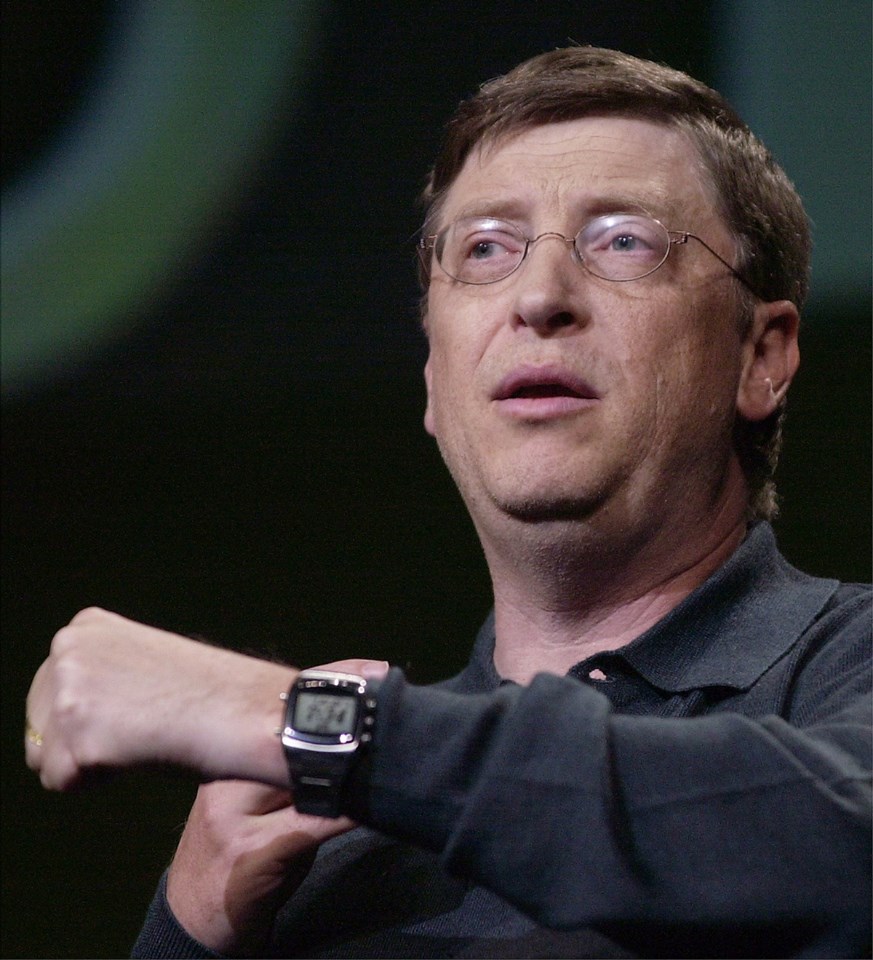
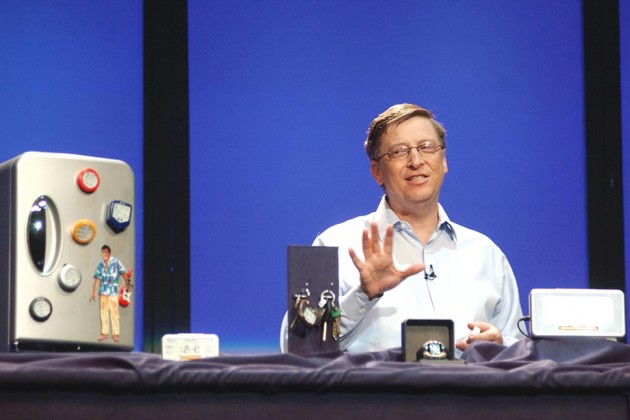
And in 2003, Bill Gates introduced a watch with Smart Personal Object technology. This technology is designed to control household appliances and personal electronics.
In 2000, Casio built a camera in the watch. Monochrome Casio WQV-1 clock display with a resolution of 120x120 pixels, transmitting 16 shades of gray, allowed you to view pictures.

The continuation of the Casio WQV-10 line is already with a color screen and a color camera. The device had enough memory for 100 photographs with a resolution of 176x144 pixels. Color display - 78x80 pixels. A funny feature, but with the advent of mobile devices with cameras, such devices have lost their relevance.

But these were far from the very first cameras in the clock form factor. In Germany, in the late 1940s there was a Steineck ABC camera.

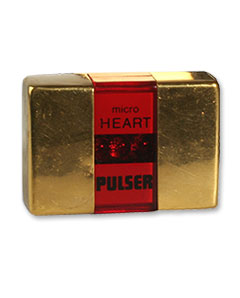
The first in the production of heart rate monitors was Polar, which in 1977 invented a heart rate monitor for the Finnish national ski team. And I received a patent for the "Optical heart rate sensor."
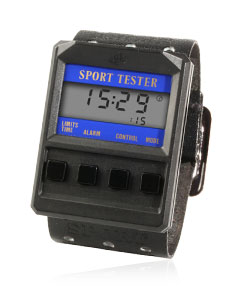
Three years later, the company issued the world's first sports smart watch Polar Sport Tester PE 2000. Of the pleasant things in them are the watch itself, an alarm clock, a heart monitor and a couple of other functions.
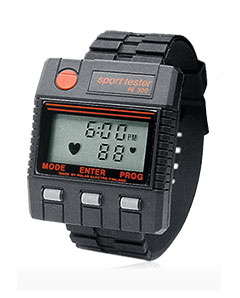
In 1985, Polar patented a wireless heart rate measurement and two years later released the PE 3000 - a watch that allows you to analyze the data obtained during training using a computer. Read more about the history of heart rate monitors at the beginning of 2014 here . It's amazing how fast things are changing, it's time to write a new article on this topic.
Launched by Casio in 1991, the BP-400 was able to measure heart rate using a sensor on the front panel. And they looked more like a classic watch, not a sports one. This design will seem relevant to someone today.

Surprisingly, the first watch with a player appeared only in 2000. And again - Casio, model WMP-1V - Wrist Audio Player.

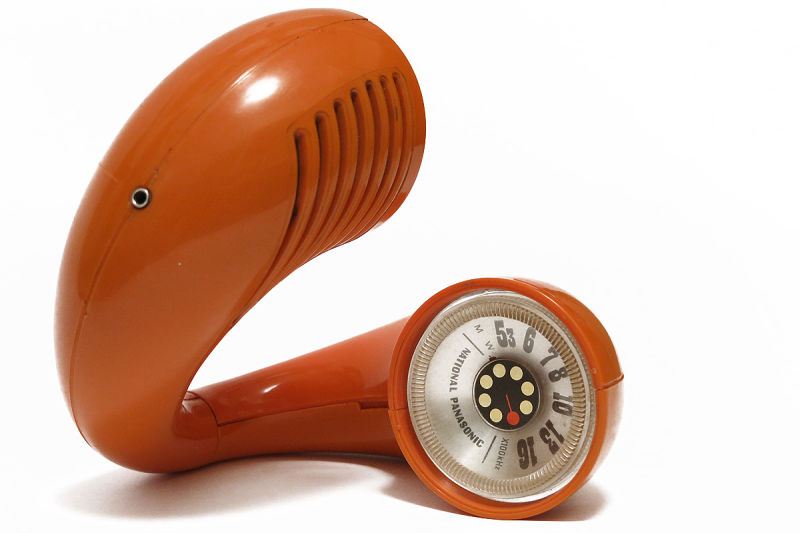
This is a Panasonic R-72S Toot-a-Loop Bracelet Radio from Japan, made in 1972. Very reminiscent of Jawbone - and the color and shape, do not you?
When you write articles on such topics, you always need to remember: an article where gadgets are in chronological order becomes incomplete after a couple of months. New gadgets are constantly appearing, manufacturers (together with marketers) are constantly inventing new needs for us, which they themselves are trying to satisfy. It’s hard to say whether it’s good or bad. Looking back at history, one can think why the industry looks like this and not otherwise, why some functions remain relevant - like heart rate monitors, and others - go away like clocks with cameras.
Let's discuss in the comments which devices in the clock form factor were the most significant for you.
Let's remember what features we tried successfully (and not so much) to add to a watch, including navigation, calculators, cameras and phones. Share your experiences in the comments.
Navigation
In 1920, the world's first navigator appeared in the clock form factor. It was necessary to insert a special card into the device, and then twist it manually during the trip.
These wrist compasses were used by German pilots during World War II.
In modern Garmin EPIX with GPS / GLONASS and a topographic map of Russia, no scrolls need to be inserted. But such a watch costs more than 50,000 rubles, but it works without charging for up to 14 weeks.
Casio Prayer Compass was released specifically for Muslims. The compass helps turn towards Mecca. Casio now has six watches in its arsenal , made especially for traveling representatives of this religion.
Engineering Calculators
Those of you who are between 30 and 40 years old can remember the school years when a clock with a calculator was considered an amazing thing. But the first hours with a calculator appeared much earlier, in 1975, but in Russia I did not see them. These were the Pulsar.
And even earlier, in the XVII century, China already made bills in the form of a ring.
Around the display of the Citizen 9140A, there are 41 buttons. They helped calculate sine, cosine, tangent and do other mathematical actions. This certainly stylish gadget does not have many users - several hundred such watches have been released.
In 1985, Casio launched the CFX-400 - a watch with an engineering calculator.
In 2014, you had a chance to buy a prototype watch HP-01with a calculator for only $ 14,500. But you missed him. The watch itself was made in 1977.
Telephone
Today, advanced smart watches - namely, devices on Android Wear and Apple Watch - are more likely an addition to the smartphone, simplifying some of its functions. Some will say that they satisfy a fictitious need. An important intermediate stage was the watch, which itself served as a smartphone. And the fact that this type of device did not sell well enough led to the current state of the infrastructure of such gadgets.
In 1998, Samsung launched the Samsung SPH-WP10, the first mobile watch. In fact, it was just a small phone that was attached to the hand. One could speak with a wired headset.
NTT introduced another version of such a device in 1999.
In 2001, Samsung introduced a new phone watch at CES in Las Vegas. They worked hard on the design, but still the company was unable to conquer the market.
But Samsung did not want to give up, and in 2009 began selling the S9110. Again - a mobile phone, not a “mobile assistant.” Again failure.
Similar devices were offered by LG. The Watch Phone device with a touch screen had not only a built-in speaker and an MP3 player, but also supported voice activation of the call, it was equipped with a VGA-camera, Bluetooth and eight dial options. The gadget supported 3G +.
Home Appliance Management
Once upon a time, when Motorola had not yet made the Moto 360, and Apple was not thinking about developing smart watches, several eminent manufacturers from the watch world and the software world tried to incorporate wrist devices into the infrastructure of the “smart home”.
Casio CMD-40 is not only a
And in 2003, Bill Gates introduced a watch with Smart Personal Object technology. This technology is designed to control household appliances and personal electronics.
Camera
In 2000, Casio built a camera in the watch. Monochrome Casio WQV-1 clock display with a resolution of 120x120 pixels, transmitting 16 shades of gray, allowed you to view pictures.
The continuation of the Casio WQV-10 line is already with a color screen and a color camera. The device had enough memory for 100 photographs with a resolution of 176x144 pixels. Color display - 78x80 pixels. A funny feature, but with the advent of mobile devices with cameras, such devices have lost their relevance.
But these were far from the very first cameras in the clock form factor. In Germany, in the late 1940s there was a Steineck ABC camera.
Sport
The first in the production of heart rate monitors was Polar, which in 1977 invented a heart rate monitor for the Finnish national ski team. And I received a patent for the "Optical heart rate sensor."
Three years later, the company issued the world's first sports smart watch Polar Sport Tester PE 2000. Of the pleasant things in them are the watch itself, an alarm clock, a heart monitor and a couple of other functions.
In 1985, Polar patented a wireless heart rate measurement and two years later released the PE 3000 - a watch that allows you to analyze the data obtained during training using a computer. Read more about the history of heart rate monitors at the beginning of 2014 here . It's amazing how fast things are changing, it's time to write a new article on this topic.
Launched by Casio in 1991, the BP-400 was able to measure heart rate using a sensor on the front panel. And they looked more like a classic watch, not a sports one. This design will seem relevant to someone today.
Music
Surprisingly, the first watch with a player appeared only in 2000. And again - Casio, model WMP-1V - Wrist Audio Player.
This is a Panasonic R-72S Toot-a-Loop Bracelet Radio from Japan, made in 1972. Very reminiscent of Jawbone - and the color and shape, do not you?
Conclusion
When you write articles on such topics, you always need to remember: an article where gadgets are in chronological order becomes incomplete after a couple of months. New gadgets are constantly appearing, manufacturers (together with marketers) are constantly inventing new needs for us, which they themselves are trying to satisfy. It’s hard to say whether it’s good or bad. Looking back at history, one can think why the industry looks like this and not otherwise, why some functions remain relevant - like heart rate monitors, and others - go away like clocks with cameras.
Let's discuss in the comments which devices in the clock form factor were the most significant for you.