August 1, 2016 at 18:33
Uber doesn't always win
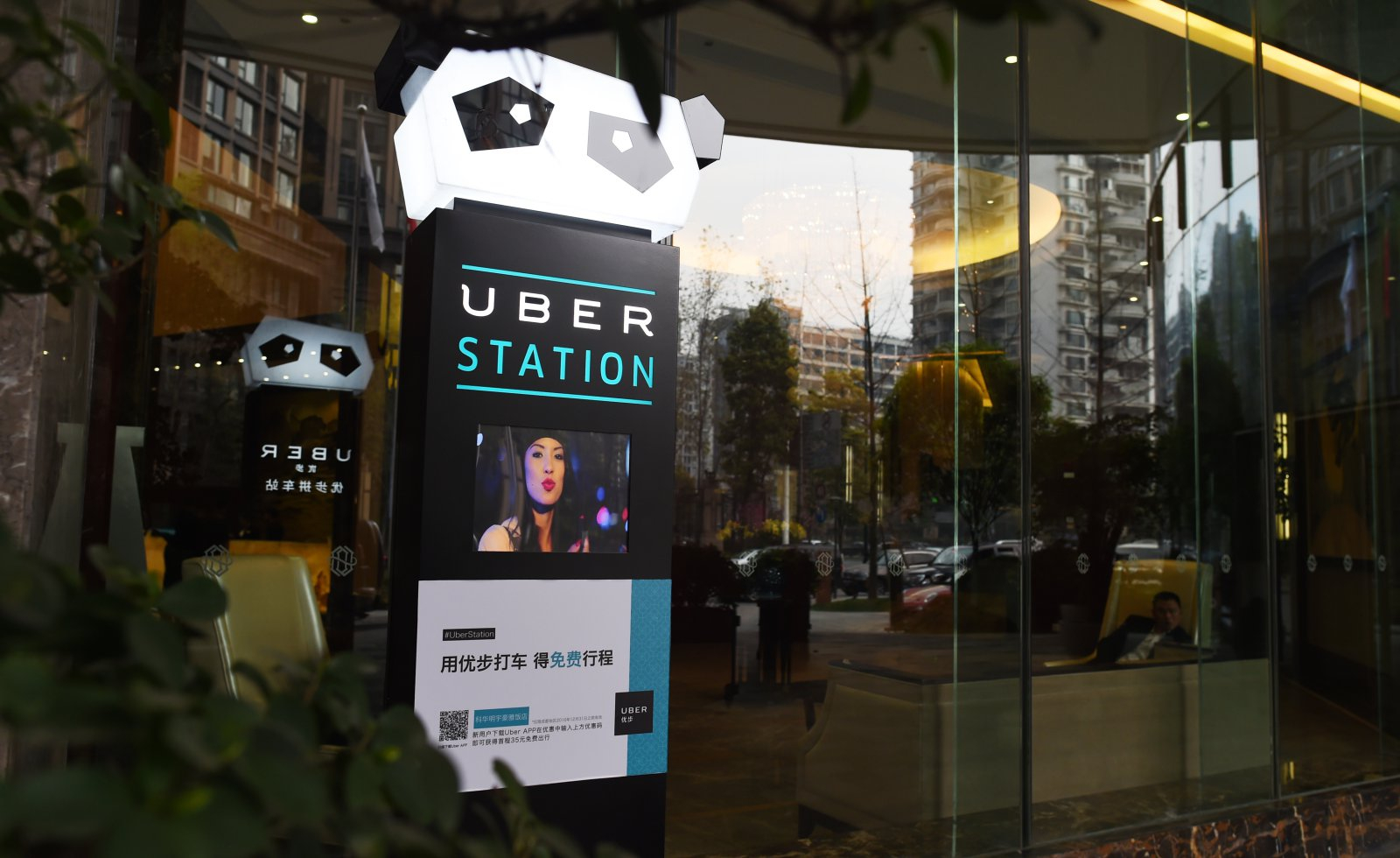
Greg Baker / AFP / Getty Images
Uber's taxi service is causing controversy. Moreover, such reviews come from both users and competitors. The business model of such a service is very popular at the moment, and the creation of a similar project, it would seem, does not require a lot of costs. However, the Uber team continues to work on the technological aspects of the service to this day.
The hardest part starts when the service enters the market. Large companies such as Uber can “crush” most of their competitors and even drive them out of their home market. However, competitors still appear and sometimes achieve unexpected results. And in such a situation, when everything is not going according to the script, Uber has to make a “knight's move”.
Let's go to the world
Taxi service Uber plans to merge its Chinese division with Didi Chuxing taxi service, which also operates in China. The owners of Uber China, including the Chinese corporation Baidu Inc., will get 20% of the combined company.
After the merger, Uber is expected to cease operations in China, but will receive a significant stake in the new company.
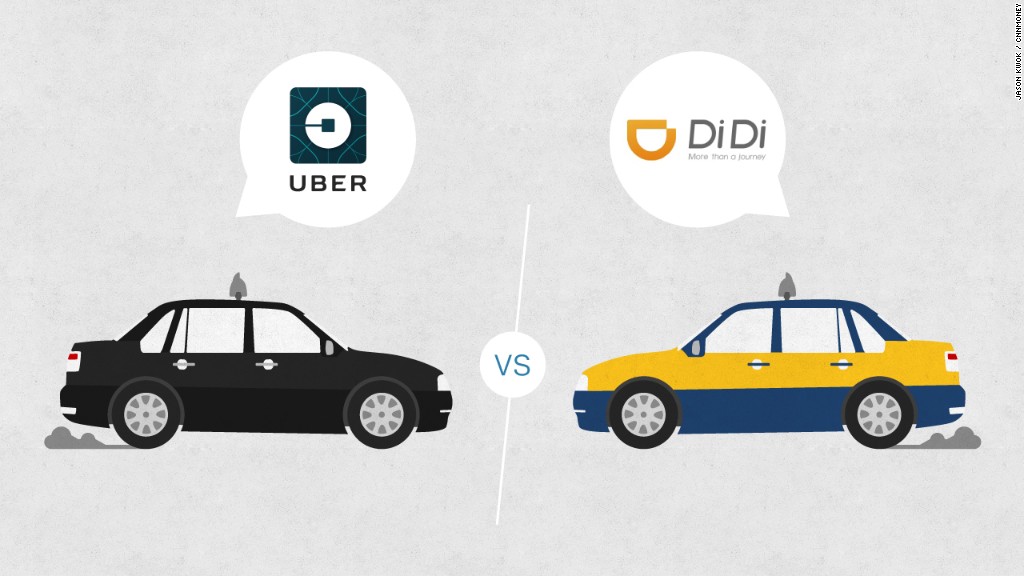
Prior to this, Didi was Uber's main competitor in China.
The American company will receive 5.89% in Didi, which means 17.7% of economic interest.
Didi will get the Uber brand, business and customer base of the company. Didi representatives also noted that they plan to combine the managerial and technological experience of the two teams, as well as their expertise. Uber China's current shareholders will receive 2.3% of the economic interest in the combined company. Uber China itself will continue to operate under its brand in China. And the head of Uber Travis Kalanik will become a member of the board of directors of the new company.
In addition to the transfer of Didi Chuxing to Uber's Chinese business, there is another condition for the deal: a Chinese company will invest $ 1 billion in Uber. The cost of the combined company will be $ 35 billion, according to Bloomberg sources.
At first, the public took the information about the merger as regular rumors, but today, August 1, both companies have confirmed their intentions.
“Uber and Didi Chuxing are investing billions of dollars in China and both companies have yet to make a profit there. Profitability is the only way to build a sustainable business that can satisfy the needs of passengers, drivers and cities in the long run, ”commented Travis Kalanik, CEO of Uber.
An agreement with Uber will help the industry take a more sustainable path, said Didi Chuxing founder Cheng Wei.
The contract comes into force on November 1. According to the contract, from now on, both companies are prohibited from providing services below the established price.
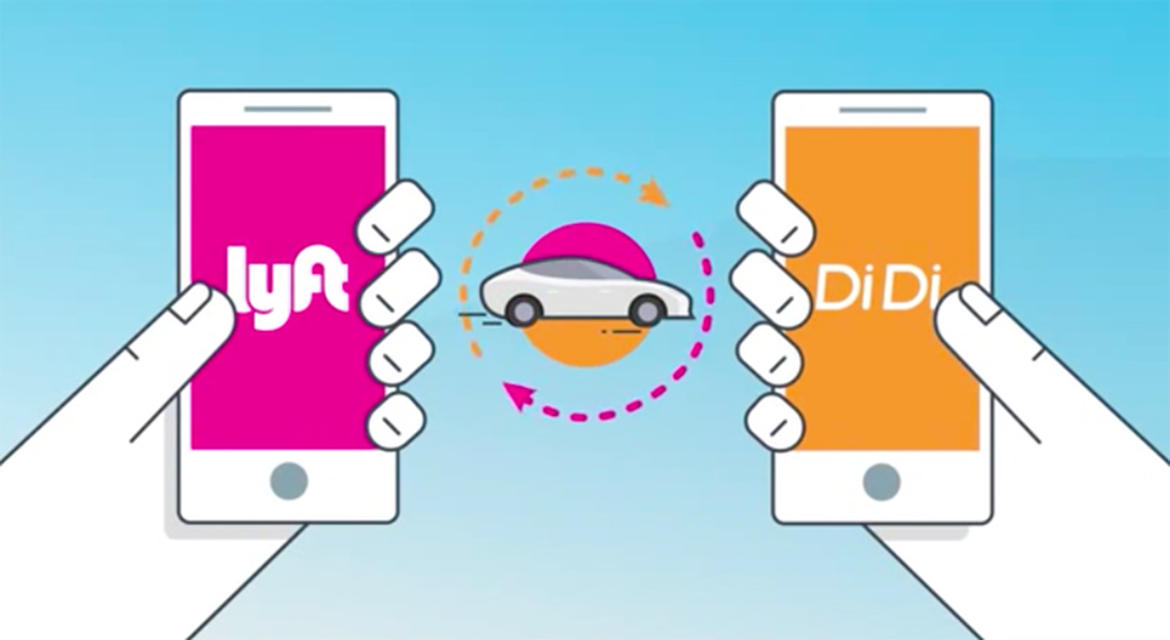
Didi Chuxing is China's largest taxi service. Meanwhile, according to experts at Bloomberg, an alliance of companies could complicate Didi Chuxing's relationship with other market players. Earlier, the Chinese service agreed to cooperate with the American Lyft Inc., Indian Ola, as well as Grab, working in Southeast Asia, to join forces to defeat Uber in the competition.
Experts also do not exclude that the transaction is being prepared in anticipation of the first public offering of Uber securities.
For Didi Chuxing, such a deal is not the first - a year ago it already merged with a similar Chinese service Kuaidi. Investors of the service are the founders of the Chinese Internet giants Alibaba and Tencent, as well as Apple.
At a presentation to investors in 2015, Didi representatives said that by 2020, the annual size of the Chinese taxi call market will be $ 50 billion.
In 2016, Didi Chuxing received a $ 1 billion investment from Apple. In total, the Chinese company raised $ 7.23 billion. Now, according to the company, about 300 million people make 14 million trips a day, Didi Chuxing users.
The 33-year-old founder of the company, Chen Wei, is on the Forbes global list of wealthiest businessmen with a fortune of $ 1 billion.
It is noteworthy that the news about the deal was preceded by another news - a few days ago, the Chinese government legalized services to call drivers.
In mid-June, Kalanik announced that China had become the largest market for Uber. Its volume exceeded even the American market. However, access to China cost the company dearly: Bloomberg sources believe that at the launch in China, Uber lost $ 2 billion. In the Chinese market, the company showed great generosity by providing large discounts to passengers and bonuses to drivers.
Not Uber one
Grab Taxi CEO Anthony Ten commented :
“Companies have been vying for more than a year. Our investor and global partner Didi was the winner in this struggle for leadership in the Chinese market. ”
He believes that in other countries, local players can successfully compete with Uber:
“We live in a diverse world, and there are no universal recipes. Local solutions do better with local problems. Just as Didi did in China, in Singapore or Jakarta, or in Manila, users have their own pain points ... "
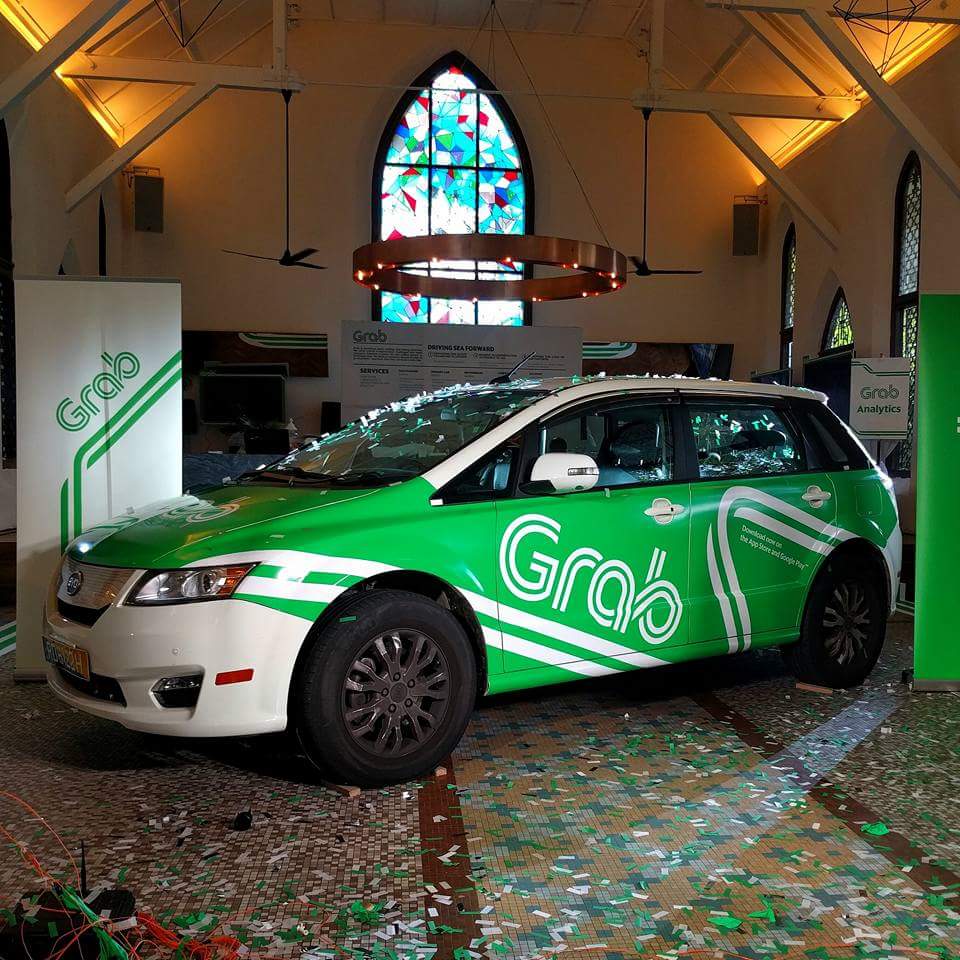
Singapore-based startup GrabTaxi Holdings already operates in 30 cities in six countries in Southeast Asia - it is 2 times more than the number of cities in the region where Uber is present - and, according to analytical company App Annie, bypasses Uber in the number of users of its mobile application in this region .
The Singapore company GrabTaxi has existed since 2012 and offers services oriented to the specifics of the local market: Grab users can call mototaxi, which is very popular in Asian cities with cars, order delivery of small loads and pay for services in cash.
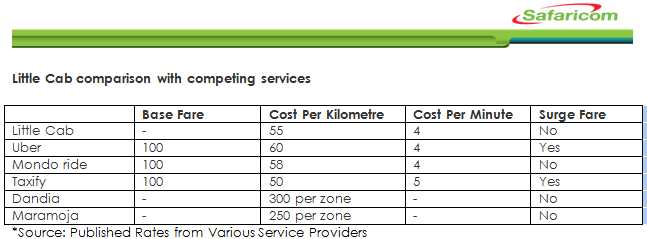
Nevertheless, the struggle in the regions continues. One of the important markets is Africa. In Kenya, startups are trying to compete with Uber, as well as giants such as Safaricom, the country's largest telecom and fintech company. The latter launched the Little Cab ride sharing service .
The service is available to users of devices based on iOS, Android and Windows. In the near future, those who do not have smartphones will be able to use it. The application allows you to pay in cash, card and, of course, mobile money Safaricom M-Pesa. The service also supports maps with GPS and provides passengers with free Wi-Fi.
Uber launched in Kenya in 2015.
Among other services in this region, MondoRide , Taxify , Dandiaand Maramoja .
“Little Cab intends to reach 1 million trips over the next 6 months,” said Craft Silicon CEO Kamal Budhabhati, a partner with Safaricom.
Technical points
Change DBMS
July 26, Uber announced the change of DBMS. The “early” architecture of the data layer was a monolithic backend application written in Python that used Postgres DBMS. Since then, the architecture has changed: over time, developers have switched to the microservice model.
And instead of Postgres, in many cases, the Schemaless layer , an add-on for MySQL, has been used. Another reason for the complete abandonment of Postgres is the presence of problems in performing various operations and, as a result, the threat of losing valuable information.
Development of your own mapping service
As reported by the Financial Times, Uber plans to develop its own mapping service. The company's goal is to get rid of dependence on Google Maps. The company is ready to allocate $ 500 million for this project.
Uber is currently collecting information and images for maps in the US and Mexico. We are talking about traffic patterns, the location of the entrances to the building and other details. For this, the company uses machines with cartographic equipment. In other countries, data collection will begin soon.
In 2015, Uber hired Brian McClendon, a digital mapping specialist who managed Google Maps and was responsible for creating Google Earth. According to him, Google Maps were “a good starting point” for Uber, but now these maps do not provide the necessary level of detail of the terrain.
“We have increased our investment in cartography because of the need for cards designed with Uber in mind,” said McClendon. He added that in developing countries, Google Maps are not accurate enough, which is why Uber drivers have to check the passengers' directions.
Despite the fact that Google previously invested in Uber, both companies are trying to avoid close cooperation, because they are currently developing competing technologies, for example, unmanned vehicles, says the Financial Times.
In June 2015, Uber acquired from Microsoft a stake in the Bing Maps mapping service. As part of the deal, the taxi service received about 100 employees who were engaged in the collection and processing of images in Bing Maps. In March 2015, Uber acquired the deCarta mapping service.
*******
Even the Uber company could not avoid the trend of consolidation of ride-sharing services. But before, these services, for the most part, united against her. And now the situation has changed.
As it turned out, Uber has many problems not only in terms of business, but also in terms of technology. Uber doesn't always win. But the company continues to develop comprehensively and remains the most expensive startup in the world.