July 18, 2016 at 18:49
How Linus Torvalds made software development freer
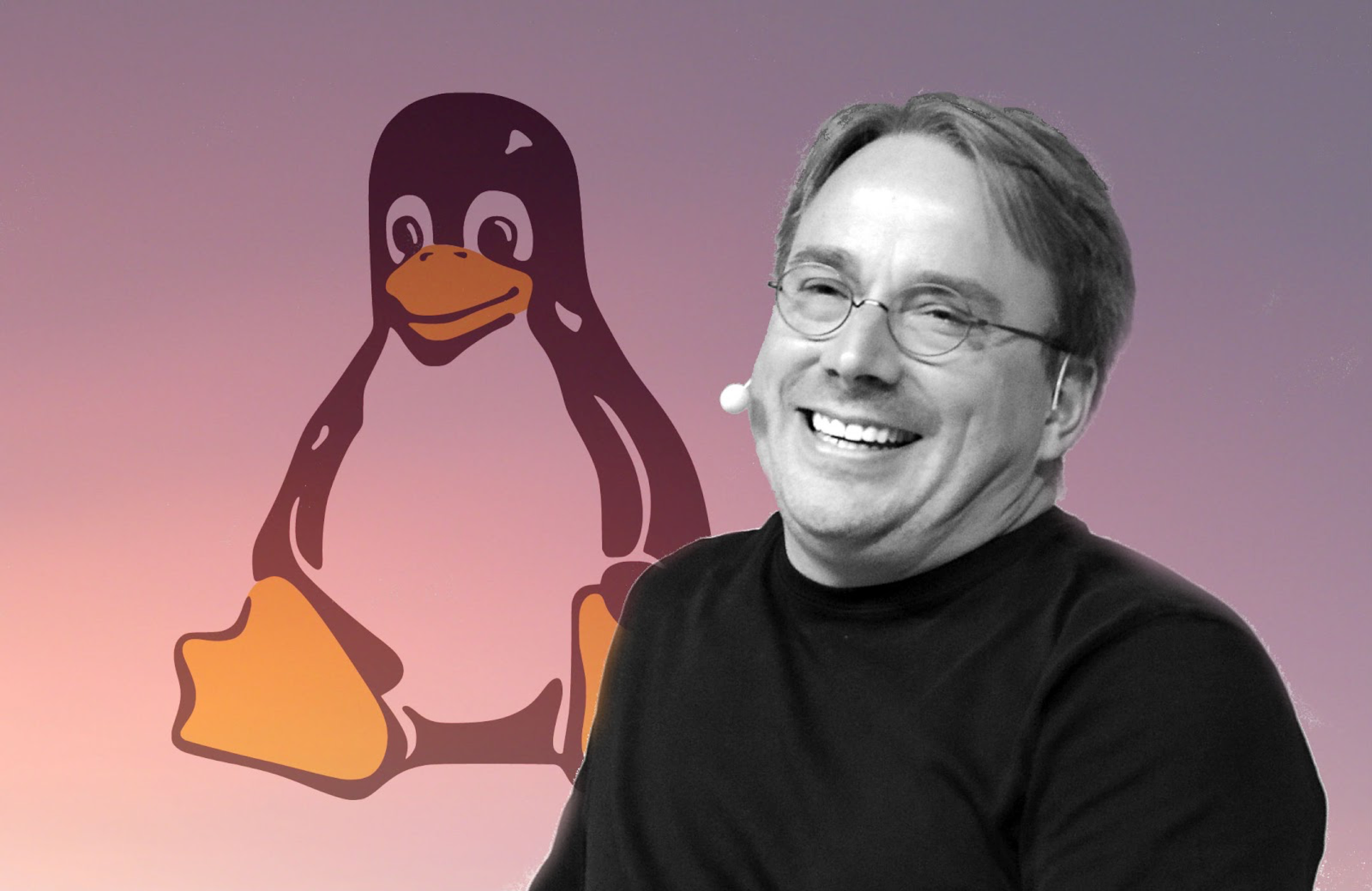
“I do free software because I think this is the only right way to develop.”
Some consider Linus Torvalds, the creator of the Linux operating system and the Git repository, to be just a lucky person. To someone, on the contrary, he seems a determined enthusiast in his field. However, no one will argue that thanks to the exceptional talent of Torvalds, an operating system has emerged that has spread throughout the world.
Moreover, of fundamental importance for its creator was the free use and free editing of the OS source code. Around Linux, a huge opensource community has formed, thanks to which the system is developing to this day: new builds and new operating systems based on the Linux kernel are constantly appearing.
Linux distribution conditions were developed at an early stage. Linux is free and cannot be put up for sale. If the user made any changes or improvements to the system, he should have made them public in the form of source codes.
Linus wrote his OS, relying on many freely distributed tools on the Internet. The most important of these was the GCC compiler, the copyright of which was stipulated in the General Public License. Subsequently, the entire Linux operating system was registered under the GPL.
"Game" on Linux
Linus Torvalds did not think about fame, and did not at all assume that the Linux story would go that far. He was fond of computers and programming from his school years and continued to do what he liked, studying at the University of Helsinki. He himself often notes that programming should be done as a pleasure. Therefore, just like in childhood, he simply "played" in the development of Linux. Driven first by excitement, and later by positive reviews, Torvalds at one point discovered that he had created an operating system.

Linux 0.01
"No one actually creates great code the first time, except for me, but I'm the only one."
Gradually, other developers began to “play” in Linux with its creator. By revealing all the cards and putting the source of his brainchild in the public domain, Torvalds to some extent risked losing the status of a leading developer in the project. However, he seems to have guessed that his professional level was significantly higher than most developers. In addition, not everyone knows how to work a lot, efficiently and at the same time for free. And Linus Torvalds just had such a "unique" ability.
And the following quote illustrates the term "entertainment" in the presentation of Torvalds:
So, most of you, most likely, will be unbearably tossed out of boredom on Christmas, and here you have the perfect entertainment. Test 2.6.15-rc7. All stores will be closed, and in fact there will be no better occupation between eating food.
In general, before Linus married his student, programming was probably the only thing he did between eating food. After getting married in 1996, Torvalds got a job at Transmeta, a California-based startup that developed energy-efficient CPUs. Nevertheless, he remained a leading Linux developer, while continuing to enjoy it.

And in 2003, he left the company to fully focus on the development of his OS. Care was made possible thanks to the newly formed public organization The Linux Foundation (at that time it was called Open Source Development Labs), which provided Torvalds with medical insurance and a salary.
Accidental success
The Linux community has become a self-regulating organism that no one has controlled centrally. Accordingly, there was no point in organizing a power struggle in the project. However, Torvalds is still credited with informal leadership. According to a famous quote, leading programmers is like grazing a herd of cats. Perhaps Linus was able to find a balance between the general direction of the project and at the same time did not stop the developers from walking on their own. Moreover, within the framework of this project, any participant can conduct their own development based on the Linux kernel without disturbing anyone.
You can also recall that like attracts like: being an adequate and self-critical professional without inflated QWS, Torvalds naturally “attracted” to himself those who possessed similar qualities. At some point, Linux became the most successful open source project. And as you know, the team most often achieves serious success when its members look in approximately the same direction.
Such results could not leave indifferent commercial manufacturers of operating systems ... and simply envious people who remained on the sidelines. However, Linus Torvalds did not seek to cross their path or make someone envy. Linux began to spread outside the community because it was a truly quality product. Especially great opportunities opened before her, when in the spring of 1992, the hacker Orest Zbrowski successfully adapted the X Window for Linux. Thus, Linux has a graphical interface.

Git
In addition to developing operating systems, Torvalds was of little interest. Although this topic includes many aspects that you can do all your life. The most boring areas Linus considered the development of version control systems and working with databases. However, ironically, in 2005 he was forced to create his own source code management system.
In 2005, Torvalds released the Linux 2.6.12-rc2 release and said it would not continue to develop the operating system until there was a replacement for the BitKeeper repository, which the Linux community had been using before 2005. BitKeeper had to be abandoned due to disagreements with its developers regarding its free use in opensource development. And other systems of source control, Thoralds categorically did not like.
“As a result, I decided that I could write something better in two weeks, and I was not mistaken.”
Torvalds created a distributed Git source control system in two weeks. He has said more than once that he cannot stand centralized repositories like SVN. When creating Git, Linus clearly understood what he needed: decentralization, the possibility of independent offline development, convenience and reliability during branching and merging. Moreover, he created a source code management system specifically for the needs of Linux kernel developers.

But Git was destined for a “great” fate, which Torvalds, again, did not expect. The repository has become popular outside the Linux community. Git was used by developers of products such as KVM, Qt, Drupal, Puppet, Wine.
Geek with character
In the wake of the popularity of Git, Linus even made a presentation to Google in 2007. After reviewing the report, we can conclude that Torvalds treated himself and the current situation with a fair amount of irony and self-criticism:
I should caution you slightly that I am not a very good speaker, partly because I don’t like speaking, and partly because over the past few years everyone just wanted me to talk about Linux’s foggy future in the next century, and I generally geek and prefer to talk about technology.
As a child, Linus Torvalds was a shy and uncommunicative person. At school, he was considered a typical "nerd", which is consistent with his appearance (feeble and stunted) and hobbies. He considered himself “ugly” - including because of his big nose.
In his youth, he continued to suffer from all sorts of complexes related to socialization. True, he suffered exclusively in his free time from programming - that is, quite rarely.
His failures in society were more than offset by successes in computer science, where Torvalds enjoyed his own “omnipotence”. But such contradictions are characteristic of outstanding people and are compensated with age. In this case, one can trace what imprint this left on his manner of communication.

You may not agree with me as much as you want, but during this report all who disagree with me are, by definition, stupid freaks. Remember this! You will be free to do and think whatever you want when I finish the report. And now I'm telling you my only right opinion, so CVS users, if you really love him that way, get out of my sight. You need to go to a mental hospital or somewhere else.
The topic in which Torvalds feels confident becomes a field for improvisation, self-irony, coquetry and other forms of flirting with the public.
I started the project, developed the architecture and the initial code, over the past year and a half it has been supported by a much more glorious guy, the Japanese Junio Hamano, and it was he who made Git more accessible for mere mortals. Early versions of Git did require a certain amount of “mental points” in the brain. Since then it has become much easier.
In general, this is my usual approach - everyone else is doing everything possible, but I myself can just sit and sip PinaColada.
Such qualities as frank frankness, bordering on demonstrative indecency, are not alien to Linus Torvalds. This is illustrated by the history of cooperation with NVidia in 2012.
One of the university's students asked the creator of Linux to comment on the relationship between the open source community and one of the world's largest developers of graphics accelerators and processors - NVidia.
Linus Torvalds said NVidia was one of the worst companies he had to deal with. According to him, representatives of NVidia have absolutely no desire to cooperate with the community of Linux developers and continues to keep closed the code of their graphics drivers for Linux.
Concluding his answer, Linus Torvalds summarized the above with respect to NVidia, made an indecent gesture with his hand on the camera, anddeclared : “NVidia, fuck you!” The

values that Linus Torvalds upheld (maybe, sometimes too defiantly) have changed the idea of what an open source community can be. His example inspired, and now continues to inspire, “to the exploits” of other developers.
On April 20, 2012, Linus Torvalds (together with the Japanese physician Sinya Yamanaka) won the Millennium Technology Award (Finland).
In 2014, Linus Torvalds received the Computer Pioneer Award from the IEEE Computer Society.