21 welcome letter: inspiration for your email marketing
- Transfer

Welcome letters are the superheroes of the lifelong e-mail marketing cycle. Deceptively soft, they are sometimes underestimated, but they are extremely important.
The success of your subsequent work with the e-mail stream largely depends on your first impressions. The welcome letter should prompt action, be informative and clear. That is why we pay so much attention to this topic, because it is not for nothing that they say that we have no second chance to make a first impression . The examples in this article cover a wide range of approaches (from different business areas). Some might be great for your product and service, others might not. Testing, as, however, and always, is very useful.
Purpose of welcome letters
It’s important to understand that in the case of welcome emails, opening and click statistics are not so important. Of course, you will try to maximize the effect of the message subject and its text, but the real purpose of the welcome letters is to promote the user through your registration process. The next step, depending on the software you use, blog, store, etc. may include filling out a profile, downloading something, reading a document, or something else. Whatever the next step, it should give the user something you need.
The statistics that are important here is the conversion rate. How many recipients took the step you asked them to take?
Without forgetting about this, let's look at examples.
1. Airbnb
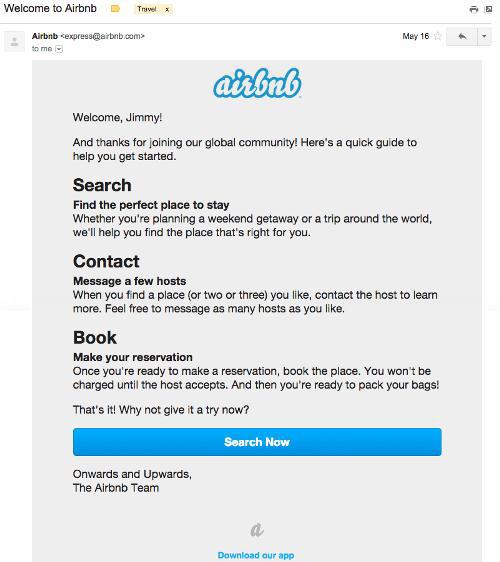
Uncertainty kills conversion. New users want to know how your product or service works before jumping into the water from the tower. This letter from Airbnb helps them relieve tension by offering a description of the booking process. After which, instead of asking users to "Book now", the letter encourages them to "Search now." The search does not oblige you to anything and this call does not cause resistance.
2. Amazon
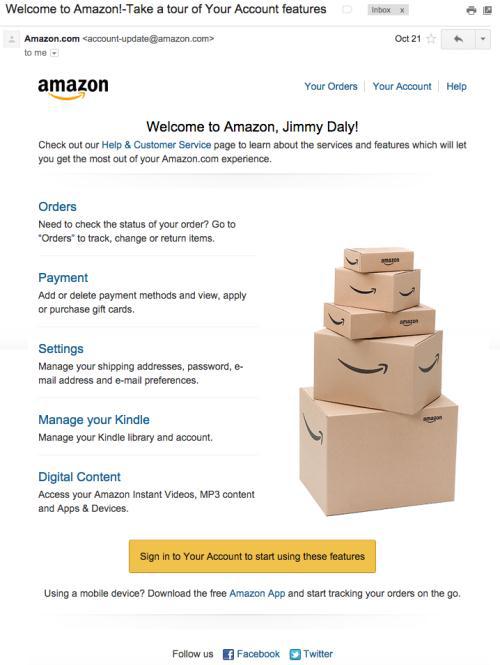
Amazon is a huge company. Yes, of course, she is mainly engaged in selling goods online, but their welcome letter should tell users about other things. For example, a lot of attention in this letter is given to digital content, possibly because these products are more profitable than physical ones.
Think strategically by creating a call to action in your welcome letter. Instead of directing customers to popular products or content, direct them to those products that give you maximum profit and conversion.
3. Basecamp
The only purpose of this welcome letter from Basecamp is to encourage the user to subscribe. They are sure that the product will sell itself. This letter is a bridge from incoming letters to the application. If you have a great product, you don’t need anything else.
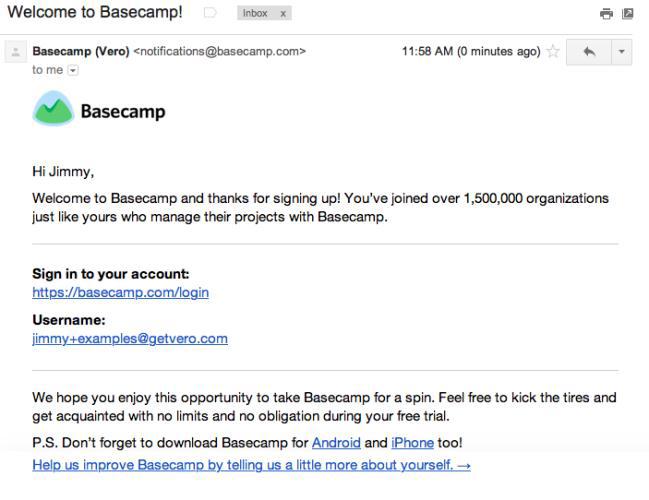
In this letter, they mention that 1.5 million organizations use Basecamp. This is a huge number and a perfect example of social confirmation.
4. Beatrix
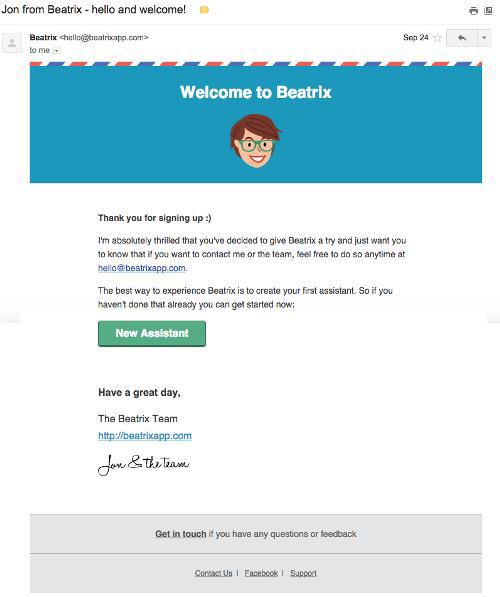
An emphasis on immediate action is what makes this Beatrix welcome letter effective. A short introduction goes into a call to action: create a “New Assistant.”
Creating an assistant is what will make this program useful to the client. The sooner this happens, the sooner the user of the free trial becomes a paying customer.
5. BugHerd
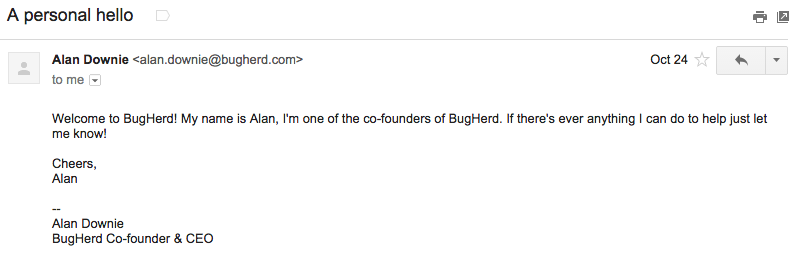
Now this company is known under the brand name Macropod. A letter from the founder, Alan Doury, is simple and personal. It sets a certain tone, letting the user know what kind of experience he can expect from using the product. This method, at first glance, may seem contrary to common sense, but it is one of the best branding methods for new customers - because of how they feel when reading this letter ... as a person, an individual, and not just a faceless “user” ".
6. Buzzsumo
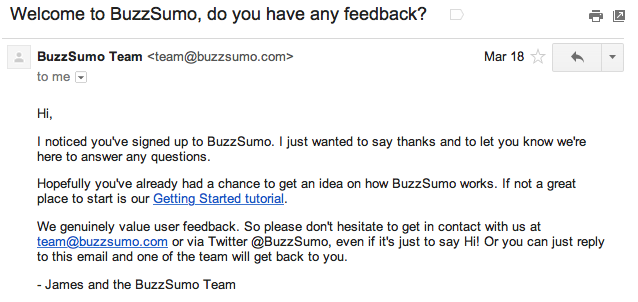
Buzzsumo takes a similar approach by sending out a welcome message in plain text format. The difference, however, is that Buzzsumo places emphasis on getting product reviews. They offer several ways to do this, which is the key to conversion to achieve a specific goal.
7. Ello
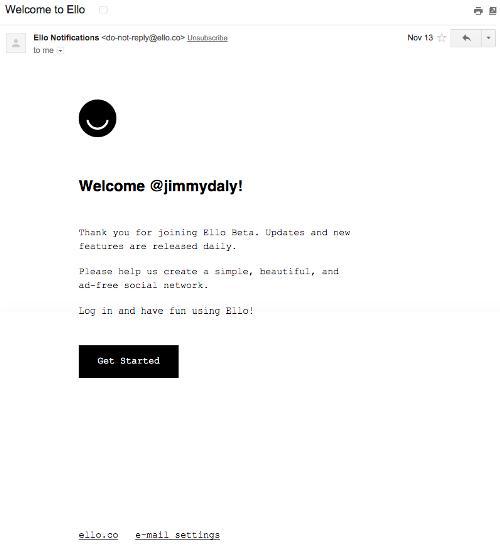
A welcome letter from Ello matches their branding perfectly. Unique font, lots of white space and some text. The impression of the message is the same as on the site. The welcome letter perfectly builds a bridge between clients and the company.
8. Fab
There is a lot of content in the welcome letter from Fab, but they manage to cope with the task through their excellent appearance - the design is simply beautiful - and the use of a peppy tone.
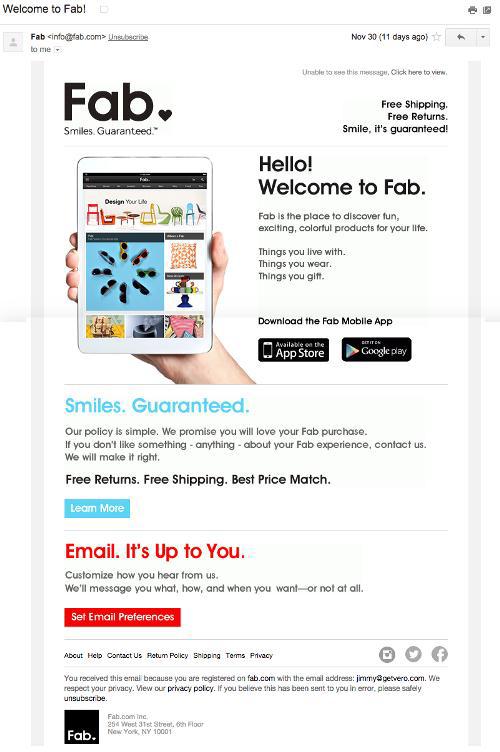
See what words they use:
• “Discover fun, colorful products!”
• “Smiles. Guaranteed! ”
•“ We promise you will love your Fab purchase! ”
In general, this is a good impression and the letter provides several ways to start using the site directly from the text of the letter.
9. Goodreads
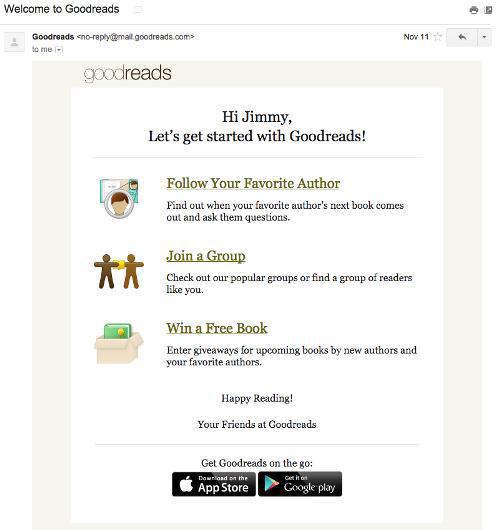
Formula 1-2-3 is great for greeting letters. Just as in the example letter from Airbnb above, Goodreads shows how easy it is to start using the site. Formula 1-2-3 is understandable to readers and, if applied correctly, helps clear up doubts about using a new product.
10. iDoneThis
This is arguably the most functional welcome email I have ever seen. IDoneThis users receive a daily message that looks exactly like this. The answer to the tasks that you have already done adds “done” to your calendar. A welcome letter explains how everything works, and gives you the opportunity to try to do it right away.

11. Import.io
If you need users to download something, it is very important that they do it as soon as possible. Without downloading, your product is useless to them.

This letter could put a stronger emphasis on the download, but in general, we like the way it is divided into sections with instructions on how to complete each part of the task.
12. Inbox by Gmail
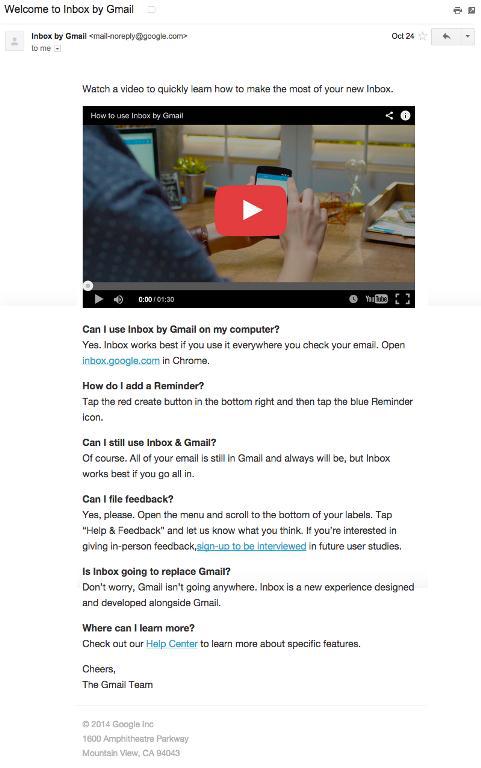
Given that Inbox is a new concept for many users, Gmail uses a “frequently asked questions” approach in its welcome email. It is possible that some users still do not fully understand how everything works. Together with 6 questions and answers, the video clearly shows how the product works, and users are eager to try it.
13. JustUnfollow
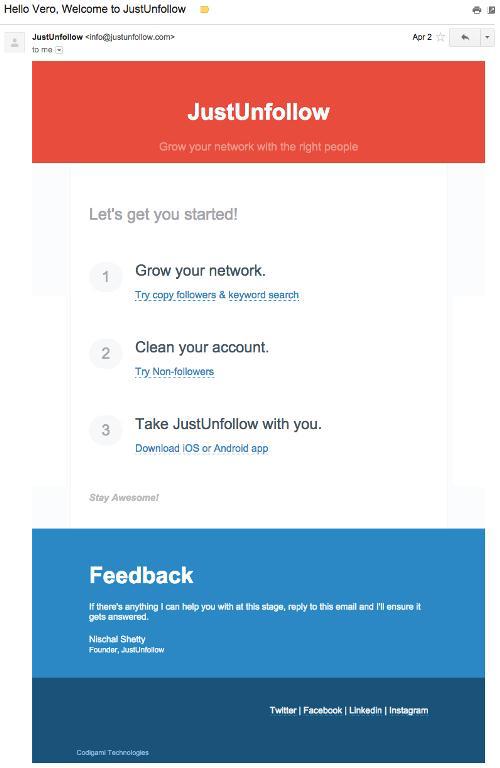
Approach 1-2-3 in the simplest format. JustUnfollow uses as few words as possible to describe what users need to do, and provides the necessary links to the right places in the application. Often, the less said, the greater the benefit - and in this case it really is.
14. Lonely Planet
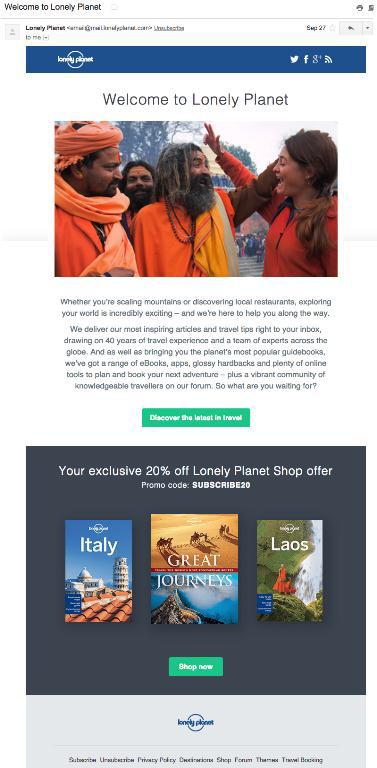
The first example of using a coupon code strategy. This is a popular and easy way to push new customers to action. Lonely Planet does a good job of this, making the introductory paragraph interesting and immediately turning to the call for immediate participation in the action, offering a coupon.
15. Squarespace
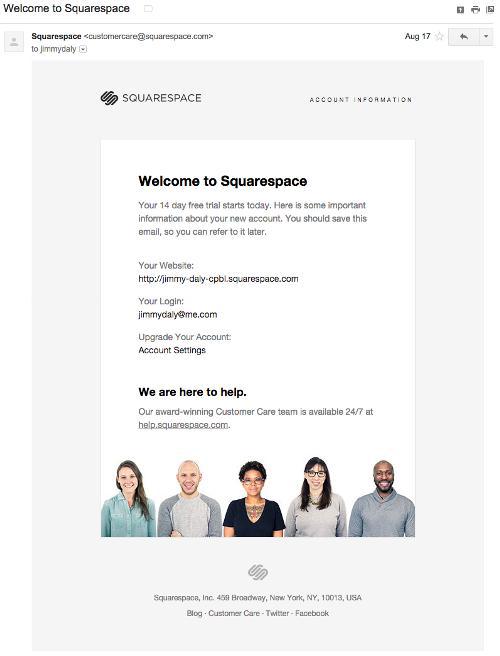
Just like in the Basecamp example, Squarespace is confident that their product will be able to sell itself. Their welcome letter focuses on getting new users logged in and mentioning support at the end is a kind of safety net for users who are afraid to start the process.
16. Strava
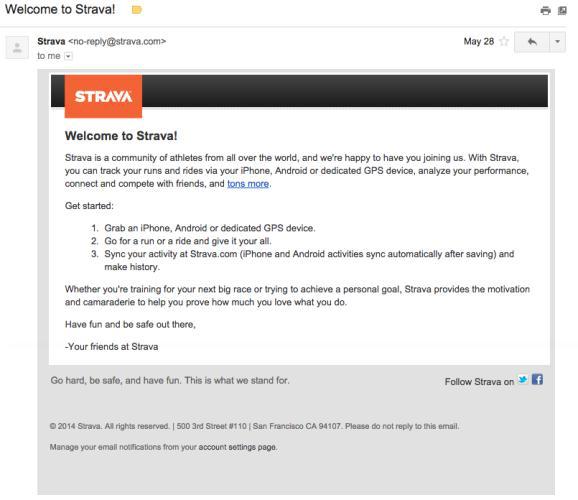
Another example of the popular 1-2-3 method. This letter from Strava does an excellent job explaining what the application does and why customers should use it. But, at the same time, the letter does not give a sufficiently strong call to action. For example, a button that prompts users to record their first workout or log in could make this email almost perfect.
17. SumAll
As already mentioned, you need to understand what exactly will be useful to your users in order to move them in the right direction and form loyalty. For SumAll, the key to success is joining other services so that you can start collecting data. Contrasting colors and strong text make the call to action very effective.

18. SumDay
This welcome email is surprisingly similar to SumAll, and in the same way encourages new users to take immediate action to benefit from the product.
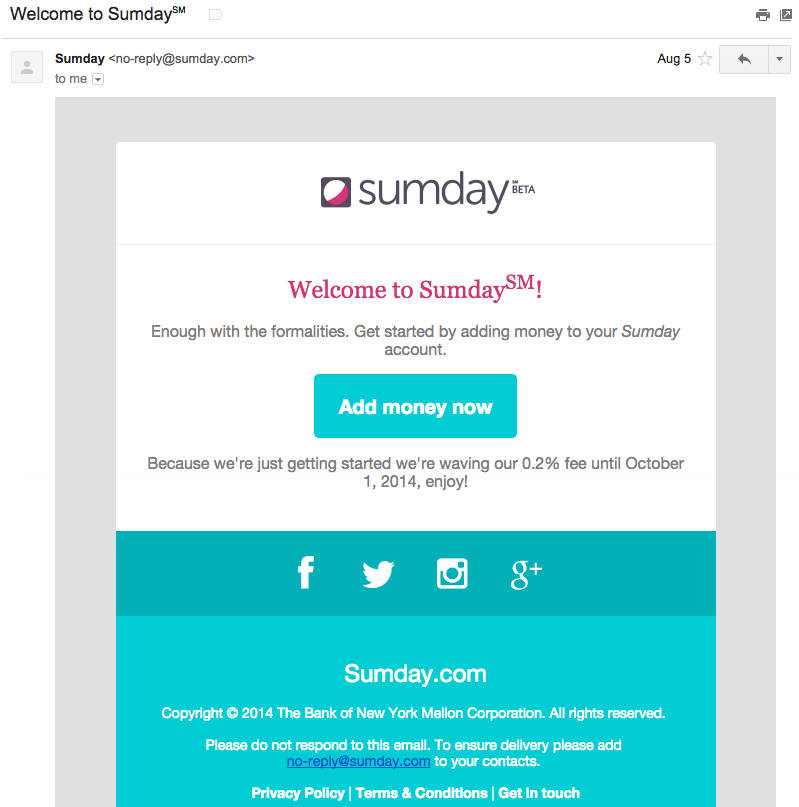
Without top-up, this service is useless. Therefore, eliminating the initial payment works like a coupon so that the client can immediately start using the site.
19. Target
For some reason, huge companies often think that they need to have huge letters. Not at all. In fact, it is better for new customers to send short, actionable messages.

This welcome letter from Target is too long, but it achieves several goals at once:
1. It uses a positive, peppy text.
2. Offers discounts in exchange for immediate action.
3. Contains an image of a dog (any excuse to use a picture with a dog, cat, koala bear or a newborn baby always works).
20. Vero
Warning: this letter was written by the author of the article, but at the same time, he is absolutely sure that it is successful.
People get this letter when they sign up for our e-mail vacation course. The purpose of this letter is for people to tell their friends about the company.
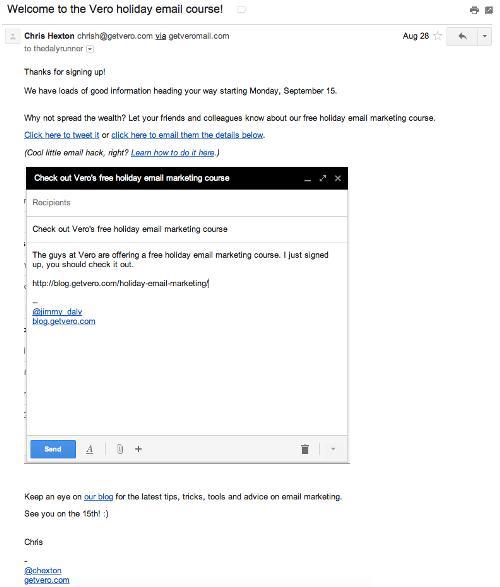
So, the task of writing is to make it as easy as possible for them. For this, the e-mail hack Noah Kagan's Samuel L. Jackson was used, which you can read more about here .
21. Zapier
This letter welcomes users of the free Zapier plan. And it means that their free probe has ended.
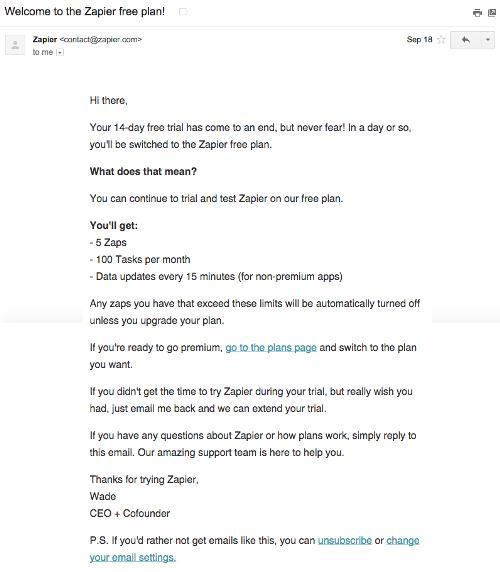
The letter fell into this list because it transforms what could be the end of the client cycle into the beginning of something new and interesting. If you can turn a negative event into a positive one, take advantage of this.