Search Articles — Sudonull
Search Results
Trending Now

How to Build an AI Agent with LangChain: Step-by-Step Guide
Learn how to build an AI agent with LangChain in this step-by-step tutorial. Set up tools, integrate LLMs, and create autonomous agents with memory.

What Is Kubernetes and How It Works: Complete Guide
Learn what is Kubernetes and how it works. Understand its architecture, self-healing, scaling benefits, and real-world impact. Start mastering container orchestration today.

What Is a Vector Database? Beginner's Guide to AI Search
What is a vector database? Learn how vector databases power AI search, RAG, and recommendations. Discover key concepts and when to use them. Start here.
GPT-4 vs Claude Comparison: Which AI Model Is Best?
Read our data-driven GPT-4 vs Claude comparison covering accuracy, coding, hallucinations, and cost. Discover which AI model fits your needs in 2026.

Kubernetes Architecture Explained with Examples | Guide
Kubernetes architecture explained with examples: understand control plane, worker nodes, Pods, and deployment flow. Learn how clusters work with practical use cases.
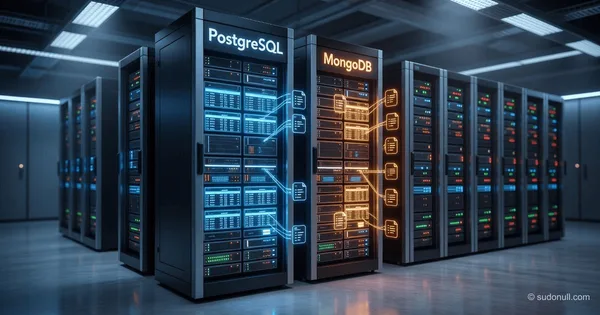
MongoDB vs PostgreSQL When to Use Each: Key Differences
MongoDB vs PostgreSQL when to use each: compare ACID compliance, scalability, schema flexibility, and query power. Choose the right database for your project.

How Does Retrieval Augmented Generation Work? RAG Guide
Learn how does retrieval augmented generation work: RAG reduces AI hallucinations, grounds responses in real data, and transforms LLMs into trustworthy systems. Start now.

How to Choose a Database for Your System: Expert Guide
Learn how to choose a database for your system with this evidence-based framework. Compare SQL, NoSQL, graph, and time-series databases to make the right decision.
What Is Microservices Architecture? Benefits & Patterns
Learn what is microservices architecture, its benefits, challenges, and key patterns like Saga and API Gateway. Understand when to use this modern approach.

Breakthrough in Quantum Error Correction: Google and Quantinuum
Google and Quantinuum have reached the threshold of scalable quantum error correction. Learn how this changes the future of quantum computing and who benefits from the breakthrough.