Autonomous AI Agents in Industry: Implementation Cases 2025–2026
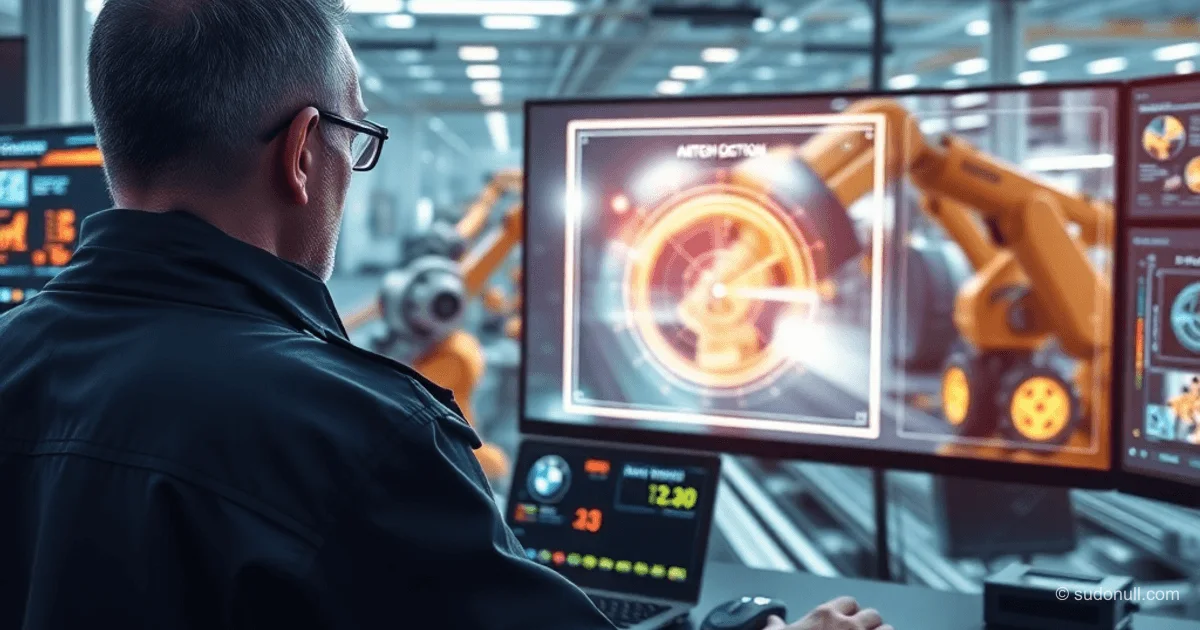
From 2025 to 2026, AI in industry has evolved from reactive chatbots to autonomous agents. Models like OpenClaw demonstrate the ability to plan multi-stage tasks: from adjusting procurement to integrating with ERP systems. Native multimodality — Qwen3 VL, GLM 4.6V, Llama 4 Scout — enables analysis of assembly line video, machine acoustics, and engineering reports within a single system. This lays the groundwork for the AI-Factory, where AI manages physical processes through robots and equipment.
The concept is implemented without humanoid robots: agents coordinate warehouse logistics and optimize machine parameters based on real-time data.
Quality Control and Predictive Maintenance
BMW launched GenAI4Q — a multimodal LLM for custom inspections. The system interprets text specifications and visuals, identifying defects without manual programming. At the Regensburg plant, AI optimizes inspection sequences, reducing control time and improving assembly quality. The ATS system coordinates 140+ autonomous robots and 50 tuggers.
Tesla uses AI for HVAC and energy consumption at gigafactories. Algorithms model workshop dynamics using data from thousands of sensors, predicting load. In Berlin, 17,000 MWh per year were saved, reducing the carbon footprint.
Corporate LLMs and Digital Twins
Foxconn developed FoxBrain — an LLM based on Llama 3, optimized for manufacturing and the Chinese language. The model integrates ERP data, generates code for equipment, and automates document flow. In electronics assembly, AI agents with computer vision detect micro-soldering defects using thermal maps and video. Yield increased, and defects decreased by 15%.
Digital twins based on NVIDIA Omniverse allow continuous training of agents for machine adjustments.
Mercedes-Benz deployed Direct Chat on GPT and Gemini for 10,000 employees. Assistants answer according to regulations, generate reports, and translate into 40+ languages.
JD in logistics uses an LLM dispatcher: analyzing inventory for 10 million products, forecasting shortages with >95% accuracy, and achieving inventory turnover of 30 days.
Office Automation in Manufacturing
Ma’aden integrated AI into Microsoft Teams:
- Processing emails and reports;
- Accounting and finance;
- Presentations;
- Data extraction from spreadsheets;
- Corporate chatbot;
- Knowledge base;
- Agent for regulatory documents.
Savings — >2000 hours/month.
Risks and Mitigation Measures
Hallucinations (2–3% of cases) are critical for assembly lines. Solution: RAG with search in verified sources + guardrails to block uncertain answers.
Agent vulnerabilities to prompt injections. Measures: limiting permissions (Human-in-the-Loop), AI firewalls.
Legacy systems and dirty data hinder 42–95% of projects. Start with digitization: unified data space.
Key Takeaways
- Autonomous agents are transitioning from analysis to physical process management.
- Multimodal models integrate video, audio, and text for real-time decisions.
- Cases from BMW, Tesla, and Foxconn show ROI in quality, energy, and logistics.
- Office automation is accessible to small businesses without large investments.
- RAG and guardrails minimize risks of hallucinations and attacks.
— Editorial Team










No comments yet.