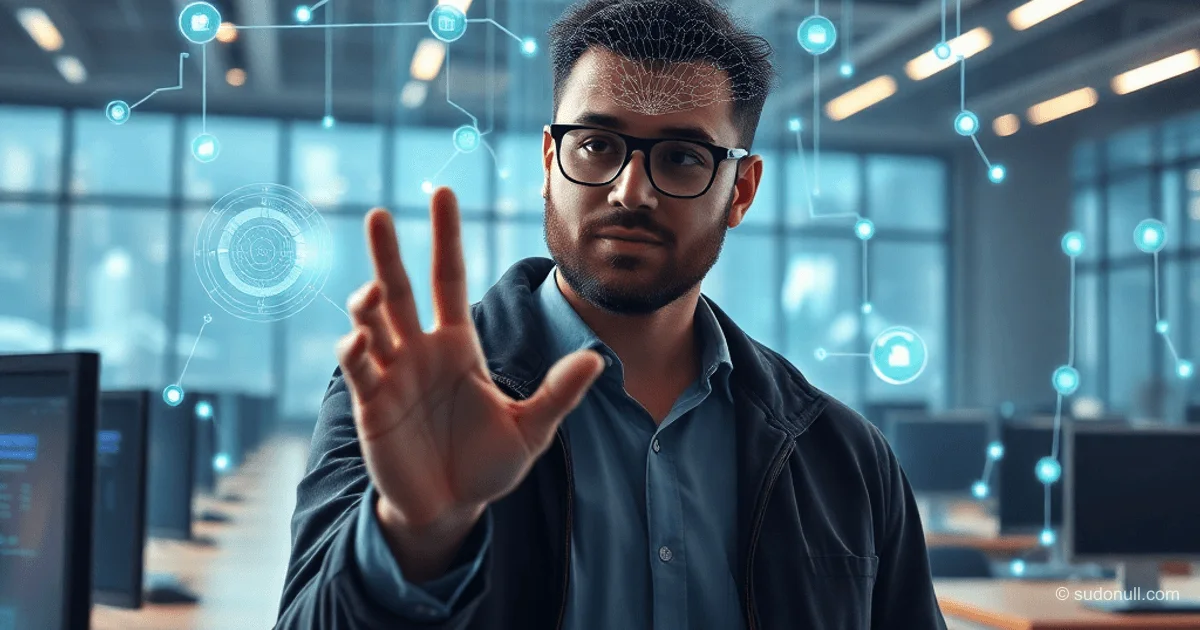
Humans and AI: From Labor Replacement to Symbiotic Evolution
Digital transformation is fundamentally reshaping the core mechanics of society. Labor, which historically shaped social structures through cooperation and production, is losing its central position. Physical effort is giving way to data management, system design, and intellectual processes. This shifts humans from the role of production-line executors to that of coordinators.
An example from China's rice culture illustrates this connection: collective labor for irrigation systems defined the social order. Today, automation is breaking this link, reorienting the economy toward cognitive resources.
Automation and Unexpected Replacement
It was expected that robotics and AI would free up time for creativity, science, and entrepreneurship by taking over routine tasks. However, practice shows the opposite: not only are jobs at risk, but creative professions—designers, programmers, writers—are also under threat. AI agents are taking on tasks requiring creativity, calling the ideal scenario into question.
Two Trajectories of Human Adaptation
Society is stratifying into two types of participants in the digital ecosystem:
- The Consumer: Integrates into recommendation systems where autonomy diminishes. Choice is limited to preset options convenient for platforms.
- The Creator (homo creatoris): Uses AI as a tool to enhance productivity. Platforms lower entry barriers, reduce tool costs, erase geographical limitations, and open niches in agriculture, construction, and other sectors.
The key difference is the direction of dependency: from system to human or vice versa. The question is whether most people will have enough motivation for creativity or if hedonism will prevail.
Digital Personas and Hybrid Structures
The development of AI agents will lead to autonomous digital entities—avatars acting on behalf of individuals. Recognizing their subjectivity will complicate social architecture: rights, responsibilities, and the speed of connections within the "human—agent—device—platform" loop will exceed human perceptual capabilities.
Neurointerfaces may partially solve this speed bottleneck, but a dilemma arises: where is the boundary for replacing human parts, beyond which a person ceases to be human? This is not like replacing planks in a boat but a fundamental shift in identity.
Symbiosis Instead of Replacement
The scenario of humans being fully replaced by machines is oversimplified. A more likely outcome is a hypercomplex network where humans, computations, and devices are interdependent nodes. Humans retain the role of providing context, values, meaningful novelty, and non-standard tasks—elements irreducible to algorithms.
As Yuval Noah Harari noted, the key lies in defining what humanity truly wants to desire. Symbiotic assembly enhances humans if institutions reinforce their subjectivity.
Key Takeaways
- Redistributing the benefits of automation to strengthen human capital, not reduce labor compensation.
- Developing core competencies: attention management, critical thinking, and decision ethics in the age of agentic systems.
- Defining boundaries for delegating tasks to AI, preserving zones of human responsibility.
- Regulating the legal status of digital agents.
- Designing institutions where humans remain subjects, not interfaces for algorithms.
Ultimately, the main challenge is preserving human subjectivity in an accelerating environment of machine decisions. A positive outcome will make the digital era a stage of evolution.
— Editorial Team










No comments yet.