# ICLR Rejects 497 Papers: Why AI Detectors in 2026 Are a False Sense of Security
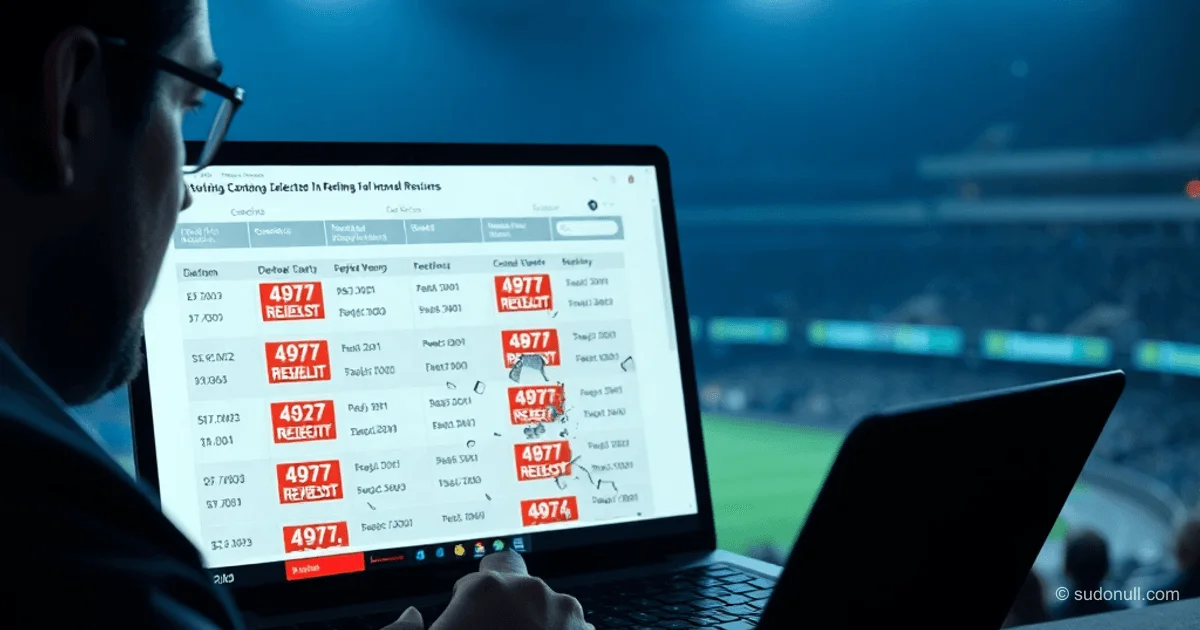
In late March 2026, the ICLR conference rejected 497 scientific papers due to suspicions of AI being used to write the reviews. However, independent studies show that modern AI detectors perform with 15-20% lower accuracy than claimed, and they can be bypassed in just 30 seconds. What's more, these systems systematically discriminate against non-native English speakers. We break down why this situation undermines the methodology of scientific conferences.
How AI Detectors Work: Three Technical Foundations
Modern AI detectors are built on three fundamentally different architectures. All of them analyze text and output a probability of AI generation, but their processing algorithms differ radically:
- Perplexity-based systems (GPTZero, ZeroGPT). They calculate perplexity—the degree of predictability of the text for a language model (usually GPT-2). AI-generated texts have low perplexity due to statistical uniformity. The method is vulnerable to variations in sentence length and stylistic imperfections.
- Contrastive approach (Binoculars). Compares perplexity between a base model and a fine-tuned one. The difference in scores indicates the text's origin. Accuracy is 10-15% higher, but it requires complex model calibration.
- Neural network classifiers (Originality.ai, Copyleaks). Use RoBERTa or similar models trained on "human vs. AI" datasets. Model ensembles (like TriBoost) theoretically reach 99% accuracy, but only in lab conditions.
The key systemic flaw in all three types: detectors identify not the fact of AI generation, but statistical patterns typical of AI texts. This fundamental difference makes the systems vulnerable to manipulation.
Claimed Performance vs. Real-World Data
In March-April 2026, independent labs (TextShift, Walter Writes, UndetectedGPT) tested commercial detectors on mixed corpora of 500-2000 texts. Results consistently diverged from marketing claims:
- Originality.ai: claimed 96-99% → real accuracy 84-88%
- Pangram: claimed 99.5% → real accuracy 81-87%
- GPTZero: claimed 98% → real accuracy 65-72%
- Copyleaks: claimed 99% → real accuracy 78-82%
- ZeroGPT: claimed 98% → real accuracy 60-68%
The 15-20 percentage point gap is not the exception, but the rule. There are two reasons: first, the detectors' test datasets don't reflect real-world text diversity; second, developers deliberately optimize metrics for lab conditions. For example, Pangram Labs admitted in their March report that their model hits 99.5% accuracy only on training corpora, dropping 12-15% on real academic texts.
Bypassing Detectors: The Human Touch in 30 Seconds
Since December 2025, "humanizers"—prompts for LLMs that alter text's statistical properties—have gained traction. Technically, they add:
- Variations in sentence length
- Illogical transitions and conversational phrases
- Typographical rough edges (extra commas, sentence fragments)
- Stylistic "impurities" (avoiding templates like "it should be noted")
Humanization sharply reduces detector accuracy:
- Originality.ai: from 88% to 7.8%
- Copyleaks: from 82% to 6.2%
- Turnitin: from 79% to 5.1%
- GPTZero: from 72% to 4.3%
- ZeroGPT: from 65% to 3.1%
Example humanizing prompt:
HUMANIZE_PROMPT = """
Rewrite the following text so it sounds like a human draft.
You may: inconsistency, uneven rhythm, colloquial inserts,
a little uncertainty, sometimes dlinnye sentences, sometimes obryvki.
Withkeep the meaning, but change structure. Not ispolzuy typical templates
like «in-first, in-second», «takim way», «it should be noted».
"""
In experiments with academic reviews, humanized text scored 6-14% AI probability on detectors—identical to human-written text. For an experienced user, this takes 30 seconds without special skills.
Systemic Bias Against Non-Native English Speakers
Stanford research (Liang et al., 2023) and follow-ups revealed a critical issue: AI detectors show strong bias against non-native English speakers. Pangram Labs data (March 2026):
- 61% of non-native English essays are flagged as AI-generated by at least one detector
- Among native speakers, false positive rate is 5-7%
- Reasons: non-natives write more "evenly," with less linguistic redundancy, statistically closer to AI texts
Pangram Labs claims their new model reduced false positives for ESL to 1.2%. However, independent verification on large corpora is lacking—the data is too fresh. Given that 70% of ICLR participants are non-native English speakers (China, India, Russia, Brazil), a significant portion of the 497 rejected papers likely included human-written reviews, not AI.
Implications for the Scientific Community
The state of AI detectors in 2026 creates three fundamental problems:
- Methodological flaws in mass rejections. Detectors can't reliably distinguish humanized AI text from human writing, while penalizing non-native speakers.
- Ethical risks. Decisions based on detector outputs (rejection, disqualification) can ruin careers without solid evidence.
- Technical dead end. As shown in Sadasivan et al., reliably detecting AI generation from modern LLMs is mathematically unsolvable without embedded watermarks.
Commercial providers (including OpenAI) deliberately disable watermarking, as it reduces user retention. Without systemic support from generative models, we're doomed to an era of distrust in textual content.
Key Takeaways
- Modern AI detectors deliver 15-20% lower real-world accuracy than marketing claims
- Humanizing text via a simple prompt drops detector accuracy to coin-flip levels (3-8%)
- Systemic bias against non-native English speakers causes 61% false positives
- Using detectors as proof of ethical violations in scientific publishing is methodologically flawed
- Reliable AI detection without LLM support is technically impossible
In the coming years, scientific conferences and educational institutions will need to rethink text verification policies. The focus should shift from automated scanning to expert review and research transparency. For now, the ICLR incident shows how failing to acknowledge tech limitations harms the very idea of scientific integrity.
— Editorial Team







No comments yet.