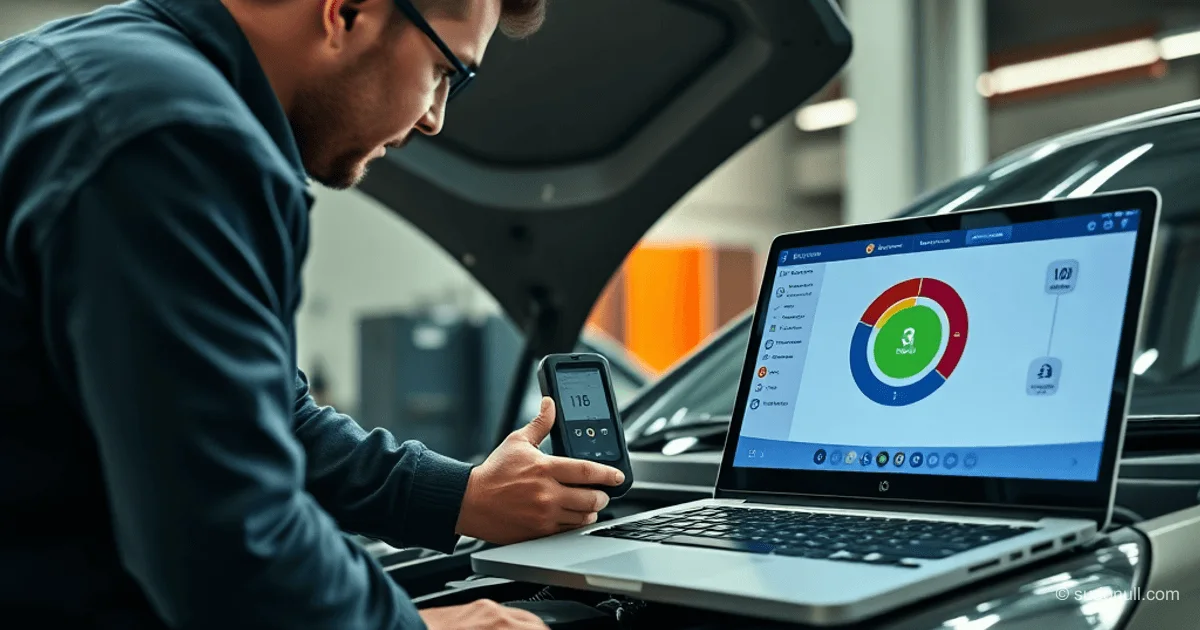
AI Tools for Predicting Breakdowns in the Citroen C3 Picasso
For a 2010 Citroen C3 Picasso (1.4VTi, 95 hp, 95-98 octane gasoline, 145,000 km mileage) with a usage history—minimal mileage until 2013 (10,000 km), followed by year-round city driving in traffic with regular highway trips (120 km)—AI can gather data on typical failures. Using models like DeepSeek, a report on potential component issues is generated: engine, transmission, suspension, electronics. Data is aggregated from open sources for the model, considering mileage and storage conditions (cold parking level 3).
The report is imported into NotebookLM for infographic visualization. This provides a structured overview of risks without manual forum or manual searches.
Risk Analysis and IT Solutions
DeepSeek analyzes existing risks and proposes IT approaches for mitigation. Key areas:
- Real-time monitoring: OBD-II adapters (ELM327) with apps like Torque Pro or Car Scanner ELM OBD2. Connecting to the car's CAN bus reads parameters: oil temperature, pressure, ECU errors.
- Predictive analytics: Integration with cloud services (Google Cloud IoT, AWS IoT) for ML models on historical data. Predicting failures based on vibration trends, fuel consumption.
- Automated notifications: Telegram bots or IFTTT based on collected data. Python scripts with pandas and scikit-learn libraries for local log analysis.
The generated report is visualized in NotebookLM: infographics with task priorities, part costs, and ROI from preventive maintenance.
Practical Implementation Pipeline
- Data collection: Query DeepSeek with car parameters (year, model, mileage, usage).
- Report generation: LLM aggregates typical problems—oil leaks in 1.4VTi, clutch wear in city driving, suspension corrosion from year-round use.
- Visualization: NotebookLM builds dashboards with component reliability charts by mileage.
- Recommendations: AI suggests scripts for automation. Example basic monitoring:
import obd
connection = obd.OBD()  # ELM327 connection
cmd = obd.commands.RPM
response = connection.query(cmd)
print(response.value)
This code extracts engine RPM; expandable to failure sensors.
For senior developers: integrate with InfluxDB for time-series OBD data storage, apply Prophet or LSTM for failure forecasting based on telemetry.
AI Limitations in Diagnostics
Models like DeepSeek hallucinate: generate non-existent defects based on noisy internet data. Reports are not a mechanic replacement, but a starting point.
- Validation: Cross-check with PSA (Peugeot-Citroen) service bulletins, owner forums.
- Accuracy: For C3 Picasso, real issues—catalytic converter after 140k km, thermostat, DPF filter in gasoline versions.
- Scaling: Custom sensors (Arduino + MPU6050 for vibration) instead of OBD.
Key Takeaways
- AI accelerates brainstorming: from query to infographics in minutes.
- OBD-II + ML reduces maintenance costs by 20–30% through prediction.
- Hallucinations require expert verification.
- DeepSeek + NotebookLM pipeline suits rapid prototyping.
- For 145k km, focus on engine and transmission.
— Editorial Team










No comments yet.