Argo and Nero After 20 Years: The Evolution of Oceanographic Buoys and Multimedia Software
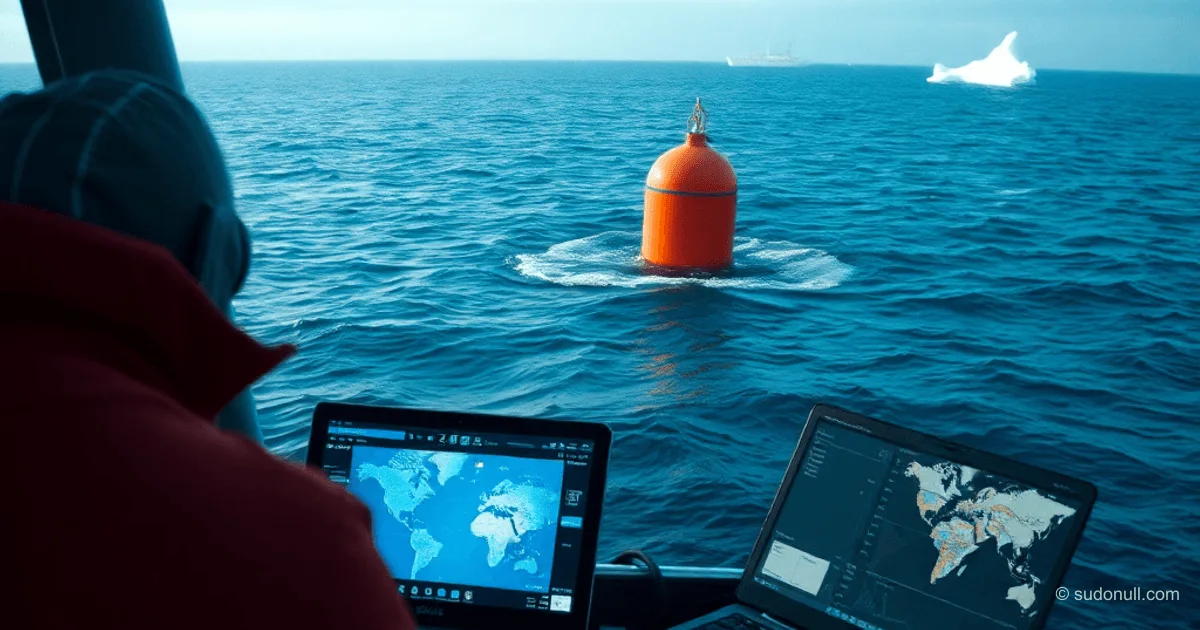
In 2005, the Argo project launched its 1,500th robotic buoy for monitoring the world's oceans. Today, the network has grown to over 4,000 active buoys collecting data on temperature, salinity, and currents. The buoys operate on 10-day cycles: 9 days drifting at a depth of 1,000 meters, profiling down to 2,000 meters with measurements, and transmitting data via satellites.
The system covers the entire ocean, including tropical regions and boundary currents. Over 25 years, it has gathered more than 3 million profiles. This data is used for climate modeling, storm forecasting, and assessing warming—the ocean absorbs 90% of excess heat from greenhouse gases.
How Argo Buoys Work
- Drift: Descent to 1,000 meters, passive movement for 9 days.
- Profiling: Dive to 2,000 meters, slow ascent with temperature and salinity sensors.
- Transmission: At the surface—satellite transmission to scientific centers in 65 countries.
- Cycle: Repeat every 10 days, lifespan of 4–7 years.
New variants expand capabilities:
- Deep Argo—down to 6,000 meters.
- BGC Argo—biochemistry (oxygen, pH, nitrates).
- Polar Argo—operation under Arctic and Antarctic ice with delayed transmission.
Improvements in power systems extend device life, compensating for natural wear and tear.
The Evolution of Nero: From CD/DVD Burning to AI Multimedia
In 2005, Ahead Software AG rebranded as Nero AG to capitalize on the popularity of Nero Burning ROM—a leader with 160 million users. The product was bundled with drives from LG, ASUS, and Sony, ensuring dominance in the optical media market.
As demand for CDs/DVDs declined, the company diversified. By 2012, Nero Multimedia Suite faced criticism as bloatware: heavy code, low performance. Staff reductions from over 400 to a minimum, restructuring.
Timeline of Key Milestones
- 1995–2005: The Golden Era. Ahead Software GmbH (Karlsruhe) dominates disc burning.
- 2006–2012: Crisis. Shift to multimedia, losses, bloatware criticism.
- 2013–2020: Transformation. Focus on digital content, workforce reduction.
- 2024–2026: AI Niche. Nero Platinum Suite 2026—20+ applications with AI.
The modern stack includes:
- Nero AI Photo Tagger, AI Image Upscaler.
- Nero Video, Motion Tracker.
- Nero Burning ROM, Recode, BackItUp.
- Nero MediaHome, TuneItUp PRO.
Nero Start manages subscriptions, updates, and module downloads. The company survived without acquisition, becoming a niche player in AI multimedia.
Key Takeaways
- Argo: 4,000+ buoys provide global ocean monitoring; new types (Deep, BGC, Polar) expand data on depth, chemistry, and polar regions.
- Nero Evolution: From CD burning to 20+ AI tools in Platinum Suite; overcame bloatware crisis through restructuring.
- Project Resilience: Both examples show technology adaptation—Argo to climate challenges, Nero to digitalization.
- Argo Data: 3+ million profiles for weather models and warming assessment.
- Nero 2026: AI integration into photo/video/audio without losing legacy burning functions.
— Editorial Team










No comments yet.