Catalytic Micromotion of Microsystems: Principles and Experimental Realization
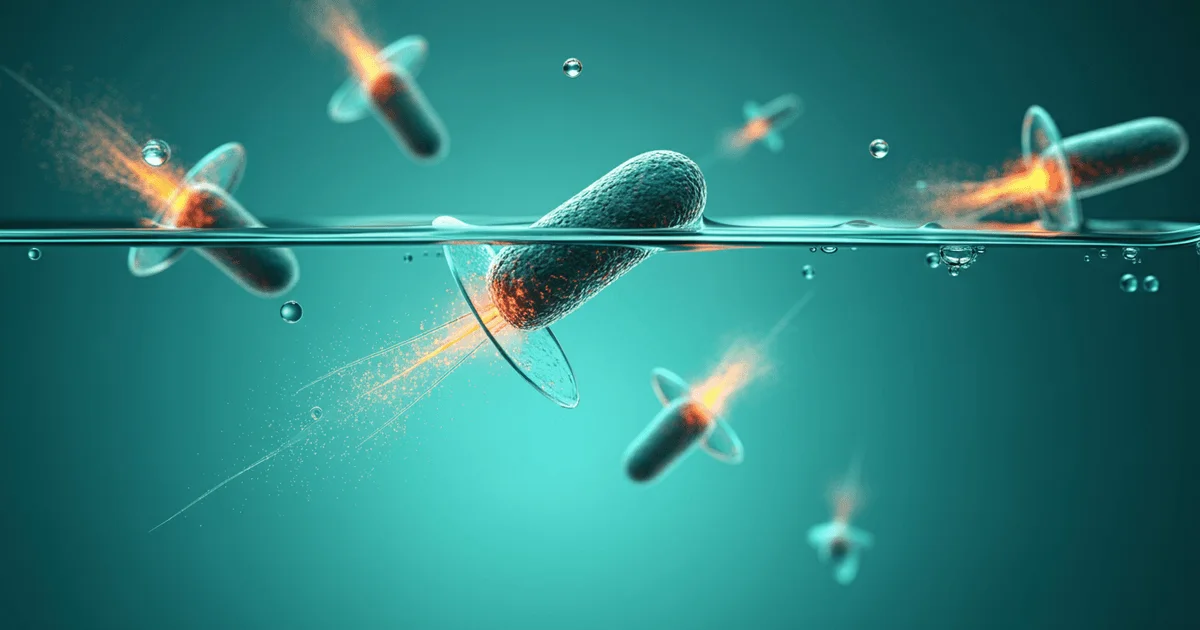
Self-propelled micro-objects, or micro-swimmers, represent a rapidly developing field in materials science and micro-robotics. These solid particles are capable of autonomous movement in liquid media due to catalytic reactions occurring on their surface. Their motion is based on the principle of jet propulsion, where the gaseous products of the reaction generate thrust, propelling the object. A classic example involves platinum-coated microbeads which, when placed in hydrogen peroxide, catalyze its decomposition, with the resulting oxygen bubbles providing propulsion. However, the high cost and scarcity of platinum drive the search for alternative, more accessible catalysts for creating efficient micro-swimmers.
Fundamentals of Catalysis and Jet Propulsion
Catalysis is the process of accelerating a chemical reaction with the involvement of a catalyst – a substance that is not consumed during the reaction but alters its mechanism and activation energy. In the context of self-propelled systems, heterogeneous catalysis is particularly relevant. Here, the catalyst and reactants are in different phases (e.g., a solid catalyst in a liquid medium). The decomposition reaction of hydrogen peroxide (H2O2) is key to generating oxygen bubbles:
2H2O2 → 2H2O + O2 (gas)
This process is exothermic and leads to the formation of gaseous oxygen. On the surface of the catalyst particle, H2O2 molecules adsorb, dissociate, and recombine to form O2. As oxygen bubbles detach from the surface, they generate a reactive force, in accordance with Newton's third law, propelling the particle. The efficiency of this motion depends on the rate of bubble formation, their size, and their detachment point.
Manganese dioxide (MnO2), an effective catalyst for H2O2 decomposition, can be prepared using the reaction of potassium permanganate with hydrogen peroxide:
2KMnO4 + 3H2O2 → 2KOH + 2H2O + 2MnO2 + 3O2
The resulting black MnO2 precipitate is then separated and used as a catalytic coating. Similarly, iron oxide (Fe2O3) can be obtained by calcining iron:
4Fe + 3O2 → 2Fe2O3
These substances serve as examples of accessible catalysts that can replace expensive platinum in simple experiments.
Experimental Methodology for Evaluating Micro-Swimmers
The experiment aims to comparatively evaluate the speed of self-propelled micro-swimmers fabricated using various catalysts. This involves preparing the micro-swimmers, setting up the measurement apparatus, and conducting a series of trials. Key steps include:
- Catalyst Preparation: Obtaining manganese dioxide from potassium permanganate and hydrogen peroxide, and iron oxide by calcining iron powder. Activated carbon, blood, and potatoes are also used as biocatalysts (containing the enzyme catalase).
- Micro-Swimmer Fabrication: Small pellets of prepared solid catalysts (or pieces of biomaterials) are embedded into small, rounded plasticine balls. It is crucial to ensure uniform catalyst distribution and standardize the size and shape of the micro-swimmers for comparable results.
- Experimental Setup: A test tube filled with a 3% hydrogen peroxide solution is used. A retort stand, ruler, and stopwatch are required for accurate time and distance measurements.
- Measurement Procedure: The micro-swimmer is carefully lowered into the test tube. Initially, it sinks to the bottom. Then, as oxygen bubbles form on its surface, the micro-swimmer begins to ascend. The time until motion begins (ascent) and the time it takes for the micro-swimmer to cover a certain height are recorded. These data allow for the calculation of the average speed of movement.
- Repeatability and Control: For each catalyst type, the experiment is repeated several times, and the results are averaged to increase accuracy. After each measurement, the hydrogen peroxide solution is replaced with a fresh one to eliminate the influence of previous reactions.
Equipment and Reagents:
- Retort stand, tweezers, ruler, test tube
- Plasticine, rubber gloves, alcohol lamp, stopwatch
- Hydrogen peroxide (3% solution)
- Potassium permanganate, iron, rust, activated carbon, blood, potatoes
Results Analysis and Influencing Factors
Experimental results typically show significant differences in micro-swimmer speeds depending on the catalyst used. For instance, manganese dioxide and iron oxide may exhibit high activity compared to activated carbon or untreated iron. Biological catalysts, such as catalase in blood or potatoes, also effectively decompose hydrogen peroxide, but their stability and longevity may be lower.
| Catalyst | Average Speed (mm/s) |
| :----------------- | :------------------- |
| Manganese Dioxide | 0.5 - 1.2 |
| Iron Oxide | 0.3 - 0.8 |
| Activated Carbon | 0.1 - 0.3 |
| Blood | 0.4 - 0.9 |
| Potato | 0.2 - 0.6 |
Note: The values provided are approximate and may vary depending on specific experimental conditions, H2O2 concentration, and material quality.
Key Factors Influencing Micro-Swimmer Speed:
- Catalyst Activity: Determined by its chemical nature and ability to effectively lower the activation energy of the H2O2 decomposition reaction.
- Catalyst Surface Area: Since catalysis is heterogeneous, a larger contact area between the catalyst and the H2O2 solution increases the number of active sites and, consequently, the reaction rate and bubble formation.
- Micro-Swimmer Density and Hydrodynamic Properties: The shape, size, and density of the particle affect fluid resistance and the efficiency of converting bubble thrust into translational motion.
- Hydrogen Peroxide Concentration: Higher H2O2 concentration generally leads to a faster reaction and more intense bubble formation, up to a certain limit.
- Temperature: Increased temperature typically accelerates chemical reactions, including catalytic decomposition.
Prospects and Applications of Micro-Swimmers
The development and study of self-propelled micro-objects hold significant promise across various fields, from fundamental science to practical engineering solutions. Understanding their propulsion mechanisms and optimizing catalytic systems pave the way for creating autonomous micro-robots capable of performing complex tasks. Potential applications include:
- Targeted Drug Delivery: Micro-swimmers can be engineered to deliver medications to specific cells or tissues in the body, minimizing side effects.
- Microsurgery: Development of nano- and micro-robots for performing precise operations at the cellular level.
- Environmental Remediation: Self-propelled particles can be used to neutralize pollutants in water or soil, for example, by delivering reagents to contamination sites.
- Diagnostics: Creation of sensors capable of navigating micro-environments to collect information or detect biomarkers.
- Lab-on-a-Chip Systems: Integration of micro-swimmers into microfluidic systems for automating analytical processes and sample manipulation.
Further research in this area includes developing more sophisticated motion control systems, utilizing external fields (magnetic, electric) for navigation, and creating biocompatible and biodegradable materials for medical applications. Improving the efficiency and scalability of producing such systems is a key challenge for their widespread adoption.
Key Takeaways
- Self-propelled micro-objects utilize catalytic reactions to generate thrust, typically through the release of gaseous products.
- Motion efficiency depends on catalyst activity, its surface area, and the hydrodynamic properties of the micro-swimmer itself.
- Accessible catalysts like manganese dioxide and iron oxide can serve as effective alternatives to expensive materials such as platinum.
- An experimental methodology allows for comparing various catalysts based on the speed of the micro-swimmers they create.
- Micro-swimmer technology has a wide range of potential applications, including targeted drug delivery, microsurgery, and environmental remediation.
— Editorial Team










No comments yet.