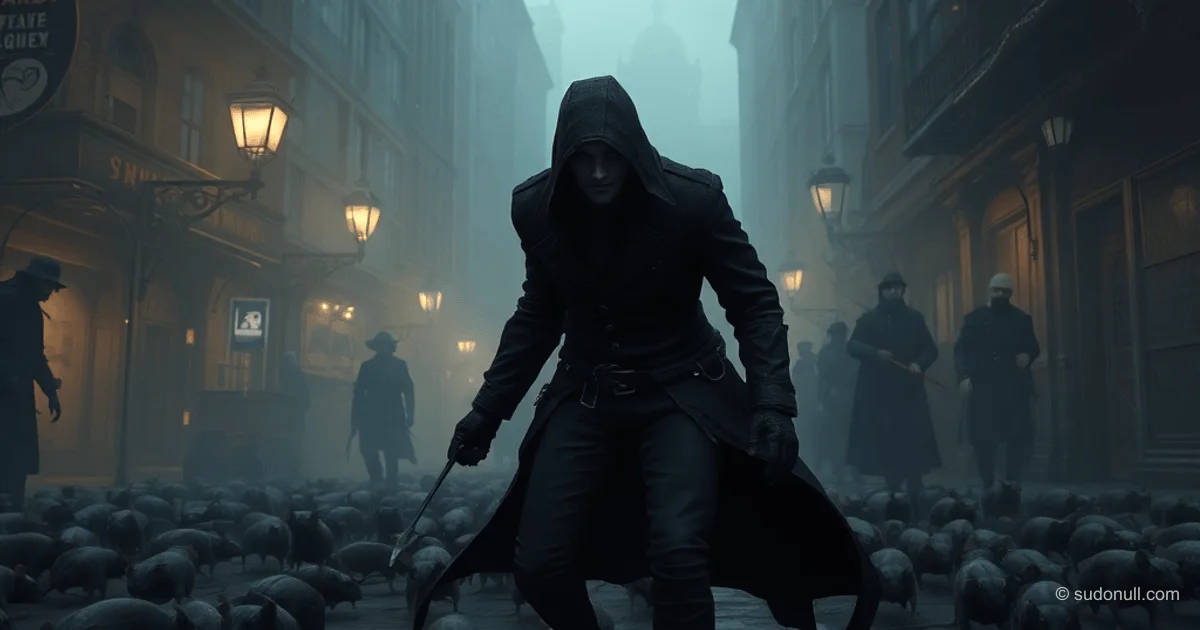
The Chaos System in Dishonored: Analysis and Proposed Improvements
The Chaos system in Dishonored serves as an indicator of playstyle, influencing the game world and narrative. The level accumulates from killing guards, poisoning key objects like the distillery for counterfeit elixir, or completing side quests with destructive outcomes. Low Chaos keeps the world stable, while high Chaos triggers escalating threats.
Its impact manifests in weather (from clear to stormy), NPC behavior, enemy density (guards, rats, weepers), and alternate endings. A high level increases gameplay difficulty by boosting enemy numbers, adapting to an aggressive style, but overlooks the nuances of stealth playthroughs.
The design goal is to simulate the consequences of choices, enhancing immersion. However, the binary high/low Chaos system oversimplifies motivation: a low level is achieved through non-lethal stealth using Blink, making the 'good' ending trivial.
Issues with the Current Implementation
The rigid dichotomy is demotivating: low Chaos implies 'correctness,' high Chaos punishes with hordes of enemies. There's no gradation, direct control, or connection to the narrative. The Heart as an indicator mentions changes but doesn't integrate them into gameplay.
- Ease of stealth: Blink allows bypassing patrols without consequences.
- Punishment for aggression: More enemies complicate combat without compensation.
- Lack of middle ground: No incentive to balance actions.
This reduces depth: players either farm kills or minimize them without challenge.
Proposed Mechanics Overhaul
Integrate Chaos into faction power dynamics: the Lord Regent (former head of the secret service) strengthens defenses at low levels, while plague and chaos increase at high levels. A medium level creates a balance of conflicts.
Chaos Level Gradation
- Low Chaos: Enhanced static defenses—more defensive structures (walls, pillars, machines), guard patrols, lighting, and cyclical alarms (loudspeakers with music boxes). Stealth becomes more challenging: players adapt to enemy patterns, risking mistakes.
- Medium Chaos: Faction conflict—the Regent's resources are spent on plague, guards rely on crowds and Abbey overseers. More sick people, rats; neutral NPCs (citizens, gang members) clash with loyalists. Players manipulate: possess rats for attacks, disable barriers to trigger skirmishes.
- High Chaos: Plague escalation—Tallboys clear zones, rats and weepers are everywhere. Resources are depleted: consumables are rare and expensive, but magic is enhanced (rat swarms, summoning Daud's assassins—aggressive to all factions). Stability drops, risking backlash.
The Heart tracks the level with dialogue, motivating manipulation for a medium balance—comfortable for a hybrid playstyle.
Additions:
- Low Chaos: more consumables.
- High: enhanced spells.
Changes to Gameplay and Immersion
Achievement: Low Chaos makes stealth a challenge (patrol cycles, lighting), medium Chaos involves faction manipulation tactics, high Chaos is survival with powerful but unstable magic. The 'good' ending requires skill against the Regent's paranoia.
Visually, the medium level conveys controlled chaos: fuel shortages weaken machines, triggering riots. Players use the environment—set rats on enemies, provoke clashes.
High Chaos intensifies collapse: rare shops, expensive goods, random magic effects (aggressive summons).
This approach eliminates the binary nature, integrating Chaos into narrative and balance, boosting replayability.
Key Takeaways
- Chaos adapts the world to playstyle: low enhances defense, high boosts plague and magic.
- Medium level encourages faction manipulation for a comfortable playthrough.
- Stealth complexity with cyclical patrols and lighting increases the sense of achievement.
- The Heart as a HUD motivates balance without direct control.
- Gradation removes demotivation from trivial non-lethal playthroughs.
— Editorial Team










No comments yet.