Why Enterprises Are Choosing Claude Over GPT-5.4: Data and Benchmarks
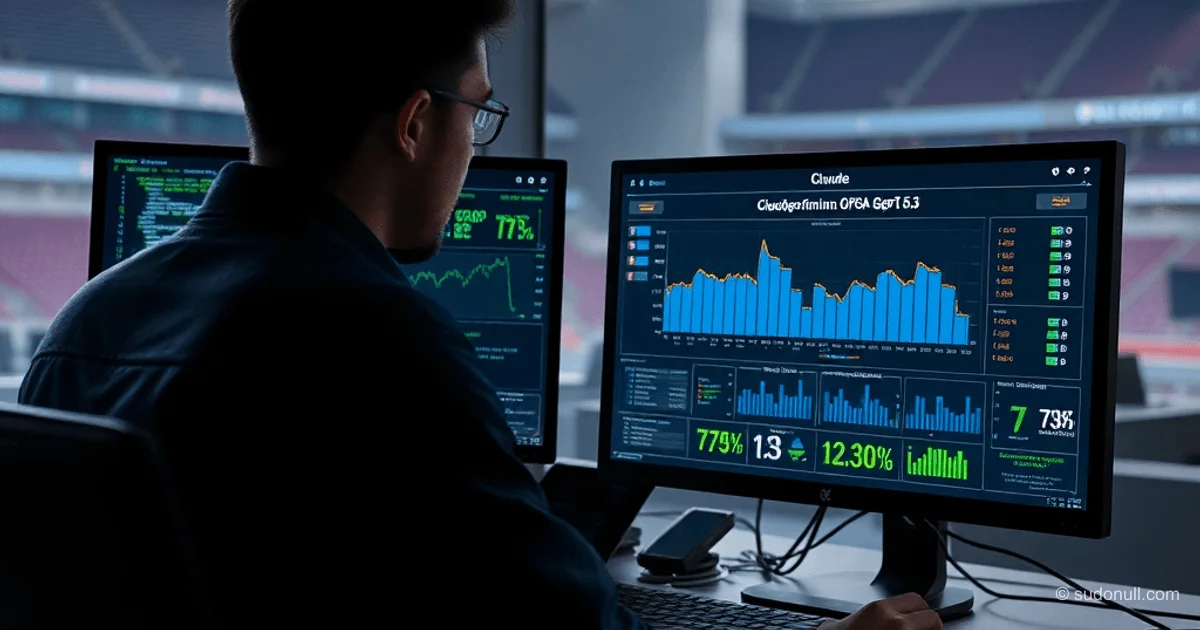
In March 2026, the Ramp AI Index revealed Anthropic’s dominance among new enterprise buyers of AI tools: 73.3% of spending went to Claude, compared to 26.7% for OpenAI. This shift followed a 50/50 split in January and a previous OpenAI lead in December 2025. These figures reflect early adoption patterns—signaling a clear trend in business decision-making.
Key Advantages of Claude for Developers
Claude stands out with high-quality code generation and exceptional stability during long sessions. Developers praise its clean, well-documented output without unnecessary architectural complexity. The model handles up to 1 million tokens of context efficiently, significantly reducing hallucinations when extracting insights from large codebases.
Claude’s behavioral consistency surpasses GPT-5.4—it maintains instructions and tone far longer across extended interactions.
Pricing Plans: Anthropic’s Flexible Tiering
| Model | Input (per 1M tokens) | Output (per 1M tokens) |
|-------|------------------------|-------------------------|
| GPT-5.4 | $2.50 | $15.00 |
| Claude Opus 4.6 | $5.00 | $25.00 |
| Claude Sonnet 4.6 | $3.00 | $15.00 |
Anthropic offers tiered subscriptions: Pro at $20, Max at $100 (5x limits), and $200 (20x). OpenAI’s move from $20 Plus to $200 Pro is pricing out mid-sized teams. While OpenAI’s API is cheaper, businesses value Claude’s quality over cost savings.
Benchmarks: Where Each Model Excels
The March 2026 MindStudio comparison highlights distinct strengths:
| Benchmark | GPT-5.4 | Claude Opus 4.6 | Winner |
|-----------|---------|------------------|--------|
| HumanEval (pass@1) | 93.1% | 90.4% | GPT-5.4 |
| SWE-bench Verified | 52.7% | 50.3% | GPT-5.4 |
| GPQA Diamond | 83.9% | 87.4% | Claude |
| MMLU Pro | 92.3% | 91.7% | Tie |
| Prose Quality (1–10) | 7.8 | 8.6 | Claude |
- Coding: GPT-5.4 leads in benchmarks, but Claude produces more maintainable code.
- Reasoning: Claude wins GPQA thanks to multi-step logical reasoning.
- Prose: Evaluators prefer Claude for tone, flow, and natural rhythm.
OpenAI excels in speed and scalability; Claude dominates in precision and complex, long-form tasks.
OpenAI’s Response: Sub-agents and Optimizations
On March 17, OpenAI launched GPT-5.4 mini ($0.75/$4.50 per 1M) and nano ($0.20/$1.25), delivering over twice the speed of earlier versions. Designed for sub-agents, they handle parsing, classification, and subtasks under a central coordinator.
On March 24, OpenAI shut down Sora, redirecting resources to Spud—a model focused on accelerating growth. A unified app integrating Codex and GPT Atlas Browser will launch soon. The division has been rebranded as AGI Deployment.
Community Sentiment and Challenges
Communities report a noticeable migration: users commend Claude for minimal censorship and task-focused design. Anthropic’s challenges include server overloads and restrictive pricing tiers.
Key Takeaways:
- New enterprise clients spend 73% on Claude (Ramp, March 2026).
- Claude leads in reasoning (GPQA: 87.4%) and prose quality (8.6/10).
- OpenAI wins in coding (HumanEval: 93.1%) and API affordability.
- GPT-5.4 mini/nano sub-agents reduce overhead costs for background work.
- Competition is driving better workflow integration.
— Editorial Team










No comments yet.