Copper Tripeptide in Cosmetics: Science vs. Marketing Hyper-Concentrations
Cosmetics featuring copper tripeptide at concentrations up to 10,000 ppm and higher are flooding the market. These levels aren't just unsupported by science—they're potentially dangerous. We break down why hyper-concentrations are a marketing gimmick rather than a skincare breakthrough, and how to spot genuine products from counterfeits.
Transparency Without Regulation: A Trap for Consumers
The push for transparency in the cosmetics industry has led manufacturers to start listing concentrations of active ingredients. Previously, it was common to add valuable substances (like peptides) in homeopathic doses and build a marketing campaign around them. Now, packaging boasts figures like 10,000 ppm copper tripeptide—but without mandatory standards for verification, this becomes a tool for manipulation. Unlike pharmaceuticals, which are governed by pharmacopeias, cosmetics lack strict regulations. Verifying concentrations of complex compounds requires lab analysis, which isn't accessible to everyday consumers.
The core issue is the lack of accountability for claimed specs. A manufacturer might honestly label "copper tripeptide," but use unverified raw materials or swap them for toxic analogs. This creates an illusion of efficacy while posing real health risks.
Mechanism of Action and Safe Limits
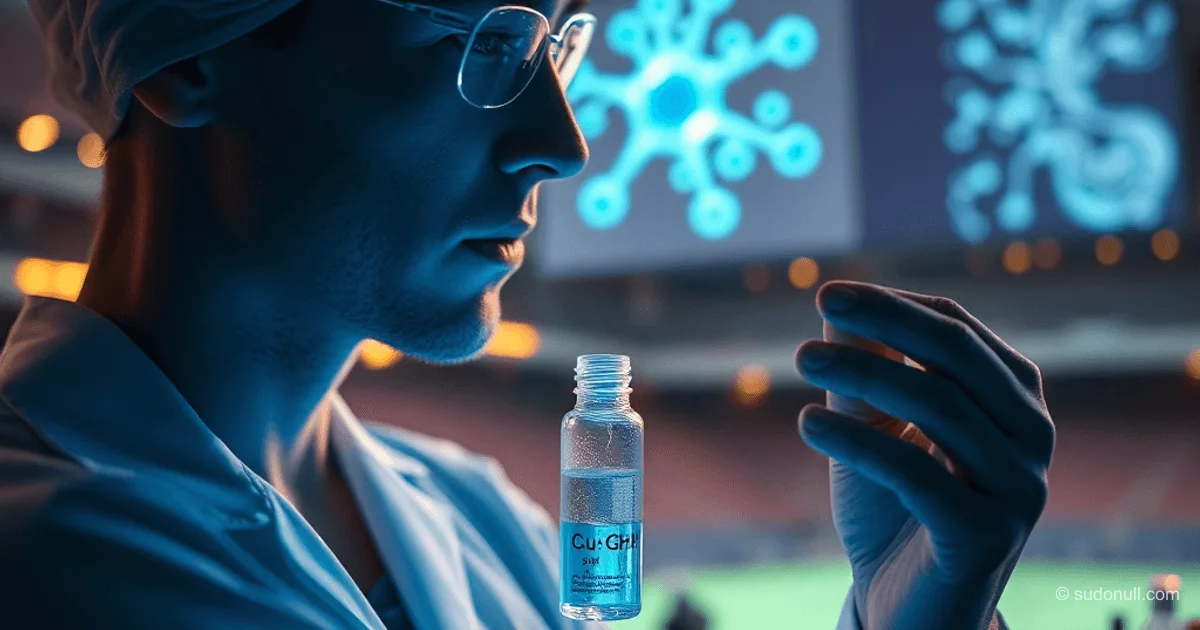
Copper tripeptide (Cu-GHK) is a complex of the Cu²⁺ ion with glycyl-histidyl-lysine. Its effectiveness is backed by research: the compound stimulates collagen synthesis, inhibits matrix metalloproteinases, and accelerates tissue regeneration. In industry, raw material is supplied as a 1000 ppm solution (1 g dry peptide per 1 kg solution) or dry powder. When incorporated into cosmetics, the standard dosage is 1–5%, equating to 10–50 ppm in the final product.
It's crucial to understand the differences between copper forms:
- Organic complexes (Cu-GHK) are safe up to 2000 ppm
- Inorganic salts (copper sulfate, chloride) are toxic even in small doses
- Copper acetate is dangerous from 100 ppm onward
Counterfeits often contain precisely these inorganic compounds, explaining unrealistically low raw material prices (e.g., 1039 rubles for 50 g on Chinese platforms). Such products aren't just ineffective—they're harmful.
Physiological Limits of Penetration
Skin has clear barrier properties that dictate the maximum dose the epidermis can absorb. For copper tripeptide, the penetration limit is 136 μg/cm² over 48 hours. This means a 1000 ppm solution is fully absorbed by the skin, with excess remaining on the surface. Bumping the concentration to 10,000 ppm won't boost the effect—the skin physically can't take in more active ingredient.
Experimental data confirms: Cu-GHK efficacy plateaus above 1 ppm. A 1000-fold dose increase yields minimal activity gains but dramatically raises risks of irritation and toxicity. Marketing claims of "powerful effects" from hyper-concentrations fly in the face of basic physiology.
Authenticity Indicators: Color and Reasonable Concentrations
Visual inspection remains an accessible check:
- 10–50 ppm: faint blue tint (optimal range)
- 100–500 ppm: pronounced blue color
- Over 1000 ppm: deep blue-green hue
Snow-white cream claiming 1000+ ppm is a dead giveaway for fakery. Real copper tripeptide at those levels imparts a distinctive color to the product. Meanwhile, efficacy kicks in at just 1 ppm, or 0.0001% on a dry weight basis.
Key Points
- Concentrations over 500 ppm don't enhance effects due to skin's physiological limits
- Products priced 2–3 times below market rate almost always contain fakes
- Blue tint is a must-have visual marker for Cu-GHK presence
- Request raw material origin docs from the manufacturer
- Optimal range: 10–100 ppm in the final product
Practical Recommendations for Professionals
When formulating cosmetics, follow the principle of reasonable sufficiency:
- Use certified raw materials from vetted suppliers with verified composition
- Cap copper tripeptide at 500 ppm in the finished product
- Test for stability and bioavailability
- Include penetration enhancers (liposomes, peptide transporters)
- Avoid pairing with harsh acids that degrade peptide structure
For consumers, the key advice is to scrutinize marketing hype critically. True cosmetic innovations are built on scientific data, not inflated numbers. Proven efficacy lies in a narrow concentration range, backed by clinical studies balancing safety and results.
— Editorial Team










No comments yet.