FinOps and ITFM: Mastering IT Cost Management in Modern Enterprises
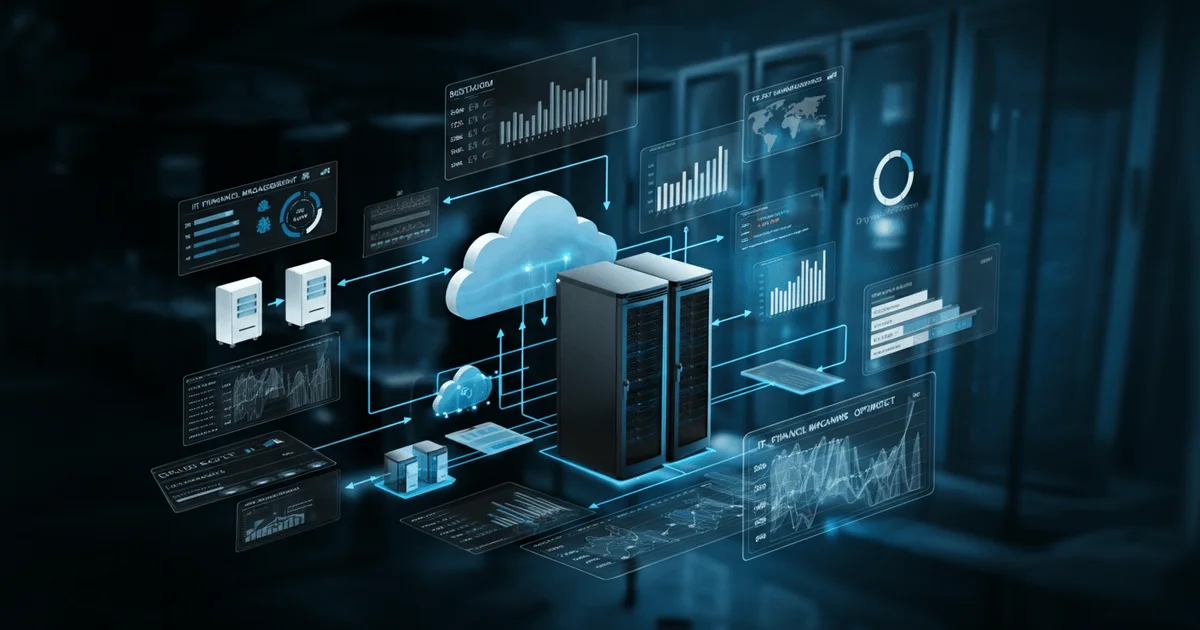
Effective IT cost management is becoming critically important for companies with hybrid infrastructures, encompassing on-premise data centers, cloud services, and shared platforms. A simplistic, "one-size-fits-all" accounting approach is no longer effective. Achieving transparency and control demands a well-designed cost allocation system where each resource has a clear tag, owner, and distribution rule. In this article, we will explore the fundamentals of building such a system, delving into the FinOps and ITFM methodologies, and the role of P&L centers in IT financial management.
The modern IT landscape is characterized by significant complexity. Companies utilize a combination of their own servers (on-premise), public and private cloud solutions, and numerous shared platform services. In such an environment, traditional approaches to budgeting and expense tracking become inefficient, hindering a clear understanding of the true cost of IT services provided. A lack of transparency leads to suboptimal resource utilization, difficulties in planning future development, and decision-making based more on intuition than on precise data. The key challenge isn't merely to tally the total expenses, but to understand who is paying for what, and how these costs are distributed within the company.
Complementary Approaches: FinOps and ITFM
To address these challenges, two key methodologies are employed: FinOps (Financial Operations) and ITFM (IT Financial Management). While often mentioned together, their focus differs slightly, yet they perfectly complement each other:
- FinOps focuses on managing and optimizing cloud costs. It brings together financial, operational, and engineering teams to enhance financial accountability and transparency in cloud environments. The goal of FinOps is to help organizations make informed decisions about cloud spending, minimize wasteful consumption, and maximize value. This is achieved through real-time monitoring, analysis, and optimization of resource usage.
- ITFM provides a broader framework for the financial management of the entire IT infrastructure, including both cloud and on-premise resources. ITFM encompasses budgeting, planning, forecasting, cost accounting, and allocation for all IT services and assets. It links IT expenditures to business objectives, enabling leadership to make strategic decisions based on a complete financial picture of IT. ITFM helps answer questions about the profitability of IT investments and the total cost of ownership for various IT solutions.
Thus, FinOps can be seen as a specialized component of ITFM, focused on the dynamics of cloud costs, while ITFM ensures overall financial discipline and transparency across the entire IT portfolio.
Fundamentals of IT Cost Accounting: Categorization and Allocation
The first step towards building an effective IT cost management system is a clear categorization of all expenses. This allows for analysis of their structure and informed decision-making.
- Cost Categorization:
* Capital Expenditures (CapEx): Include investments in long-term assets such as the purchase of servers, network equipment, and software licenses with a long lifespan. These expenses are depreciated over several years.
* Operational Expenditures (OpEx): These are ongoing costs associated with day-to-day operations, such as renting cloud services (IaaS, PaaS, SaaS), technical support, software subscriptions, staff salaries, electricity, and data center services. OpEx are expensed in the period in which they are incurred.
- Resource Usage Model: The cost of resources varies significantly depending on their deployment and usage model:
* On-premise: Resources deployed in the company's own data center. Costs are formed from CapEx (equipment) and OpEx (power, cooling, maintenance, personnel).
* Cloud: Resources provided by external providers. Primarily OpEx, paid based on actual consumption.
* Hybrid: A combination of on-premise and cloud solutions, requiring a comprehensive approach to accounting.
- Exclusive or Shared Use:
* Exclusive (Dedicated): A resource used by a single consumer (e.g., a dedicated server for a specific application). Costs are easily attributable.
* Shared (Common): A resource shared among multiple consumers (e.g., shared storage, virtualized infrastructure). Requires a cost allocation mechanism.
- Cost Allocation Methods: The choice of method depends on the resource type and business logic:
* Per User: Proportional to the number of employees or departments using a common service (e.g., corporate software licenses).
* By Consumption Volume: The most accurate method for computing resources, data storage, and network traffic. Costs are distributed based on actual usage.
* By Projects/Products: Costs directly associated with the development, support, or operation of a specific project or product line.
- Key Expense Categories: For comprehensive coverage, the following categories must be considered:
* Equipment (servers, storage, network equipment, workstations).
* Software and licenses (OS, databases, middleware, specialized applications).
* Cloud services (IaaS, PaaS, SaaS).
* Cybersecurity (security systems, monitoring, audits).
* Personnel and payroll (IT department, outsourcing).
* Power consumption and data center services (for local infrastructure).
The Role of P&L Centers in IT Financial Management
For an IT resource accounting system to be truly effective and foster greater financial accountability, it must be integrated with the concept of P&L (Profit and Loss) centers. P&L centers are structural units or departments within an organization that are responsible not only for their expenses but also for generating revenue. This allows for detailed and enhanced transparency in financial control.
At its core, a P&L center is a mini-business within the company, independently managing its revenues and expenses. This could be a separate business unit, a branch, a product team, or even a functional department, provided it has clearly measurable revenues and expenses. The primary objective of a P&L center is to maximize profit while effectively managing costs.
Benefits of P&L Centers for IT Finance:
- Financial Transparency and Accountability: Each department acting as a P&L center becomes responsible for its profitability, including the IT costs allocated to it. This creates a clear picture of how different departments impact the company's overall financial results.
- Decentralized Management: In large organizations, P&L centers enable decentralized decision-making. Department heads gain more autonomy in managing their budgets, including their IT budget, allowing them to react more quickly to changes and optimize processes.
- Motivation and Efficiency: When a department is directly responsible for its profitability, it becomes more motivated to improve efficiency and optimize costs. This encourages P&L center managers to seek ways to reduce excessive IT spending and utilize resources more rationally.
- Objective Performance Evaluation: Establishing P&L centers allows for an objective assessment of the success of each department or business line. The financial results of each P&L center, including IT efficiency, can be used for further analysis, planning, and investment decisions.
Key Components of a P&L Center:
- Revenue: Sales of goods or services generated by the department.
- Expenses: All costs associated with the P&L center's operations, including allocated IT costs, salaries, rent, marketing, and other overheads. It's important to distinguish between variable and fixed expenses.
- Profit: The difference between revenues and expenses, reflecting the financial efficiency of the department.
Types of P&L Centers:
- Business Units (Product P&L Centers): Responsible for a specific product or group of products.
- Geographic P&L Centers: Responsible for results in specific regions or countries.
- Functional P&L Centers: Responsible for the outcome of a specific function (e.g., marketing, production), if they can be financially isolated.
- Project P&L Centers: Used in project-based organizations to assess the financial effectiveness of individual projects.
The entire IT resource accounting methodology is based on assigning specific tags to them and subsequently correlating them with the corresponding P&L centers. For instance, each IT resource (virtual machine, database, cloud service) can be assigned a tag indicating its owner (P&L center), cost type, project, and responsible team lead or team. This enables automated data collection, detailed consumption analysis, and efficient cost distribution. Such a system provides the necessary granularity for further IT budget optimization and informed decision-making regarding infrastructure development.
Key Takeaways
- Comprehensive Approach: FinOps and ITFM are complementary approaches to IT financial management, with FinOps focusing on cloud, and ITFM providing end-to-end financial transparency for the entire IT infrastructure.
- Detailed Costing: The key to effective accounting is clear cost categorization (CapEx/OpEx, on-prem/cloud/hybrid), understanding consumption models (dedicated/shared resources), and selecting appropriate allocation methods (per user, by volume, by project).
- Role of P&L Centers: P&L centers play a central role in decentralized financial management, allowing departments to be accountable for their IT expenses, which increases transparency, motivation, and efficiency.
- Resource Tagging: Detailed tagging of IT resources and linking them to P&L centers are critically important for accurate cost distribution, consumption analysis, and informed planning.
- Data-Driven Decisions: Transparency in IT costs promotes optimization, efficiency, and data-driven strategic decision-making, which is especially crucial in the context of ever-increasing IT infrastructure complexity.
— Editorial Team










No comments yet.