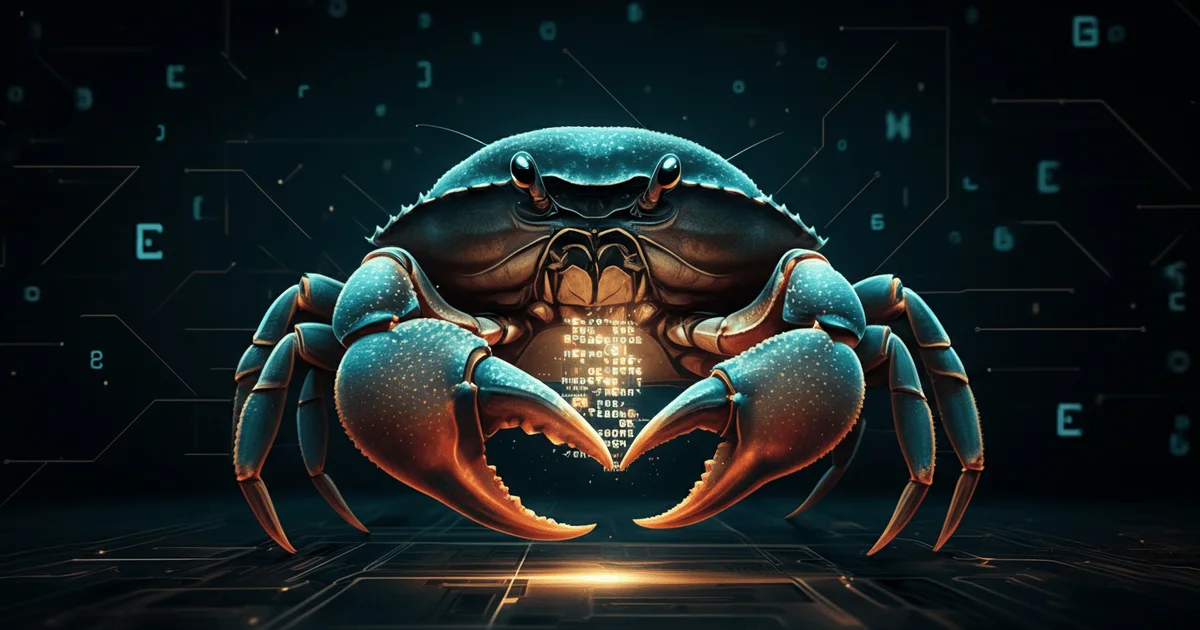
GitCrab 1.0: Natural Selection as the New Paradigm for Version Control
In today's fast-paced IT landscape, where development speed and efficiency are paramount, a new tool emerges that radically redefines the concept of version control. Introducing GitCrab 1.0 — a system designed not just to manage code, but to cultivate an environment where only the most adapted and actively evolving projects survive. Moving beyond traditional paradigms of comfortable programming, GitCrab implements "natural selection" mechanisms, compelling teams to continuously maintain code in an up-to-date and pristine condition, thereby optimizing the process from concept to release.
GitCrab 1.0 positions itself as a framework for building a highly efficient development ecosystem, where dormant code and inactive developers are treated as untapped resources. The core principle of GitCrab is to incentivize continuous activity and minimize technical debt through a series of unique mechanics that challenge conventional repository management methods. This isn't just a deployment tool; it's a system that forces developers to constantly fight for the viability of their code.
GitCrab 1.0 Key Mechanisms: Adapt or Be Eliminated
GitCrab introduces a series of mechanisms aimed at maintaining the dynamism and cleanliness of the codebase. These functions are designed to ensure maximum output from every team member and every commit:
- Hunger Mechanism: If a repository remains unattended or without commits for 60 minutes, GitCrab activates "hunger mode." In this state, the system irrevocably deletes 4 to 9 random lines of code. The absence of logs or traces of deletion demands constant vigilance and continuous interaction with the codebase from developers, eliminating periods of inactivity.
- Lateral Deployment: The traditional
git pushcommand is replaced withgit scuttle. This function moves code changes into random submodules of the project. The goal is to ensure architectural "fluidity" and compel developers to constantly adapt to changing module locations, as well as to encourage a deep understanding of the entire project, rather than just their isolated parts. - Molting Mode: Once a month, GitCrab initiates a "global molt." During this process, all dependencies that haven't been called within the last 48 hours are automatically removed. This mechanism aims to combat bloated
node_modulesand other "legacy baggage," forcing teams to maintain a minimalistic and functional dependency structure. The philosophy behind this mode is that an application should be able to run with a minimal set of resources, rather than relying on outdated or unused components. - Passive-Aggressive "Bottom Feeding" Optimization: GitCrab doesn't just reject stale pull requests; it "recycles" them. If a commit remains in "Pending Review" status for more than 4 hours, it's classified as organic waste. Following this, an additional optimization element is activated — the "Bubble Protocol."
* Bubble Protocol: This protocol is designed for "garbage cleanup" and automatically replaces meticulously written documentation and code comments with random ASCII bubbles. This incentivizes developers to create self-documenting code and process pull requests immediately, as delayed review can lead to the loss of critical information.
Interacting with GitCrab: Survival Hacks
For effective work within the GitCrab ecosystem, developers must master new commands and approaches:
- Habitat Initialization: Instead of the usual repository initialization, use the command
git crab hatch --aggressive. This not only creates the repository but also activates a 60-minute timer, after which, if no commits are made, the code "feeding frenzy" begins. - Ecosystem Status Check: The
git crab statuscommand allows you to assess GitCrab's "hunger level" on a scale of 0 to 10, informing the developer of the potential threat of code deletion. - Performing a "Push": Standard
git pushmethods are not applicable. To send changes, usegit scuttle --direction=left. This command moves local changes to a random colleague's branch. If the changes are not noticed and integrated within 10 minutes, they revert to the original author, but under the colleague's authorship, which encourages quick reactions and team collaboration. - Strengthening Molt Protection: To prevent unwanted dependency deletion in molting mode, use
git pinch --force-hard. This command is designed to strengthen the repository's "shell." - Documentation Restoration: Should the "Bubble Protocol" activate and replace documentation with ASCII bubbles, the
git surface --pop-bubblescommand attempts restoration. However, there's a 50% chance that lines from the song "Under the Sea" will be inserted instead of the original text, highlighting the risks of delaying pull request processing. - Distracting the "Crab": If the situation spirals out of control and lines of code are actively being devoured, the
git crab-rave --distractcommand plays a loud sound through the speakers to temporarily "scare off" GitCrab and buy time to resolve the issue.
Evolution or Disposal: A New Development Philosophy
GitCrab 1.0 offers a radical approach that transforms the development process from comfortable code writing into a constant struggle for its survival. This tool is not merely a codebase sanitizer; rather, it's a stimulant that creates a perfectly functioning ecosystem where maximum efficiency is achieved through continuous pressure and the need for rapid adaptation. Key takeaways before implementing GitCrab:
- Technical Debt is a Myth. In the GitCrab ecosystem, the concept of "fixing it next sprint" is non-existent. Code must be perfect now, or it will be disposed of.
- KPI is Measured in Adrenaline. Traditional efficiency metrics are superseded by indicators based on the volume of code "devoured" by GitCrab, which directly correlates with the team's activity level and vigilance.
- Teamwork is a Competition. In the GitCrab ecosystem, interaction with colleagues takes on a competitive nature, where each developer strives to ensure the viability of their code and the project as a whole, avoiding "blame-shifting."
GitCrab 1.0 doesn't promise comfort, but it guarantees speed and adaptability. It transforms developers accustomed to a leisurely pace into seasoned professionals capable of responding swiftly to any challenges and maintaining code in pristine condition. In this new paradigm, each participant defines their role: to be a "shark" or "nutritious biomass" in the ever-changing sea of code.
Key Takeaways
- GitCrab 1.0 is a radical version control tool that implements "natural selection" mechanisms to boost development efficiency.
- The system actively combats inactivity and technical debt by deleting dormant code, dependencies, and stale merge requests.
- Developers are forced to maintain high vigilance and rapid response, as GitCrab can modify code, move it between branches, or destroy documentation.
- GitCrab redefines success metrics, focusing on continuous adaptation and the "survival" struggle of a project, rather than traditional indicators.
- Using GitCrab aims to transform "comfortable" developers into "hardened" professionals capable of working under constant pressure and unpredictability.
— Editorial Team










No comments yet.