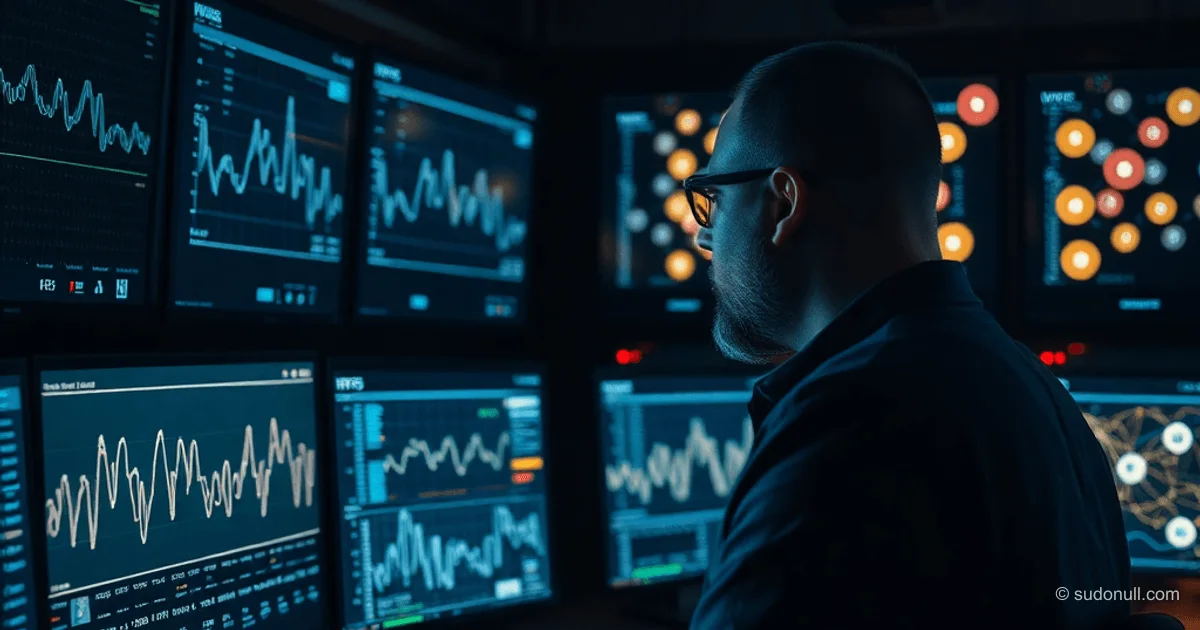
Invisible Network Architecture: Traffic Obfuscation Principles
Building private networks demands abandoning the search for one-size-fits-all solutions. Instead of relying on off-the-shelf protocols, focus on foundational networking mechanisms—those covered in standard textbooks. Adaptability comes from understanding Deep Packet Inspection (DPI) systems, which analyze not only encryption but also traffic metrics: header sizes, transmission timing, and handshake sequences.
The trend is shifting from heavy cryptography to obfuscation. Strong encryption makes traffic conspicuous due to anomalies in behavioral patterns. The goal is statistical invisibility: traffic must blend seamlessly into background HTTPS traffic—matching its volume, rhythm, and behavioral profile.
Ditching VPN-Like Signatures
Any protocol generating recognizable signatures is vulnerable. OpenVPN—with its massive, rigid headers—or Hysteria 2—with its exotic handshake sequences—stands out starkly against ordinary web traffic.
DPI detects:
- Characteristic packet sizes.
- Data transmission periodicity.
- Connection initiation sequences.
Solution: break predictable rhythms and mimic natural HTTPS deviations. Traffic must be indistinguishable from YouTube streams or CDN requests.
Rotation and Dynamism
Static endpoints are the top vulnerability. Consistent traffic from a fixed IP transforms obfuscation into a target.
Automate:
- Node and IP address rotation.
- Domain and port cycling.
- Dynamic protocol switching.
This reduces temporal and volumetric correlation—making analysis impossible without long-term monitoring.
Layered Architecture Isolation
A single point of failure is unacceptable. Segment your network into independent, isolated layers:
- Network layer: routing and tunneling.
- Operational layer: process isolation and containerization.
- Service layer: load distribution.
- Commercial layer: integration with legitimate services.
Compromising one layer leaves the others unaffected. Enforce strict segmentation using Linux namespaces, cgroups, and virtualization.
Optimizing Network Scale
Scale itself is a pattern. An oversized network draws attention by volume; an undersized one, by lack of diversity.
Balance requires:
- Enough nodes for effective rotation (minimum 50–100).
- Total traffic below the DPI detection threshold (< 1% of background HTTPS volume).
- Geographic distribution to emulate a global CDN.
The Crowd Philosophy
The best obfuscation is blending in with the majority. Like a person in a crowd, your traffic must:
- Appear as standard web traffic.
- Move at typical, human-like timing.
- Respond to events naturally—not robotically.
This demands real-world traffic analysis: sample live HTTPS flows, model their statistical behavior. Tools like Wireshark or tcpdump help calibrate parameters precisely.
Key Takeaways
- Obfuscation > cryptography: heavyweight protocols stand out by packet shape—not just content.
- Rotation is non-negotiable: static endpoints enable traffic correlation.
- Layer isolation is essential: enforce containment across at least four distinct architectural levels.
- Statistical invisibility is the goal: match the noise floor of mainstream HTTPS traffic.
- Adapt continuously: monitor DPI evolution and adjust tactics proactively.
This architecture rests on fundamental networking principles—not novelty. Real-world implementation demands rigorous testing: live tracing, traffic profiling, and iterative refinement.
— Editorial Team










No comments yet.