October 17, 2014 at 12:07
Trunk radio channel - even cheaper
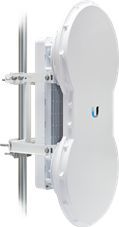
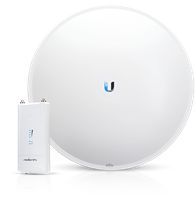

No sooner had the commercial AirFiber 5 / 5U installations begun , the first Ubiquiti AC standard solutions announced as “450 Mbps TDD” became available. If the capabilities of the usual AirMAX line are known, then the new line has not been studied much. The question arises - is it possible to build highways on the new Rocket AC, or is airFiber 5 / 5U still better? Maybe Cambium PTP650 is better?
Let's take a closer look at Rocket AC lite, the cheapest 5 GHz backbone solution.
The new AirMAX AC line at Ubiquiti is represented by only two solutions so far:
- PowerBeam AC with integrated antenna;
- Rocket AC lite with familiar RP-SMA connectors.
The devices are not yet compatible with the usual AirMAX line, they work only in point-to-point mode.
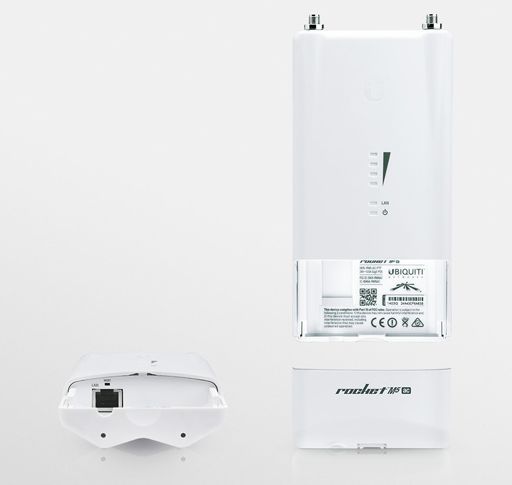
Physically, the new Rocket AC resembles the standard Rocket:
- A pair of antenna outputs;
- Gigabit port, but power supply - 24 V;
- There is no GPS synchronization.
A new 31 dB parabolic antenna with a visor and hood is recommended for use:

For medium range, the PowerBeam AC solution with a 27 dB antenna, but less than Rocket AC, with power:

Main parameters of Ubiquiti 5 GHz trunk solutions
| Frequency Ratings MHz | 5150-5845 | 5470-5950 / 5725-6200 | 5150-5875 |
| Channel capacity max (duplex *) | 90 | 500 | 300 |
| Frequency Bands, MHz / Technology | 5,10,20,30,40 (TDD) | 10,20,30,40,50 (TDD / FDD) | 10,20,30,40,50,60,80 (TDD) |
| Available Modes | PTP / PMP | Ptp | Ptp |
| Antennas | External 30-34 dB; built-in 8-25 dB | Built-in 23 dB | External 31 dB; built-in 27 dB |
| Power, dBm (16/64 / 256QAM) | 27/24 / no | 24/22/20 | 27/27/23 and 22/22/18 respectively |
| Sensitivity, dBm (16/64/256 QAM) | -87 / -79 / no | -78 / -71 / -64 | -90 / -83 / -69 |
* For TDD systems, speed is converted to symmetric traffic
From the point of view of the main parameters, the first-born AC families look more interesting than the AirMAX line: although they are inferior in capacity to airFiber - they are several times cheaper! A channel on a Rocket AC with 31 dB antennas will cost about $ 1000-1100 , while a flight on Airfiber will cost $ 2300. You can look at actual prices on CompTek.ru , and we will continue to sort equipment.
Equipment functionality
In terms of functionality, the device repeats the classic lineup: bridge / router / NAT, VLAN support, traffic filtering.
The main differences:
- No built-in spectrum analyzer (planned for addition) ;
- There is no traffic restriction on vlan interfaces;
- There is no function of the test application of the configuration (planned to be added) ;
- It is impossible to limit the maximum channel speed, and the set speed is displayed not in the MCS, but more roughly, in the conditional speeds;
- Wi-Fi compatibility mode is not provided.
An important difference from the classic line is the available frequencies.
In the European version, at best, you can focus on the working ranges of the air 5150-5845 MHz. It should be noted that for the AC line there is no software with the Compliance test region. Thus, you do not have to rely on receiving non-standard frequencies.
Equipment testing
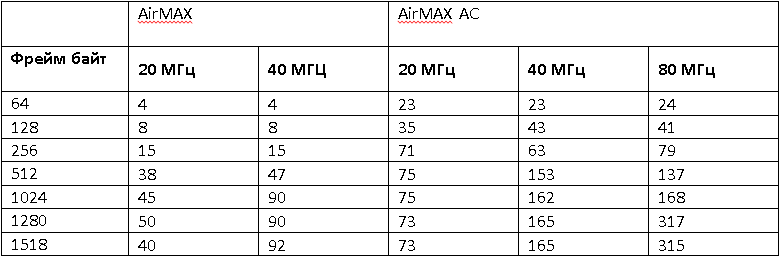
For the AirMAX line, we noted rather low performance with small packets - let's see how the situation in Rocket AC changed:
Mbit / s duplex capacity:
Performance in the 40 MHz band, frames of various types:
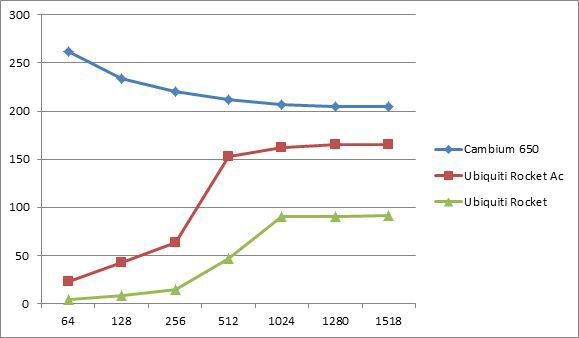
(abscissa axis - packet size in bytes, ordinate axis - bandwidth in Mbps duplex)
The situation has improved significantly, and although the performance of 700 thousand packets (airFiber) is not yet achievable, the system has come close to carrier-class equipment.
System sensitivity
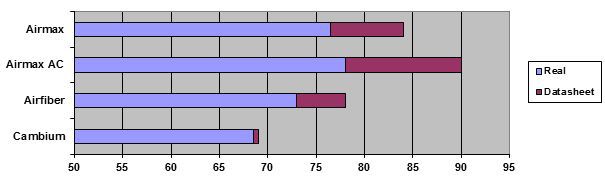
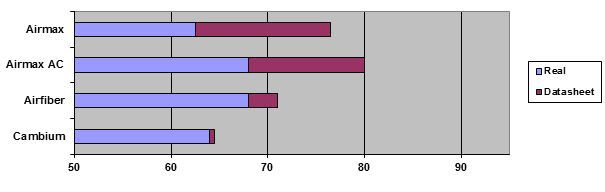
We measure the real sensitivity of the system, that is, the signal level at which the system holds modulation.
| Model Families | Cambium | Cambium real | AirFiber 5 | AirFiber 5 real | Airmax | Airmax real | AirMAX AC | AirMAX AC real |
|---|---|---|---|---|---|---|---|---|
| QAM16 dBm | -69 | -68.5 | -78 | -73 | -84 | -76.5 | -90 | -78 |
| QAM64 dBm | -64 | -64.5 | -71 | -68 | -75 | -62.5 | -83 | -68 |
| QAM256, dBm | -62 | -57.5 | -64 | -62 | - | - | -69 | -52 |
It should be noted that AirFiber measurements were made on the channel, not the attenuators, so external interference could affect the operation of QAM16 modulation.
Sensitivity graphs for modulations:
QAM 16 modulation, sensitivity module:
QAM 64 modulation, sensitivity module:
QAM 256 modulation, sensitivity module:
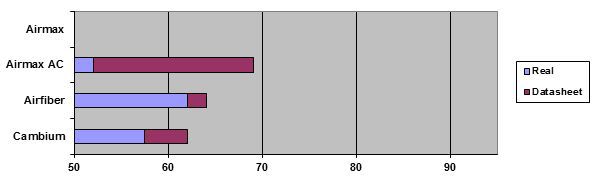
QAM 64 modulation, sensitivity module:
QAM 256 modulation, sensitivity module:
Conclusions:
Sensitivity is better than AirMAX, although lower than Cambium's higher modulation solution.
It was again confirmed that it is undesirable to compare the sensitivity parameters of equipment of different classes without practical testing.
Solutions on specialized chipsets with lower passport sensitivity in practice work at a signal level comparable to 802.11.
Knowing the sensitivity, we can calculate the range of the links on the classic AirMAX equipment, AC line and airFiber, determine the scope of each system.
Maximum Reachable Capacity
In general, registering the use of frequencies in the band over 40 MHz in the Russian Federation is problematic, therefore, we will consider TDD options in the 40 and 20 MHz bands:
Capacity (Mbps) in the 40 MHz band depending on distance (km):

Capacity (Mbps ) in the 20 MHz band depending on the distance (km):
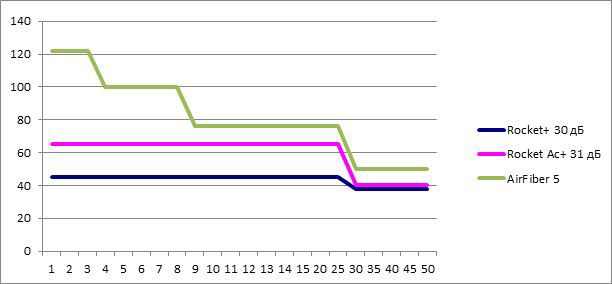
It can be seen that with a limited range of AirFiber there is not enough antenna gain, the option with antenna outputs would be interesting.
Conclusion
- The performance of the new solution is significantly superior to AirMAX, although inferior to AirFiber;
- Bit efficiency is significantly higher than AirMAX, but lower than AirFiber;
- The batch productivity of the equipment approached the performance of the carrier-class equipment and allows you to work in the bands of 20 MHz for any traffic profile;
- At the moment, the software is in beta status, respectively, the functionality of the system will expand, and its implementation on channels under load so far requires special accuracy;
- The frequency range of the solution is significantly narrower than the classic line, a range above 5875 is not supported (here you can recommend AirFiber 5u);
- Given the measurements, it seems doubtful the use of QAM256 modulation in PtMP mode;
- For QAM64 modulation, there is a significant improvement in sensitivity with respect to AirMAX.
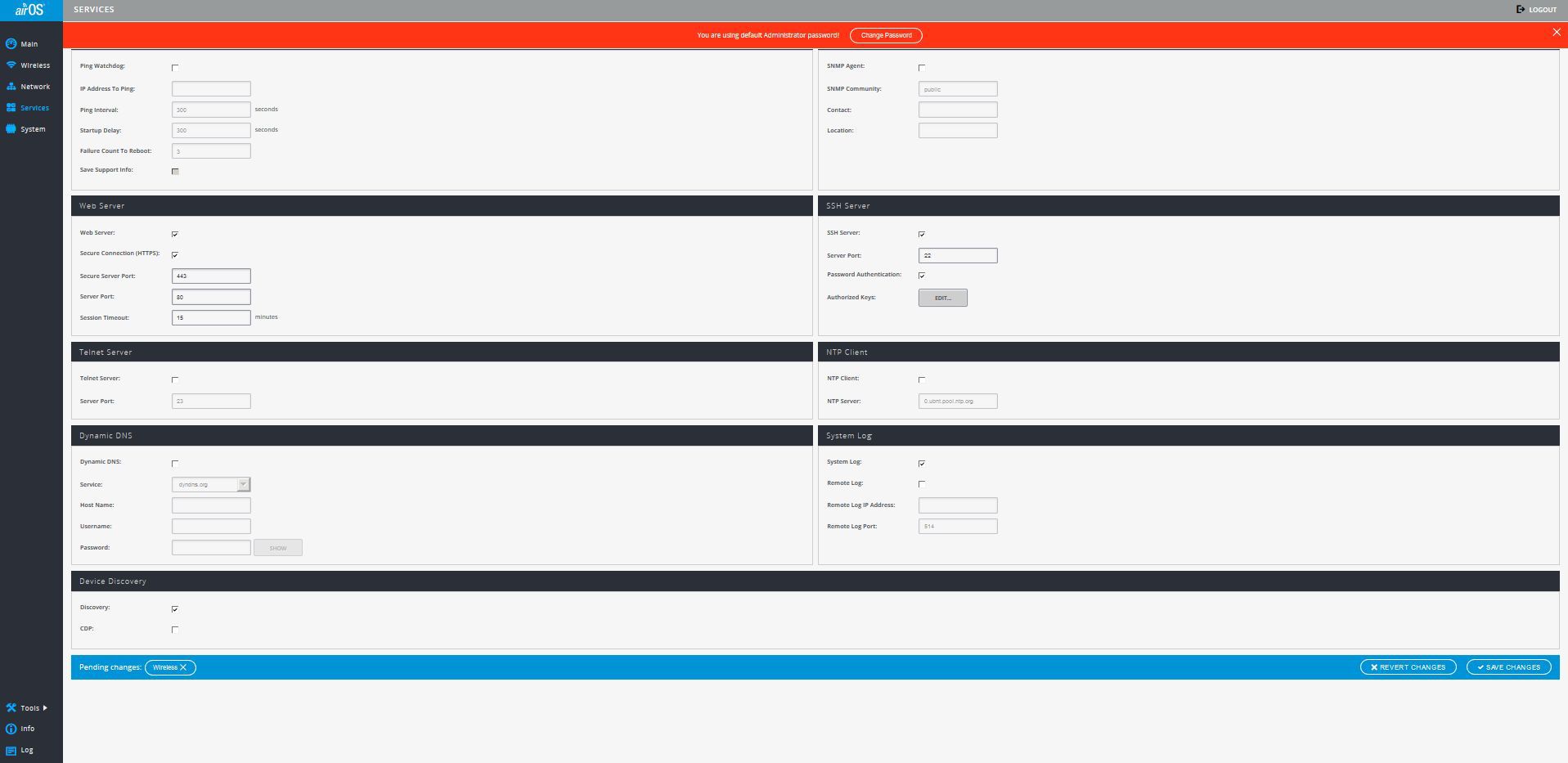
And a few pictures of the new Ubiquiti interface
Region selection.

Main menu.

Radio
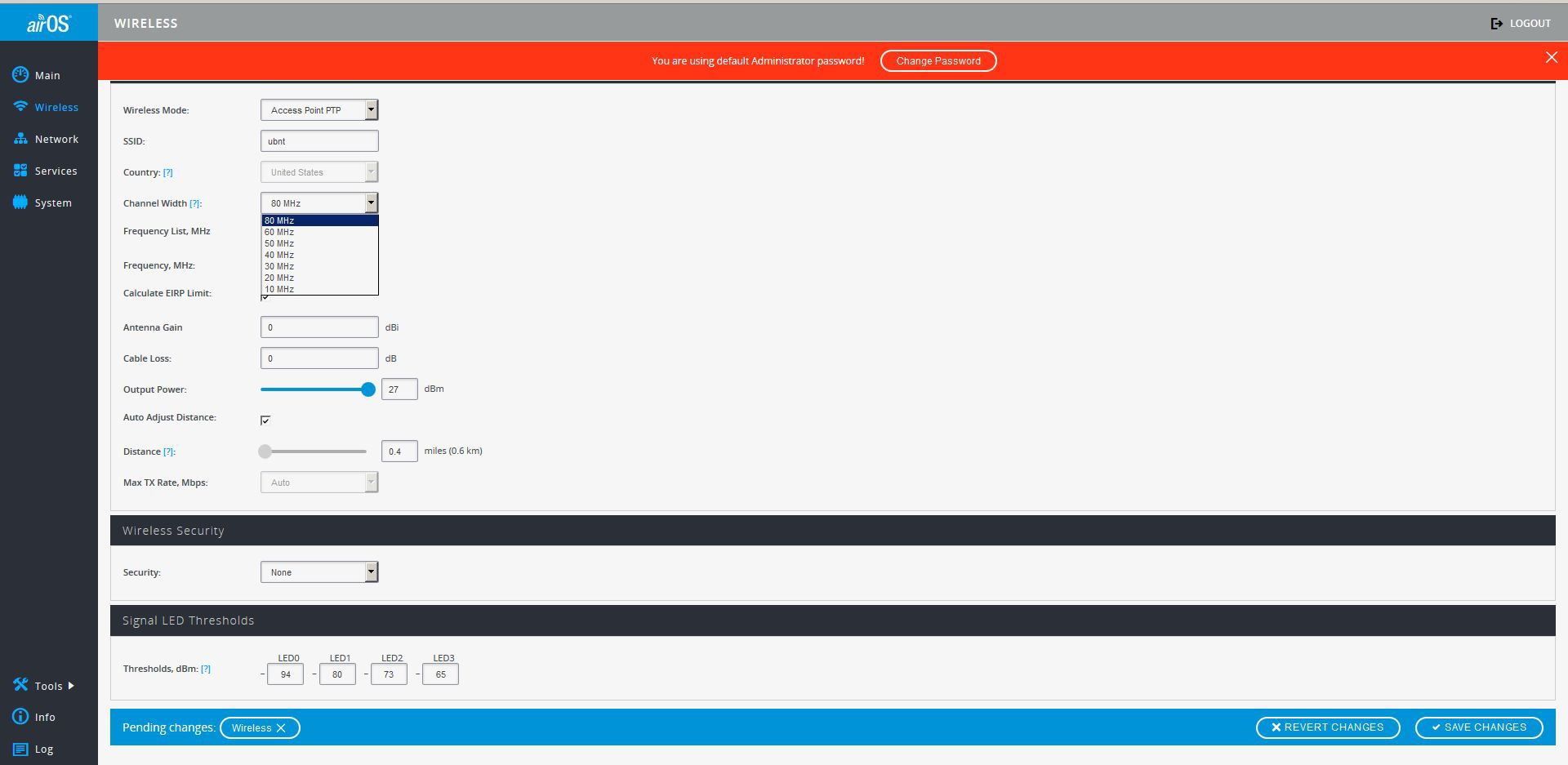
settings. Network layer settings.
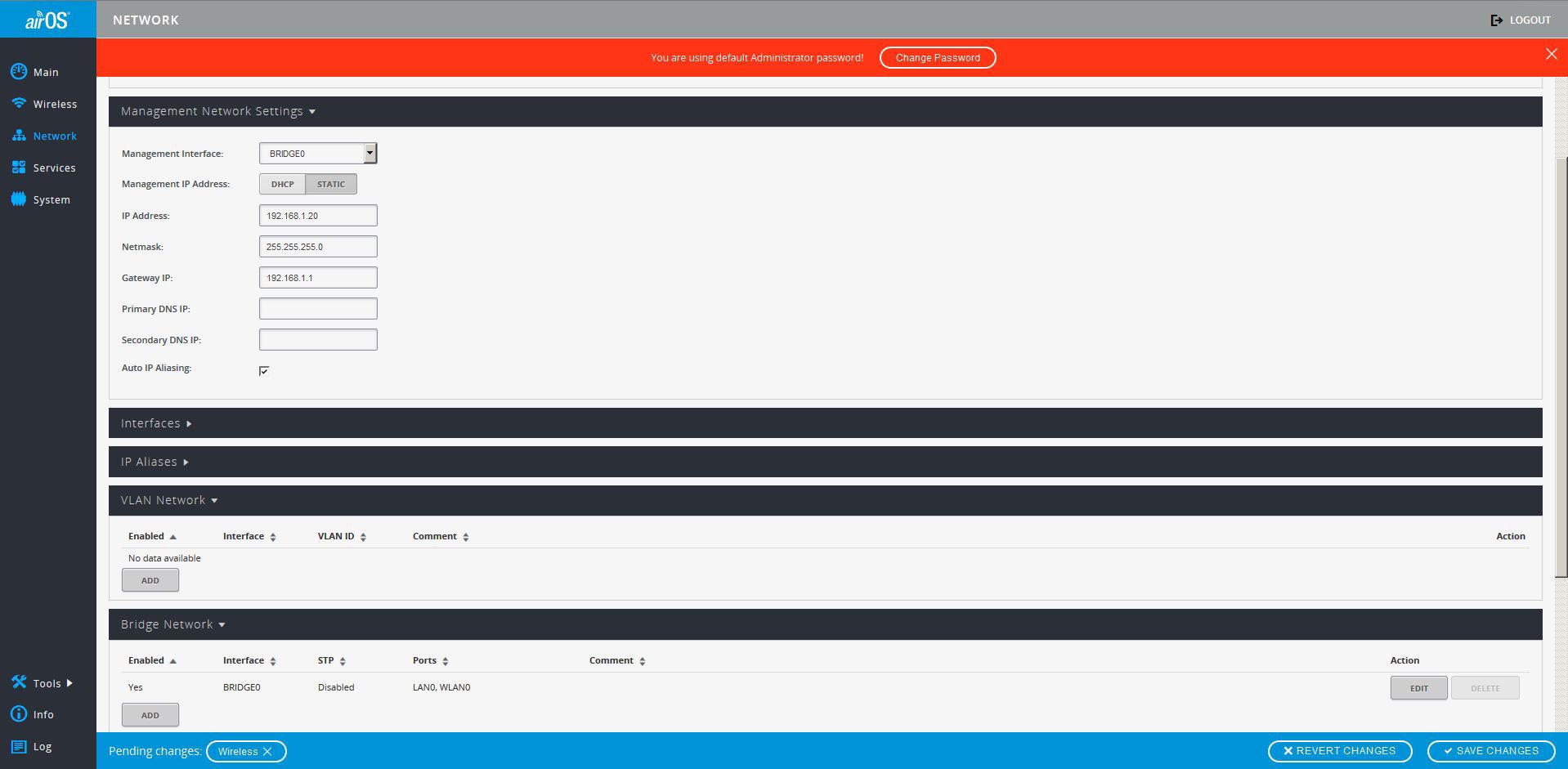
Services.
Connection established. Connection
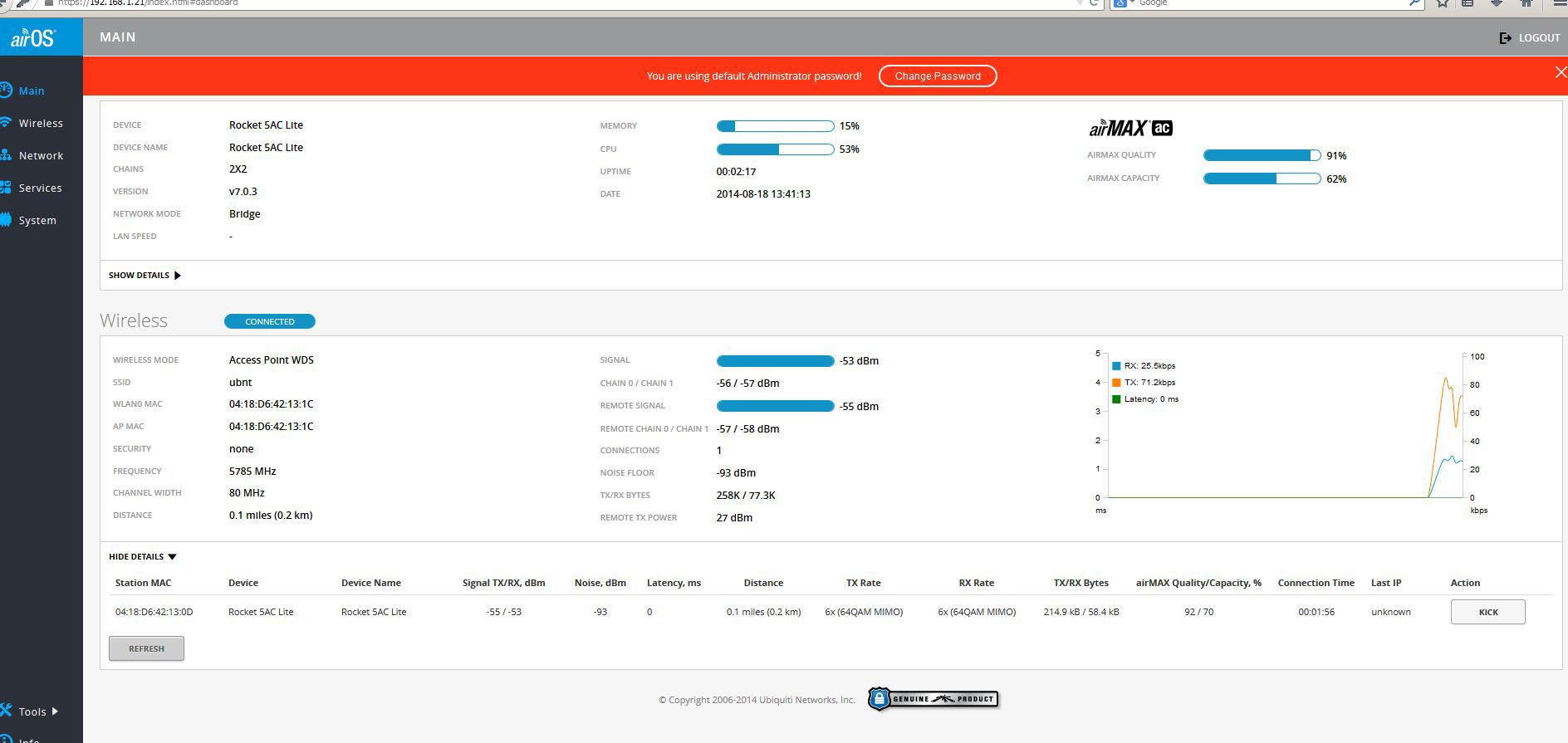
properties, modulation increased
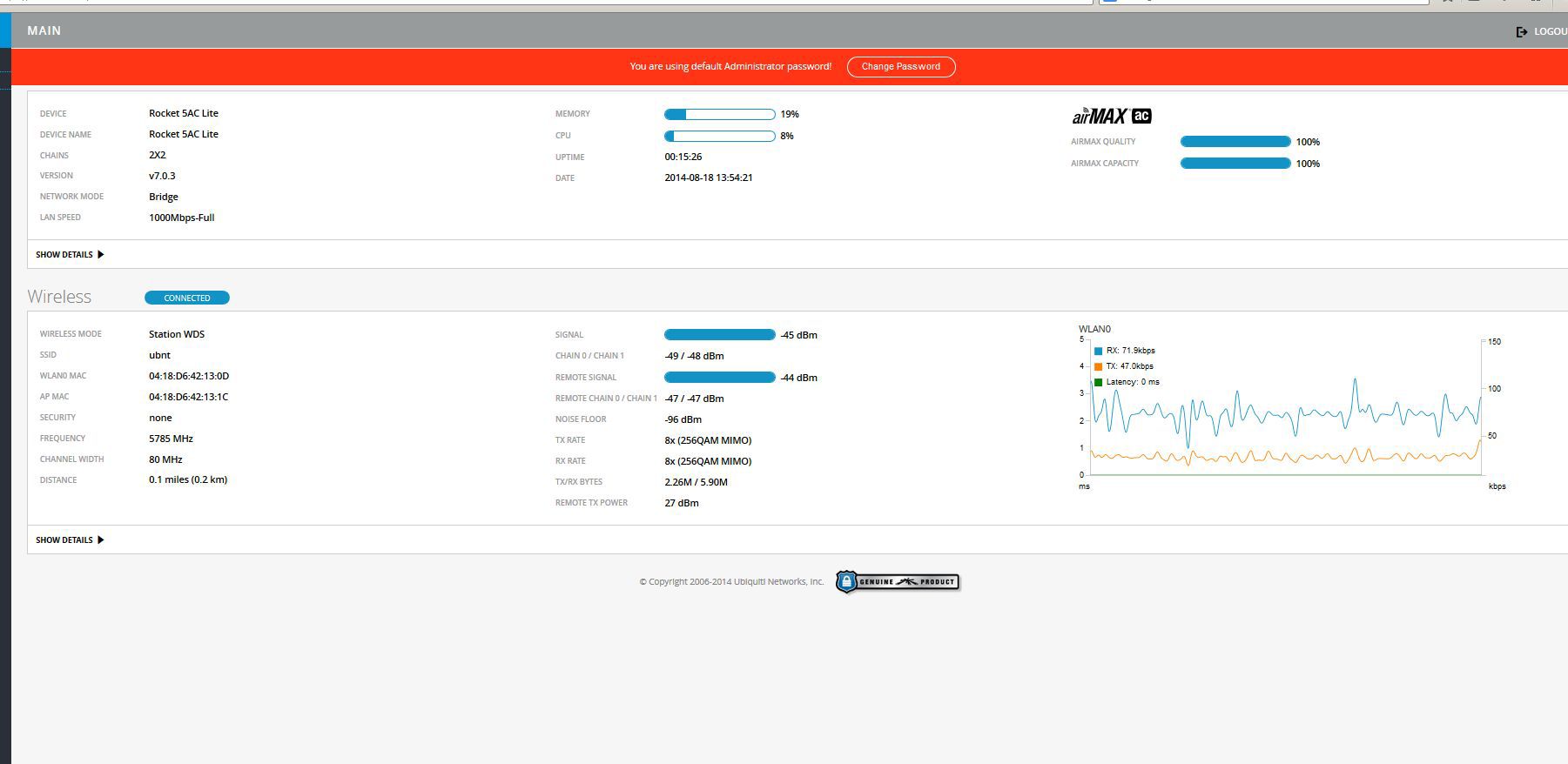
Main menu.
Radio
settings. Network layer settings.
Services.
Connection established. Connection
properties, modulation increased
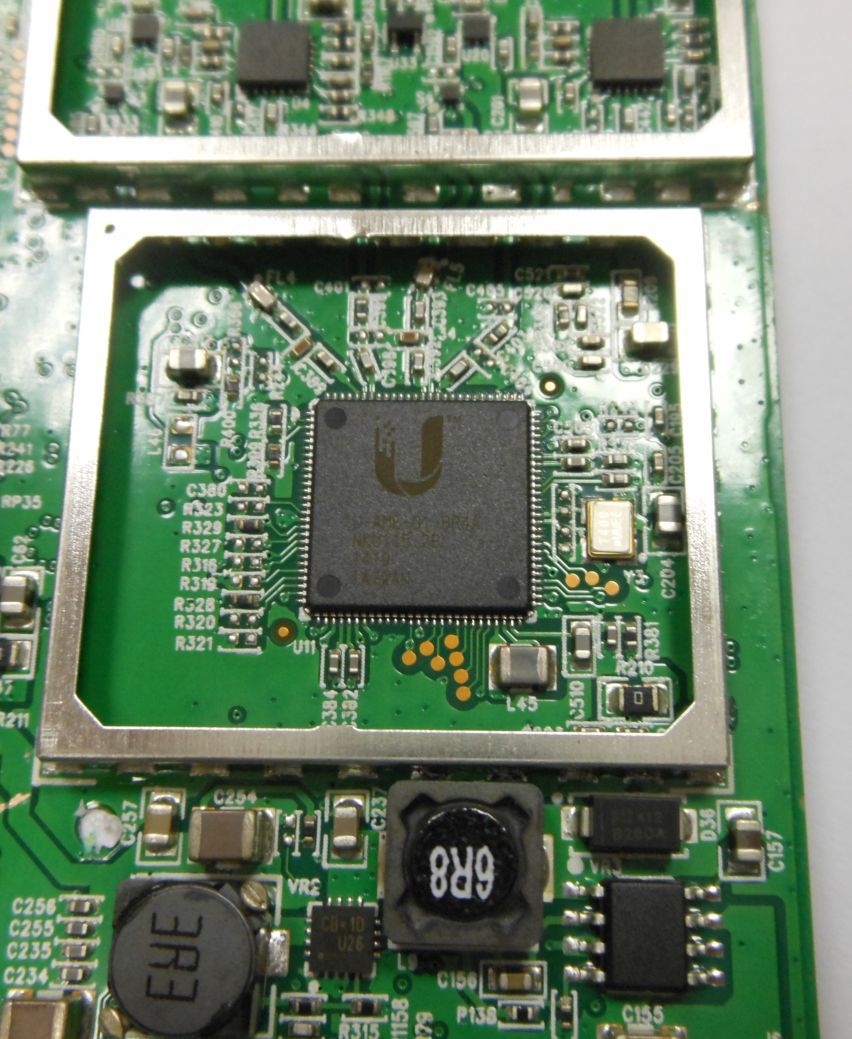
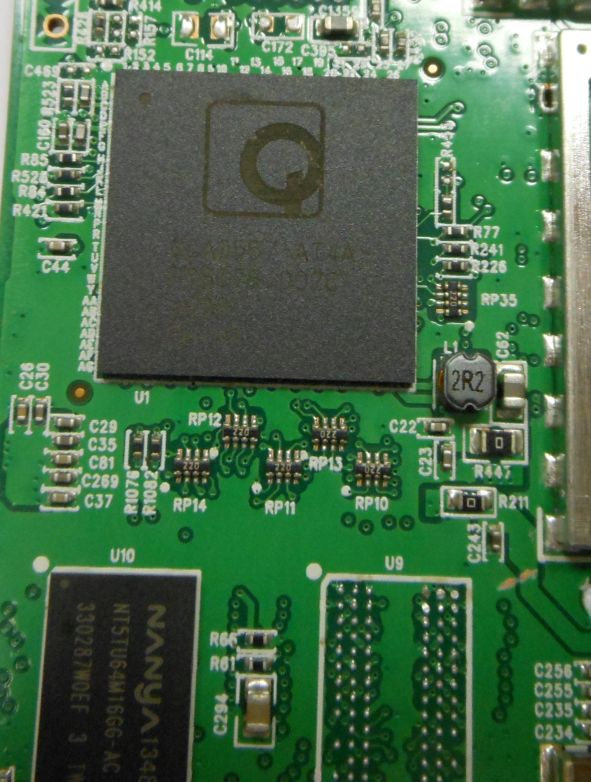
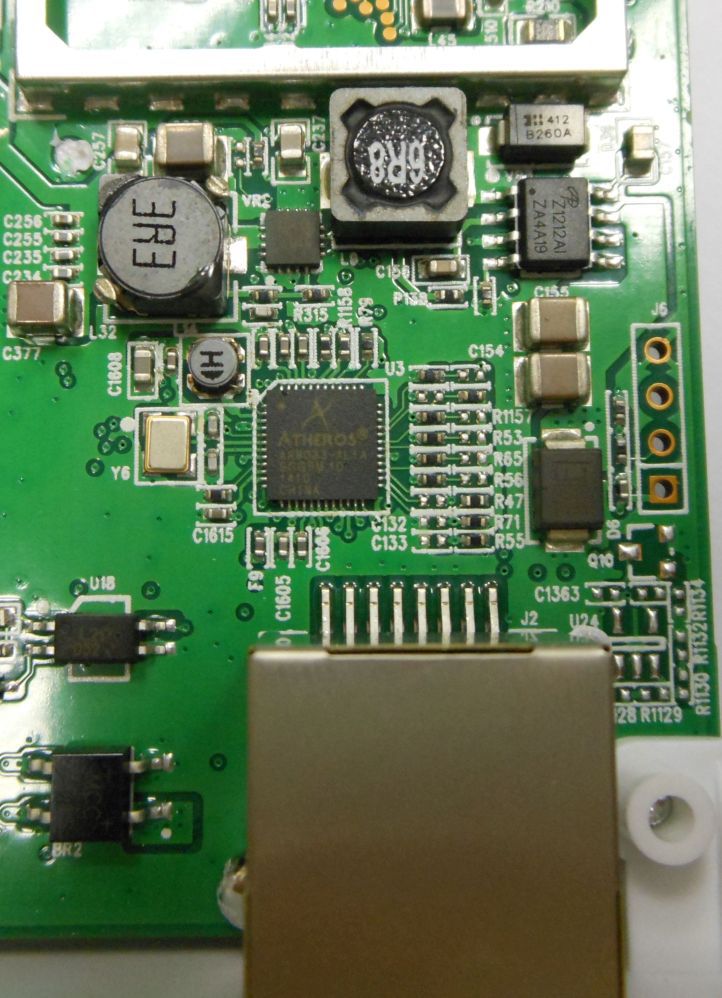
Photo of the filling system:
General plan

Screenshots
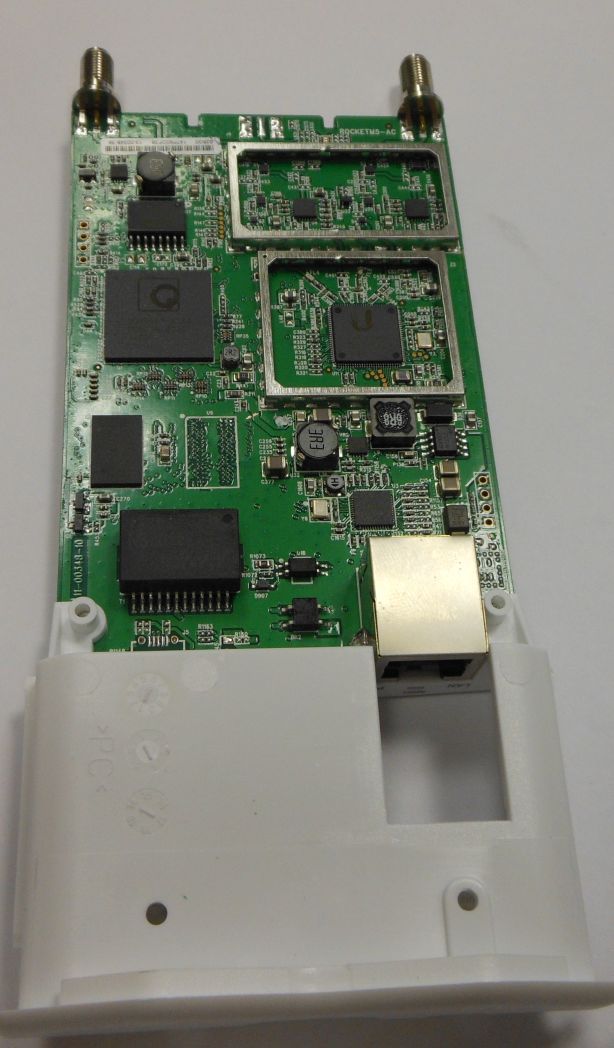
taken Radio path and signal processing chip
General processor, RAM
Ethernet chip
Screenshots
taken Radio path and signal processing chip
General processor, RAM
Ethernet chip