December 17, 2014 at 13:00
URANUS: first working desktop SLA (stereo lithographic) printer
This time I want to talk about how I got acquainted with the first (at the time of writing of the article) normally working desktop stereo lithographic printer ( URANUS ) which is in Moscow.
The history of 3d printers began in 1984 with a stereolithographic device. Now, such printers are often used by jewelers, since the accuracy of printing of such models is much higher than FDM devices (which I print with plastic).
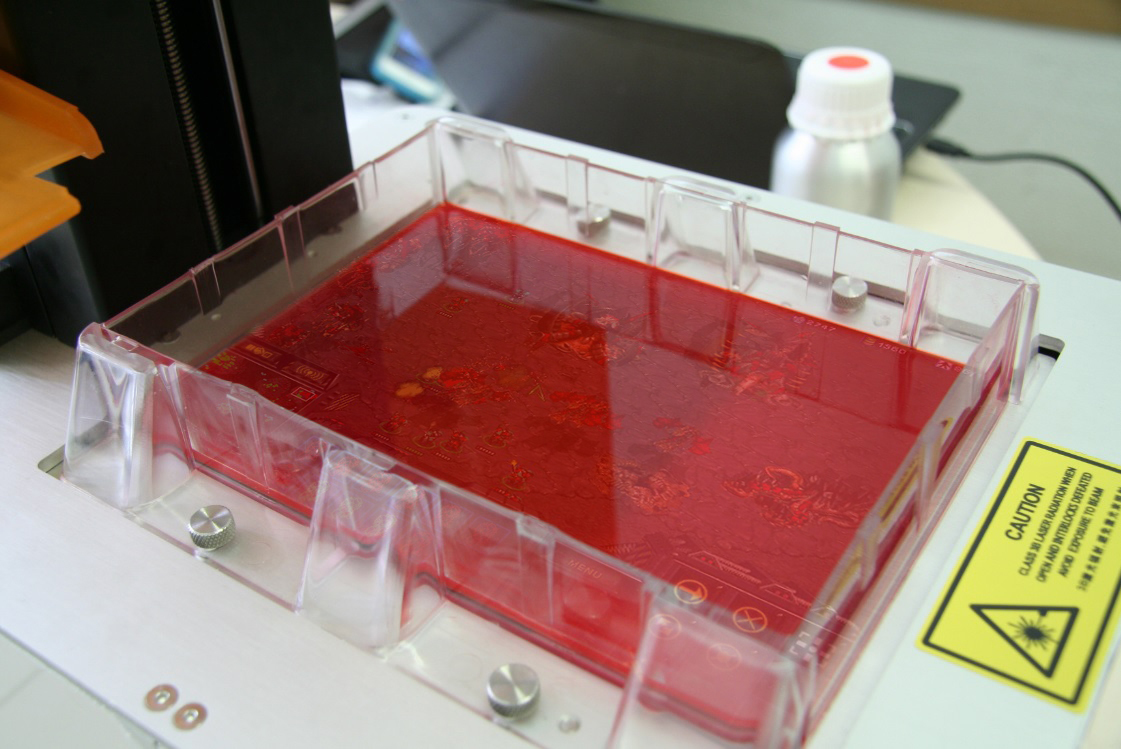
Under the cut are a few photos of the printer's interior and the birth of a hydralisk from a "bloody bath"

Spawn Hydralisk (H)
Appearance:

First impression - It looks like a paper bucket, but “behind a plain interface lies a powerful algorithm”
Raw material:

Photopolymerbright red. The printer comes with a 0.5 liter photopolymer resin, separately a 0.5 liter photopolymer resin costs 10,000 rubles (already taking into account the new rate), but the printer is not limited to this resin and allows the use of other resins. Those. in fact, this SLA printer is universal for the use of resins from various manufacturers.

Change in photopolymer when exposed to light
Printing Examples


The printer has its own “native” software that allows you to do all the necessary manipulations

.
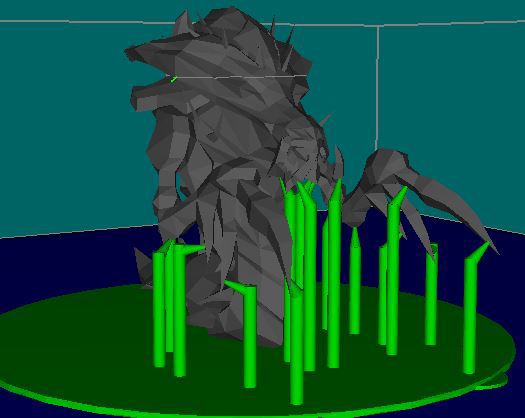
We select the number and location of supports ourselves. You can choose the form of the substrate.

Initially, the platform is at the very depth of “minus delta.”
Next, the laser is turned on, which affects those sections of the polymer that correspond to the walls of the target object, causing them to solidify. After that, the entire platform rises a little higher, by an amount equal to the thickness of the layer.

(something I've often come across lasers lately)

Laser and control mirrors

Laser power: 50mW - the most powerful laser, allows you to use a wider range of resins.
UV wavelength: 405NM
It took about an hour to print the hydralisk, all this time the softina showed% completion and estimated time.

After the materialization is completed, it is necessary to place the product in an alcohol bath, followed by irradiation in ultraviolet (suitable and pedicure).

The platform (print area: 128x128 × 180mm) is easily removed, which makes it easier work with freshly baked hydra.

After you examine / peer at the details printed on a similar printer for an hour, what comes out from under the nozzle of “ordinary” 3D printers seems coarse and thick, the layers just cut your eyes (but soon it passes).

Scientific research. Since you can get a model of almost any complexity for any purpose in a matter of hours, SLA-technology becomes an indispensable assistant in various kinds of research studies. Models have sufficient strength, as well as transparency, so it is possible to visualize gas and hydrodynamic flows within models.

The medicine. A new direction has been formed in maxillofacial surgery and orthodontics with the advent of SLA. Magnetic resonance imaging of the problem area is done to the patient, a 3D computer model is formed from it, and a real 3D model of bone tissue is grown on it. Thus, the doctor the next day has at his disposal a model of bones or teeth of a real patient.


Art.Thanks to stereolithography technology, sculptors, fashion designers and jewelers are entering a new level of production. The process of 3D printing of prototypes significantly reduces the time for testing experimental samples, which favorably affects the speed and quality of creating future jewelry or sculpture. SLA technology is very well suited for this: the models are durable, easy to paint.
Burnout casting. If there is a need to obtain a metal part, the following technology is applied: the SLA model is poured with a molding sand, then calcined at high temperatures. In this case, the plastic completely burns out, and in its place, the metal is poured into the formed form under vacuum. After it hardens, the form is destroyed and the part is removed.
Chip
One of the owners of the printer (from Belarus) managed to burn the resin in the furnace, that is, there is actual evidence that when using the resin in conjunction with the URANUS printer, you can burn the resin with temperature (“ash” parameter). Jewelers and those who make metal crafts will understand what.
The peculiarity is that a special temperature card will be supplied to the printer, which will contain information at what temperatures (approximately 600-650 degrees Celsius) and time it is necessary to hold the craft to achieve the decay of the resin in the furnace.
Speed is higher than that of FDM
Very large print size (compared to ProJet 1200 about 4x4 cm)
Extremely quiet (but there is a smell)
Detailing is much higher than that of plastic 3d printers (FDM)
Price is lower than that of analogues
Economical consumption of consumables
There is still one minus. If the operation of a plastic printer can be watched for hours, it captivates like a flight of snowflakes or like a flutter of flames, then everything is very pragmatic for SLA printers - I pressed a button - in an hour I received a part from a box. The birth process will not be able to peep. But still, the thing seems magical.
The history of 3d printers began in 1984 with a stereolithographic device. Now, such printers are often used by jewelers, since the accuracy of printing of such models is much higher than FDM devices (which I print with plastic).
Under the cut are a few photos of the printer's interior and the birth of a hydralisk from a "bloody bath"
Spawn Hydralisk (H)
Appearance:
First impression - It looks like a paper bucket, but “behind a plain interface lies a powerful algorithm”
Raw material:
Photopolymerbright red. The printer comes with a 0.5 liter photopolymer resin, separately a 0.5 liter photopolymer resin costs 10,000 rubles (already taking into account the new rate), but the printer is not limited to this resin and allows the use of other resins. Those. in fact, this SLA printer is universal for the use of resins from various manufacturers.
Change in photopolymer when exposed to light
How SLA works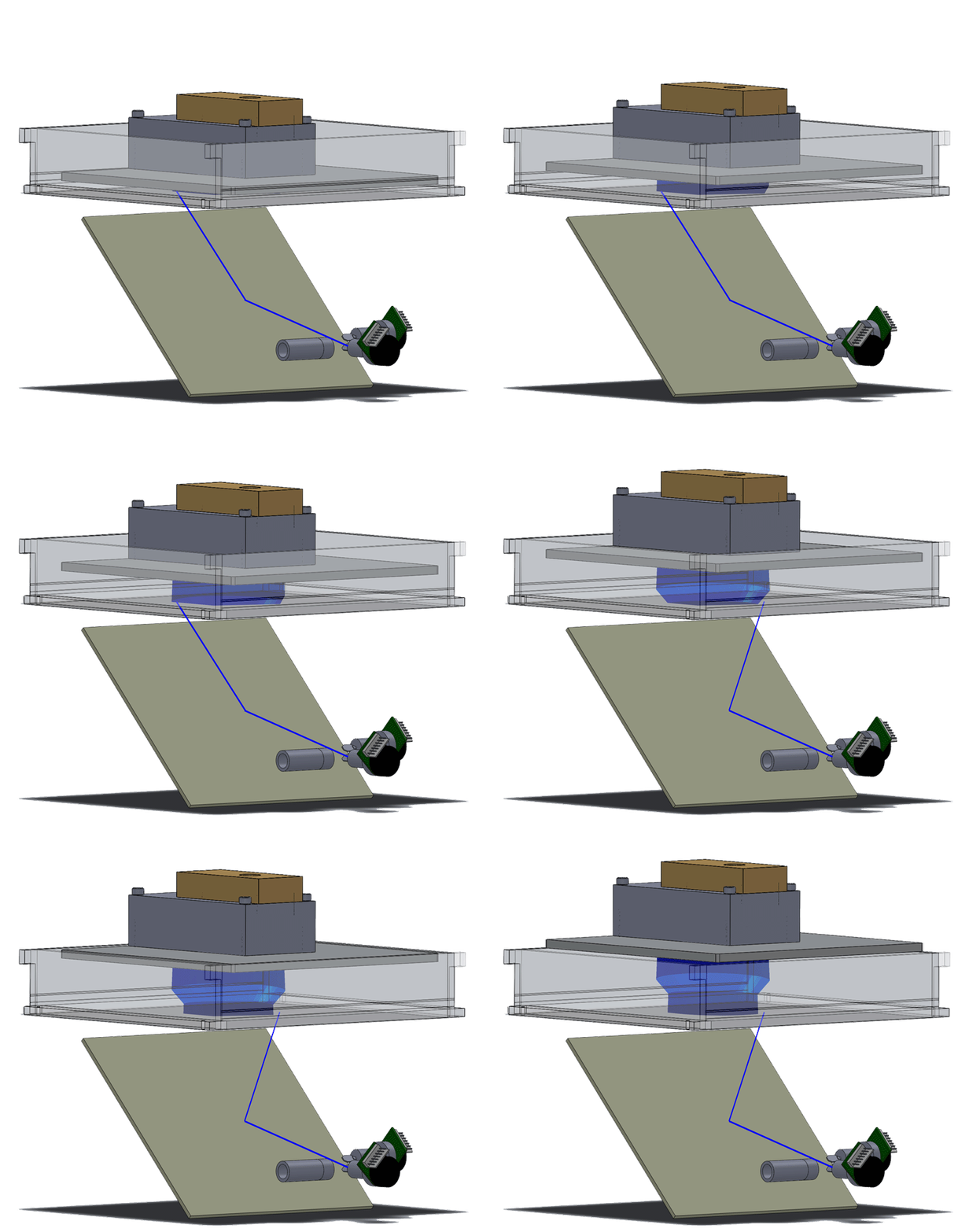
Printing Examples
Blood bath hydralisk production
The printer has its own “native” software that allows you to do all the necessary manipulations
.
We select the number and location of supports ourselves. You can choose the form of the substrate.
Initially, the platform is at the very depth of “minus delta.”
Next, the laser is turned on, which affects those sections of the polymer that correspond to the walls of the target object, causing them to solidify. After that, the entire platform rises a little higher, by an amount equal to the thickness of the layer.
(something I've often come across lasers lately)
Laser and control mirrors
Laser power: 50mW - the most powerful laser, allows you to use a wider range of resins.
UV wavelength: 405NM
It took about an hour to print the hydralisk, all this time the softina showed% completion and estimated time.
After the materialization is completed, it is necessary to place the product in an alcohol bath, followed by irradiation in ultraviolet (suitable and pedicure).
The platform (print area: 128x128 × 180mm) is easily removed, which makes it easier work with freshly baked hydra.
After you examine / peer at the details printed on a similar printer for an hour, what comes out from under the nozzle of “ordinary” 3D printers seems coarse and thick, the layers just cut your eyes (but soon it passes).
More examples of work printed on URANUS


Application area
Scientific research. Since you can get a model of almost any complexity for any purpose in a matter of hours, SLA-technology becomes an indispensable assistant in various kinds of research studies. Models have sufficient strength, as well as transparency, so it is possible to visualize gas and hydrodynamic flows within models.
The medicine. A new direction has been formed in maxillofacial surgery and orthodontics with the advent of SLA. Magnetic resonance imaging of the problem area is done to the patient, a 3D computer model is formed from it, and a real 3D model of bone tissue is grown on it. Thus, the doctor the next day has at his disposal a model of bones or teeth of a real patient.
Art.Thanks to stereolithography technology, sculptors, fashion designers and jewelers are entering a new level of production. The process of 3D printing of prototypes significantly reduces the time for testing experimental samples, which favorably affects the speed and quality of creating future jewelry or sculpture. SLA technology is very well suited for this: the models are durable, easy to paint.
Burnout casting. If there is a need to obtain a metal part, the following technology is applied: the SLA model is poured with a molding sand, then calcined at high temperatures. In this case, the plastic completely burns out, and in its place, the metal is poured into the formed form under vacuum. After it hardens, the form is destroyed and the part is removed.
Chip
One of the owners of the printer (from Belarus) managed to burn the resin in the furnace, that is, there is actual evidence that when using the resin in conjunction with the URANUS printer, you can burn the resin with temperature (“ash” parameter). Jewelers and those who make metal crafts will understand what.
The peculiarity is that a special temperature card will be supplied to the printer, which will contain information at what temperatures (approximately 600-650 degrees Celsius) and time it is necessary to hold the craft to achieve the decay of the resin in the furnace.
Conclusions.
Speed is higher than that of FDM
Very large print size (compared to ProJet 1200 about 4x4 cm)
Extremely quiet (but there is a smell)
Detailing is much higher than that of plastic 3d printers (FDM)
Price is lower than that of analogues
Economical consumption of consumables
There is still one minus. If the operation of a plastic printer can be watched for hours, it captivates like a flight of snowflakes or like a flutter of flames, then everything is very pragmatic for SLA printers - I pressed a button - in an hour I received a part from a box. The birth process will not be able to peep. But still, the thing seems magical.
PS There are no former