June 26, 2014 at 01:23
Space whalers
- Transfer
Leading space agencies came close to the need
It is estimated that more than 17,000 objects larger than a circle fly in near-Earth space. And they all pose a potential, and deadly, threat to working satellites and spacecraft. Even a collision with a nut with a diameter of 1 cm can have the effect of a grenade explosion on board.
Low orbits (800-1000 km) are very important, they usually have observation satellites. The only way to limit the amount of rubbish at these heights is to remove the largest objects — old satellites and upper stages of launch vehicles.
These multi-ton objects are time bombs: sooner or later, but they collide with each other. If they do not explode earlier due to running out of fuel or overheating of batteries. The resulting clouds of debris can make low orbits very dangerous for any vehicles, and subsequent collisions can lead to a chain reaction of such events.
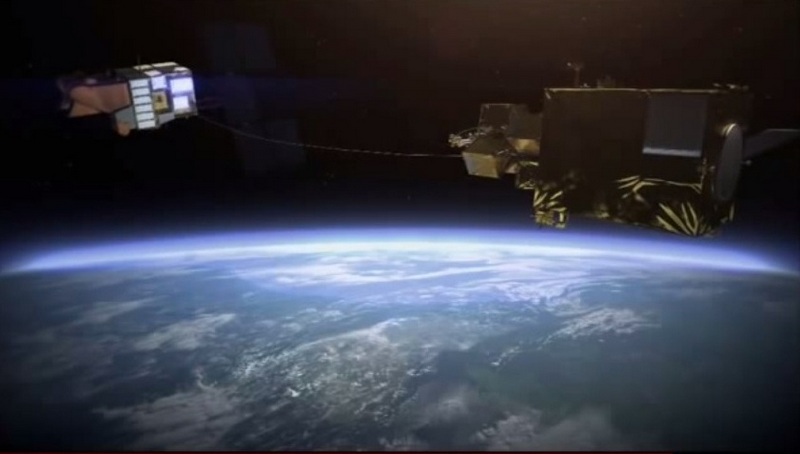
To avoid this grim scenario, the European Space Agency launched the e.DeOrbit initiative. It involves a mission to clean low orbits in 2021. To do this, a hunter satellite will be launched into space, which will direct from the Earth to the largest garbage objects. The satellite will harpoon them and send them to the upper atmosphere.
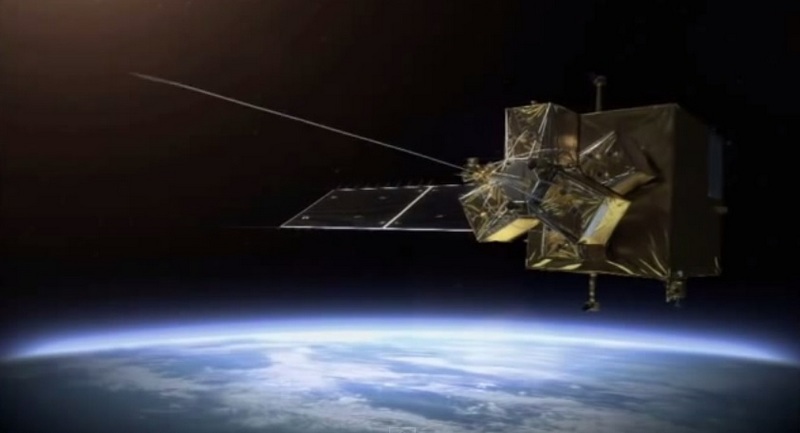
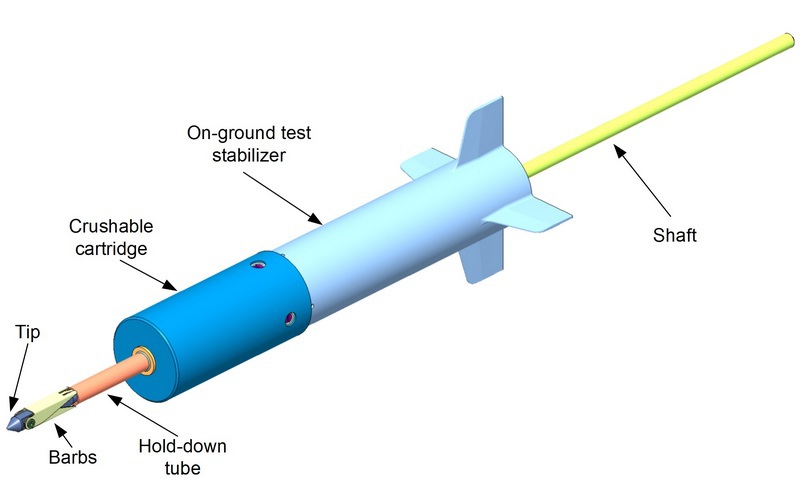
After considering a number of capture methods, the Europeans settled on a harpoon. His concept has already been developed by Airbus Defense and Space, UK. They even managed to test a test sample by firing samples of materials used to make satellites. They evaluated not only the momentum necessary for reliable penetration, but also the formation of secondary debris that could be dangerous for a hunting companion. So far, the design of the harpoon is far from ideal and requires further study. The plans envisage computer simulation of all three stages - implementation in an object, capture with hooks, towing - and the construction of a full-scale stand for further tests.