April 27, 2014 at 21:17
Data recovery from flash drives monolith
Flash drives are brought to our laboratory for data recovery almost daily. However, in recent years, more and more often began to bring miniature, the analysis of which reveals a special manufacturing construct - Monolith.
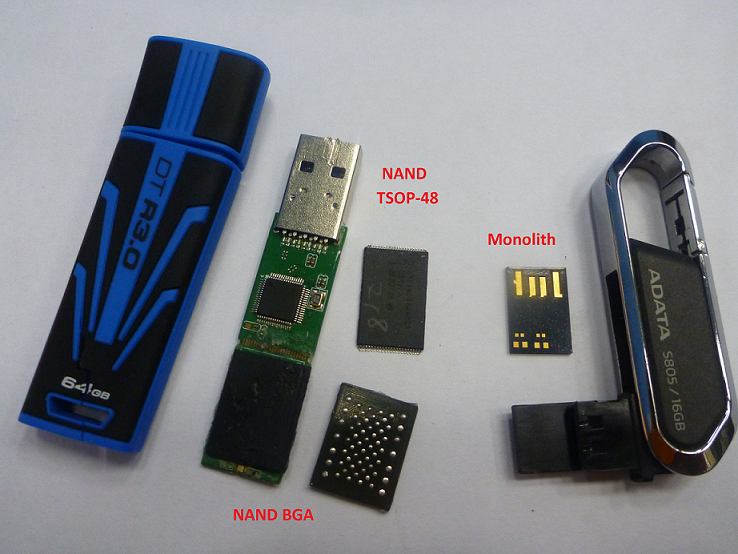
In the circle of repairmen, we called this execution of the “monolith” case. Due to the fact that the controller chip and the NAND memory chip are made in one bottle.
Such a construct touched not only USB flash drives, but also SD memory cards, and of course MicroSD.

Manufacturers of flash drives can be understood - stylishly, glamorously, miniaturely, but ...
Data recovery from such flash drives is very, very problematic.
Usually on flash drives, either the controller burns out or the memory cells partially wear out. For any malfunction, access to the memory is required directly.
Data recovery from a regular flash drive is carried out by soldering the microcircuit, reading it on a programmer supporting NAND and further assembling the contents. The assembly is called because the data does not lie there explicitly, it is scattered throughout the chip according to the controller algorithm.
Data, the controller scatters "pieces" for uniform wear of the flash drive. There are a lot of controllers and their firmware, the algorithms and sizes of the "pieces" are different. The specialist and / or software analyzes the data, understanding the algorithm can collect the scattered "beads" in the desired sequence and voila, the data is restored.
But you don’t solder anything from the monolith ... Chef, what should I do?
We take dremel and goy paste, polish a layer of varnish from the “belly” of a flash drive, it is better to do this under a microscope for close monitoring, so as not to overdo it. Some comrades rub with sandpaper or a scalpel, but there is a danger of damaging the necessary and valuable tracks with contacts.
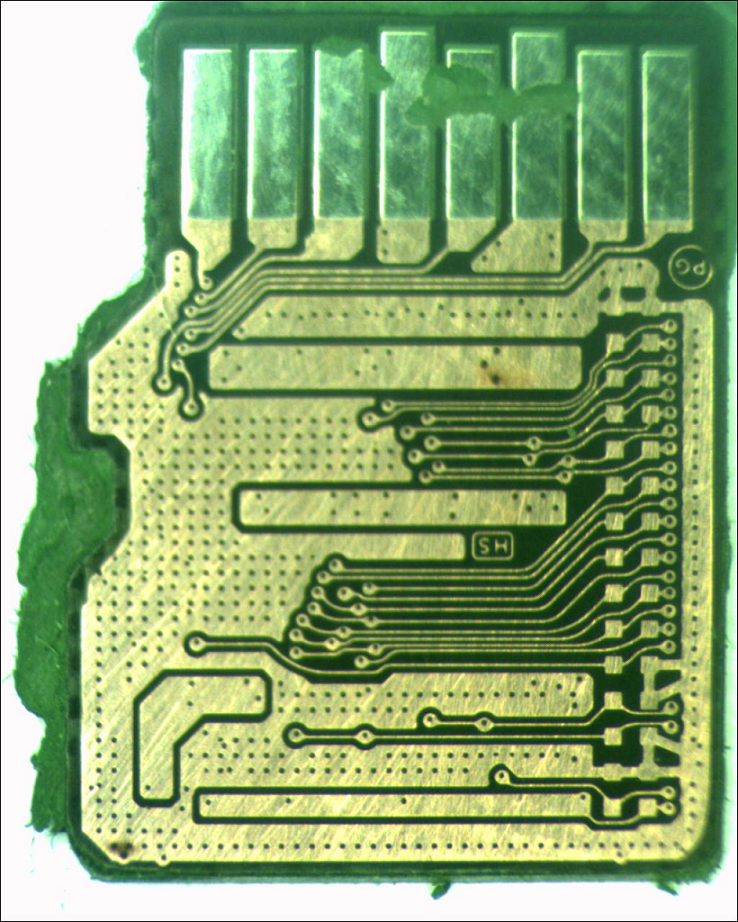
I use the MBS-10 domestic microscope and the Weller LT 1L 0.25mm sting., Wires from 0.2 to 0.5mm in varnish.
Then we get to the roads.
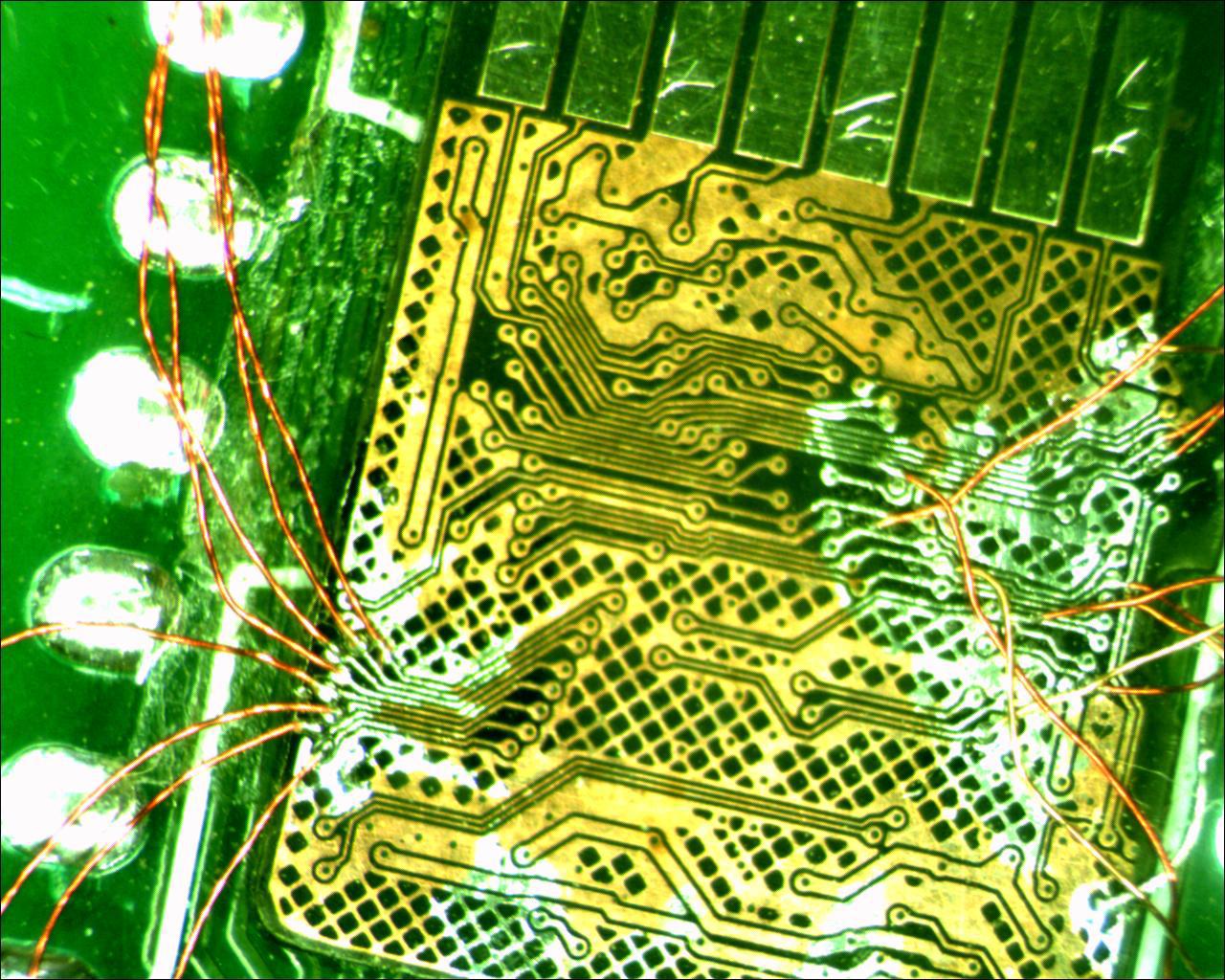
Here to the nickles.
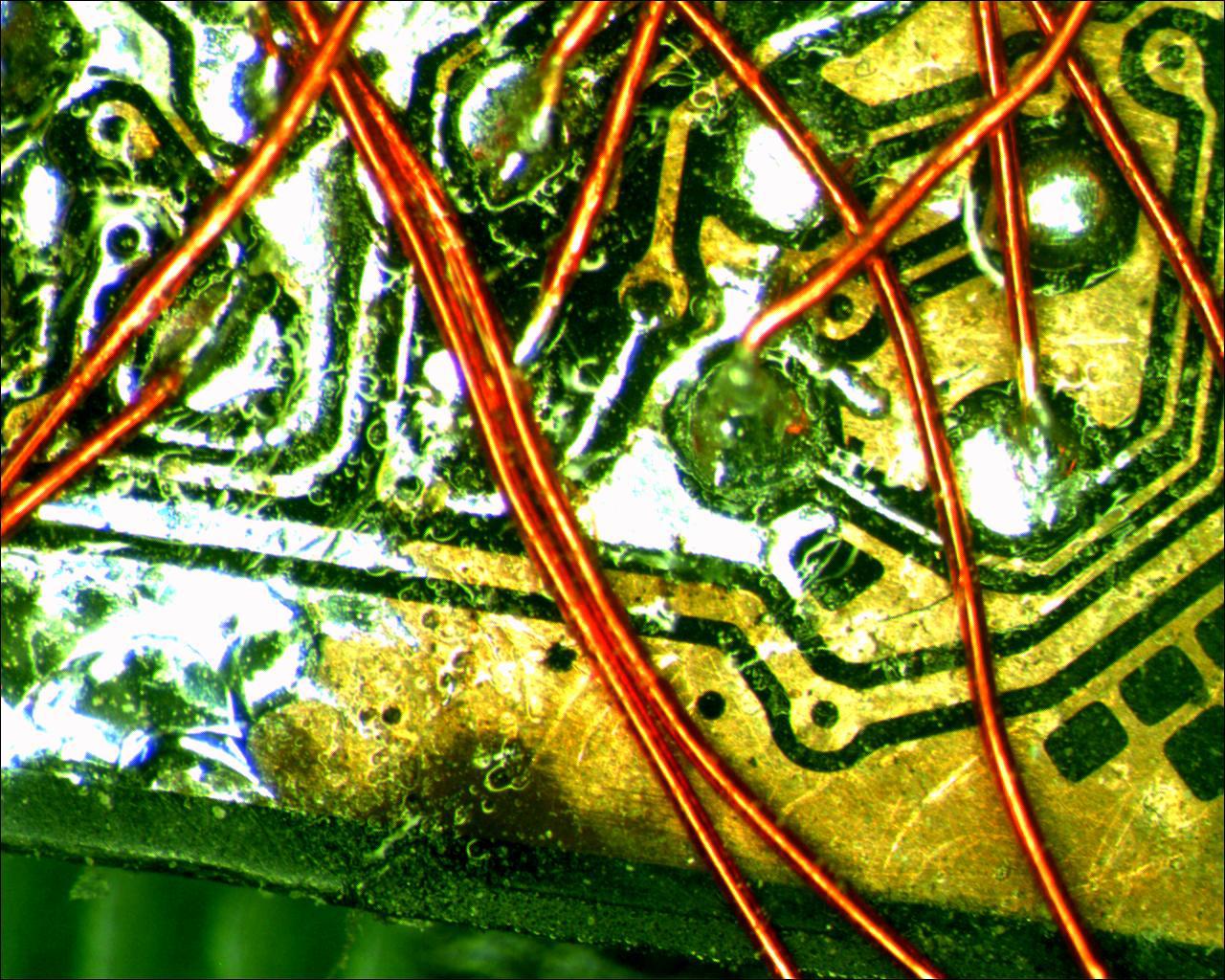
And here comes the first nuance: How do we know WHERE to solder?
NAND is NAND, flash manufacturers: Samsung, Hynix, Micron, Intel and others, put data shields on microcircuits in ordinary cases (TSOP, BGA), contacts are painted there, where are the data bus, control signals, “pitos”, ground ... All ordinary NAND conclusions are standardized, but the most important thing is that there (in pdfs) there are diagrams of signal levels, and this is what we need.
We use a logic analyzer to catch the points we need by comparing them with the manufacturer’s data shield. We have a 500Mg 35 channel logic analyzer in our lab. This occupation is very dreary.
But the main problem for working with a logical analyzer is to find the same working flash drive. Little can be found on the corpse, since it almost does not respond.
Nuance two: Sometimes not all contacts are on the belly!
Yes, not on all monoliths, the contacts required for data recovery are displayed on the top layer. Textolite puff .... where there in the bowels of the flash drive contacts chef ??
X-rays will save us.
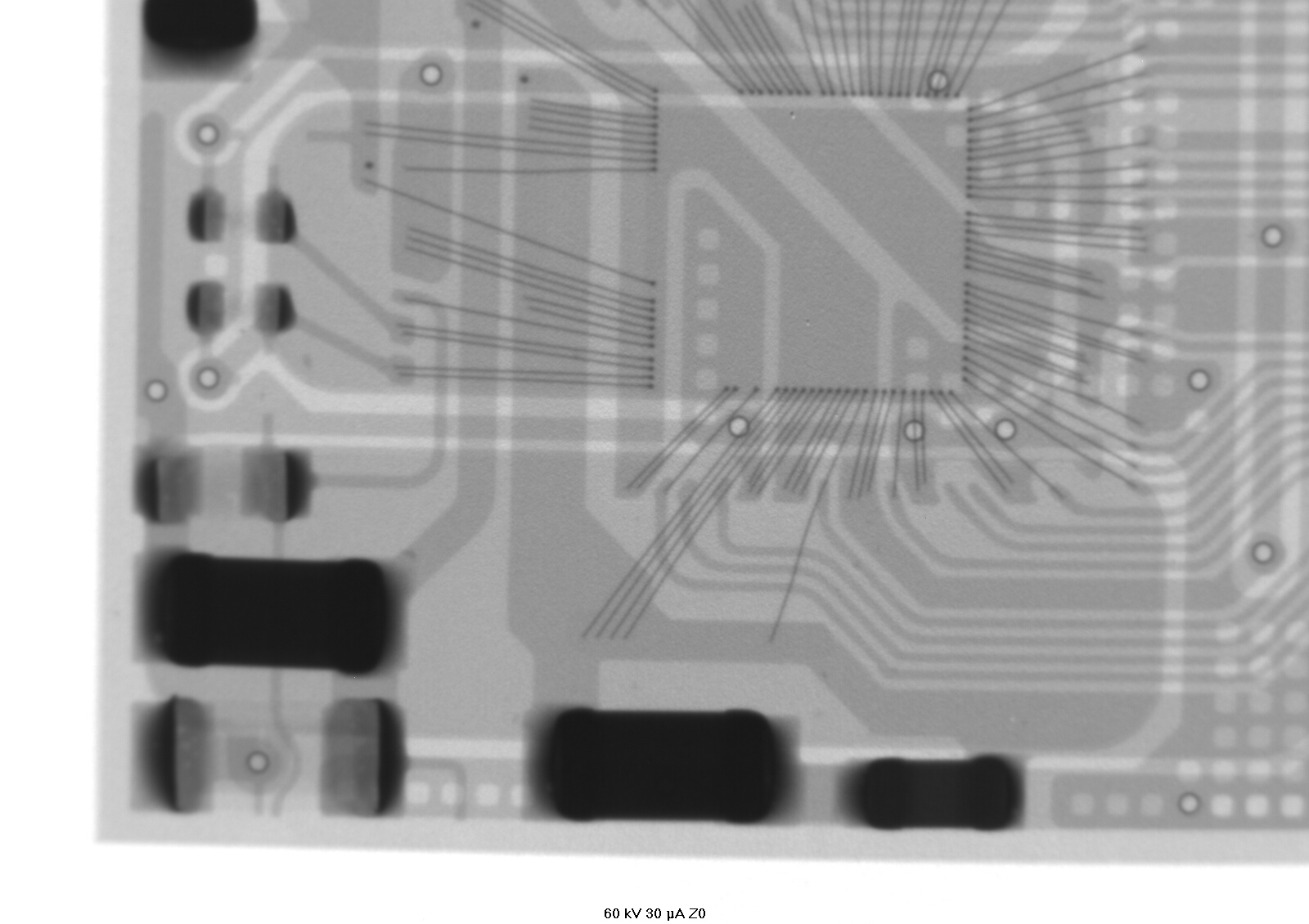
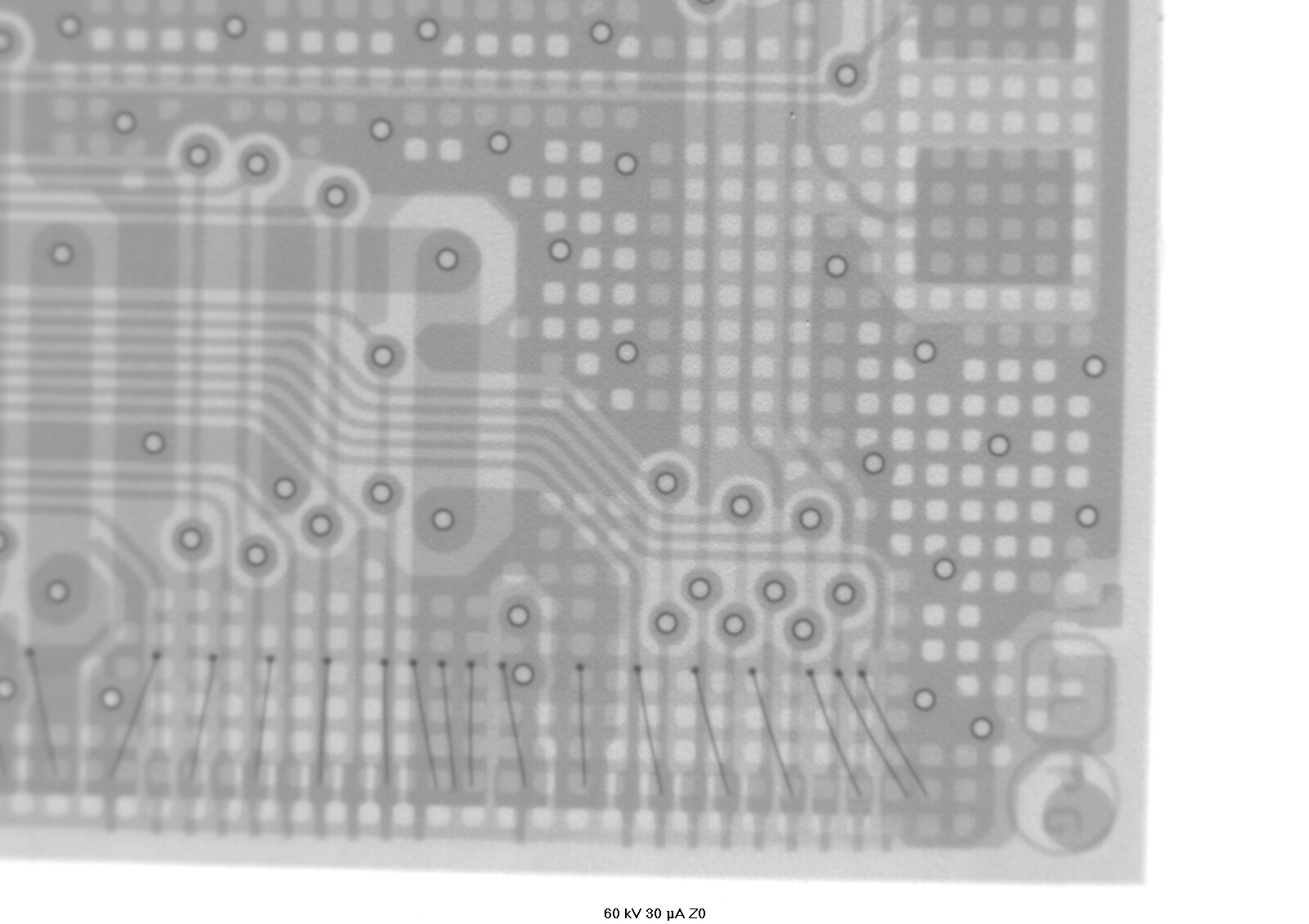
When examining the layers under the x-ray, you can see where you need to grind the layers, in which place.
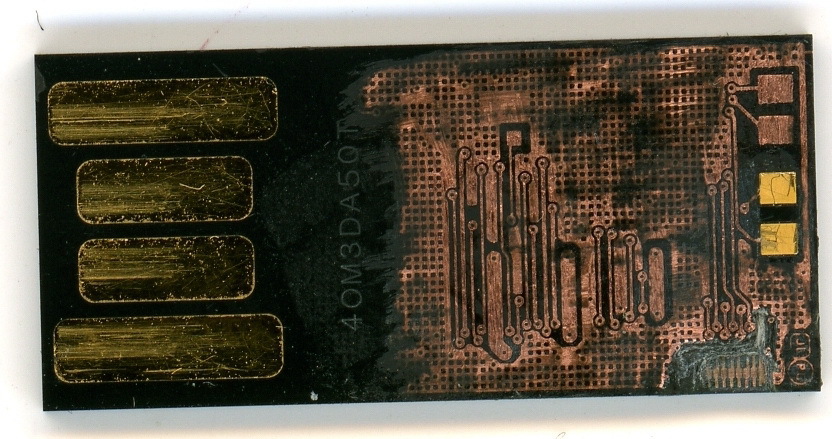
Find contacts, solder, and then decompose as needed, as with a regular flash drive.
Summary.
Recovering data from a monolith is more expensive, longer, more complicated than with a regular flash drive.
PS This is the first post of the corporate blog www.datalabs.ru , I hope for healthy criticism of the Habra residents ...
In the circle of repairmen, we called this execution of the “monolith” case. Due to the fact that the controller chip and the NAND memory chip are made in one bottle.
Such a construct touched not only USB flash drives, but also SD memory cards, and of course MicroSD.
Manufacturers of flash drives can be understood - stylishly, glamorously, miniaturely, but ...
Data recovery from such flash drives is very, very problematic.
Usually on flash drives, either the controller burns out or the memory cells partially wear out. For any malfunction, access to the memory is required directly.
Data recovery from a regular flash drive is carried out by soldering the microcircuit, reading it on a programmer supporting NAND and further assembling the contents. The assembly is called because the data does not lie there explicitly, it is scattered throughout the chip according to the controller algorithm.
Data, the controller scatters "pieces" for uniform wear of the flash drive. There are a lot of controllers and their firmware, the algorithms and sizes of the "pieces" are different. The specialist and / or software analyzes the data, understanding the algorithm can collect the scattered "beads" in the desired sequence and voila, the data is restored.
But you don’t solder anything from the monolith ... Chef, what should I do?
We take dremel and goy paste, polish a layer of varnish from the “belly” of a flash drive, it is better to do this under a microscope for close monitoring, so as not to overdo it. Some comrades rub with sandpaper or a scalpel, but there is a danger of damaging the necessary and valuable tracks with contacts.
I use the MBS-10 domestic microscope and the Weller LT 1L 0.25mm sting., Wires from 0.2 to 0.5mm in varnish.
Then we get to the roads.
Here to the nickles.
And here comes the first nuance: How do we know WHERE to solder?
NAND is NAND, flash manufacturers: Samsung, Hynix, Micron, Intel and others, put data shields on microcircuits in ordinary cases (TSOP, BGA), contacts are painted there, where are the data bus, control signals, “pitos”, ground ... All ordinary NAND conclusions are standardized, but the most important thing is that there (in pdfs) there are diagrams of signal levels, and this is what we need.
We use a logic analyzer to catch the points we need by comparing them with the manufacturer’s data shield. We have a 500Mg 35 channel logic analyzer in our lab. This occupation is very dreary.
But the main problem for working with a logical analyzer is to find the same working flash drive. Little can be found on the corpse, since it almost does not respond.
Nuance two: Sometimes not all contacts are on the belly!
Yes, not on all monoliths, the contacts required for data recovery are displayed on the top layer. Textolite puff .... where there in the bowels of the flash drive contacts chef ??
X-rays will save us.
When examining the layers under the x-ray, you can see where you need to grind the layers, in which place.
Find contacts, solder, and then decompose as needed, as with a regular flash drive.
Summary.
Recovering data from a monolith is more expensive, longer, more complicated than with a regular flash drive.
PS This is the first post of the corporate blog www.datalabs.ru , I hope for healthy criticism of the Habra residents ...