We disassemble IBOX, another ARM mini-PC
My last post about the IBOX not yet covered
What's in the package?
I received the earliest version of the BETA1 device. The device flew in in such a colorful box:
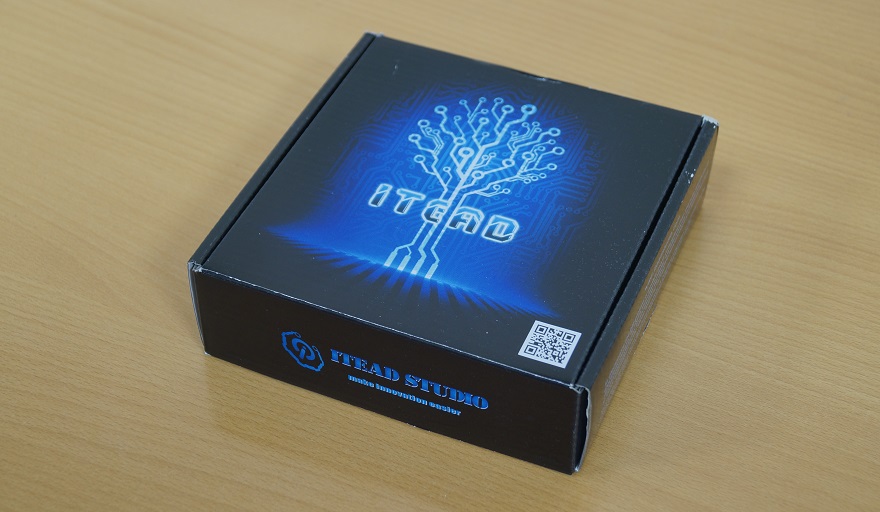
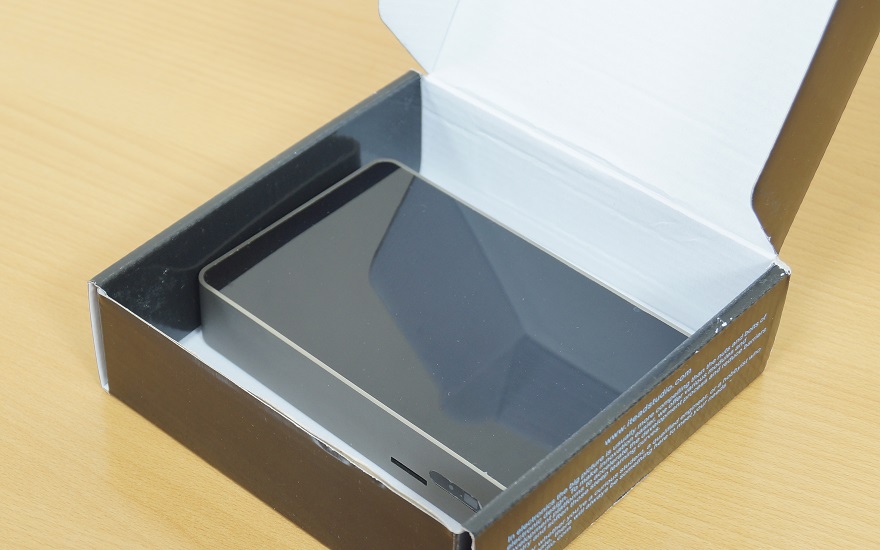
Inside - a bunch of bubble wrap that hides the IBOX “system unit”.

I get enough packages from China to say with confidence that the Chinese are very cunning people. So cunning that they often send their goods in a bubble wrap with already bursting bubbles, depriving the buyer of such a longed-for activity. The guys from ITEAD were on top and did not burst my bubbles, for which many thanks to them.
But for which you can’t say thank you, duck is for meager equipment. In the box, in addition to the microcomputer itself and the heap of uncut bubbles, there was absolutely nothing. I expected to see at least a power supply there, and at a maximum - one or two proprietary expansion modules that stick into a special IBOX connector. Or a DIY-shawl with the mating part of this connector and breakout all its conclusions to standard 2.54 mm pins, for experiments.
Outside view
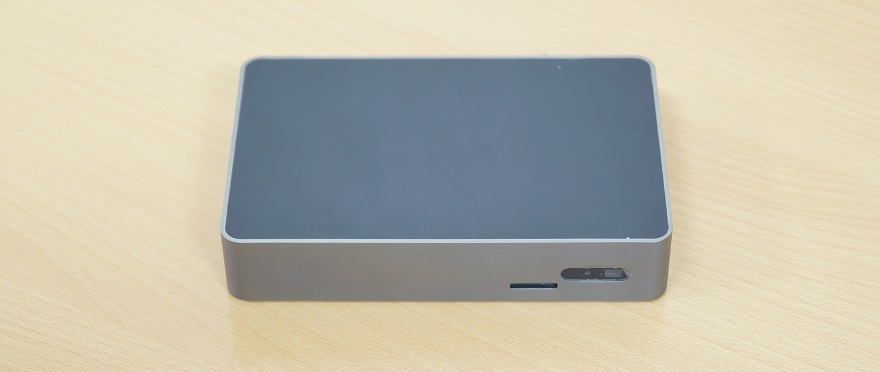
The appearance of the front panel of the device is shown in the title photo.
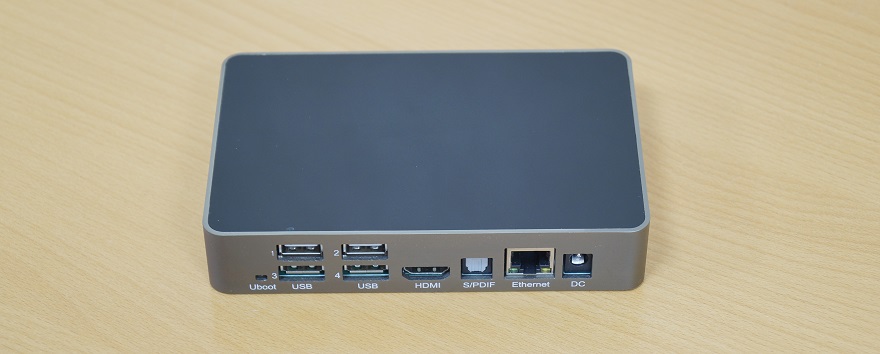
From the back, it looks like this: On the whole, the device looks, if not “five,” then “four plus.” The main body is made of some (I suspect, magnesium, like some laptops) alloy. The top is black glossy plastic. Bottom - molded metal plate.
Connectors and controls
On the front panel:
- Micro SD
- Multi-colored LED - status indicator
- IR sensor window, infrared remote control signal receiver
At the end:
- 32 pin expansion connector
Back:
- Reset button
- 4 USB2.0
- HDMI
- S / PDIF
- Ethernet
- Power supply connector
What's inside?
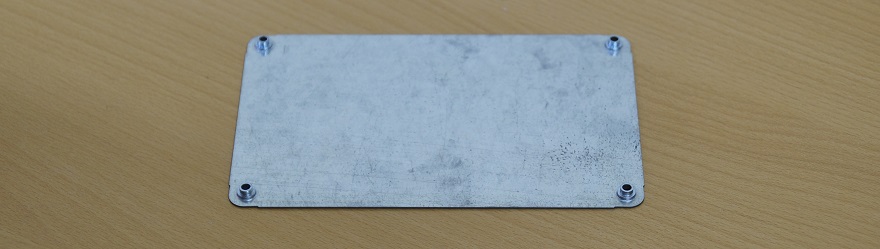
We take a Phillips screwdriver in our hands, unscrew the four screws in the lower plane of the device, remove the bottom cover:
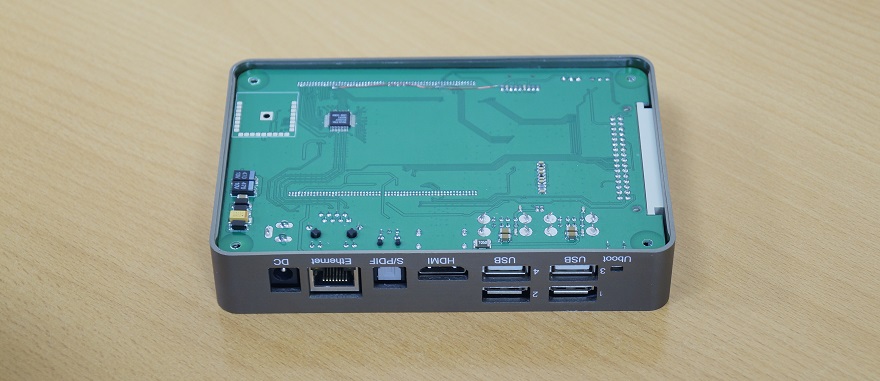
Under the cover we see the lower part of the circuit board: The
upper part of the case without the filling looks like this:
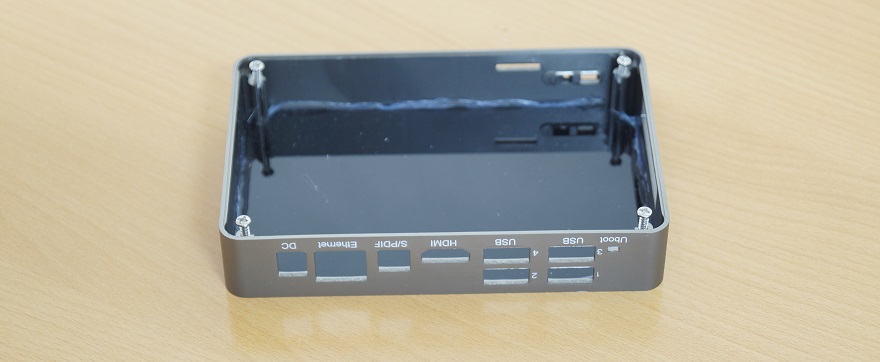
It can be seen that the upper black surface is simply inserted into the case and glued around the perimeter from the inside. I think, if desired, it will be possible to pick it out and replace it with your own, from normal material with the necessary holes for any indicators, buttons, and so on. You can cut such a plate without much difficulty. Offices carrying out laser cutting of plexiglass seem to be full in every big city in this country.
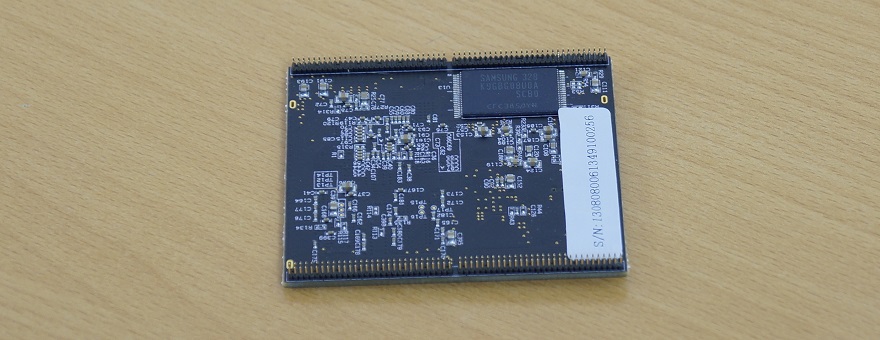
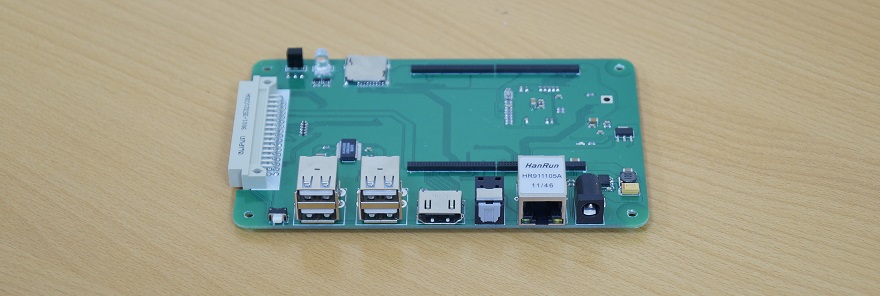
The IBOX circuit board is a sandwich from a board with connectors and a universal processor module ITEAD A10 / A20 CORE .

The processor module has several configuration options and costs from $ 42. IBOX uses equipment with a dual-core A20 processor and 4GB internal flash. Such equipment costs $ 48.
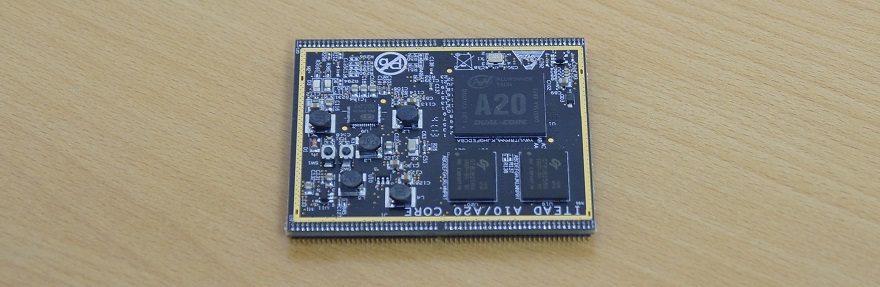
Typically, the connector on the processor module does not have protection against improper installation. On the “motherboard” printed circuit board, I also did not notice any “hints”. You need to be careful not to mix anything up. Bottom of the processor module:
“Motherboard” without a processor module from the side of the connectors:
... From the front:
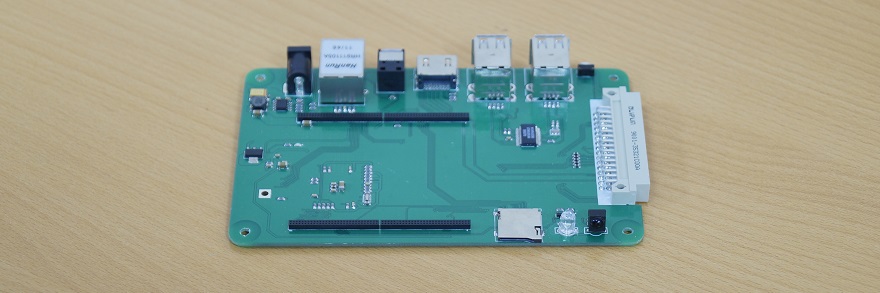
Bottom view, with soldered wiring and an unsoldered area for some secret element:

It can be seen that more than a free layout is used. The place is full, both on the printed circuit board, and in the case itself above the circuit board. The dimensions of the case, apparently, were dictated by the dimensions of the connectors located on the back of the device. It may be so, but the resulting space of the case and the area of the "motherboard" should be used more efficiently and turned into competitive advantages.
Total What is missing from the first revision of the IBOX?
- There is no internal SATA connector. The A20 chip supports SATA disks, ITEAD has another product based on the same processor module - ITEADUINO PLUS A20 , with SATA on board. What kind of savings on matches?
- There are no case mounts for a 2.5 "hard drive. I did not measure it clearly with a ruler, but visually the hard drive can fit into the existing case above the processor board.
- No internal power supply. There is a huge pile of free space on the board. The integrated power supply could be a very significant competitive advantage for many customers.
- There are no rubber or plastic legs in the case. The body rests on the surface with the protruding heads of four screws that secure the bottom cover. They are a Phillips screwdriver and not at all perfectly flat, can easily scratch the polished surface of the furniture.
- There is no wall mount. Two tricky holes for fixing to the wall, which in reality for some reason are not there, are asked for on the back cover of the device.
- There is no expansion plug. The device is very beautiful, claiming a place next to a large TV and a good audio system. A bunch of sticking pins on the side of the case does not add to his beauty at all, plus there is a slight danger in them. Accidental finger locking of several pins on a working device will not lead to anything good.
- There is no at least one USB port on the front panel, next to the flash card slot.
- The glossy top of the case is not the best solution. Beauty is quickly lost after touching with your fingers. And even more is lost after trying to wipe fingerprints - scratches remain on the surface after a simple wipe with a cloth.
Conclusion
ITEAD IBOX is an interesting device in terms of characteristics and appearance, not without a number of drawbacks. A price tag of $ 70 for a dual-core microcomputer in a pretty metal case is more than adequate. If, over time, a manufacturer can answer at least some of the questions and eliminate the indicated shortcomings in the following revisions (without raising the final price tag), the device may well go into the “must have” category for so many potential buyers.
PS And a little "advertising." This post has been posted to the COOLRF project corporate blog . We are developing iron for a smart home based on the ZigBee wireless protocol. If you are not familiar with us yet, you can read the previous blog posts and join our VKontakte group. The group publishes (including) small project news that do not fall on Habrahabr.
PPS The post talks about the early beta version of the device. Buyers will be shipped a more streamlined modification. Now the manufacturer already has BETA2: blog.iteadstudio.com/ibox-production-schedule-update