November 15, 2013 at 19:56
In-ear headphones: all about them
1. What are IEMs?
In-ear headphones (English In-Ear-Canalphone), also referred to as earplugs, less commonly ear-monitors or (correct) IEMs (hereinafter in the article this name will be, because it is very concise and the author likes it) - these are headphones , outwardly very similar to the earbuds, but designed for maximum sound insulation of the ear canal of the listener. It (sound insulation) is also called sound “sealing” - it has two functions: blocking excess noise and forming a sound area (camera) to achieve sound completeness. It creates such a sealing nozzle, worn on the nozzle of the earpiece and embedded in the front of the ear canal. There are also headphones where the nozzle is created according to the casts of the owner’s ears - they are called (in the Russian-speaking audience) custom (English Custom molded earplugs), - such things serve to achieve maximum sound quality and listening comfort.
Why choose IEMs ? Due to its high portability, high-quality sound and the ability to block excess noise. Some models have long been used by audio engineers; musicians performing on stage. Gags (in Russia this name has taken root more), are a kind of IEMs . When manufacturers of in-ear headphones began to rivet them for the general consumer (iPod generation), the abbreviation IEMs became more popular (not in Russia), replacing the expression “plugs”. It is correct to call “plugs” the technical language - IEMs . Less common abbreviation for IEMsUsed to indicate high-quality in-ear headphones.
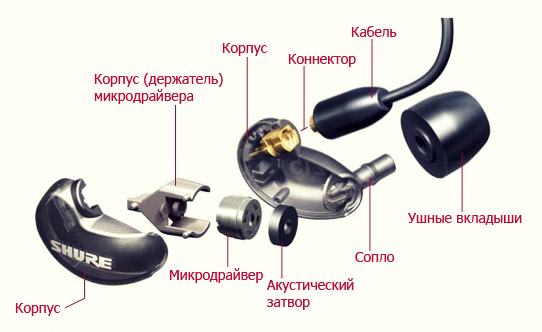
Fig. 1. The main components of IEMs.
2. IEMs are loose leaves?
Not. IEMs and inserts (Eng. Earbuds ) are the two main, but different types of inner ear headphones (Eng. In the earphones ). The second transducers are small enough to fit snugly in the ear, and as a result, they are not "leakproof".
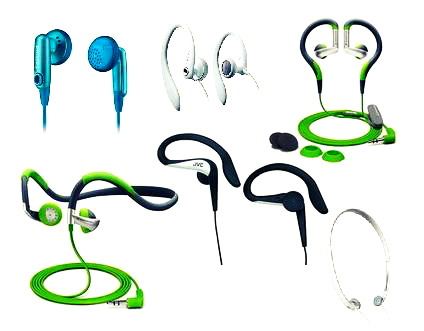
Fig. 2. Various types of liners.
The earbuds and earplugs are worn as open headphones, often outside the ear canal. They can be attached with a rim on the head, or with a clip (clip) for greater comfort.
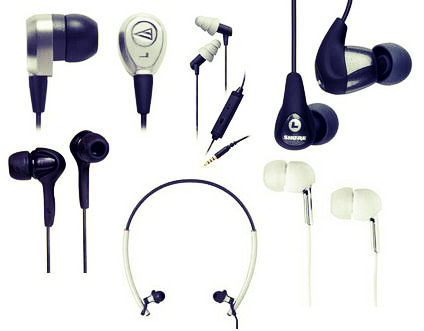
Fig. 3. Various kinds of IEMs.
Only IEMs are designed for partial installation in the ear canal, to create a "tight" seal. Previously, most (sites, shops, people) because of their misunderstanding often confused two completely different types of headphones.
3. Noise isolation and noise reduction
Despite their large sizes, active noise canceling headphones ( ANCs ) do not always isolate better from noise than IEMs . Also in ANC, sound quality ( SQ ) is often of the second class, or even lower (although much depends on the price, but still). There is a number of studies from Auditory Systems Lab (Virginia Tech University) that have worked on this issue and come to this conclusion.
4. Types of converters
There are two main converters (sensors, drivers) that are used in IEMs: dynamic and with balanced armature ( English BA ; in Russia - fittings).
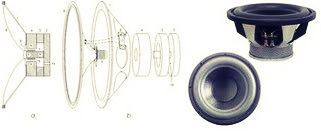 Fig. 4. Dynamic converter.
 A dynamic transducer (moving coil) is often found in IEMslow class because of its simplicity and low cost, in contrast to the "fittings". As a rule, the size of the former is much smaller and ranges from 3 to 6 mm in diameter. The dynamic transducer is known for its ability to create more powerful bass, as during the reproduction of sound, more air moves in it, due to the available space (than “reinforcing” headphones with several transducers cannot boast), which is felt by the human ear. It is worth noting that some well-known manufacturers use a dynamic converter in their IEMs , but the sound quality remains relatively low, and this should be remembered.
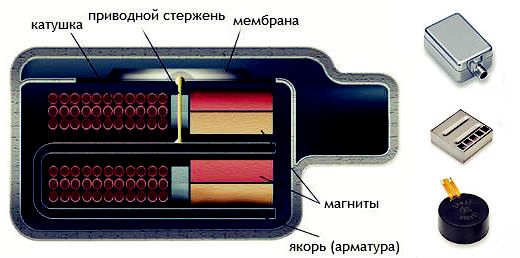
Fig. 5. Dynamic converter (inside and out).
Reinforcing headphones have an advantage - the playback accuracy in them is much higher, the frequency range is less to eliminate this drawback, they use several dynamic transducers in each earphone at once, which solves this problem, each driver works on its own frequency range, increasing the total range , thereby aligning the frequency response. The disadvantage of headphones with several converters is their high price and large size.
5. Nozzles
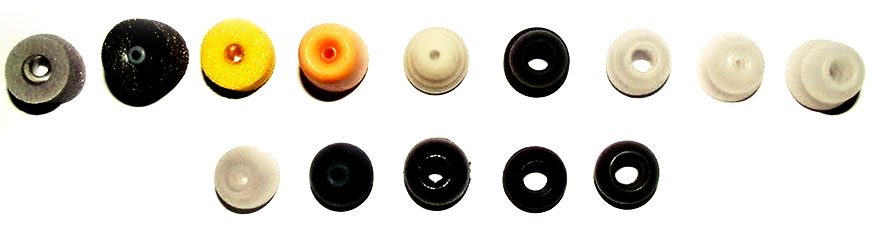 Fig. 6. Options for earbuds.
 In IEMs type earphones , as a rule, there can be three types of nozzles: soft plastic ( English flanges, sleeves ), foam ( English foam ) and arbitrary shapes ( English mold ) with hard acrylic or soft silicone material (there are also hybrid, soft and hard forms, but less often).
There are two types of soft plastic nozzles: universal ( English universal ) and size-dependent ( English size-depended) Universal are with two or three protrusions, this allows you to insert them into the ears to the required depth, achieving the notorious "tightness". Often, headphones with such nozzles are disturbing by their impact to the listener. Size-dependent soft plastic nozzles are more comfortable as they have three sizes: small, medium and large. The user chooses what suits his ear size.
The highest “sealing”, and as a result, the best comfort and sound insulation of foam nozzles. This form gives a more complete, warm and pleasant sound than plastic or silicone. Foam nozzles also have two types, related to size. It is worth noting that nozzles of this type cannot be cleaned and require replacement after several weeks of use. Some manufacturers even produce such nozzles (with various types of foams) for a separate sale, in addition to the standard ones.
Shure black foam nozzles are the most popular [no ads] on the market and provide more comfort based on (subjective) experience. Often models have a size that is indicated by dots on the bottom of the headphone: one dot is small, two points are middle, three points are large. Manuals always come with headphones.
6. Size of nozzles
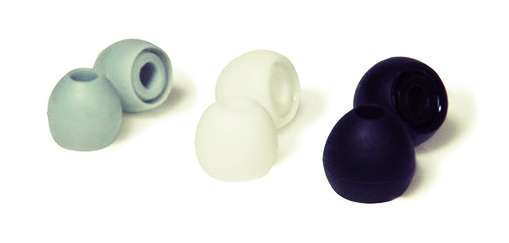
Fig. 7. Nozzles of various sizes.
The right choice of nozzle size provides perfect “sealing”, which in turn leads to maximum comfort and excellent sound. Using a large nozzle will cause pain in the ear after a few days, and the result of using a small size will be the lack of sound insulation and the predominance of high frequencies, due to air leakage.
It happens that a person for a long time can not pick up the desired size of the nozzle, because some ears are very susceptible to foreign bodies. In this case, you will need to follow a few tips to reduce the discomfort of this problem.
7. Nozzles: comfort factors
We settled on “sealing”, comfort and sound quality in silicone and plastic nozzles (we won’t say anything about the foam, because they are very convenient and cause discomfort to the smallest part of the audience). Let's consider some factors.
Factor 1: partial and full fit
Some headphones (for example, EP-630 and CX-300 ) allow you to fully, but not deeply insert the nozzle into your ear (approximately 8-9 mm), which will create less insulation, but more comfort for the user.
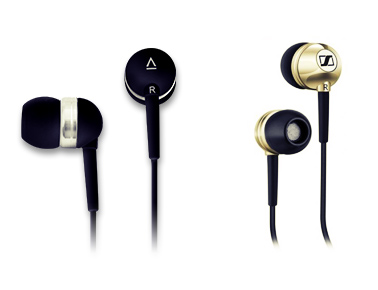
Fig. 8. Creative EP-630 and Sennheiser CX 300 respectively.
Most other headphones require a deeper insertion from the listener (more than 9 mm). Such a landing, as already mentioned, will create a good seal, therefore a better "seal", as a result of noise isolation, but to the detriment of convenience.
Factor 2: nozzle material.
Often, nozzles are made of soft plastic, silicone or polyvinyl chloride. Silicone is the softest of all nozzles, as a result more convenient, but not all silicone nozzles have the same softness.
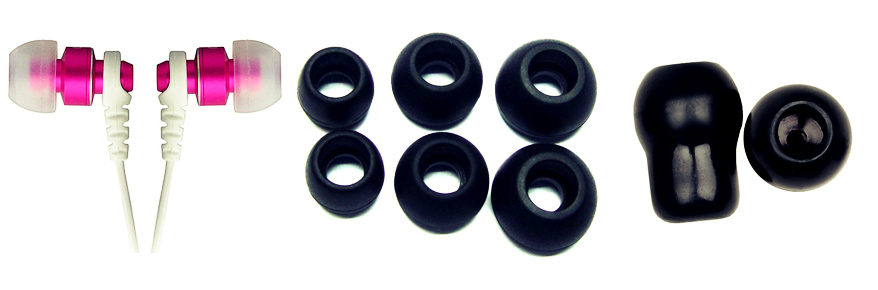 Fig. 9. Nozzles made of soft plastic, silicone and PVC, respectively.
 Factor 3: Nozzle Thickness
A simple rule that states that the finer the material on the nozzle, the better, but again at the expense of sound insulation.
Factor 4: Nozzle Design
The location of the converter also plays an important role. In general, if it is hidden compactly, which will allow the earphone to be small in size, then this is good. That is why headphones with multiple transducers are considered uncomfortable.
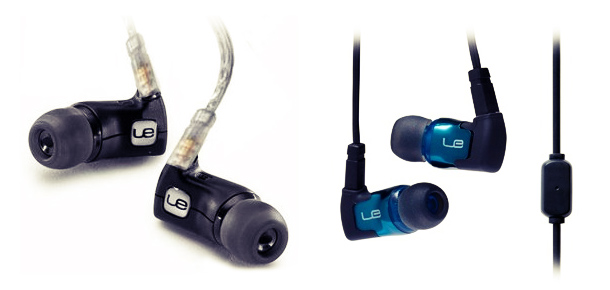
Fig. 10. Headphones Ultimate Ears Series Superfi and Triplefi (with multiple transducers), respectively.
Let's consider the factors with illustrative examples.
Example 1: Ultimate Ears headphones with a single nozzle - a shallow fit, hard and thick nozzles, a large earphone size = not very convenient, but good noise isolation.
Example 2: Sennheiser CX300 Headphoneswith a single nozzle - not deep landing, soft, thin, small earphone size = comfortable, average noise isolation.
Example 3: Etymotic ER-6i headphones with a triple nozzle - deep landing, soft and thick, a small earphone - not so comfortable, but excellent sound insulation.
Example 4: Sleek Audio SA6 dual- headphone earphones — deep- seated , soft, slightly porous medium-sized earpieces, small earbud = comfort and excellent noise isolation.
Example 5: Double -head Head-Direct RE1 headphones - deep insert, medium softness and thickness, small earphone size = excellent comfort and good noise isolation.
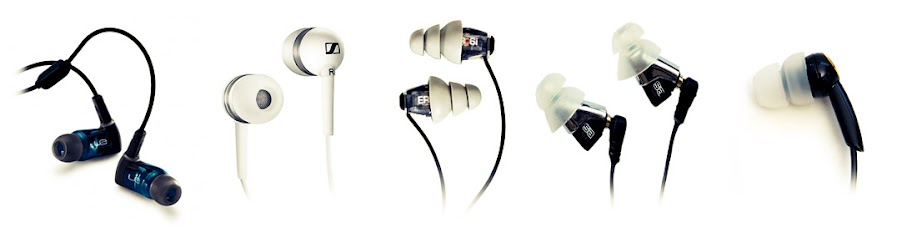
Fig. 11. Headphones according to example.
It is important to remember that it always takes time to get used to a particular nozzle, so there is no need to rush in decisions. Personal preferences in sound change more often than in convenience and this must also be taken into account. It also happens that a person falls in love with sound, not paying attention to inconvenience, after which, when the euphoria from the sound disappears, forgotten anxieties come to him.
9. Maintaining appearance and care
Maintaining a set of headphones in good appearance can increase the quality of the initial “sealing” and the life of the headphones. First of all, remember that there is no better way to preserve the life of the headphones than regular cleaning of the ear canal.
For universal headphones, contamination of the nozzles promises the appearance of excess noise and deterioration in sound quality, as small debris contributes to improper air distribution. To avoid this, you must either change the nozzles for new ones, or use special tools to clean them.
Clean your headphones and cable at least once a month. If you play sports with headphones, then this should be done more often, especially in those areas where the wire touches the skin. This will make your headphones more durable.
In no case do not use alcohol-based cleaning fluids and bleaches. It is enough to use a damp cloth and soap.
To clean the nozzles, be sure to remove them from the headphones. To do this correctly, without damaging them, grab the nozzle with your thumb and forefinger and with twisting movements pull it out of the converter nozzle. Do not pull the nozzles, as this often leads to rupture and damage.
Remember that the headphone cable, like any other cable, eventually coarsens and cracks. The longer you take care of your headphones, the longer they will serve you. However, different manufacturers use cable of different quality: externally flimsy and not high-quality cable is sometimes very durable, and sometimes the situation is completely the opposite. Ideally, in the future it is better to use a replaceable cable; to all, a quality (very) detachable cable can increase the sound quality.
Soft plastic nozzles are recommended to be washed in warm, soapy water. Be careful not to get moisture, even once you wet your headphones, you will not be able to properly repair them to their previous state. If you nevertheless wet the headphones, it is recommended to leave them in a ventilated area for 1 - 2 days, this will help moisture evaporate.
Always wait for the headphones to dry completely before putting them in your ear.
Experimentally, it was revealed that when cleaning the nozzles of the headphones with hydrogen peroxide (15 minutes into the liquid), their service life significantly increases.
9. Static electricity
Using plugs it is possible to receive a discharge of electrostatic electricity.
In cold conditions with low humidity, static charge can accumulate on the body, although the ears touch only the plastic parts of the headphones, there are metal parts that are located nearby; static charge, which usually has a high voltage, is able to jump from one place to another. If the charge reaches you, then it will not harm you, although it will give you unpleasant sensations.
It is important to note that such discharges are quite rare, and do not mean that your headphones are malfunctioning; if you are regularly exposed to electric shocks, then most likely your cable (sheath) is damaged, and this is already a warranty case.
10. Warm-up IEMs
No final answer, yes or no. In general, the topic of warming up is a little religious in nature, and here, mostly the answer is no, although there are people (if you look at thematic forums) and even tests where IEMs really showed signs of improvement after warming up.
In general, it is very easy to verify this, as the warm-up time for IEMs is an order of magnitude shorter than for any other headphone and lasts a maximum of a couple of days (more precisely, no more than 50 hours) of random music playback at normal volume.
11. Noise from the cable (English cable noise) and from the movement of the body (English bone conduction)
Often , there are two kinds of complaints from demanding IEMs owners - when a user hears unpleasant sounds caused by vibrations of IEMs that touch clothing or other objects; the second - if translated literally, it will sound like "bone conduction" - a phenomenon when the noise in the headphones (occurring inside the body) appears when walking, running, eating food, etc.
You can solve the first problem by buying a clip (or better, not one) and attach the cable properly. There are also special cables that do not care if they hurt him or not. Often, even with top-end headphones, you can find a low-quality cable, so in this matter, before buying, it is better to first look at thematic forums or listen to, “check” the cable so that it meets your needs. The second problem for the current day has not been resolved, but, as a rule, the listener gets used to the noise in the background over time, or walks more slowly (changes shoes).
12. Portable Amplifier for IEMs
Do I need a portable amplifier ( Portable Amps ) for IEMs ? - Yes, in order to sound better, but for a small part of the headphones. Often these are high-impedance IEMs , for example Etymotic ER4S, can be associated with an amplifier, but the increase in SQ will be barely noticeable unless you have amazing hearing, or are not sick with the last stage of audiphilia.
Resistance and sensitivity is the easiest way to determine if headphones need an amplifier - if the characteristics there are less than 50 Ohms and 98 dB, respectively, then IEMs certainly do not require amplification.
13. Hissing and whistling
Sometimes, IEMs listeners may hear slight noise at a low volume, similar to hissing. Because Since most IEMs are very sensitive, they easily pick up electrical noise when any other headphones ignore them. There is no actual fix for this vulnerability, but if you add a resistor to the incoming line (to increase resistance and reduce sensitivity), then there is a chance that it will work. Some sources (one type of HDD on an iPod) produce more electrical noise.
Whistling. IEMs in the frequency range from 1KHz ~ 10kHz for some “whistle” or “hiss,” which is very subjective. The problem seems to be obvious - the headphones produce a very sharp sound of high frequencies, which during long-term listening can annoy, bore the listener. There are two solutions - equalizer and customization for yourself and (or) the choice of other nozzles, a filter.
14. Service life and out of warranty cases
Don’t think that $ 500 headphones will last you 5 times longer than $ 100 headphones. The average life is usually written in the warranty condition. High cost is not an indicator of longevity.
After a breakdown, in 90% of cases, the buyer (if the breakdown satisfies the terms of the warranty contract) is provided with new headphones, because replacement is disadvantageous to the manufacturer, as It requires a good technical base, which is often only on the production line.
In general, it is better to draw an analogy with cars. If you don’t have enough financial resources, do not buy expensive IEMs, as they are no less susceptible to breakdowns, but require more care (in their technical structure), to everything: a more complex search for parts, their high cost.
15. IEMs and Health
IEMs are often mistaken as a kind of health hazard. There are two reasons - partial hearing loss and ear infections. Here, again, the point is the correct use.
Firstly, it is logical that if you listen to music at high volume for a long time, it will lead to hearing loss, regardless of which headphones (speakers) were used. IEMs have the advantage of not having to turn up the volume to the maximum to overcome external noise. The default volume on most players should satisfy the needs of the average listener. Also, it should be considered incorrect guesses that the hearing may be spoiled due to the fact that the sound is closer to the eardrum. There are several studies on the topic of security: 1 , 2 .
Secondly, inserting any object into the ear, your body will respond with increased production of earwax. This is such a protective reaction against an increase in bacterial populations in a humid environment; ear canal cleaning is recommended regularly. Actually, the less you take off your headphones, the more sulfur you accumulate, and with noticeable hearing loss, you should immediately consult a doctor, excluding listening to in-ear headphones for this period, because this can cause damage to the gray eardrum and, as a result, hearing loss.
One important attention: people, even if they do not expose themselves to loud listening to music, but listening to music for a very long time, can still have problems. There is a studythat even at low volume (45 ~ 55dB), listening without affecting the hearing is harmful to health: people are prone to developing serious diseases, both physical and psychological. It is not recommended to listen to music continuously, even at low volume, a love of music 24/7 directly harms health.
To summarize: keep your ears clean, do not listen to music for too long (for example at night, and then on the way to work, at work, from work, at night ...), do not turn up the volume (there are a lot of studies where it has been proven that this is significant reduces hearing for short periods of time) - remember, hearing loss is an irreversible disease; keep common sense over emotional enjoyment.
16. Frequency Response of IEMs
An interesting fact is when many people say that IEMs are full of detail, accuracy; however, the range of most of these headphones, if you look at the specifications, do not really exceed 16kHz.
Although the human range of sound perceived by the human ear is somewhere in the region from 20Hz to 20,000Hz, most adults (after ~ 20 years old) actually cannot hear sound above 16kHz; the high frequencies are the range from 5kHz to 16kHz, - there are all the details, most of them in the lower region.
Perhaps smart and well-read listeners here will object, because although people cannot hear sound above 20kHz, they can feel the presence of ultrasound (harmonious distortion), which has a positive effect on SQ. However, given that almost all popular audio formats have a limit of 20kHz, we can conclude - most music is already limited within this framework; and, as a result, you don’t need to believe the new sound from the headphones if their range is beyond 20kHz.
17. Are IEMs worth their money?
It often turns out that ordinary (overhead) headphones sound better than IEMs at the same price. However, IEMs have advantages over other types of headphones, such as noise isolation and mobility, which are also worth considering. You have to decide on your priorities, which is better for you: SQ, portability or something else? With what, when and where you are going to use your headphones. Once the decision is made, you need to decide on the budget and go to some kind of audio forum (doctorhead.ru, pleer.ru, hi-fi.ru), search for what you want or ask people (for the thousandth time )
18. IEMs - Pros and Cons
[+] - Noise isolation;
[+] - The best combination of portability and SQ;
[-] - Requires more care and support;
[-] - Narrow sound stage;
[-] - High price.
19. What to choose if there is a budget?
IEMs can be broken down by price category (subjectively).
The lowest class segment, up to $ 50 , a kind of budget level - this includes dynamic IEMs that provide relatively poor sound insulation (often they have a nozzle with one flange, not foam). The sound they have is slightly better or at the same level than the earbuds . Usually in such models bass prevails, sometimes headphones with good high frequencies come across too. In general, everything is very similar to liners, but with insulation.
Price from $ 50 to $ 100 , - in fact entry into the class, the first level of these IEMs. There are dynamic headphones with the best SQ, and one-way reinforcing headphones. Any earbuds up to ~ $ 100 worse than headphones in this category.
Price from $ 100 to $ 300 , - middle class IEMs . There are headphones with dynamic and two-way (reinforcing) transducers. For most music lovers, these are high-end headphones. In this budget, you can find custom headphones or assemble (by ordering modding) them for yourself. Perhaps the best value for money among IEMs .
Price above $ 300, - headphones of the highest class, - Hi-End, if officially. Often, in this range the price is clearly overpriced (it can easily be more than $ 1000). As for quality, in reality there are no special advantages compared to what the manufacturer advertises and how it positions itself.
Be careful. Firstly, you need to look at the official price on the manufacturer’s website and for the country where the headphones were manufactured, or in which country the company is based in — often manufacturers for some countries (including Russia) overcharge. Secondly, price is often determined by demand.
And, most importantly, you should not 100% trust the instructions above (the market price cannot reflect the value): it happens that great IEMs can become underestimated, or not great - revalued. The best way to choose is to go to the store and listen, or read the appropriate forums, and ask experienced people.
20. Custom headphones
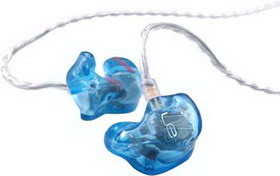
Fig. 13. UE11 Pro, costing over $ 1000 (but not so bad) .
This is a product created in an acoustic laboratory from scratch: experts calculate all the factors that affect the sound and create headphones that are most suitable for both the shape of your ears and your perception of sound.
As a rule, headphones in this category break records in price among the rest, but not without budget brands ( eg “mylivewires” ), of course; - qualitatively and at an affordable price, unlike, for example, Ultimate ears products, sometimes even the hardware component is used the same.
There are a few things you need to know before purchasing custom headphones.
In order for the headphones to impress you, they need to be well-adjusted to fit your ears, but even the most ideal fit with the most ideal headphones cannot be compared with real professional, “audiophile” headphones. In addition, the “fit” may have to be done several times, because material (less often ears) can be deformed, which will lead to another waste of money - all this clearly confirms the main disadvantage of IEMs - its high cost.
It was considered for a very long time what material (soft or hard) the nozzles should be in order to create the best comfort and seal; and lately, the trend is more for soft tips, even among professionals. However, there are studies that believe that there is no clear advantage between the material, arguing that the Streisand effect.
Unlike conventional IEMs, the product life cycle is quite short and is estimated at about 4 years, but there is no definite answer; - a lot depends on physiology. The reason is interesting - your ears will grow, mutate. As a consequence of this, you simply cannot insert them one fine day. You will need to re-make the cast, and so on for several years. It happens that some companies do not make new nozzles for old headphones ( English remolding ), but offer the same, new model at a discount (or without, which is less common). There are still companies that will make your heads, even if you don’t have their headphones, it’s just beneficial for them.
Perhaps many will be interested: how does the manufacturer know the shape of my ear, if it is located somewhere in another country, but has never been to Russia - it's simple - you make a cast (~ 1 thousand - 3 thousand rubles) and send to the manufacturer.
21. List of manufacturers
Well, lastly, in order.
Universal IEMs:
- AIAIAI
- AKG
- Apple
- Atomic floyd
- Audio technica
- Beyerdynamics
- Bose
- Brainwavz by MP4Nation
- Creative
- Cresyn (Korea)
- CrossRoads (Singapore)
- Denon
- DUNU (China)
- EarSonics (France)
- ECCI (China)
- Etmotic
- Final Audio Design (Japan)
- Fischer Audio (Russia)
- Future sonics
- Grado
- Head-Direct / HiFiMAN
- Hippo (singapore)
- JBL (USA)
- j-phonic (Japan)
- Jays
- Jvc
- Kenwood
- Klipsch
- Maximo
- Meelectronics
- Microsonic music
- Monster
- NuForce
- Ortofon (Japan)
- OVC (China)
- Phiaton
- Phonak (Swiss)
- Radius (Japan)
- Sennheiser
- Shure
- Sleek audio
- SonoCore (Korea)
- Sony
- SoundMAGIC (China)
- Spider
- SunRise-Audio (Vietnam)
- Thinksound
- Ultimate Ears
- V-moda
- ViSang (China)
- Vsonic (China)
- Westone
- Woodees
- Xears (Germany)
Кастомные IEMs:
- 1964 Ears (with reshell service, U.S.)
- Advanced Communication Solutions (UK)
- Alien Ears (with reshell service, U.S.)
- Ambient Acoustics (Ukraine)
- Canal Works (Japan)
- Clear Tune Monitors
- Compact Monitors (Germany)
- DRM Earz
- E.A.R. inc.
- EarPower (Italy)
- EarSonics (France)
- EarSound Customs
- Fabulous Earphones (Germany)
- Fidelity Custom Earphones
- Fisher Hearing (with reshell service, U.S.)
- FitEar (Japan)
- Future Sonics
- Insono (France)
- JH Audio
- Kozee Solution (with reshell service, U.S.)
- LiveWires
- Microsonic Music
- Minerva Hearing Protection (UK)
- Puretone Music
- Rooth (with resehll service, China, via Japan distributor)
- Sensaphonics
- Sleek Audio (with custom artwork service)
- Spiral Ear (Poland)
- StarKey
- Thousand Sound (China)
- Ultimate Ears
- Unique Melody (with reshell service, China)
- WanXuan (Hong Kong)
- Westone
- Xtreme Ears (Brazil)