August 2, 2013 at 18:55
SuperMicro SYS-5017A-EF Server Platform or Atom Virtualization (Part 1)

I have long been a fan of energy-efficient and compact solutions on the Mini-ITX and Barebone systems, this time I decided to transfer all the home subsystems to a dedicated server. The choice fell on the new atomic SoC processor S1260 for servers. It took two weeks to find a supplier in Tyumen, since the only server on this processor has not been officially delivered to Russia yet. And so, about two weeks ago I received a wonderful platform from Supermicro on the first Atom server line with support for hardware virtualization, VT-x and VT-d . The motherboard has a built-in IPMI2.0 controller with a dedicated Ethernet port and control via iKVM . The server was ordered in the following configuration:
| Component | Model | Price |
| SuperMicro Platform | SYS-5017A-EF | 18860 p. |
| Fastener for fan | MCP-320-81302-0B | 275 p. |
| Chassis for hard disk 2x2.5 (2 pcs.) | MCP-220-00044-0N | 275 p. |
| RAM Transcend | TS1GSK72V3H-I | 6000 p. |
| Western Digital Server Hard Drive | WD20NPVT | 6676 p. |
| OCZ Server SSD | D2CSTK251A20-0060 | 4329 p. |
In total, the entire server cost a symbolic amount of 36,690 wooden. The waiting time is 7 weeks and the memory arrived, another week - the server itself with giblets. The hard drive had to wait another three weeks, although in Tyumen it was at the same time as the server. Suppliers started shipping.
The main purpose of buying a home server is to transfer the hosting, telephony, file trash and Internet gateway functionality from the DS411Slim network storage to dedicated virtual machines, in order to increase performance and subsequent scaling (GSM gateway for Asterisk, full LVM environment, resource management, etc.) )
Traditionally, I give photos of unboxing the server (clickable). I apologize for the quality of some photos, because the photographer from me is awful, and my wife was in Surgut at the time of unpacking.
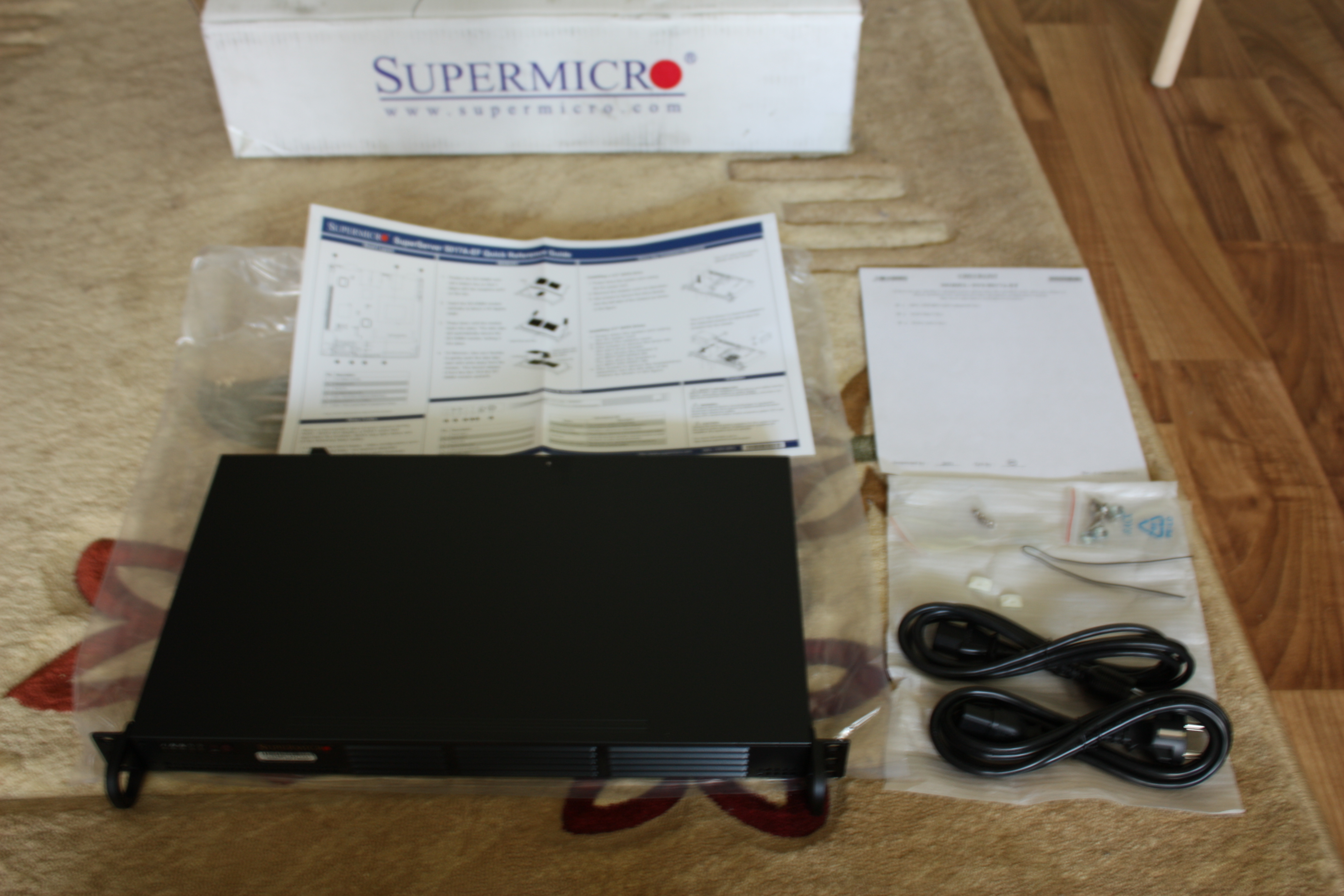
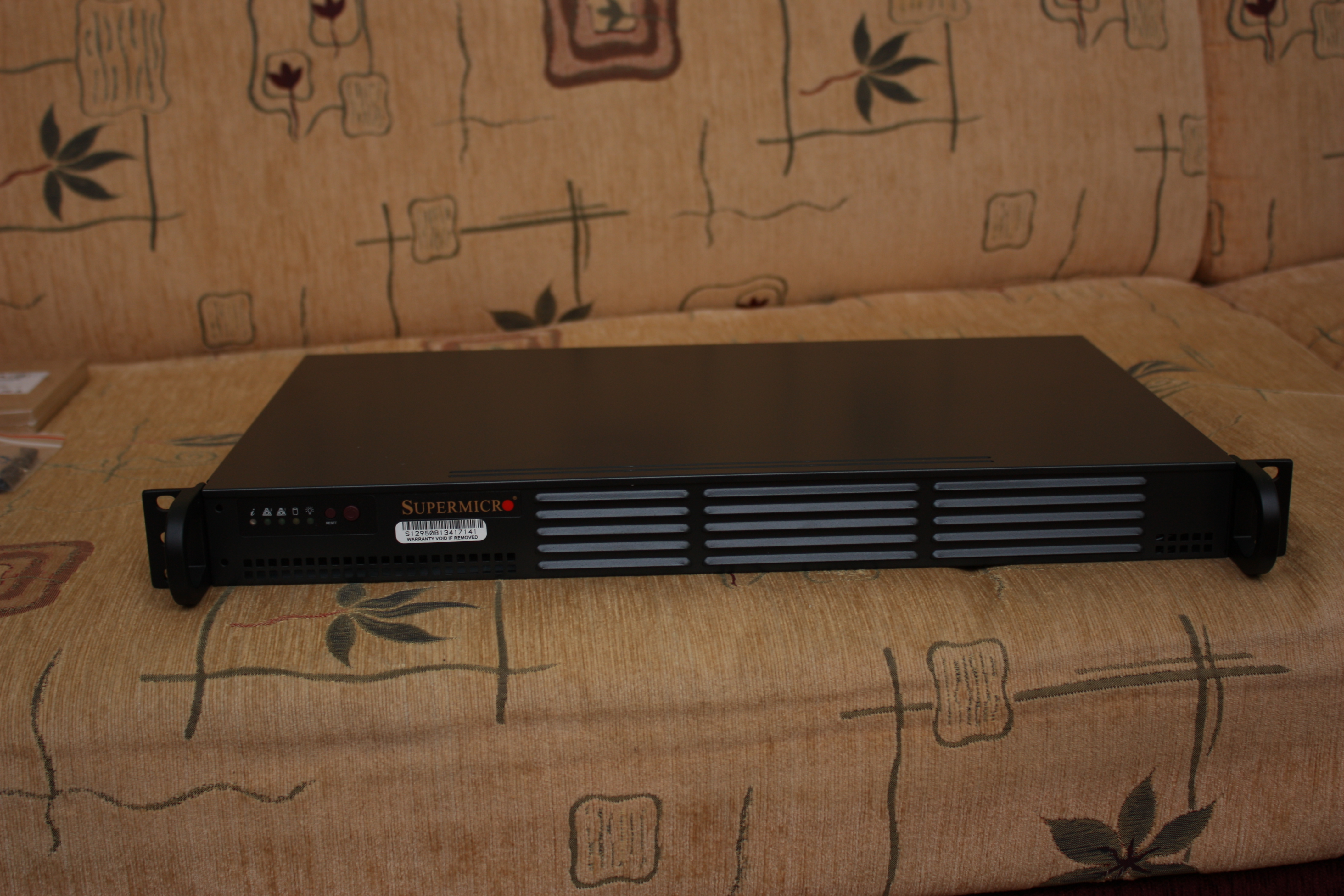
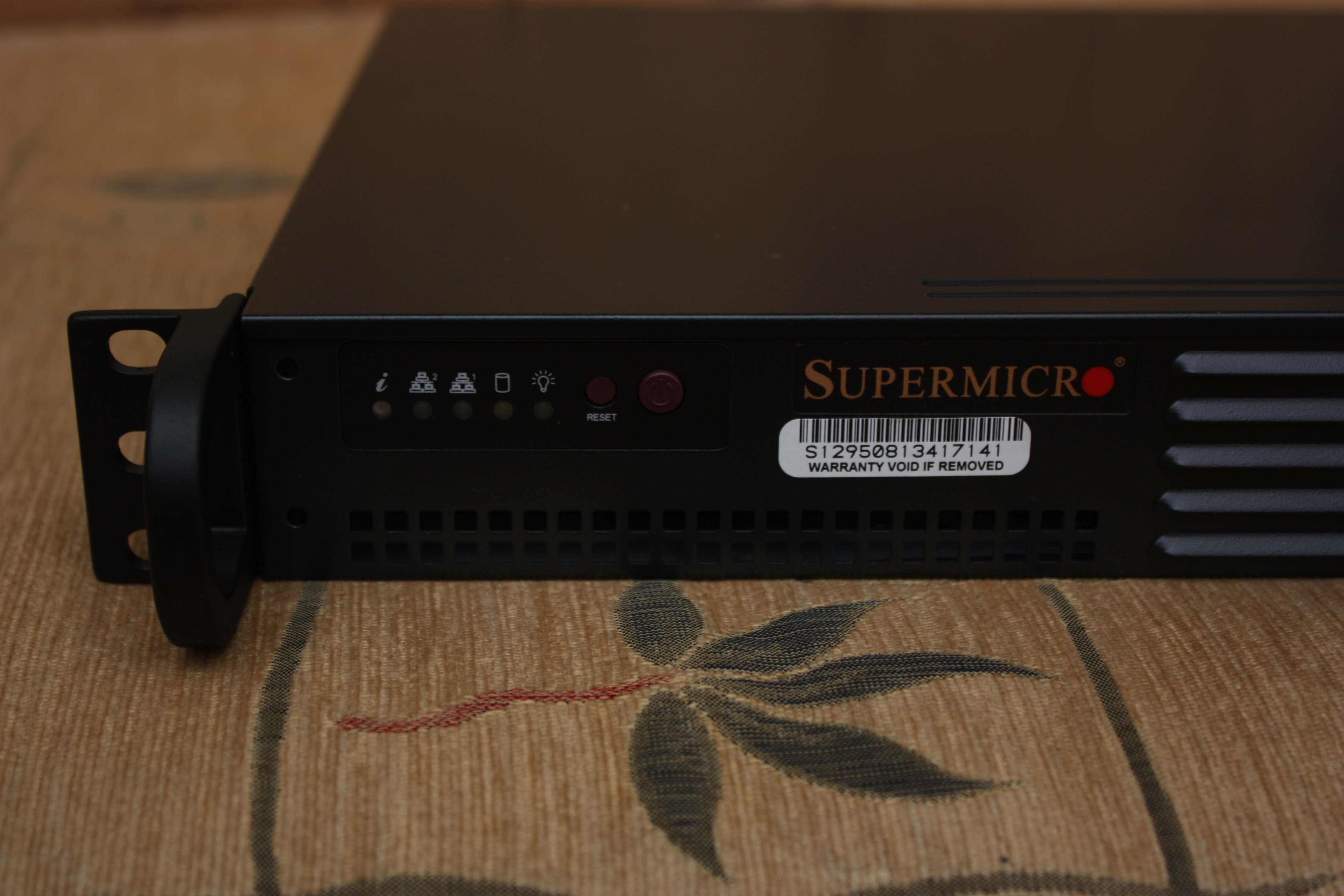
Platform in the box: Contents of the box: Assembly and installation instructions, two power cables - Euro and American, couplers and a set of mounting bolts for the server rack. Rails were not ordered, because the server installation will be wall-mounted. The server body itself is half-depth (HalfDepth) and weighs only 4.5 kilograms in assembly. On the front side of the server there is nothing superfluous - indication, power, reset and ventilation buttons. The edges of the server are a separate topic of conversation, they are well perforated at the bottom, the design of the case for passive cooling affects. A close-up indication is the indicator of the server in the rack (it is turned on via IPMI), indicators of network activity, hard disk, power, and two buttons - reset and power on, respectively.


On the rear panel we see a single power supply fan, RS232, two USB3.0 ports, three 1gE network ports, one of which is reserved for IPMI and DSUB video output. The server assembly itself looks quite compact. There is no mishmash of air ducts and fan stacks that we are used to seeing on HP servers, the cooling is passive, as you would expect from a processor with a TDP of 8.5 watts. And yes, the power to the motherboard is started with a 20-pin ATX connector, not 24 + 4 like on classic atomic boards.
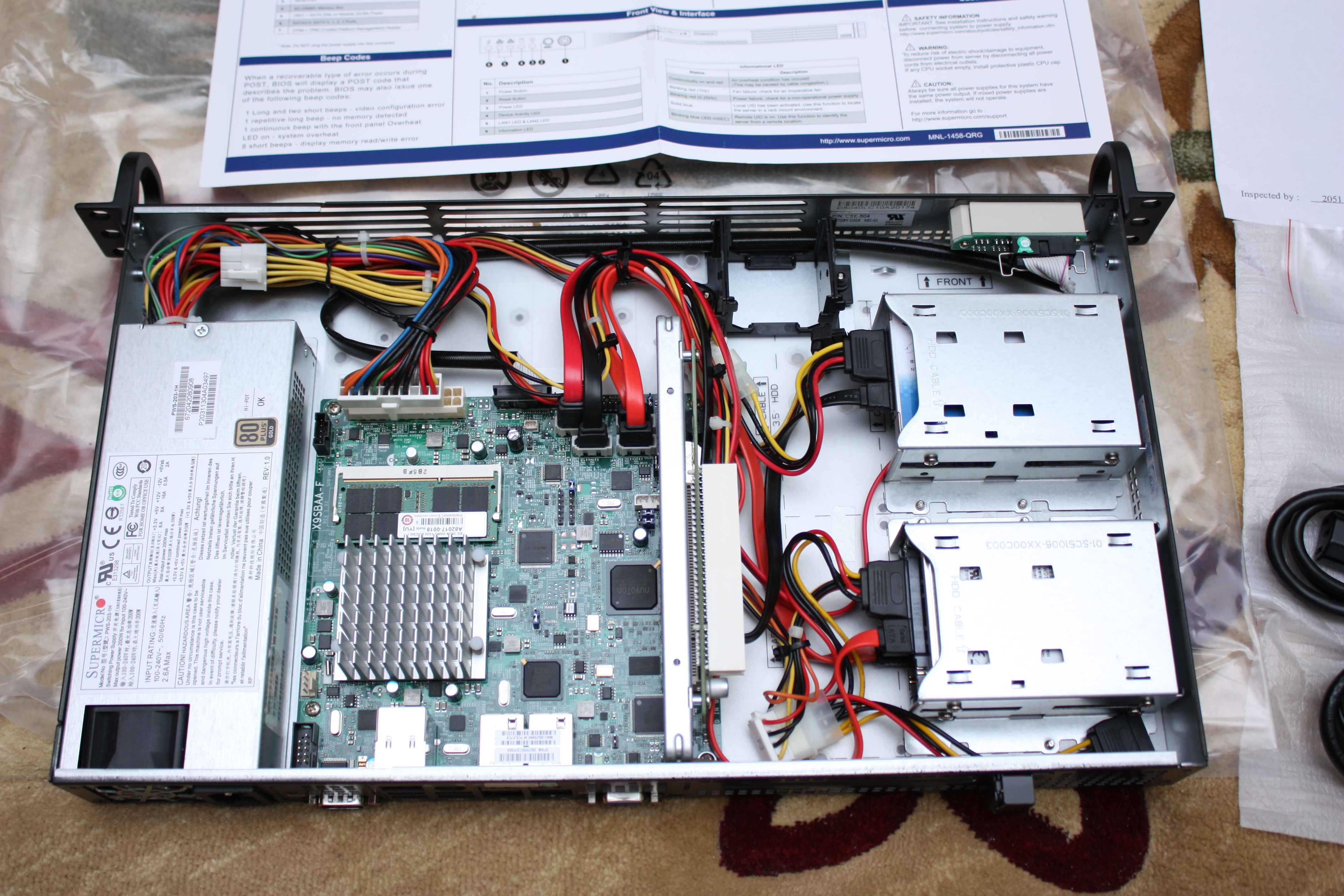
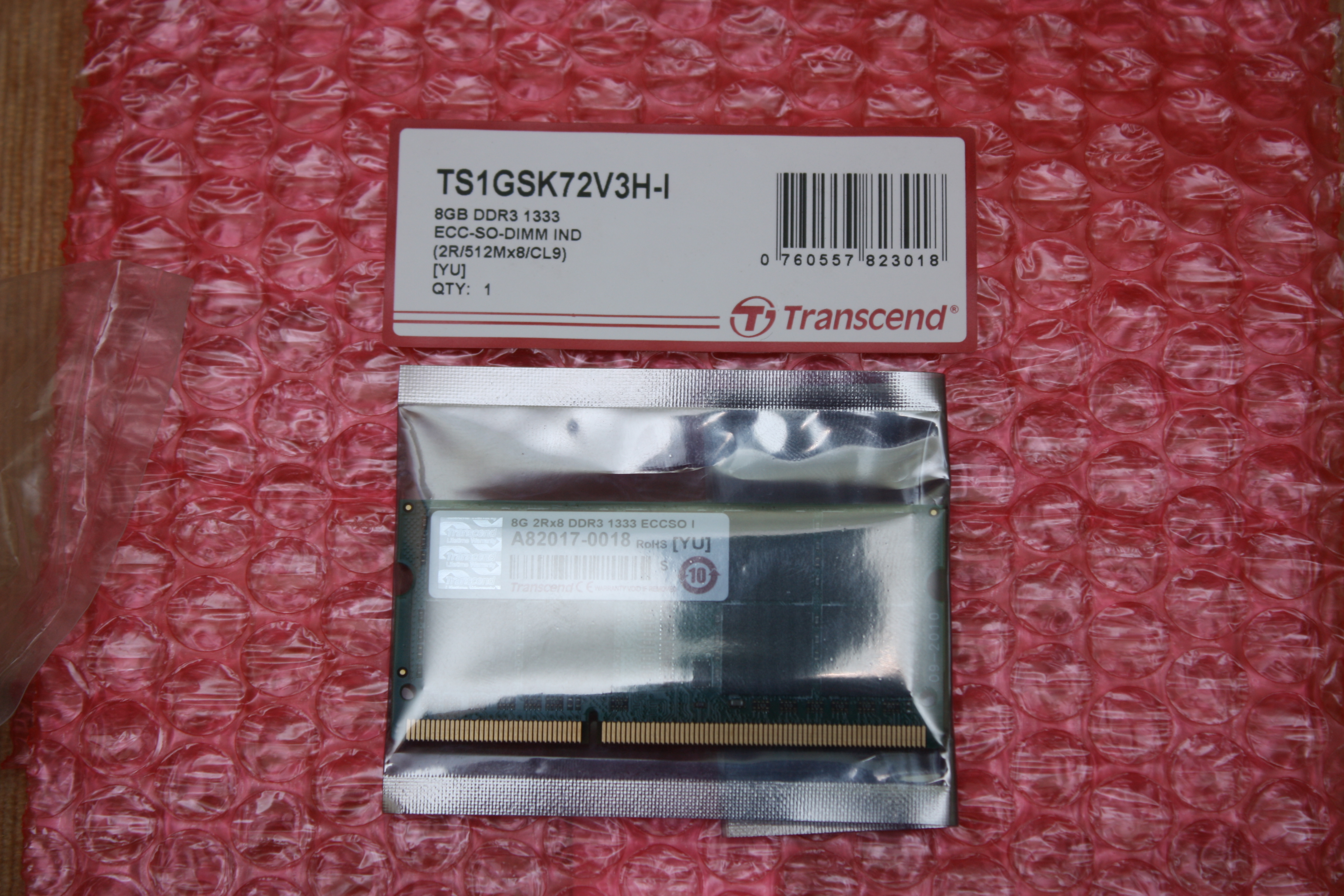
On the motherboard there is an impressive number of jumpers for fine tuning, with the help of them you can turn on and off equipment such as a VGA controller. In general, Supermicro tried to make the platform so that it was possible to reduce server consumption to a minimum, leaving only the necessary functionality. All server components - fan mounts, memory, chassis, and SSD drive. Fasteners for the fan were taken just in case you had to cool the hard drives (there are only four of them, two terabyte drives migrated from the network storage). Despite the Transcend brand and the industrial class of memory, I did not avoid marriage - an error in the upper segment (stable server hangs when testing the memory in the region of 6-8 gigabytes).
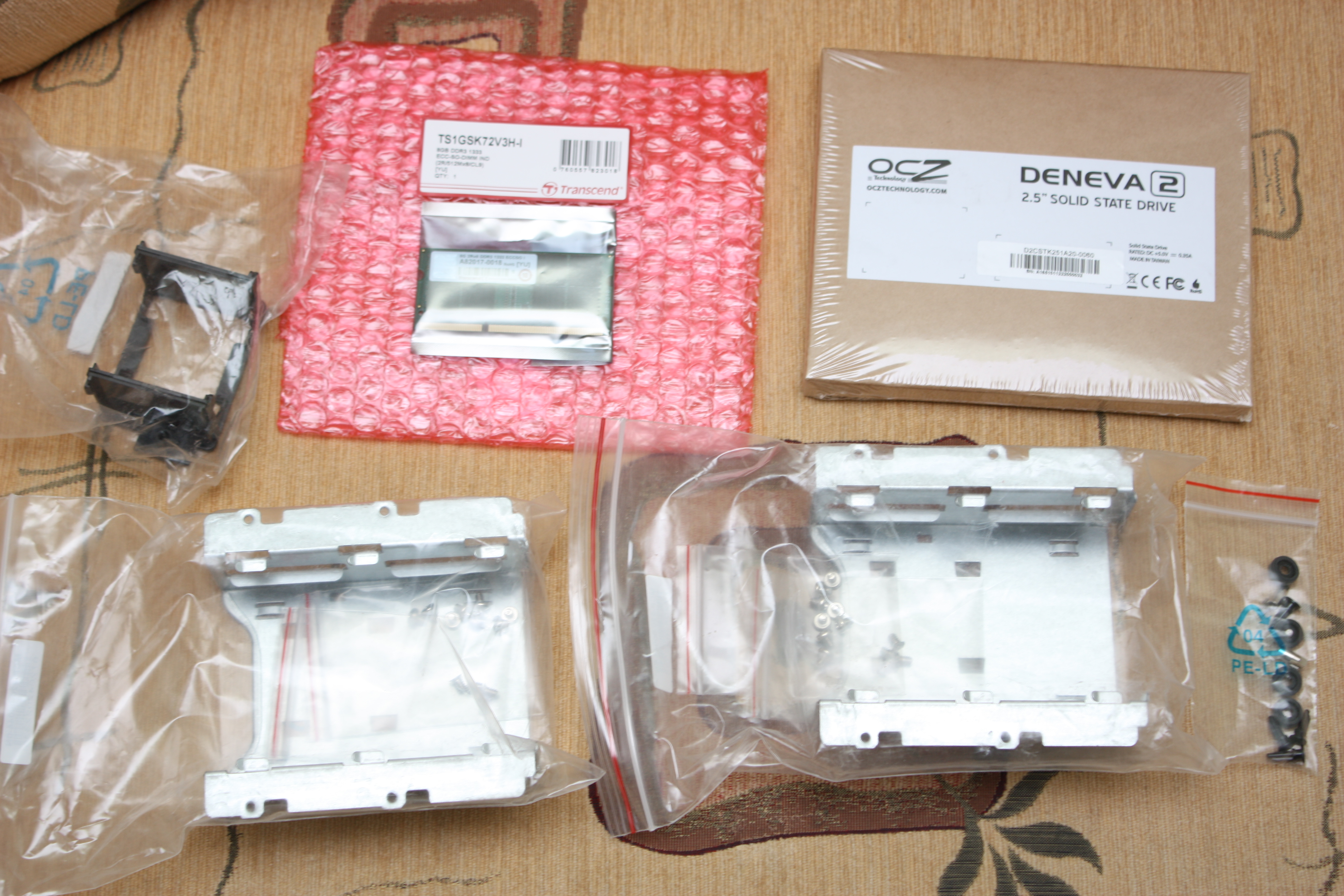

The SSD disk from OCZ Deneva 2, positioned for servers, has a capacity of 60 gigabytes (namely gigabytes, in gigabytes it is much smaller), made using Asynchronous MLC technology and officially provides a data transfer speed of 500 megabytes / s. Actually, the indicator is about 480 megabytes / s read / write, which is pretty good. The disk is planned to be used as a cache on a hardware controller with HyperDUO technology.
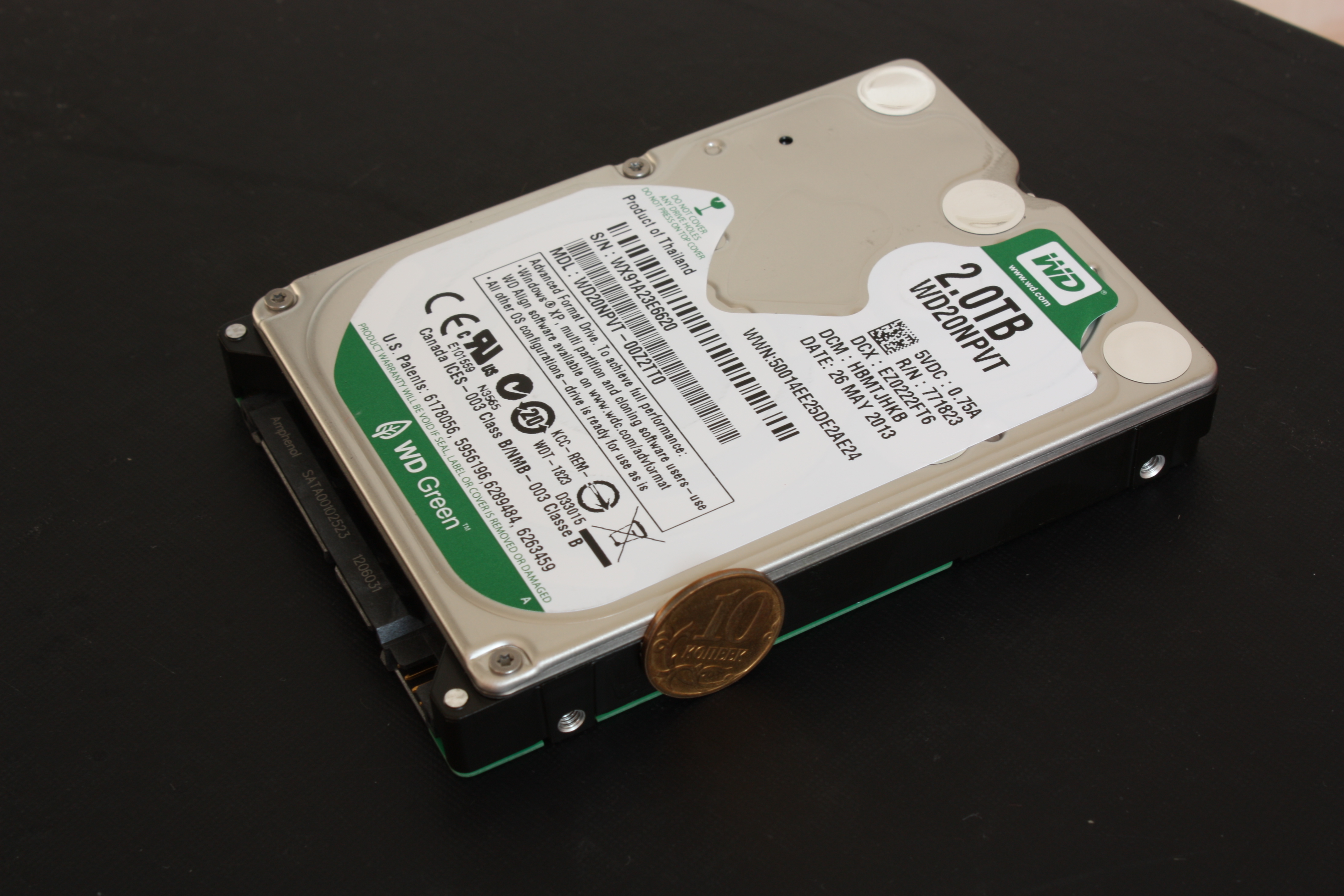
Green Digital Server Hard Drive is specifically designed for file storage and passively cooled servers. It is characterized by low noise and heat dissipation at high capacity, and speed, providing a read / write speed of 135 megabytes / s, with a volume of 2 terabytes. For such characteristics you have to pay an increased thickness of the hard drive. Due to the thickness of 15mm, it is not possible to install such a hard disk in laptops, even on a MacBook into which its terabyte and one and a half terabyte brothers interfere.
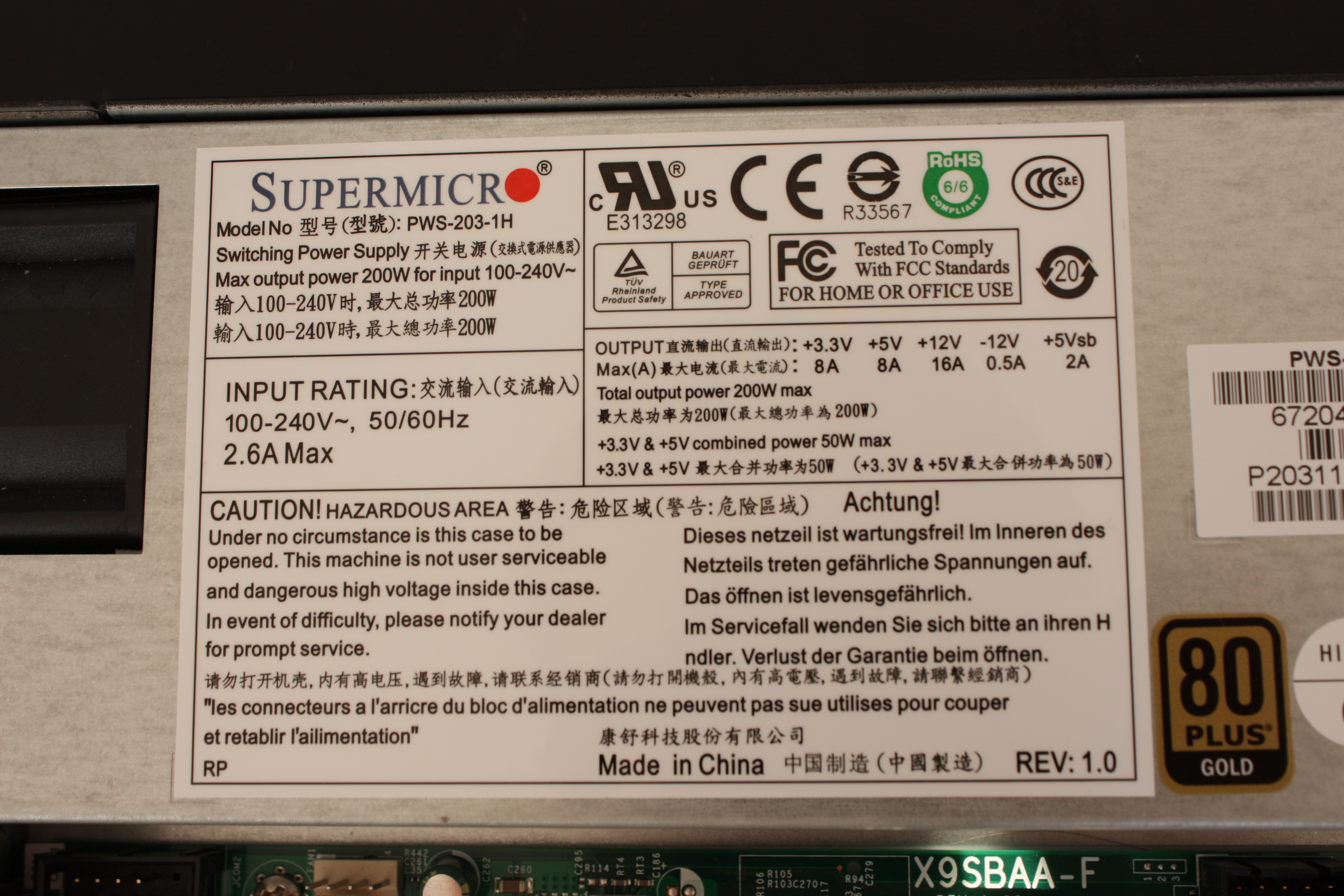
The power supply is Gold Plus certified and has a total output of 200 watts. By the way, peripheral equipment can connect up to 50 watts, but the actual consumption of the platform does not exceed 16 watts under load when using a hard and SSD drive, according to American tests.
In conclusion: At the moment, the server worked for two weeks, during operation, periodic server hangs were detected under load. The test run showed a hang on the memory test in the region of 6-8 gigabytes (Transcend factory defect), testing was carried out by different versions of memtest, including 5.0RC. In connection with the replacement of memory, virtual machines were transferred to a home computer running Core2Duo E7500, subjectively, virtual machines work more slowly than on an atom, maybe due to the DDR2 memory used.
As the new memory arrives, I will post the results of the UnixBechmark and Phoronix Test Suite tests on the physical and virtual environments.
Any questions and criticism are welcome.