July 22, 2013 at 01:24
How it feels to be weak in math
- Transfer
As a math teacher, I often become disillusioned with students. They are truant. They are lazy. They cry like babies if calculators are taken away from them. But worst of all is what they do not . No questions asked. Do not record. Do not fix the tests, even if it can increase their overall score. Don't they care about their failure to learn?
There are many explanations for this behavior: laziness, indifference, distracting extracurricular factors, etc. But if you ask me, I’ll give you a deeper reason: ignorance of mathematics makes you feel stupid. And this is unpleasant.
It is hard to understand if you have never experienced this before. Fortunately, I have such an experience (although then there was nothing to rejoice about). My story is about mathematical illiteracy. Maybe something will be familiar to you.
I went to college mathematically savvy, at the final exam I scored the highest score. It seemed that mathematics was very easy for me. But then I came across a topology.
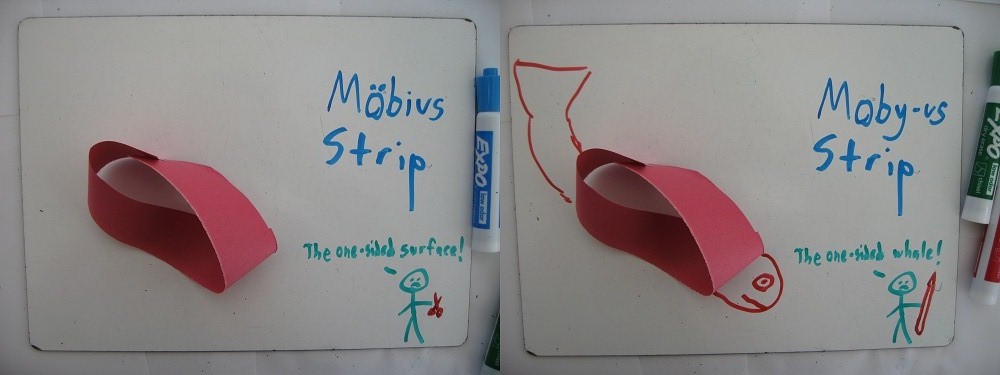
The topology lessons were held in the format of seminars where students taught each other. Twice in a semester, each of us must prepare a lecture, give homework and evaluate it.
My misunderstanding of the subject came calmly, gradually. I lectured classmates, dimly understanding only half of what was written. I memorized the main points, but did not understand the essence of the subject, hoping that someday fragmentary knowledge would take the form of something whole. But I did nothing for this. He didn’t ask questions, because he was afraid to seem stupid. As a result, everything only got worse, glimmers of understanding faded away, it became uninteresting. I realized that I was completely confused.
In the end, I did what most students do. I relied on a person who knew the subject better than me. It was my girlfriend (student in the same class). Everything that she explained to me, I simply wrote down in my own words, without delving into the essence, because of which the knowledge did not linger for a long time in my head.
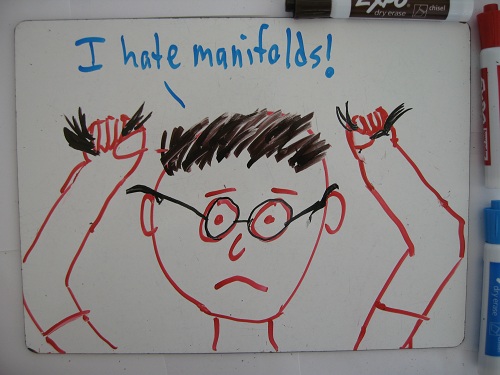
I blamed everyone around for my failures. My girlfriend who persuaded me to choose this course. The teacher, who sat on the sidelines in class and chuckled at our incompetence. Why is this topology necessary? When all the excuses were over, I said to myself: I hate this class! I hate topology!
I hate math!
My first experience as a lecturer in the class was positive, despite the fact that there was almost no knowledge of the subject. But plunging into the material, I realized that the second lecture would not be such an easy walk.
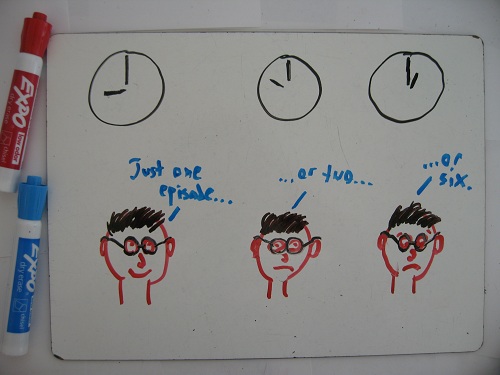
I was constantly lazy, often complaining about the complexity of the subject. But he soon realized that it was not just laziness. Faced with what I did not understand, I came across my doubts and worries. And constant procrastination pushes away these unpleasant feelings.
As the day of the second lecture was approaching, I began to panic. I called my father, a man with a good soul. Did not help. I called my sister, a math teacher, who was always fun. Did not help. Then I made an appointment with a topology teacher.
I sweated as I went upstairs to his office. The worst thing was that I admired him. Most world-class mathematicians regarded communication with students as a burdensome act of charity. He was different: insightful, hardworking, sincere. I knocked on the cabinet door to tell him that I had failed.
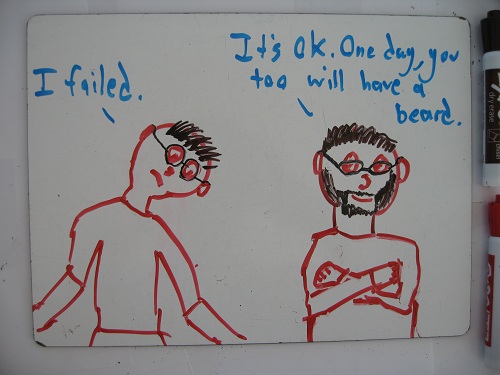
He was supportive of me, offered some ideas and helped with the presentation so that I could show at least something at the upcoming lecture. I begged not to ask questions about the material in the lesson, in fact I asked him not to do his job. And he reluctantly agreed.
I gave a second lecture and tried to forget it as quickly as possible.
Looking back, I realize that I was the perfect example of a bad student, showing all the symptoms:
It's amazing how hard it is to write about it even now. Mathematical failures as well as romantic failures are remembered for a long time.
I told this story to show that the problem is not the absence of a "natural mind", on the contrary, such failures occur when a combination of many reasons: excessive anxiety, low motivation, gaps in knowledge of the subject, etc. The hardest thing to avoid is failure when you want to expose your flaws.
Ignorance of the topology does not make me stupid. It makes me weak in topology. This difference is very important to understand. In the end, I am grateful for the experience.
There are many explanations for this behavior: laziness, indifference, distracting extracurricular factors, etc. But if you ask me, I’ll give you a deeper reason: ignorance of mathematics makes you feel stupid. And this is unpleasant.
It is hard to understand if you have never experienced this before. Fortunately, I have such an experience (although then there was nothing to rejoice about). My story is about mathematical illiteracy. Maybe something will be familiar to you.
I went to college mathematically savvy, at the final exam I scored the highest score. It seemed that mathematics was very easy for me. But then I came across a topology.
The topology lessons were held in the format of seminars where students taught each other. Twice in a semester, each of us must prepare a lecture, give homework and evaluate it.
My misunderstanding of the subject came calmly, gradually. I lectured classmates, dimly understanding only half of what was written. I memorized the main points, but did not understand the essence of the subject, hoping that someday fragmentary knowledge would take the form of something whole. But I did nothing for this. He didn’t ask questions, because he was afraid to seem stupid. As a result, everything only got worse, glimmers of understanding faded away, it became uninteresting. I realized that I was completely confused.
In the end, I did what most students do. I relied on a person who knew the subject better than me. It was my girlfriend (student in the same class). Everything that she explained to me, I simply wrote down in my own words, without delving into the essence, because of which the knowledge did not linger for a long time in my head.
I blamed everyone around for my failures. My girlfriend who persuaded me to choose this course. The teacher, who sat on the sidelines in class and chuckled at our incompetence. Why is this topology necessary? When all the excuses were over, I said to myself: I hate this class! I hate topology!
I hate math!
My first experience as a lecturer in the class was positive, despite the fact that there was almost no knowledge of the subject. But plunging into the material, I realized that the second lecture would not be such an easy walk.
I was constantly lazy, often complaining about the complexity of the subject. But he soon realized that it was not just laziness. Faced with what I did not understand, I came across my doubts and worries. And constant procrastination pushes away these unpleasant feelings.
As the day of the second lecture was approaching, I began to panic. I called my father, a man with a good soul. Did not help. I called my sister, a math teacher, who was always fun. Did not help. Then I made an appointment with a topology teacher.
I sweated as I went upstairs to his office. The worst thing was that I admired him. Most world-class mathematicians regarded communication with students as a burdensome act of charity. He was different: insightful, hardworking, sincere. I knocked on the cabinet door to tell him that I had failed.
He was supportive of me, offered some ideas and helped with the presentation so that I could show at least something at the upcoming lecture. I begged not to ask questions about the material in the lesson, in fact I asked him not to do his job. And he reluctantly agreed.
I gave a second lecture and tried to forget it as quickly as possible.
Looking back, I realize that I was the perfect example of a bad student, showing all the symptoms:
- Confused in the material
- I was afraid to ask questions
- Shy about accepting teacher help
- Instead harassed friends
- I copied other people's homework
- Justified by blaming others
- Hesitated
- Afraid of failure in public
- Afraid of teacher's conviction
- Felt like an idiot
- He did not want to recognize any of the above
It's amazing how hard it is to write about it even now. Mathematical failures as well as romantic failures are remembered for a long time.
I told this story to show that the problem is not the absence of a "natural mind", on the contrary, such failures occur when a combination of many reasons: excessive anxiety, low motivation, gaps in knowledge of the subject, etc. The hardest thing to avoid is failure when you want to expose your flaws.
Ignorance of the topology does not make me stupid. It makes me weak in topology. This difference is very important to understand. In the end, I am grateful for the experience.