July 17, 2013 at 18:16
Nokia Lumia 1020. Shock! A photo!
On July 11, 2013, at the Nokia Zoom Reinvented event in New York, we opened a new chapter in mobile photography - the Nokia Lumia 1020, the only smartphone with a 41-megapixel photo sensor and Windows Phone 8 as the operating system.
The covers were removed, all technical specifications were disclosed, so let's look at the new smartphone in detail.
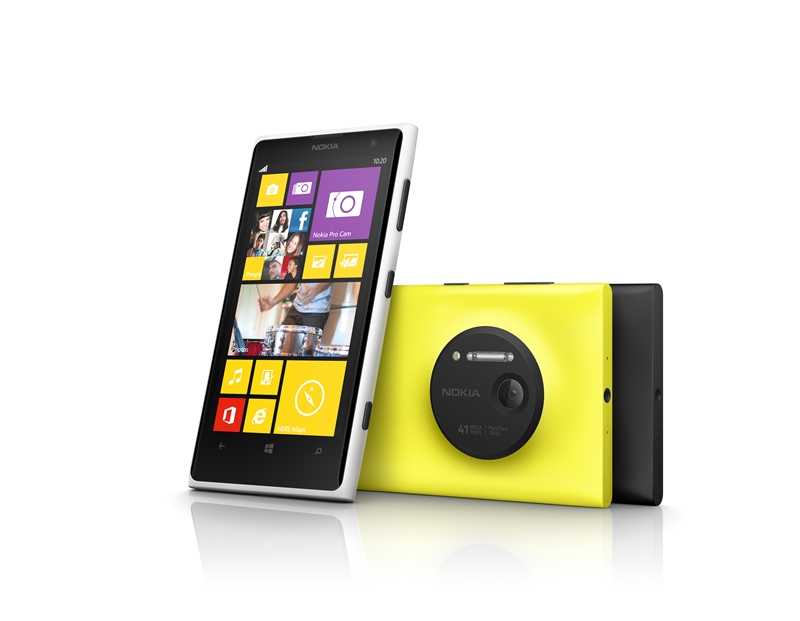
- Networks: GSM (850 MHz, 900 MHz, 1800 MHz, 1900 MHz), LTE (frequencies 1, 3, 7, 8, 20), WCDMA (900 MHz, 2100 MHz, 1900 MHz, 850 MHz);
- Camera: 41 megapixels (resolution 7712 x 5360), 1 / 1.5-inch PureView sensor, Carl Zeiss Tessar f / 2.2 lens, focal length 26 mm, autofocus, optical image stabilization, xenon flash;
- Front camera: wide-angle, HD, 1.2 megapixels;
- Display: 4.5 inches, AMOLED with PureMotion HD + technology, WXGA (1280 x 768 pixels), 334 dpi, Corning Gorilla Glass 3;
- Processor: dual-core Qualcomm Snapdragon S4 with a clock frequency of 1.5 GHz;
- Memory: 2 GB RAM, 32 (64) GB of internal memory + SkyDrive cloud storage up to 7 GB free;
- Dimensions: 130.4 x 71.4 10.4 mm;
- Weight: 158 g;
- Connections: USB 2.0, Bluetooth 3.0, NFC, WLAN a / b / g / n, A-GPS and GLONASS, 3.5 mm audio jack;
- Battery: 2000 mAh;
- Audio: speaker, 2 microphones, HD voice compliant, 3.5 mm jack;
In this case, it would be better not to start the story about the new Nokia camera phone from the traditional description of the case design and details about the technical stuffing of the device, but of course from the camera.

The Nokia Lumia 1020 uses a second-generation 41-megapixel PureView photosensor that combines the ability to capture images in ultra-high (for a mobile device) resolution, like the Nokia 808 PureView, and the ability to shoot in low light conditions, like the Lumia 920 smartphones and the new Lumia 925 and 928. A backlit photosensor (BSI) has a large surface area - 1 / 1.5 inches - and is about three to five times larger than many other modern sensors used in mobile devices.

Compared to the 808 PureView in the new Lumia 1020, the number of lenses used in the lens has increased from five to six. Together with our partner, ZEISS (until the recent rebranding - Carl Zeiss), we developed an optical system consisting of one glass and five high-quality plastic lenses. The Carl Zeiss Tessar lens has a fixed focal length of 26 mm and a maximum aperture of f / 2.2 - one of the widest in camera phones.

Another key difference of the digital module in the Lumia 1020 smartphone is the optical image stabilization system (OIS). First used in the Lumia 920, it appeared in the second interpretation in the new smartphone. Nokia engineers went in a non-standard way, installing special bearings in the camera module, which allow to most effectively eliminate any negative influences from the user's involuntary movements during the shooting process. As noted by journalists who managed to do an express test Lumia 1020 at a presentation in New York, the operation of the bearings can be heard by leaning the new Nokia in your ear in relative silence.
If we talk about the engineering concept of the new camera phone as a whole, the main principle that our experts adhered to when developing the device was to obtain the highest quality and detailed images regardless of the external shooting conditions while maintaining a balance of sharpness and ultra-low noise level. And to achieve this, the Nokia Lumia 1020 used not only the aforementioned OIS, a six-lens lens and a 41-megapixel photo sensor, but also advanced computational algorithms, advanced software and a hybrid flash, combining LED and xenon light emitters. By the way, the use of a xenon flash is not only and not so much a tribute to traditions as a solution to improve shooting in the dark: such a flash can illuminate the scene in 1/16 000 second,
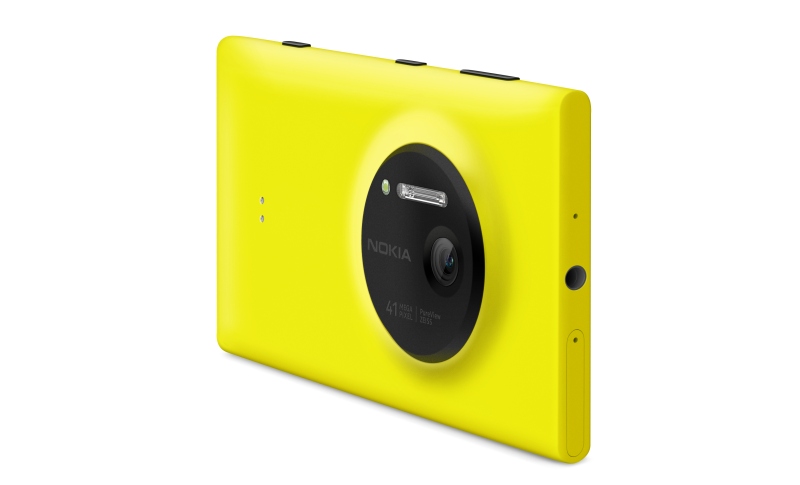
But back to the main feature of the Lumia 1020. The 41-megapixel PureView photosensor can process images with a maximum resolution of 34 megapixels with an aspect ratio of 16: 9 or 38 megapixels - with a classic 4: 3 ratio. In addition to taking a picture with maximum resolution when activating the “Dual Shooting” mode, the Lumia 1020 can simultaneously create an oversampling method at 5 megapixels. Just as it was implemented in the Nokia 808, the PureView algorithm combines up to seven neighboring pixels into one “super pixel”, producing an image with the best color reproduction, sharpness and lack of noise.

Test shot with a regular camera (left) and a Lumia 1020 camera (right).
The difference in quality is visible when comparing a “compressed” Lumia 1020 image with a conventional 5-megapixel camera. The fact is that the true resolution of the photosensor is often lower than stated by the manufacturer. That is, cameras with a resolution of 5 megapixels may not capture a resolution of five million pixels. This depends primarily on the design of the optics and the features of working with Bayer filters. For example, in most traditional 5 megapixel photosensors, there are only 2.5 million pixels in green and 1.25 million pixels in red and blue. The images obtained by oversampling in Lumia 1020, due to the initially better image capture conditions and the correctly configured PureView algorithm, are free from blurring, artifacts and other drawbacks of the traditional photosensor.
From technological processes to practice:
Nokia Lumia 1020 opens up new possibilities for mobile photocreating: the cropping and resizing functions allow you to correct and create all kinds of variations of a single shot without losing quality, starting from straightening the “lit up” horizon and ending with the breakdown of the group frame into separate portrait shots. As in the case of the “Double shooting” mode, the oversampling technology allows you to crop the desired fragment with a maximum of 3x magnification and convert it into a 5-megapixel image while maintaining high quality.
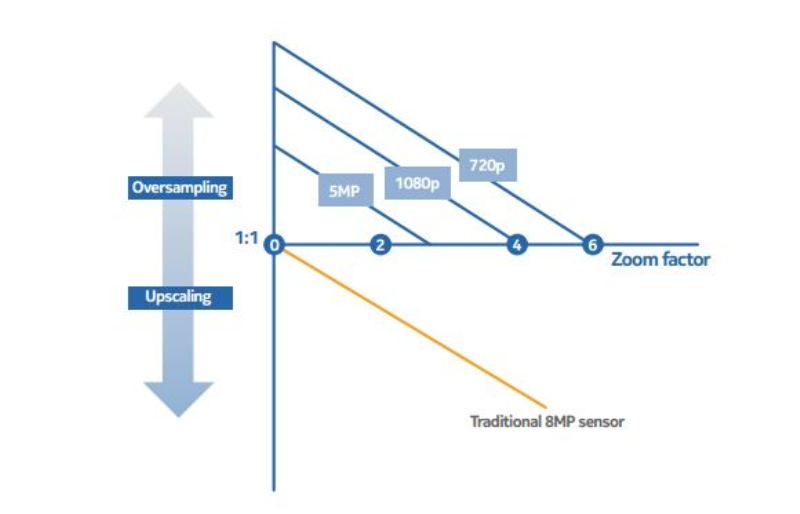
In addition, the PureView algorithm is used for digital zoom when shooting photos and videos, allowing you to achieve a three-fold increase when shooting 6-megapixel images, a four-fold increase when recording Full HD video and a six-fold increase when recording at 720 p. And all this - without the use of massive retractable zoom lenses. At the same time, Nokia Lumia 1020 allows you to maintain a constant f2.2 aperture value over the entire zoom range, which is quite rare even in the world of professional SLR cameras.
Setting various parameters and shooting modes, as well as subsequent adjustment and image correction, is carried out using the proprietary application Nokia Pro Camera. By default, it acts as the interface of the Lumia 1020 camera, replacing the standard one in Windows Phone. Thanks to the shooting settings selector in the form of dynamic semicircles, the application allows you to quickly set the necessary exposure values, white balance, shutter speed and light sensitivity (ISO) and even before pressing the shutter button (and such a button is specially displayed on the front of the case) to evaluate how any image will affect the picture change. A convenient solution for both a novice photographer (which also has a built-in manual to help), and for a professional who is keen on experimenting.
We should also say about shooting video. As mentioned above, the smartphone’s camera can record video in two possible resolutions: 1920x1080 (Full HD) or 1280x720 and supports three different recording speeds: 24, 25 and 30 frames per second. To record high-quality sound in the smartphone, Nokia Rich Recording technology is provided. Thanks to specially designed stereo microphones and Audio Bass Filter low-pass filtering technology, Nokia Rich Recording technology provides the purest sound recording up to 140 dB. Now the video from rock concerts and night discos will no longer wheeze and fonit.
Nokia Lumia 1020 is made in the already classic design of the flagship Lumia devices, however, due to the presence of a 41-megapixel camera, it has its own characteristics. So, for example, the camera area is made in the form of a protruding round disk and is deliberately emphasized by a contrasting insert of black plastic. As always, the design of the device is distinguished by well-designed elements and, in our opinion, will attract attention.
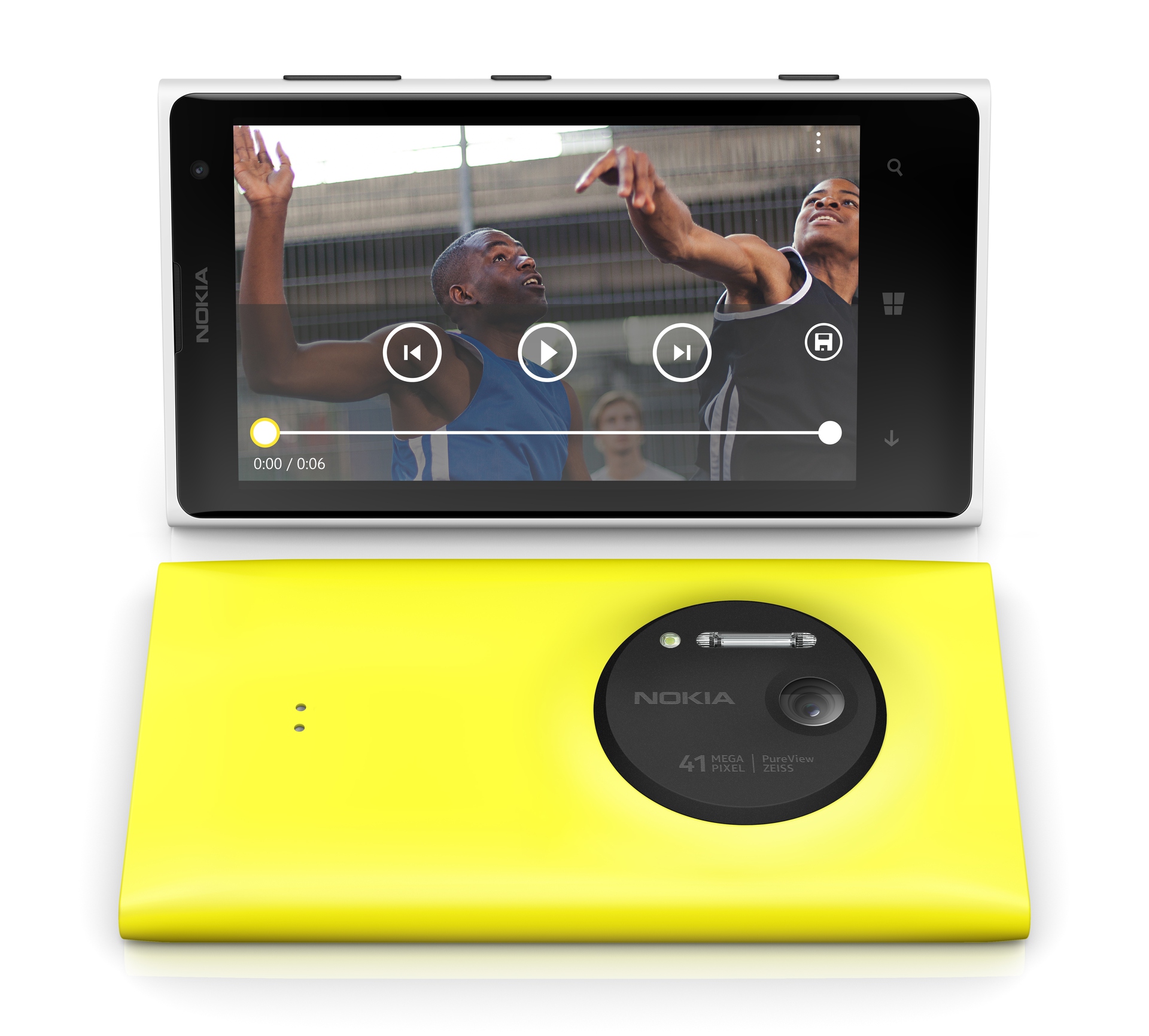
The color scheme was designed for different consumer preferences: for connoisseurs of the classic Nokia Lumia 1020 is offered in elegant black and more noticeable white, and for lovers of bright color combinations, a contrasting yellow case is provided.
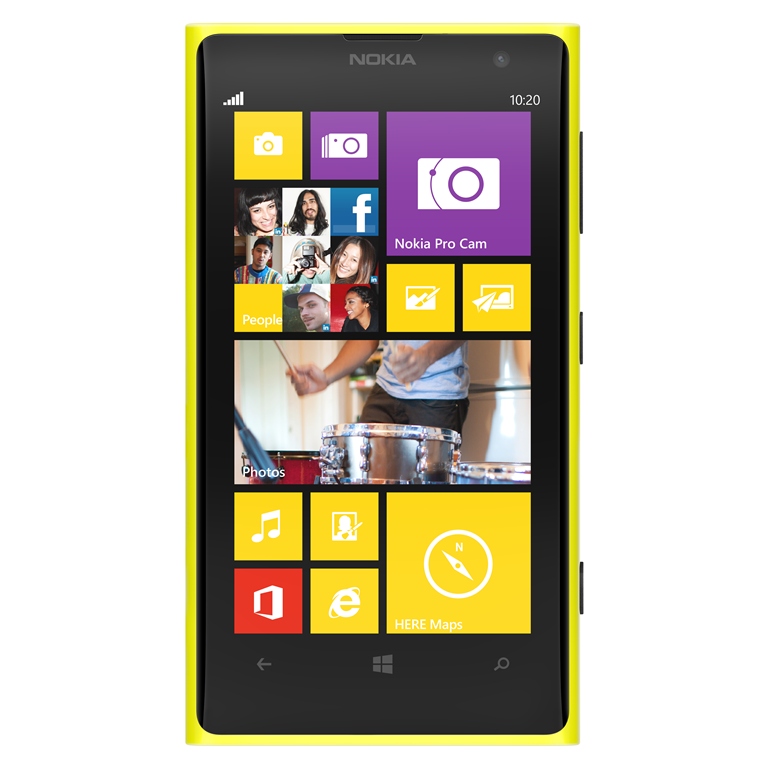
The smartphone is equipped with a bright laminated AMOLED-display with a diagonal of 4.5 inches, a resolution of 1280x768 pixels and a density of 334 dots per inch. Protecting the display, one of Corning's latest developments is the impact-resistant Gorilla Glass 3.
If at the dawn of the appearance of camera phones, these devices could be compared in thickness with the Zenith camera (without taking into account the lens, of course), today the new Lumia 1020 is quite consistent with “non-photo-oriented” classmates by this parameter. The thickness of the device is only 10.4 mm, and this is in its widest part - a special volume in which all the elements of the camera are most compactly arranged: a lens, a photosensor and a double flash.

The smartphone case traditionally consists of two parts: a monolithic base, which serves as a stiffener for the entire smartphone, and a back cover that reliably protects the internal components from dust and dirt. Both the monolithic base and the back cover are made of polycarbonate with a matte finish - stylish and not easily soiled, and therefore more convenient in everyday use.
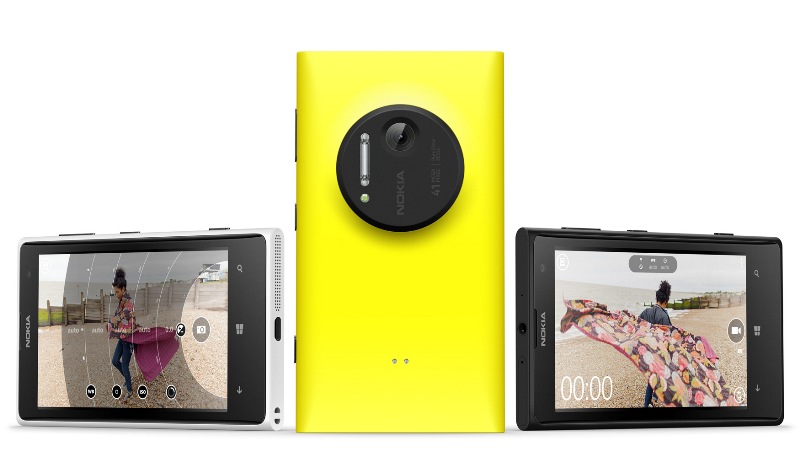
Nokia Lumia 1020 operates on the basis of a dual-core Qualcomm S4 1.5 GHz processor, like the previous flagship devices Lumia 920 and Lumia 925. The smartphone has 2 GB of RAM and 32 GB of internal memory for storing pictures in high resolution and other content. The smartphone supports all modern interfaces, including USB 2.0, Bluetooth 3.0, NFC, Wi-Fi 802.11n, A-GPS and GLONASS.
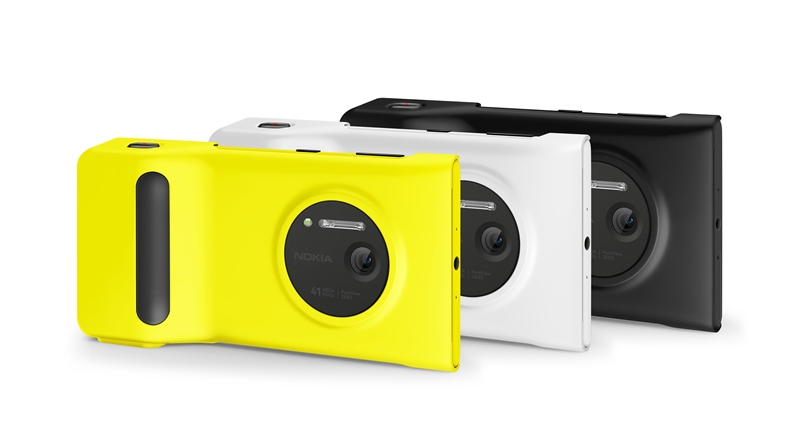
At the Nokia Zoom Reinvented event, we also introduced a number of accessories that you might find interesting. For example, Nokia Camera Grip is a special case that provides a more convenient and familiar “camera” grip and control functions when shooting objects, as well as an additional battery with a capacity of 1020 mAh. The Nokia Camera Grip also comes with a tripod.
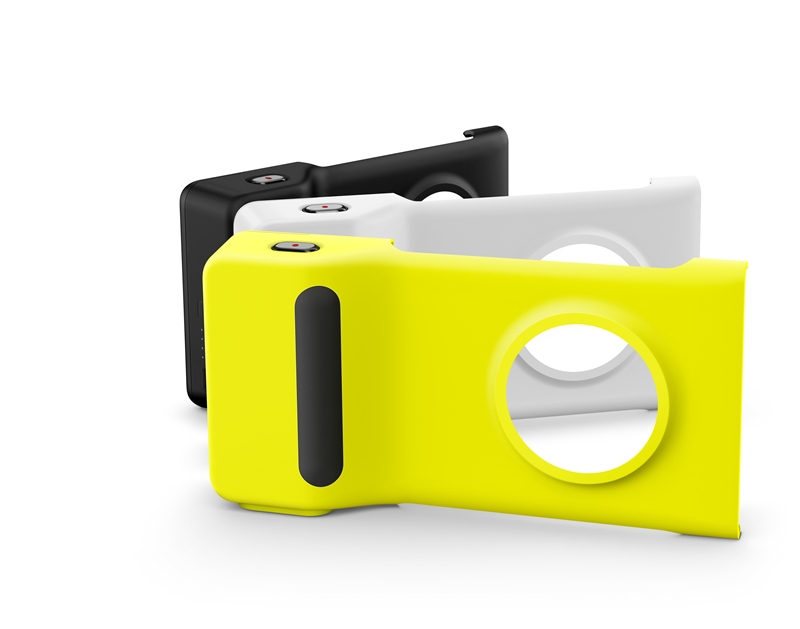
In addition, we introduced special covers for wireless charging of the Lumia 1020, as well as an accelerated charging adapter.
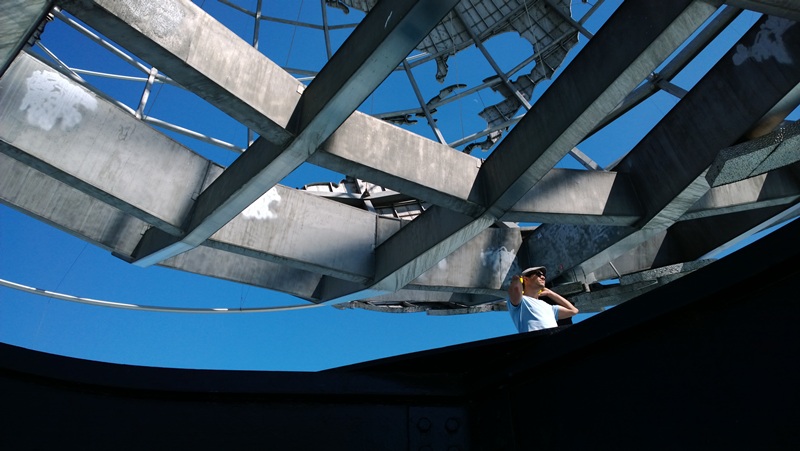
PS A few photos taken by Nokia 1020, click on hirez:




The covers were removed, all technical specifications were disclosed, so let's look at the new smartphone in detail.
Specifications
- Networks: GSM (850 MHz, 900 MHz, 1800 MHz, 1900 MHz), LTE (frequencies 1, 3, 7, 8, 20), WCDMA (900 MHz, 2100 MHz, 1900 MHz, 850 MHz);
- Camera: 41 megapixels (resolution 7712 x 5360), 1 / 1.5-inch PureView sensor, Carl Zeiss Tessar f / 2.2 lens, focal length 26 mm, autofocus, optical image stabilization, xenon flash;
- Front camera: wide-angle, HD, 1.2 megapixels;
- Display: 4.5 inches, AMOLED with PureMotion HD + technology, WXGA (1280 x 768 pixels), 334 dpi, Corning Gorilla Glass 3;
- Processor: dual-core Qualcomm Snapdragon S4 with a clock frequency of 1.5 GHz;
- Memory: 2 GB RAM, 32 (64) GB of internal memory + SkyDrive cloud storage up to 7 GB free;
- Dimensions: 130.4 x 71.4 10.4 mm;
- Weight: 158 g;
- Connections: USB 2.0, Bluetooth 3.0, NFC, WLAN a / b / g / n, A-GPS and GLONASS, 3.5 mm audio jack;
- Battery: 2000 mAh;
- Audio: speaker, 2 microphones, HD voice compliant, 3.5 mm jack;
Camera
In this case, it would be better not to start the story about the new Nokia camera phone from the traditional description of the case design and details about the technical stuffing of the device, but of course from the camera.
The Nokia Lumia 1020 uses a second-generation 41-megapixel PureView photosensor that combines the ability to capture images in ultra-high (for a mobile device) resolution, like the Nokia 808 PureView, and the ability to shoot in low light conditions, like the Lumia 920 smartphones and the new Lumia 925 and 928. A backlit photosensor (BSI) has a large surface area - 1 / 1.5 inches - and is about three to five times larger than many other modern sensors used in mobile devices.
Compared to the 808 PureView in the new Lumia 1020, the number of lenses used in the lens has increased from five to six. Together with our partner, ZEISS (until the recent rebranding - Carl Zeiss), we developed an optical system consisting of one glass and five high-quality plastic lenses. The Carl Zeiss Tessar lens has a fixed focal length of 26 mm and a maximum aperture of f / 2.2 - one of the widest in camera phones.
Another key difference of the digital module in the Lumia 1020 smartphone is the optical image stabilization system (OIS). First used in the Lumia 920, it appeared in the second interpretation in the new smartphone. Nokia engineers went in a non-standard way, installing special bearings in the camera module, which allow to most effectively eliminate any negative influences from the user's involuntary movements during the shooting process. As noted by journalists who managed to do an express test Lumia 1020 at a presentation in New York, the operation of the bearings can be heard by leaning the new Nokia in your ear in relative silence.
If we talk about the engineering concept of the new camera phone as a whole, the main principle that our experts adhered to when developing the device was to obtain the highest quality and detailed images regardless of the external shooting conditions while maintaining a balance of sharpness and ultra-low noise level. And to achieve this, the Nokia Lumia 1020 used not only the aforementioned OIS, a six-lens lens and a 41-megapixel photo sensor, but also advanced computational algorithms, advanced software and a hybrid flash, combining LED and xenon light emitters. By the way, the use of a xenon flash is not only and not so much a tribute to traditions as a solution to improve shooting in the dark: such a flash can illuminate the scene in 1/16 000 second,
But back to the main feature of the Lumia 1020. The 41-megapixel PureView photosensor can process images with a maximum resolution of 34 megapixels with an aspect ratio of 16: 9 or 38 megapixels - with a classic 4: 3 ratio. In addition to taking a picture with maximum resolution when activating the “Dual Shooting” mode, the Lumia 1020 can simultaneously create an oversampling method at 5 megapixels. Just as it was implemented in the Nokia 808, the PureView algorithm combines up to seven neighboring pixels into one “super pixel”, producing an image with the best color reproduction, sharpness and lack of noise.
Test shot with a regular camera (left) and a Lumia 1020 camera (right).
The difference in quality is visible when comparing a “compressed” Lumia 1020 image with a conventional 5-megapixel camera. The fact is that the true resolution of the photosensor is often lower than stated by the manufacturer. That is, cameras with a resolution of 5 megapixels may not capture a resolution of five million pixels. This depends primarily on the design of the optics and the features of working with Bayer filters. For example, in most traditional 5 megapixel photosensors, there are only 2.5 million pixels in green and 1.25 million pixels in red and blue. The images obtained by oversampling in Lumia 1020, due to the initially better image capture conditions and the correctly configured PureView algorithm, are free from blurring, artifacts and other drawbacks of the traditional photosensor.
From technological processes to practice:
Nokia Lumia 1020 opens up new possibilities for mobile photocreating: the cropping and resizing functions allow you to correct and create all kinds of variations of a single shot without losing quality, starting from straightening the “lit up” horizon and ending with the breakdown of the group frame into separate portrait shots. As in the case of the “Double shooting” mode, the oversampling technology allows you to crop the desired fragment with a maximum of 3x magnification and convert it into a 5-megapixel image while maintaining high quality.
In addition, the PureView algorithm is used for digital zoom when shooting photos and videos, allowing you to achieve a three-fold increase when shooting 6-megapixel images, a four-fold increase when recording Full HD video and a six-fold increase when recording at 720 p. And all this - without the use of massive retractable zoom lenses. At the same time, Nokia Lumia 1020 allows you to maintain a constant f2.2 aperture value over the entire zoom range, which is quite rare even in the world of professional SLR cameras.
Setting various parameters and shooting modes, as well as subsequent adjustment and image correction, is carried out using the proprietary application Nokia Pro Camera. By default, it acts as the interface of the Lumia 1020 camera, replacing the standard one in Windows Phone. Thanks to the shooting settings selector in the form of dynamic semicircles, the application allows you to quickly set the necessary exposure values, white balance, shutter speed and light sensitivity (ISO) and even before pressing the shutter button (and such a button is specially displayed on the front of the case) to evaluate how any image will affect the picture change. A convenient solution for both a novice photographer (which also has a built-in manual to help), and for a professional who is keen on experimenting.
We should also say about shooting video. As mentioned above, the smartphone’s camera can record video in two possible resolutions: 1920x1080 (Full HD) or 1280x720 and supports three different recording speeds: 24, 25 and 30 frames per second. To record high-quality sound in the smartphone, Nokia Rich Recording technology is provided. Thanks to specially designed stereo microphones and Audio Bass Filter low-pass filtering technology, Nokia Rich Recording technology provides the purest sound recording up to 140 dB. Now the video from rock concerts and night discos will no longer wheeze and fonit.
Design, screen
Nokia Lumia 1020 is made in the already classic design of the flagship Lumia devices, however, due to the presence of a 41-megapixel camera, it has its own characteristics. So, for example, the camera area is made in the form of a protruding round disk and is deliberately emphasized by a contrasting insert of black plastic. As always, the design of the device is distinguished by well-designed elements and, in our opinion, will attract attention.
The color scheme was designed for different consumer preferences: for connoisseurs of the classic Nokia Lumia 1020 is offered in elegant black and more noticeable white, and for lovers of bright color combinations, a contrasting yellow case is provided.
The smartphone is equipped with a bright laminated AMOLED-display with a diagonal of 4.5 inches, a resolution of 1280x768 pixels and a density of 334 dots per inch. Protecting the display, one of Corning's latest developments is the impact-resistant Gorilla Glass 3.
Housing
If at the dawn of the appearance of camera phones, these devices could be compared in thickness with the Zenith camera (without taking into account the lens, of course), today the new Lumia 1020 is quite consistent with “non-photo-oriented” classmates by this parameter. The thickness of the device is only 10.4 mm, and this is in its widest part - a special volume in which all the elements of the camera are most compactly arranged: a lens, a photosensor and a double flash.
The smartphone case traditionally consists of two parts: a monolithic base, which serves as a stiffener for the entire smartphone, and a back cover that reliably protects the internal components from dust and dirt. Both the monolithic base and the back cover are made of polycarbonate with a matte finish - stylish and not easily soiled, and therefore more convenient in everyday use.
Technical features
Nokia Lumia 1020 operates on the basis of a dual-core Qualcomm S4 1.5 GHz processor, like the previous flagship devices Lumia 920 and Lumia 925. The smartphone has 2 GB of RAM and 32 GB of internal memory for storing pictures in high resolution and other content. The smartphone supports all modern interfaces, including USB 2.0, Bluetooth 3.0, NFC, Wi-Fi 802.11n, A-GPS and GLONASS.
Accessories
At the Nokia Zoom Reinvented event, we also introduced a number of accessories that you might find interesting. For example, Nokia Camera Grip is a special case that provides a more convenient and familiar “camera” grip and control functions when shooting objects, as well as an additional battery with a capacity of 1020 mAh. The Nokia Camera Grip also comes with a tripod.
In addition, we introduced special covers for wireless charging of the Lumia 1020, as well as an accelerated charging adapter.
PS A few photos taken by Nokia 1020, click on hirez: