April 11, 2013 at 16:00
Balance in Tower Defense games (part 2)
In the first part, we started talking about the balance of units in our TD genre game, which showed itself well when it reached the top places in its US, RU, and other Appstore genres. It got featured in the Games section of the Google Play Playground and New & Noteworthy’s 60 countries appstore.
In this article, we will touch on the topic of creating new types of towers on the principle of “from the situation considered to the unit”, talk about calculating the parameters of creeps and give a description of the bonuses.

Calculation of the parameters of the towers.
1. The boundary condition is that the first tower should almost kill the first creep alone, leaving him with HP for one shot.
2. The firing tower must have the following parameters: radius of fire, reload speed, projectile damage.
3. Each tower should well destroy certain types of creeps, and somewhat worse - other types.
4. The approximate value by which you can calculate the value of the tower = the average total attack time of the creep that fell into its radius, multiplied by damage per second.
5. Towers must create “bundles” in which they operate better than individually.
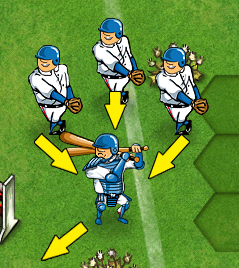
6. Upgrade should be beneficial at least in half the cases, so that the player is tormented by the choice of which is better: put another tower or improve the old one.
If we talk about the types of towers, then to create different paths for passing levels, the general principles of operation of the towers should be very different. Firstly, in addition to purely attacking, there should be towers of "support". Secondly, the types of tower attacks should differ not only in damage or rate of fire, but also in qualitative features (the dependence of the damage done on various factors). However, one way or another, the utility of the towers can be reduced to a general criterion.
The total indicator of the tower, by which it can be estimated its "slaughter" (K): DPS * R / Price (damage per second multiplied by the radius of fire and divided by the price of the tower).
The base tower in our game is a server; it has no special abilities.
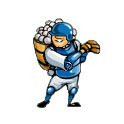
Скорострельность базовой башни – 2 выстрела в секунду, урон за 1 выстрел – 10 единиц (снимает 10 ХП), базовый урон в секунду – 20, радиус – 2.3 тайла, цена – 60. Получаем K=2.3*20/60 около 0.75
Рассмотрим другие башни, используемые в игре.
а) Сплешевик/ядрометатель
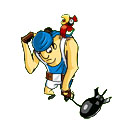
Имеет атаку по площади (юниты в определенном радиусе от места попадания снаряда получают урон). Урон башни зависит от того, на скольких юнитов он распределяется (сколько крипов находилось в зоне поражении). Для одного юнита:
урон – 3.5*15*0.5*3/100=0.75, т.е. фактически не отличается от базовой башни.
Аналогичная ситуация с 2-3 юнитами (суммарный урон для 1 юнита будет 3.5*15=52.5, для двух – 2*2*15=60, for three - 3 * 1.8 * 15 = 81 ), but we see a pattern - the more units in the attack zone, the greater the total damage they will receive. For 5 or more units, this formula will be 15 * N, and with a splash radius of 0.6 tiles, there can be 8-9 opponents in a 1.2 tile area.
b) Boxer

Knocks an opponent out of the field with one hit. It should be beneficial against enemies with high HP and disadvantageous against the weak. Its damage varies depending on the HP of the unit, from 0 to HP of the most powerful unit (except for the boss). The radius is unimportant, because only one shot has time to be fired.
Take the average creep speed = 0.8 tiles per second. Then the 2.3 tile unit will pass in about 3s. The base tower during this time will be able to inflict damage = 3 * 20 , while the boxer, in terms of 3s - 300 * 3/5, that is, of the order of 180. However, for weak units, for example, for the basic ones, this figure will be 75 * 3/5 = 45 , that is, less than the base tower.
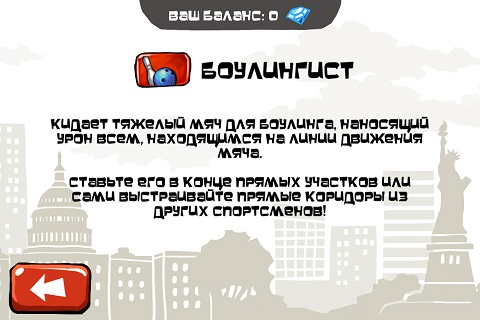
c) Bowling player

Has a linear splash attack. The attack power of the ball is 27, the shot is 1 time in 2 seconds. Total damage per unit per second is 13.5. This is less than that of the base tower, but given that the bowling player begins to attack from 5 tiles, then with an average length of the chain of units going with an interval of about 1s, he can attack 5-6 units at the same time. Thus, 1 unit can cause 13.5 to 81 damage per second, and given the price of the tower (80 coins), it will be 3 times more effective than the base tower if the situation is good (20 damage per second for 60 coins versus 80 damage per second for 80 coins).
The minuses of the tower are also visible to the naked eye - units must go just along the line of its attack.

d) Batter
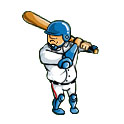
The most original unit in the game. It is useless without servicemen, because it can only transmit the balls served to it with increased damage to the ball and its speed. The main feature: you can build chains from the bats, not only as “one serving on a chain of bats”, but also as “several serving with one batter”.
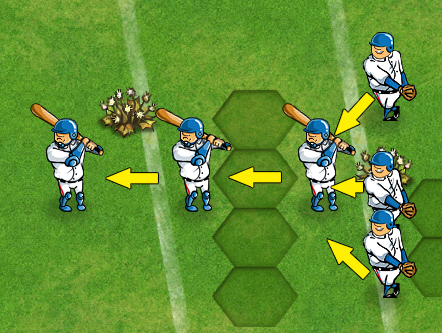
The combination “1 serving + 1 forward” can be reduced to the analogy “attack tower with a large radius of attack”. If we take the radius of attack, then at the base tower it is 2.3 * 2 = 4.6 tiles, at the ligament 2.3 + 2(distance between the supplying and slugging towers) +3 (attack radius of the slugging tower) = 6.3, i.e., 36% more. Given that the batter tower enhances the damage from the passed ball by 10%, we get an increase in damage of about 40%.
Bundle sum: 95 coins versus 60 for a single tower, i.e. 58% more. However, in the case of a limited number of places for installing towers next to the creep path, 1 batter can concentrate fire from 2–3 serving in the distance, and the cheap price of the batter tower allows it to “plug holes” in defense.
The balance of the "bundles" of towers.
1. server + slugger chain
In fact, such a bunch is similar to one tower with a large field of fire. Considering that each new batter increases the area of fire by about half the area of the circle of fire of the batter, we get a bunch of towers that are advantageous when killing creeps coming in at large gaps or in single creeps that come from different points. The design is balanced by a slight reduction in the damage of the ball when transferring it from the server to the server. When transferring 90% of the damage in a chain of 5 towers, 60% of the damage will reach the target.
2. several serveers + batter
This bunch is justified in situations where there is one good point where you can put the tower, and many serve in the distance. This design is balanced by limiting the balls per second that the batter can take.
3. A common bunch - several serveers for one batter, plus a chain of batter goes from him. The most "imbovoy" (too good for the player) option. The imbalance is removed by introducing a limit on the number of accepting balls by the batsman and the limit of amplification of damage from the balls of the batsmen (even at the 3rd level).
e) Cheerleader

Support units are useless without attacking units. Usually, the support unit acts on a certain area, creating one or another effect on it. A classic unit slows down enemies in a specific area.
The effectiveness of the support unit’s action is determined by 2 parameters: how long the enemy is in the turret firing zone, and how many towers can attack opponents in the firing zone at the same time. The first parameter is affected by both the radius of the tower and the deceleration coefficient, while the second is affected only by the radius.
Total, if we take a deceleration of the enemy’s movement speed by 20%, and the radius of action is about 3 tiles, then a creep moving by default will overcome 6 tiles in 6 / 0.8s = 7.5, and when slowing down - by 6 / (0.8 / 1.2) = 9c .
If you consider that at this time at least 2 towers will attack him, then the difference in the damage received by the unit will be 1.5s * 20 * 2 = 60. In fact, a bunch of 2 attackers + a slowdown tower is equivalent to 3 attackers. However, taking into account that the slowdown tower itself has no value, its price should be less than the price of the base tower. Total, the price of the moderator tower is 50 coins (at the base tower, recall, 60 coins).
f) Team captain.

Similarly, you can calculate the action of the unit, not weakening the enemies, but strengthening the player’s towers.
It is important for the player to see the visual strengthening of the towers, so it will be most logical to increase the speed of attack of the towers. So there was a "captain" - a unit that enhances the rate of fire of towers operating in the zone of his attack. Its parameters are calculated in a similar way, so that starting from a certain number of towers (at least 2 splasheviks / bowling players) it would be more profitable to put a captain than an N + 1 tower.
The captain’s base gain is 20%, radius is 3 tiles. Given that it is logical to set the captain when we have at least 2-3 strong towers installed, you can calculate its value. Let's say we have 2 splash towers and a bowling alley. Their total price is 2 * 100 + 80 = 280 , damage per second - (if 5 units fall in the attack area of the splashevik) - 15 * 5 * 0.5 = 37.5 , for the bowling player - 13.5 * 3 - if we assume that the radius of the attack falls 3 units. Total damage is about 115 units per second. With its increase by 20%, we get an additional 23 damage per second, which is 15% more than the damage from the base tower. Then the adequate price of the captain, given that its use is "paid off", starting with 3 support 3 strong towers - 60 * 1.15= about 70 coins. And most importantly: as new towers are improved or installed within the range of the captain, it becomes more and more profitable.

Description of the towers.
We decided not to display the exact numbers in the parameters of the towers, since they would not fit too well into the general "reckless" atmosphere of the game, therefore, where it was possible, the athletes were strengthened as they were upgraded in visually visible ways: increasing the radius of attack, decreasing time between attacks. Thus, the description of the towers in the store describes the scope of the towers, how good they are against certain opponents.
Additionally, as an advice to the players, it is indicated which situations can be created so that this or that unit is profitable.
Opponents (creeps).
It is clear that the game should also have more than one kind of opponents. In fact, each dangerous enemy has its own countermeasure in the form of a new tower, but the strongest towers should have their weak points.
Consider the evolution of opponents in the game in more detail.
1. Basic creep (fitness), has no special talents, is easily destroyed by all towers.

2. Fast creep (runner), if moving alone, then a tower with splash damage is hard to get into.
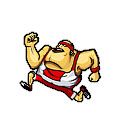
3. Creep with a lot of HP (rugby player), for its destruction just need a unit “boxer”.

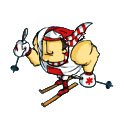
4. Creep, accelerating in straight sections (skier). Against him, spasheviks and even boxers have a bad effect (a boxer misses when attacking a fast moving unit) if they are placed in those places of the trajectory where the creep speed is maximum. Teaches the player to use moderator towers and place towers in the right places on the path of these creeps.
5. Creep jumper is slightly vulnerable in flight, can skip single obstacles. Diversifies the situation in case the player begins to build towers with a “snake”. Against it, a good countermeasure is beating towers, which not only increase the radius of attack of the base towers, but also plug places where resources would not be enough when installing other towers.
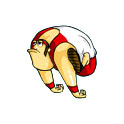
6. Creep bodybuilder causes fire on himself. It helps well against towers that have a large attack radius and strong damage. The greater the radius of attack of the tower, and the stronger its damage, the fewer such towers are installed on the field, which means that the greater the percentage of damage the bodybuilders can divert to themselves. The counter-trick against this is to build unit “tracks” in such a way that both bodybuilders and ordinary creeps go in one line.
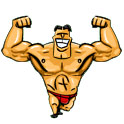
7. And finally, the most dangerous creep is karate. Temporarily knocks the tower off the field. Usually knocks out the most valuable towers located closest to it. This forces the player not to get carried away with excessive upgrades of the towers, and not allow the dependence of the entire defense on one single tower. A good countermeasure to the karate is the “captain” unit, which is far from the point of appearance of the karate, strengthens weak towers, which, in turn, remain just as unattractive for the karate, but now have more damage per second.
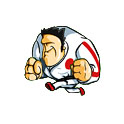
8. Creep the boss. Appears at the end of each episode. It has a tremendous amount of HP, low speed, and most importantly it removes all the life points of the base if it suddenly reaches it. Of the features - in episodes 3 and 4, bosses increase their speed if they are not attacked for a long time, which prompts the player to keep this creep under fire all the time. Usually appears along with the “retinue”, other creeps that cause the player to be distracted from the boss and strengthen the defense throughout the field (which excludes the option of selling towers in that part of the path that the boss has already passed).

It is logical that as new opponents appear, the player is given “tools” to deal with them. For example, when skiers appear, the player is given advice to set up moderator towers and a scenario of their use is shown.
Bonuses.
Bonuses are divided into several types:
1. Allowing to reverse a critical situation, when only external influence can help.
2. Simplifying the player’s life in difficult situations, if he himself acts correctly.
3. Permanently acting, allowing to skip non-critical errors, allow the player to relax a little.
You can also divide them by time of action:
1. Disposable
2. Effective for a certain period
3. Constantly acting
Each of the players under a different emotional state and style of play can find a pleasant bonus for him.
1. "Stop time" and turn the tide - freezing. Stops enemies, giving the towers time to destroy them.
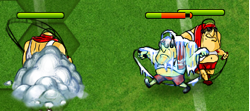
2. Hail - destroys opponents in a certain radius with one blow. It will appeal to the "tactics" who are used to quickly and accurately act in arcade games.

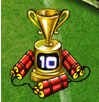
3. False goblet - a certain antithesis of “hail”, helps to direct enemies in a false trail. Obviously, fans will like to deceive the stupid AI. By the way, only bonuses 2 and 3 require a “sight” point, therefore, in fact, they are quite complex bonuses, especially the third one.

4. Strengthening the attack - helps destroy a crowd of enemies without installing additional towers. It will appeal to those players who underestimated the enemy, but do not want to fuss and resort to emergency measures.
5. Doubling income. It will help those who do not have enough money to install towers all the time. In fact, it will also help those who play strategically correctly, but allow small miscalculations with the exact installation of towers, and want to fix them in the future.
6. Base Defense - helps the player not to worry about every unit of the enemy and focus on strategy. Suitable for those who do not like to rush around the field and prefer to act in between waves of enemies.
Thus, everything is built in the game so that the player always has a tool both for solving problems “imposed” on him (a new tower as an “antidote” against a new opponent or a new map), and has additional opportunities to show his talent in areas close to him, thereby turning the tide of battle.
We told everyone at the ready how everything was planned, but, of course, not all players fully understand the advantages of different towers and bonuses over others. Next time, we’ll talk about the tools we introduced and are going to introduce (thanks for the helpful comments to Habré!), As well as the issues of using AI to create levels and utilities that simplify beta testing of the game. About monetization and promotion is also conceived a separate article.
In this article, we will touch on the topic of creating new types of towers on the principle of “from the situation considered to the unit”, talk about calculating the parameters of creeps and give a description of the bonuses.
Calculation of the parameters of the towers.
1. The boundary condition is that the first tower should almost kill the first creep alone, leaving him with HP for one shot.
2. The firing tower must have the following parameters: radius of fire, reload speed, projectile damage.
3. Each tower should well destroy certain types of creeps, and somewhat worse - other types.
4. The approximate value by which you can calculate the value of the tower = the average total attack time of the creep that fell into its radius, multiplied by damage per second.
5. Towers must create “bundles” in which they operate better than individually.
6. Upgrade should be beneficial at least in half the cases, so that the player is tormented by the choice of which is better: put another tower or improve the old one.
If we talk about the types of towers, then to create different paths for passing levels, the general principles of operation of the towers should be very different. Firstly, in addition to purely attacking, there should be towers of "support". Secondly, the types of tower attacks should differ not only in damage or rate of fire, but also in qualitative features (the dependence of the damage done on various factors). However, one way or another, the utility of the towers can be reduced to a general criterion.
The total indicator of the tower, by which it can be estimated its "slaughter" (K): DPS * R / Price (damage per second multiplied by the radius of fire and divided by the price of the tower).
The base tower in our game is a server; it has no special abilities.
Скорострельность базовой башни – 2 выстрела в секунду, урон за 1 выстрел – 10 единиц (снимает 10 ХП), базовый урон в секунду – 20, радиус – 2.3 тайла, цена – 60. Получаем K=2.3*20/60 около 0.75
Рассмотрим другие башни, используемые в игре.
а) Сплешевик/ядрометатель
Имеет атаку по площади (юниты в определенном радиусе от места попадания снаряда получают урон). Урон башни зависит от того, на скольких юнитов он распределяется (сколько крипов находилось в зоне поражении). Для одного юнита:
урон – 3.5*15*0.5*3/100=0.75, т.е. фактически не отличается от базовой башни.
Аналогичная ситуация с 2-3 юнитами (суммарный урон для 1 юнита будет 3.5*15=52.5, для двух – 2*2*15=60, for three - 3 * 1.8 * 15 = 81 ), but we see a pattern - the more units in the attack zone, the greater the total damage they will receive. For 5 or more units, this formula will be 15 * N, and with a splash radius of 0.6 tiles, there can be 8-9 opponents in a 1.2 tile area.
b) Boxer
Knocks an opponent out of the field with one hit. It should be beneficial against enemies with high HP and disadvantageous against the weak. Its damage varies depending on the HP of the unit, from 0 to HP of the most powerful unit (except for the boss). The radius is unimportant, because only one shot has time to be fired.
Take the average creep speed = 0.8 tiles per second. Then the 2.3 tile unit will pass in about 3s. The base tower during this time will be able to inflict damage = 3 * 20 , while the boxer, in terms of 3s - 300 * 3/5, that is, of the order of 180. However, for weak units, for example, for the basic ones, this figure will be 75 * 3/5 = 45 , that is, less than the base tower.
c) Bowling player
Has a linear splash attack. The attack power of the ball is 27, the shot is 1 time in 2 seconds. Total damage per unit per second is 13.5. This is less than that of the base tower, but given that the bowling player begins to attack from 5 tiles, then with an average length of the chain of units going with an interval of about 1s, he can attack 5-6 units at the same time. Thus, 1 unit can cause 13.5 to 81 damage per second, and given the price of the tower (80 coins), it will be 3 times more effective than the base tower if the situation is good (20 damage per second for 60 coins versus 80 damage per second for 80 coins).
The minuses of the tower are also visible to the naked eye - units must go just along the line of its attack.
d) Batter
The most original unit in the game. It is useless without servicemen, because it can only transmit the balls served to it with increased damage to the ball and its speed. The main feature: you can build chains from the bats, not only as “one serving on a chain of bats”, but also as “several serving with one batter”.
The combination “1 serving + 1 forward” can be reduced to the analogy “attack tower with a large radius of attack”. If we take the radius of attack, then at the base tower it is 2.3 * 2 = 4.6 tiles, at the ligament 2.3 + 2(distance between the supplying and slugging towers) +3 (attack radius of the slugging tower) = 6.3, i.e., 36% more. Given that the batter tower enhances the damage from the passed ball by 10%, we get an increase in damage of about 40%.
Bundle sum: 95 coins versus 60 for a single tower, i.e. 58% more. However, in the case of a limited number of places for installing towers next to the creep path, 1 batter can concentrate fire from 2–3 serving in the distance, and the cheap price of the batter tower allows it to “plug holes” in defense.
The balance of the "bundles" of towers.
1. server + slugger chain
In fact, such a bunch is similar to one tower with a large field of fire. Considering that each new batter increases the area of fire by about half the area of the circle of fire of the batter, we get a bunch of towers that are advantageous when killing creeps coming in at large gaps or in single creeps that come from different points. The design is balanced by a slight reduction in the damage of the ball when transferring it from the server to the server. When transferring 90% of the damage in a chain of 5 towers, 60% of the damage will reach the target.
2. several serveers + batter
This bunch is justified in situations where there is one good point where you can put the tower, and many serve in the distance. This design is balanced by limiting the balls per second that the batter can take.
3. A common bunch - several serveers for one batter, plus a chain of batter goes from him. The most "imbovoy" (too good for the player) option. The imbalance is removed by introducing a limit on the number of accepting balls by the batsman and the limit of amplification of damage from the balls of the batsmen (even at the 3rd level).
e) Cheerleader
Support units are useless without attacking units. Usually, the support unit acts on a certain area, creating one or another effect on it. A classic unit slows down enemies in a specific area.
The effectiveness of the support unit’s action is determined by 2 parameters: how long the enemy is in the turret firing zone, and how many towers can attack opponents in the firing zone at the same time. The first parameter is affected by both the radius of the tower and the deceleration coefficient, while the second is affected only by the radius.
Total, if we take a deceleration of the enemy’s movement speed by 20%, and the radius of action is about 3 tiles, then a creep moving by default will overcome 6 tiles in 6 / 0.8s = 7.5, and when slowing down - by 6 / (0.8 / 1.2) = 9c .
If you consider that at this time at least 2 towers will attack him, then the difference in the damage received by the unit will be 1.5s * 20 * 2 = 60. In fact, a bunch of 2 attackers + a slowdown tower is equivalent to 3 attackers. However, taking into account that the slowdown tower itself has no value, its price should be less than the price of the base tower. Total, the price of the moderator tower is 50 coins (at the base tower, recall, 60 coins).
f) Team captain.
Similarly, you can calculate the action of the unit, not weakening the enemies, but strengthening the player’s towers.
It is important for the player to see the visual strengthening of the towers, so it will be most logical to increase the speed of attack of the towers. So there was a "captain" - a unit that enhances the rate of fire of towers operating in the zone of his attack. Its parameters are calculated in a similar way, so that starting from a certain number of towers (at least 2 splasheviks / bowling players) it would be more profitable to put a captain than an N + 1 tower.
The captain’s base gain is 20%, radius is 3 tiles. Given that it is logical to set the captain when we have at least 2-3 strong towers installed, you can calculate its value. Let's say we have 2 splash towers and a bowling alley. Their total price is 2 * 100 + 80 = 280 , damage per second - (if 5 units fall in the attack area of the splashevik) - 15 * 5 * 0.5 = 37.5 , for the bowling player - 13.5 * 3 - if we assume that the radius of the attack falls 3 units. Total damage is about 115 units per second. With its increase by 20%, we get an additional 23 damage per second, which is 15% more than the damage from the base tower. Then the adequate price of the captain, given that its use is "paid off", starting with 3 support 3 strong towers - 60 * 1.15= about 70 coins. And most importantly: as new towers are improved or installed within the range of the captain, it becomes more and more profitable.
Description of the towers.
We decided not to display the exact numbers in the parameters of the towers, since they would not fit too well into the general "reckless" atmosphere of the game, therefore, where it was possible, the athletes were strengthened as they were upgraded in visually visible ways: increasing the radius of attack, decreasing time between attacks. Thus, the description of the towers in the store describes the scope of the towers, how good they are against certain opponents.
Additionally, as an advice to the players, it is indicated which situations can be created so that this or that unit is profitable.
Opponents (creeps).
It is clear that the game should also have more than one kind of opponents. In fact, each dangerous enemy has its own countermeasure in the form of a new tower, but the strongest towers should have their weak points.
Consider the evolution of opponents in the game in more detail.
1. Basic creep (fitness), has no special talents, is easily destroyed by all towers.
2. Fast creep (runner), if moving alone, then a tower with splash damage is hard to get into.
3. Creep with a lot of HP (rugby player), for its destruction just need a unit “boxer”.
4. Creep, accelerating in straight sections (skier). Against him, spasheviks and even boxers have a bad effect (a boxer misses when attacking a fast moving unit) if they are placed in those places of the trajectory where the creep speed is maximum. Teaches the player to use moderator towers and place towers in the right places on the path of these creeps.
5. Creep jumper is slightly vulnerable in flight, can skip single obstacles. Diversifies the situation in case the player begins to build towers with a “snake”. Against it, a good countermeasure is beating towers, which not only increase the radius of attack of the base towers, but also plug places where resources would not be enough when installing other towers.
6. Creep bodybuilder causes fire on himself. It helps well against towers that have a large attack radius and strong damage. The greater the radius of attack of the tower, and the stronger its damage, the fewer such towers are installed on the field, which means that the greater the percentage of damage the bodybuilders can divert to themselves. The counter-trick against this is to build unit “tracks” in such a way that both bodybuilders and ordinary creeps go in one line.
7. And finally, the most dangerous creep is karate. Temporarily knocks the tower off the field. Usually knocks out the most valuable towers located closest to it. This forces the player not to get carried away with excessive upgrades of the towers, and not allow the dependence of the entire defense on one single tower. A good countermeasure to the karate is the “captain” unit, which is far from the point of appearance of the karate, strengthens weak towers, which, in turn, remain just as unattractive for the karate, but now have more damage per second.
8. Creep the boss. Appears at the end of each episode. It has a tremendous amount of HP, low speed, and most importantly it removes all the life points of the base if it suddenly reaches it. Of the features - in episodes 3 and 4, bosses increase their speed if they are not attacked for a long time, which prompts the player to keep this creep under fire all the time. Usually appears along with the “retinue”, other creeps that cause the player to be distracted from the boss and strengthen the defense throughout the field (which excludes the option of selling towers in that part of the path that the boss has already passed).
It is logical that as new opponents appear, the player is given “tools” to deal with them. For example, when skiers appear, the player is given advice to set up moderator towers and a scenario of their use is shown.
Bonuses.
Bonuses are divided into several types:
1. Allowing to reverse a critical situation, when only external influence can help.
2. Simplifying the player’s life in difficult situations, if he himself acts correctly.
3. Permanently acting, allowing to skip non-critical errors, allow the player to relax a little.
You can also divide them by time of action:
1. Disposable
2. Effective for a certain period
3. Constantly acting
Each of the players under a different emotional state and style of play can find a pleasant bonus for him.
1. "Stop time" and turn the tide - freezing. Stops enemies, giving the towers time to destroy them.
2. Hail - destroys opponents in a certain radius with one blow. It will appeal to the "tactics" who are used to quickly and accurately act in arcade games.
3. False goblet - a certain antithesis of “hail”, helps to direct enemies in a false trail. Obviously, fans will like to deceive the stupid AI. By the way, only bonuses 2 and 3 require a “sight” point, therefore, in fact, they are quite complex bonuses, especially the third one.
4. Strengthening the attack - helps destroy a crowd of enemies without installing additional towers. It will appeal to those players who underestimated the enemy, but do not want to fuss and resort to emergency measures.
5. Doubling income. It will help those who do not have enough money to install towers all the time. In fact, it will also help those who play strategically correctly, but allow small miscalculations with the exact installation of towers, and want to fix them in the future.
6. Base Defense - helps the player not to worry about every unit of the enemy and focus on strategy. Suitable for those who do not like to rush around the field and prefer to act in between waves of enemies.
Thus, everything is built in the game so that the player always has a tool both for solving problems “imposed” on him (a new tower as an “antidote” against a new opponent or a new map), and has additional opportunities to show his talent in areas close to him, thereby turning the tide of battle.
We told everyone at the ready how everything was planned, but, of course, not all players fully understand the advantages of different towers and bonuses over others. Next time, we’ll talk about the tools we introduced and are going to introduce (thanks for the helpful comments to Habré!), As well as the issues of using AI to create levels and utilities that simplify beta testing of the game. About monetization and promotion is also conceived a separate article.