January 23, 2013 at 23:41
Write an algorithm for the ISS and win 10 thousand dollars
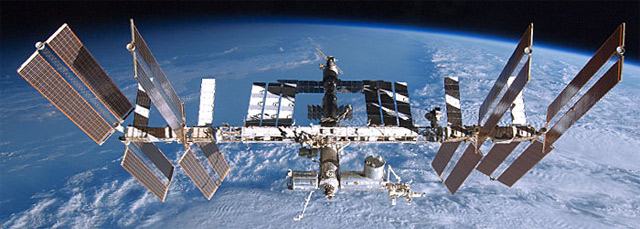
NASA's International Space Station has announced a competition to optimize its solar panel motion algorithms for the International Space Station. The ISS Longeron Challenge is being held in conjunction with the TopCoder portal.
The ISS has four pairs of wings with solar panels. Each wing (Solar Array Wings, SAW) consists of two flexible folding panels and is able to rotate around its longitudinal axis thanks to independent Beta Gimbal Assembly (BGA) motors. In addition, each of the two panel groups is able to rotate along the transverse axis using the Solar Alpha Rotary Joint (SARJ).

Task: how to generate the maximum amount of electricity, given the constant change in the position of the station relative to the sun? The solution to the problem should contain an algorithm that calculates the optimal angular positioning of each of the 10 elements in the diagram at each of 92 points in time. In addition, it is allowed to change the orientation of the entire station by a small angle (from 0 to 7 degrees, which is a constant for the entire turn).
The optimal positioning of solar panels is an extremely difficult task, for the solution of which several factors must be taken into account:
1. The station makes one revolution around the Earth in 92 minutes.
2. The shadows that the panels cast onto each other. When the wing rotates, the cast shadow on the adjacent wing decreases, but the generation of electricity from this wing also decreases.
3. Functional limitations of mechanical structures.
The statement of the problem, specific parameters of the orbit, angles relative to the Sun, formulas for calculating the voltage on solar panels, the exact dimensions of the panels, a tester / visualizer for checking solutions - all this is available immediately after registration in the competition.


For winners, a prize fund of 30 thousand dollars is provided.
1st place $ 10,000
2nd place $ 5000
3rd place $ 3000
4th place $ 1750
5th place $ 1500
6th place $ 1250
7th place $ 1000
8th place $ 750
9th place $ 500
10th place $ 250
Plus another $ 5,000 for special achievements.
2nd place $ 5000
3rd place $ 3000
4th place $ 1750
5th place $ 1500
6th place $ 1250
7th place $ 1000
8th place $ 750
9th place $ 500
10th place $ 250
Plus another $ 5,000 for special achievements.
In addition to cash prizes, there are bonuses:
- 100 T-shirts with NASA logo
- five stickers that have been in orbit
- five letters of recommendation
But the most important thing is not money, because your algorithm will work on the International Space Station!
The competition started on January 16 and will last until February 6, 2013.