May 18, 2012 at 08:17
We repair the monitor with soda!
Recently, it seems to me, plastic mines are on the verge of exhaustion. The larger and heavier the monitor, the smaller and thinner the stand. So 23 '' Samsung monitor suffered the fate of a dandelion. I accidentally stumbled, in one of the local news groups, on a way to restore plastic using baking soda. Under cat repair monitor rack.
The inner sleeve (along which the monitor “drives” when tilted horizontally) partially collapsed at the point of attachment to the rack. I don’t know what the idea of the engineers was, but on 2 screws a small 7-kilogram display is kept.
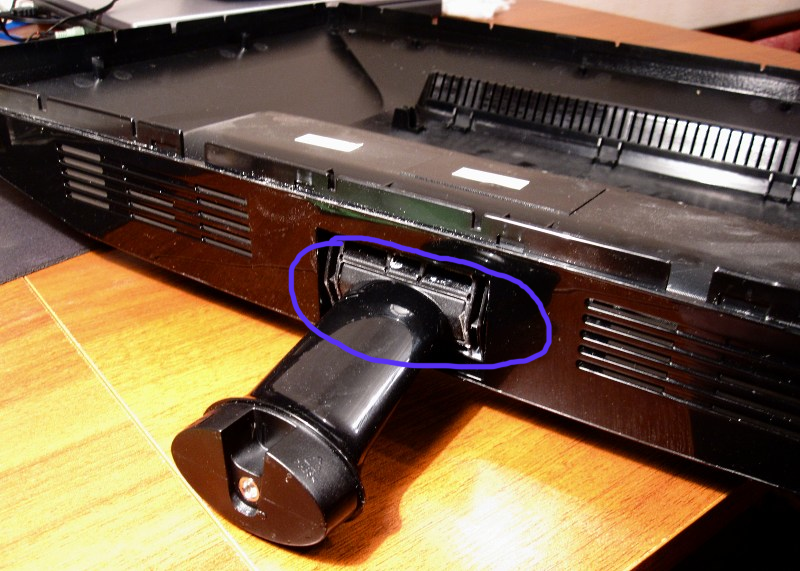
Torn out with meat! For treatment, you need either a donor, or fasten the stand “tightly”, or grind something somewhere. Epoxy will not take, as it is plastic.
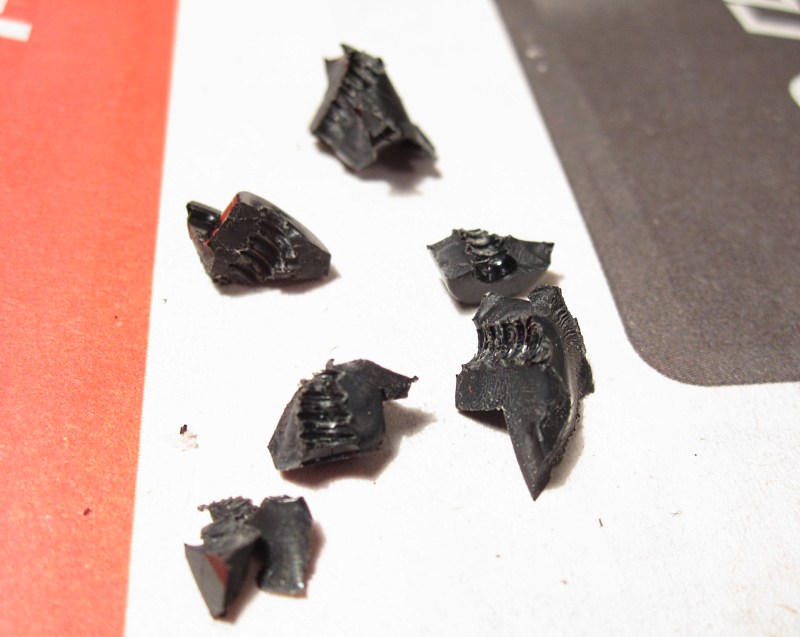
We simply throw out the fragments, they will only disturb us and fill up the damaged places with soda.
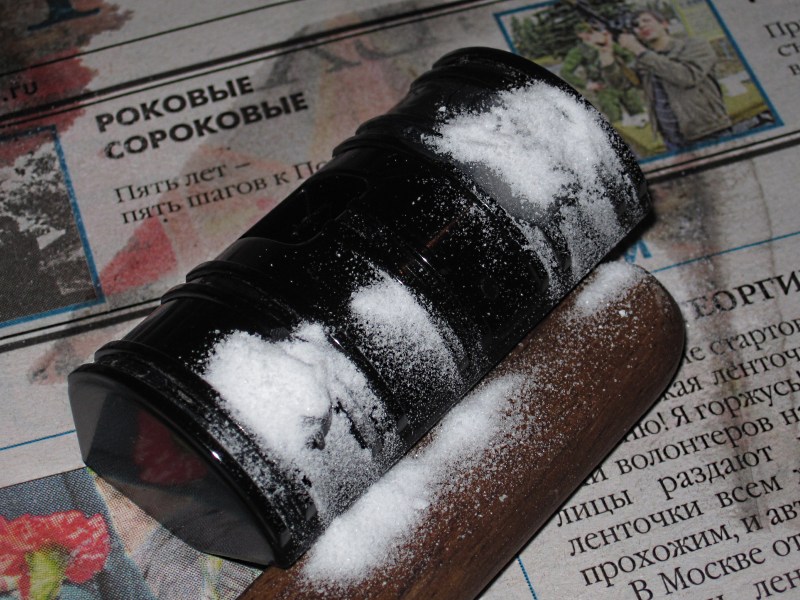
Dripping We apply enough “superglue” to wet the entire volume of soda cyanoacrylate .
UPD Glue should not be gel, but liquid “classic”. The polymerization takes place instantly, the mixture hardens completely in 2-3 seconds.

The “patch” is very durable, it is more difficult to grind it than the original plastic. It remains to grind and drill holes for the screws.
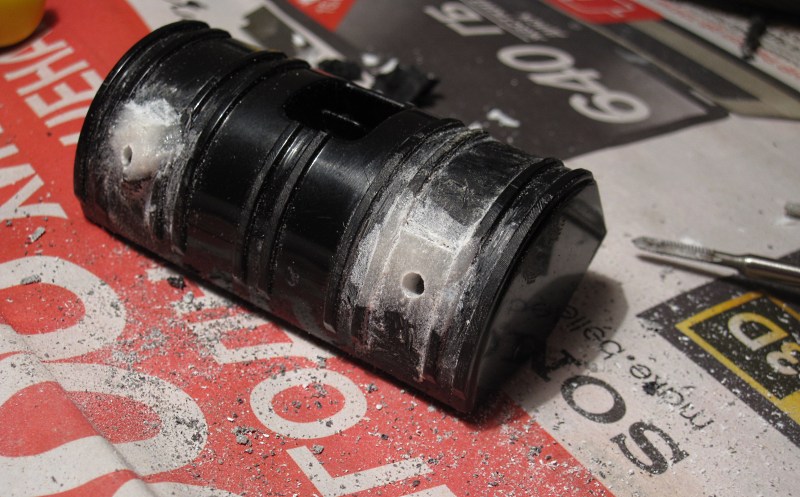
All!

Here's what Wikipedia thinks about this:
The inner sleeve (along which the monitor “drives” when tilted horizontally) partially collapsed at the point of attachment to the rack. I don’t know what the idea of the engineers was, but on 2 screws a small 7-kilogram display is kept.
Torn out with meat! For treatment, you need either a donor, or fasten the stand “tightly”, or grind something somewhere. Epoxy will not take, as it is plastic.
We simply throw out the fragments, they will only disturb us and fill up the damaged places with soda.
UPD Glue should not be gel, but liquid “classic”. The polymerization takes place instantly, the mixture hardens completely in 2-3 seconds.
The “patch” is very durable, it is more difficult to grind it than the original plastic. It remains to grind and drill holes for the screws.
All!
Here's what Wikipedia thinks about this:
To work with cyanoacrylate in thick layers, an amateur method is known with sequential filling of the seam with baking soda wetted with superglue and playing in this case the role of not only a filler, but also an alkaline polymerizing agent. The mixture hardens almost instantly, forming an acrylic-like filled plastic, and in some cases can successfully replace epoxy compositions. Also, as a filler, you can use finely ground plaster or concrete, for example dust obtained by drilling holes in such materials.