Engine structure
Recently I came across a beautiful site (Eng.), Which on the shelves grinds and shows the structure of most types of engines. I will try to freely and succinctly retell the most important thing in my opinion, completely on the fingers and as for the smallest. Of course, you could borrow exact definitions from authoritative sources, but such an amateur translation promises to be one of a kind :)
Can you explain to your girlfriend what the difference between a gas engine and a diesel engine is? Four-stroke and two-stroke engines? Not? Then I invite you to cat.
A working four-stroke engine was first introduced by German engineer Nikolaus Otto in 1876, since then it is also known as the Otto cycle. But still it’s more correct to call it four-stroke. A four-stroke engine is probably one of the most common types of engines in our time. It is used in almost all cars and trucks.
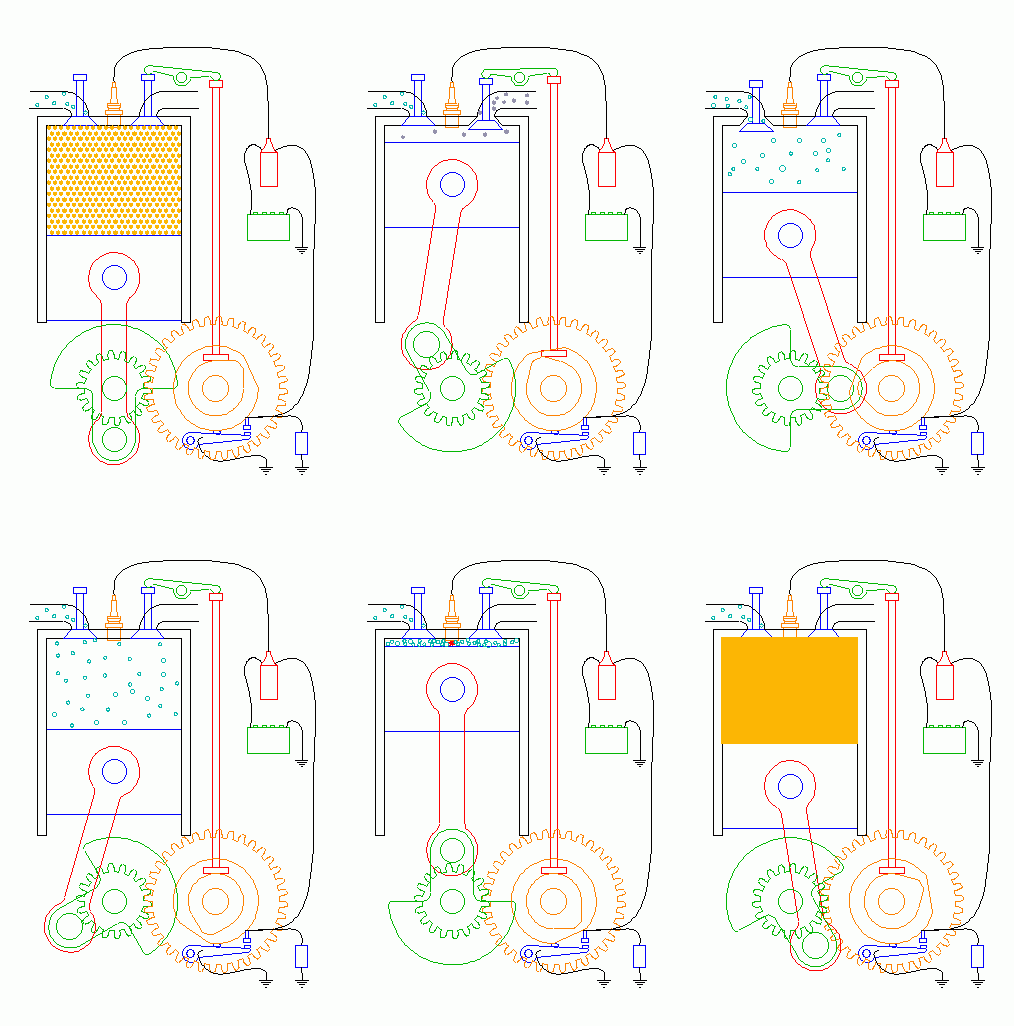
By four measures are meant: inlet , compression , stroke , and exhaust . Each cycle corresponds to one piston stroke; as a result, the working process in each of the cylinders takes place in two turns of the crankshaft.
Inlet
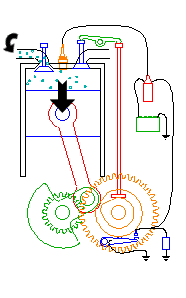
During intake, the piston moves downward, drawing a fresh portion of the air-fuel mixture through the intake valve. A distinctive feature of the engine in question is that the inlet valve opens due to the vacuum formed as a result of the downward movement of the piston.
Compression
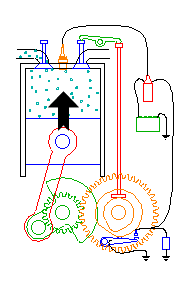
Torque raises the piston, which in turn compresses the air-fuel mixture. The inlet valve closes with an increasing pressure force resulting from the raising of the piston.
Stroke
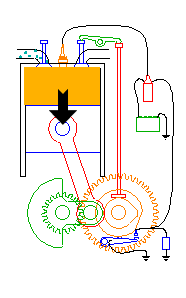
At the top of the compression stroke, a spark ignites the compressed fuel. When fuel is burned, energy is released that acts on the piston, causing it to move down.
Release
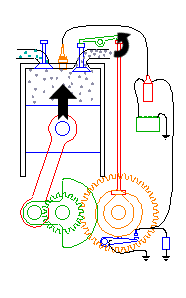
When the piston reaches its lowest point, the exhaust valve opens and exhaust gases are driven out of the cylinder by a piston moving upward.
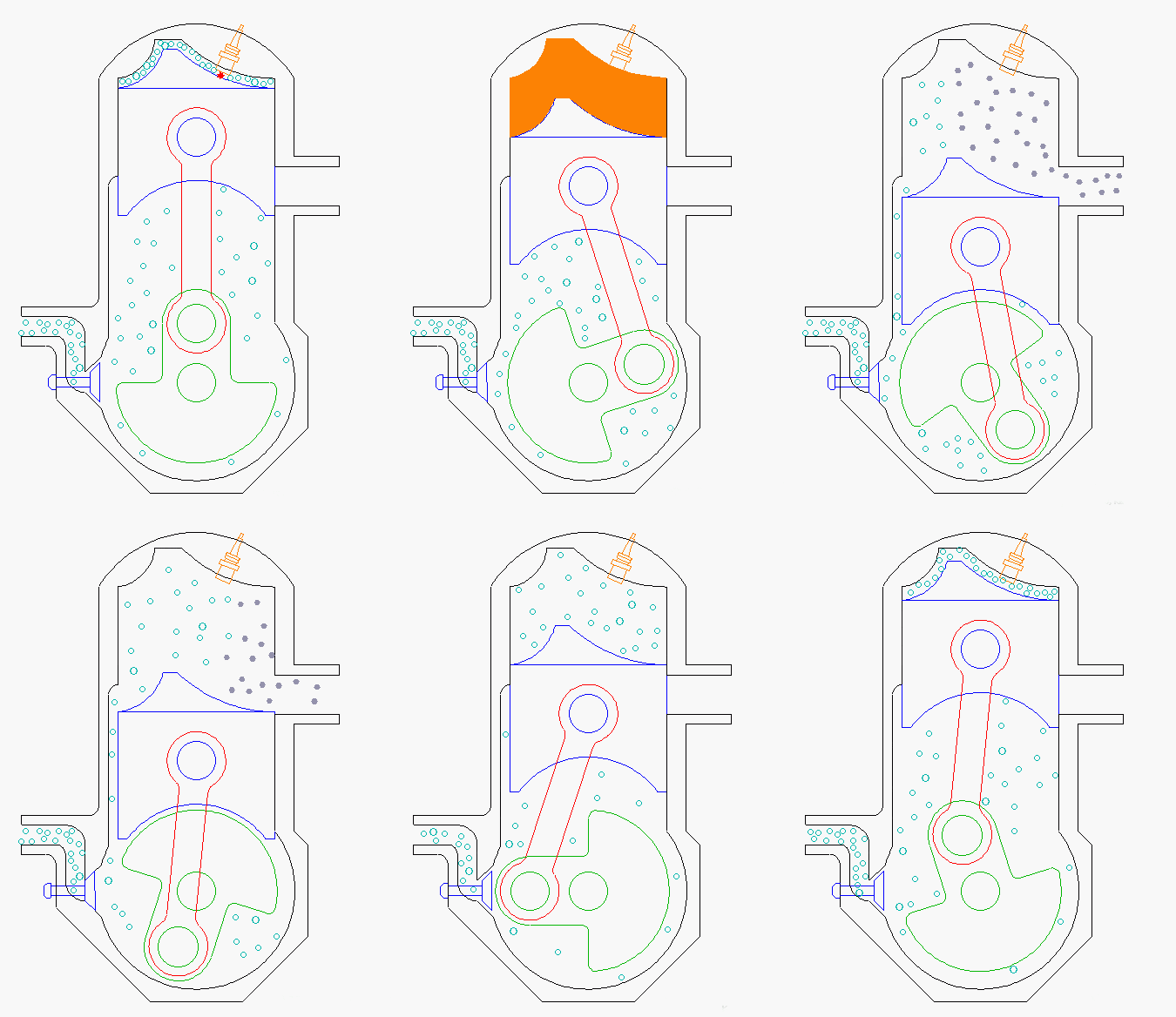
Since in a two-stroke engine for each movement of the crankshaft there is one working stroke - two-stroke engines are always more powerful than four-stroke ones (if you take engines of the same volume). An important factor in favor of the former is their simpler and lighter design. These engines are widely used in gasoline-powered saws, boat engines, snowmobiles, light motorcycles and aircraft models.
The indisputable disadvantages of this type of engine are their inefficiency, since a significant proportion of the fuel does not burn out and is emitted together with exhaust gases.
Intake The
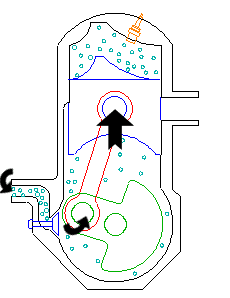
air-fuel mixture is sucked into the crank chamber due to the vacuum created during the upward movement of the piston.
Combustion chamber compression
During compression, the inlet valve is closed by pressure in the crank chamber. The fuel mixture is compressed at the last stage of the cycle.
Movement of the fuel mixture / exhaust
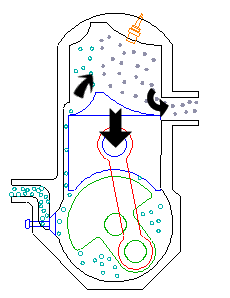
Closer to the end of the stroke, the piston causes the compressed air-fuel mixture to move along the inlet channel from the crank chamber to the master cylinder. The air-fuel mixture displaces the exhaust gases that leave the master cylinder through the exhaust valve. Unfortunately, a certain amount of unburned fuel also leaves the cylinder, which is why the design of a two-stroke engine is considered less economical.
Compression
After which the piston rises, driven by torque, and compresses the fuel mixture. (At this moment, the next intake stroke occurs under the piston).
Working stroke
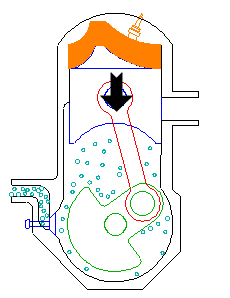
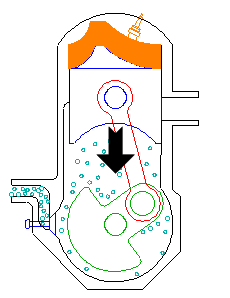
At the top of the beat, the spark plug ignites the fuel mixture. The resulting energy causes the piston to move down until the cycle ends. (At this moment, the fuel is compressed in the crank chamber at the bottom of the cylinder).
A feature of the diesel engine is a modified fuel ignition system.
Having created his type of engine in 1897, Rudolph Diesel stated that his engine was the most efficient ever created. Until now, his brainchild is among the most economical engines.
Intake The
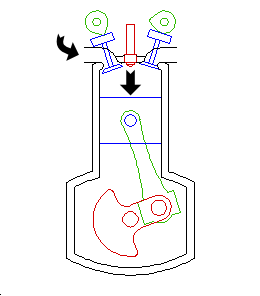
inlet valve opens and fresh air (without fuel) is sucked into the cylinder.
Compression
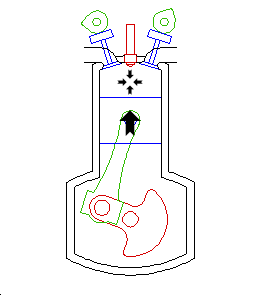
When the piston rises, the air is compressed and the temperature in the cylinder rises. At the end of the cycle, the air becomes so hot that the temperature becomes enough to ignite the fuel.
Injection
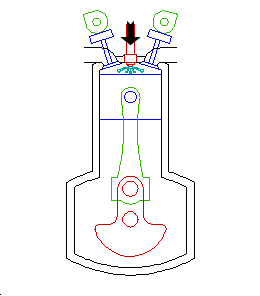
Near the top of the compression cycle, the fuel injector injects fuel into the cylinder. Contact with hot air ignites the fuel.
Working stroke
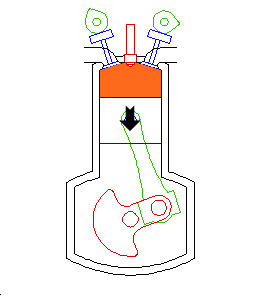
When fuel is burned, energy is released that acts on the piston, causing it to move down. Outlet
The
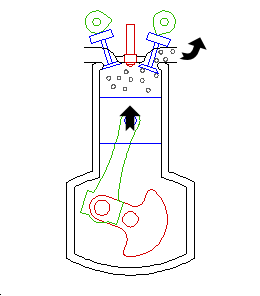
exhaust valve opens, causing exhaust to leave the cylinder.
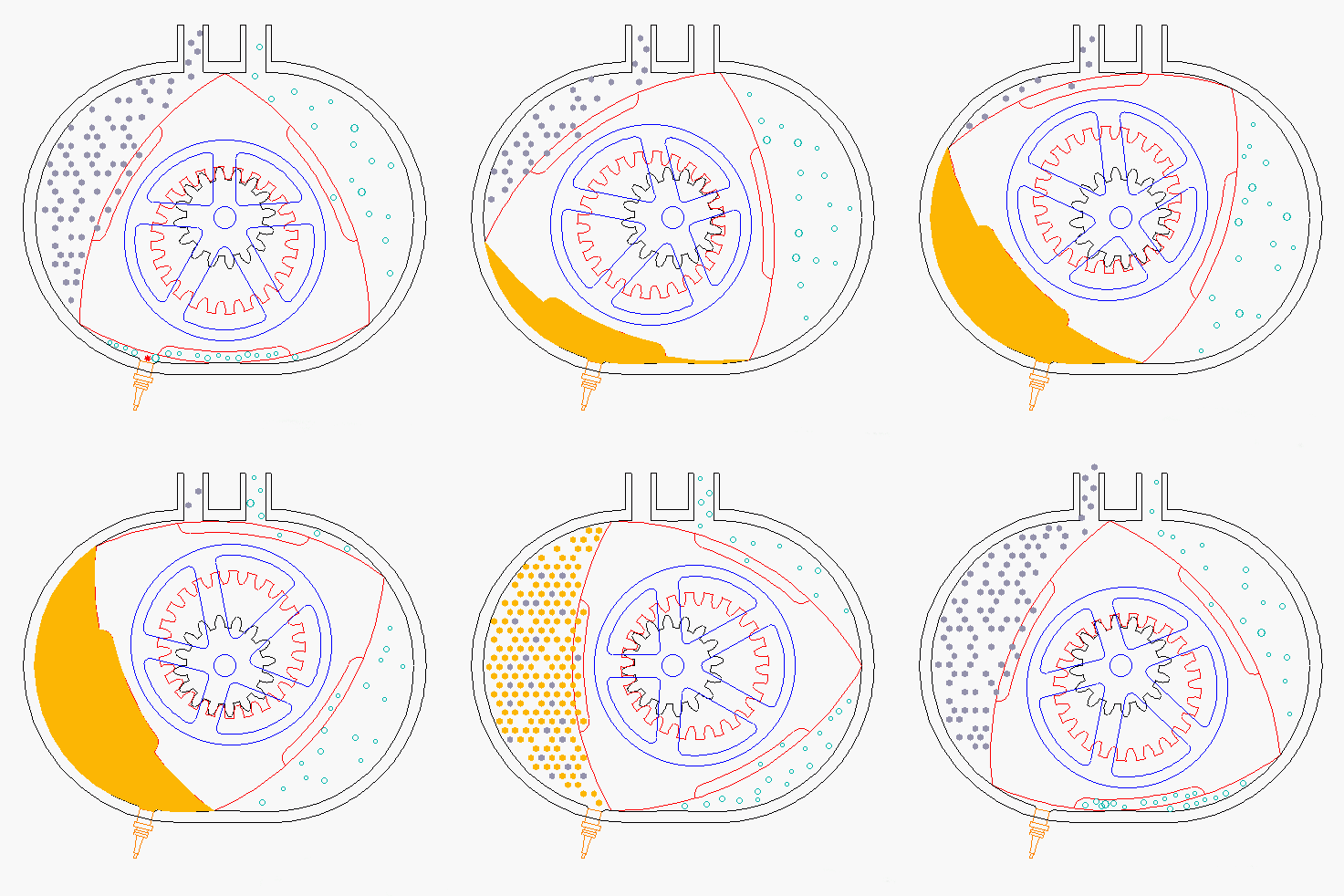
The Wankel rotary piston engine is an amazing creation, offering a very intricate redevelopment of four Otto cycle cycles. It was developed by Felix Wankel in the 50s of the last century.
In a Wankel engine, a trihedral rotor with an annular gear rotates around a fixed gear shaft in an elongated chamber.
Nowadays, the greatest efforts to develop and popularize this type of engine are made by Mazda , but still the four-stroke engine remains the most popular. AvtoVAZ also uses this type of engine in gyroplanes .
Intake The
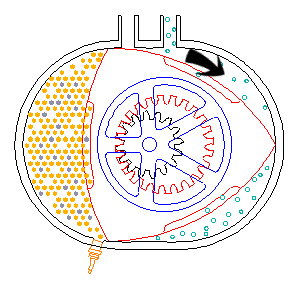
air-fuel mixture enters through the inlet valve at this stage of rotation.
Compression
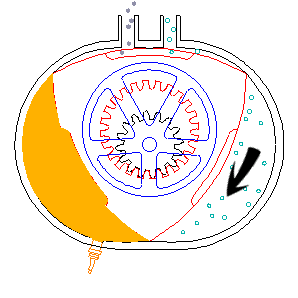
The fuel mixture is compressed here.
Working stroke
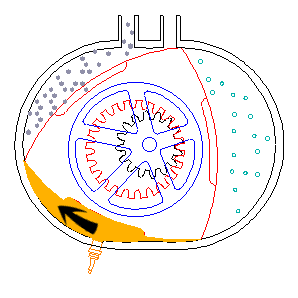
Working stroke, the fuel mixture ignites here, rotating the rotor in a circle.
Release
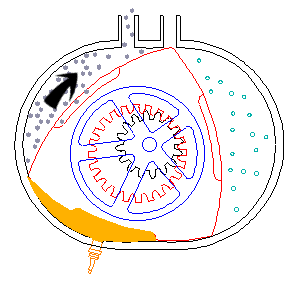
Exhaust gases leave here
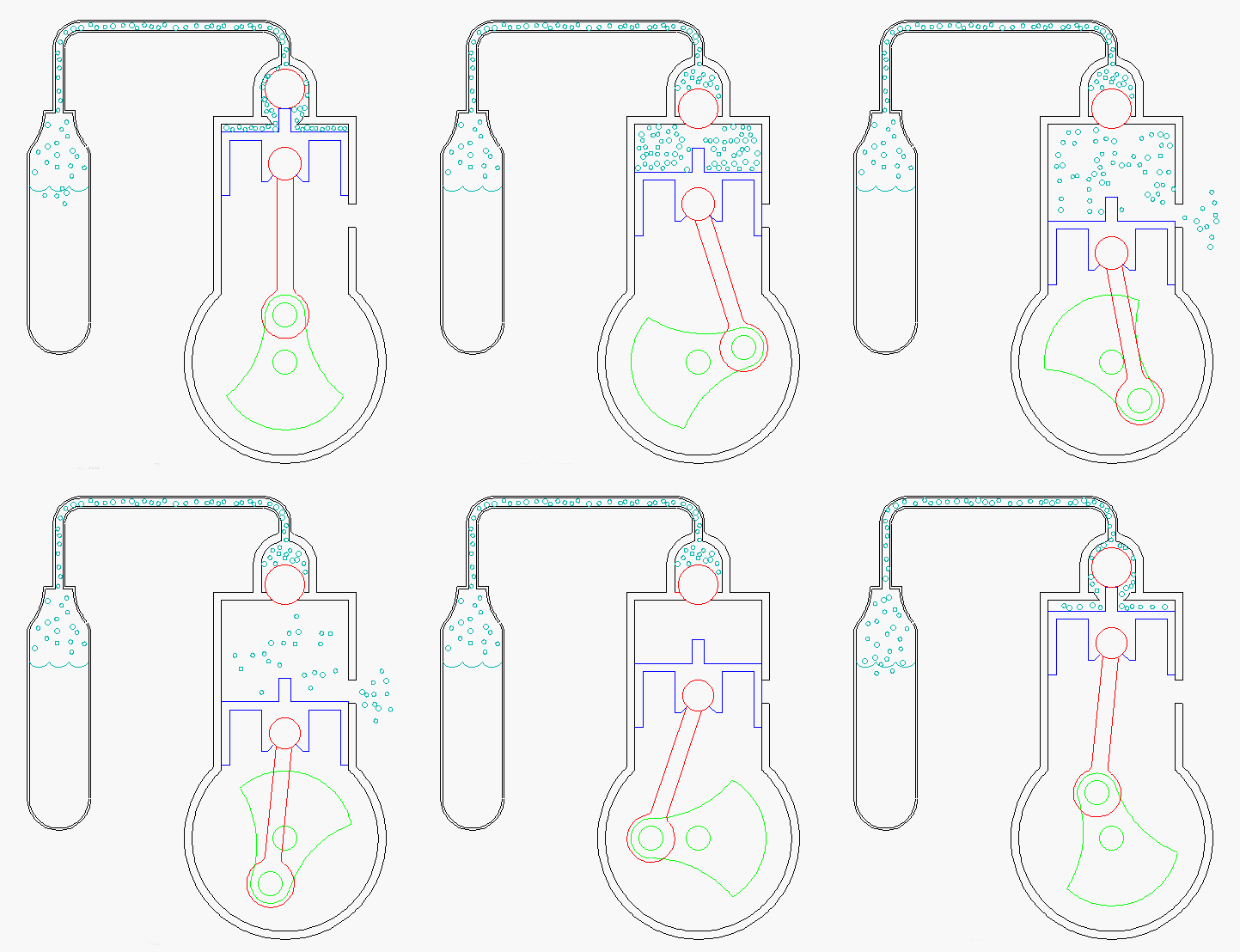
This type of engine can be driven by steam, but more often it can be found in small models of aircraft, where it runs on compressed air or carbon dioxide.
This animation shows a CO2 tank. Compressed CO2 is a liquid that, when released, turns into a gaseous state, or in other words, at normal atmospheric temperature and pressure, liquid carbon dioxide boils, therefore, we will not be mistaken if we say that this type of engine runs on a pair of CO2.
Inlet
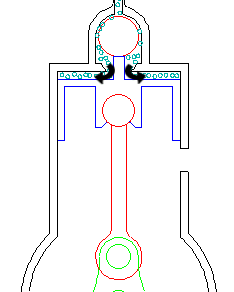
At the top of the cycle, a piston pin presses on the ball valve to let in high pressure gas into the cylinder.
Stroke
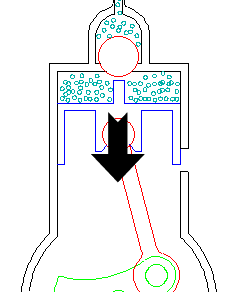
Gas expands moving the piston downwards
Release
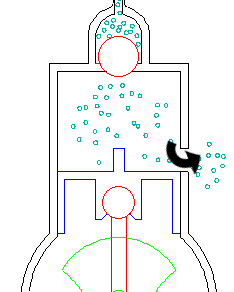
When the piston opens the exhaust valve, pressurized gas leaves the cylinder.
End
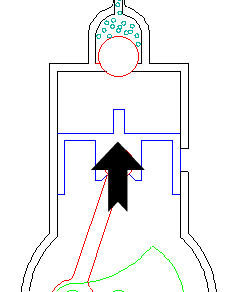
Torque returns piston up to complete the cycle.
Rocket and turbojet engines, according to the author, are striking in their design, but the animation of their work is too boring in his opinion.
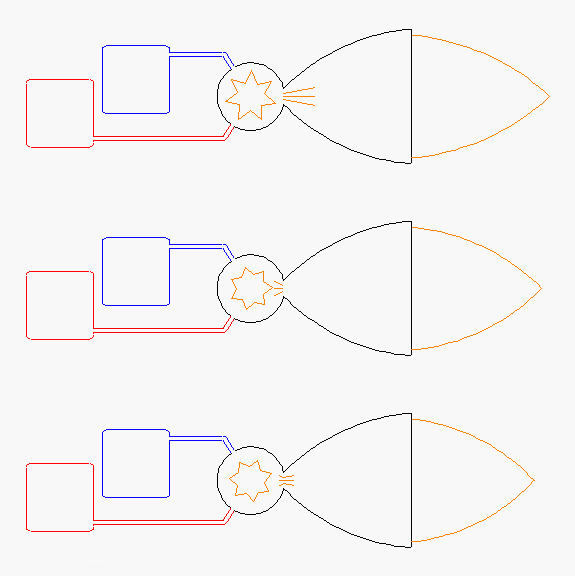
The rocket engine is the simplest of its family, so let's start with it.
In order to operate in outer space rocket engines for their work require a supply of oxygen, just like fuel. The oxygen-fuel mixture is injected into the combustion chamber where it burns continuously. Gas at high pressure exits through nozzles, causing draft in the opposite direction.
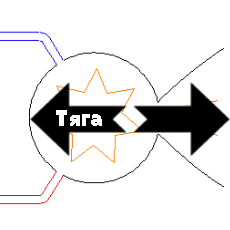
To try this principle yourself, inflate a toy ball and let it out of your hands - the rocket engine works almost the same way;)
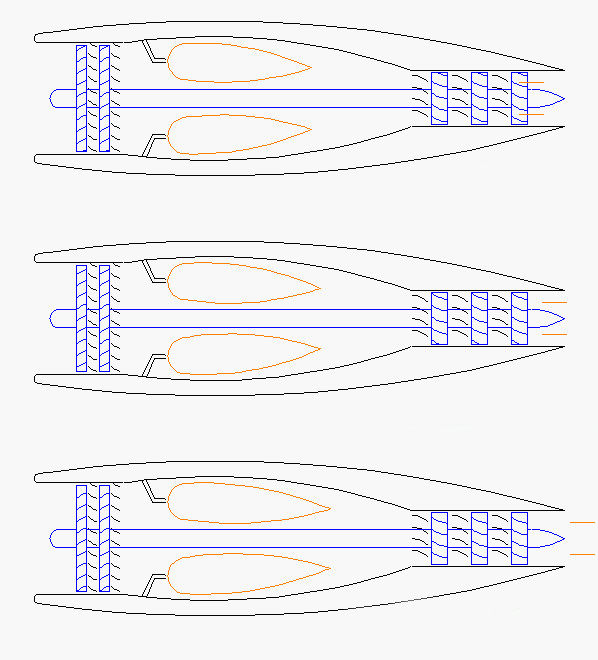
A turbojet engine operates on the same principle as a rocket engine, with the only feature that it takes the oxygen necessary for combustion from the atmosphere. By its design, it is most effective at high altitudes with discharged air.
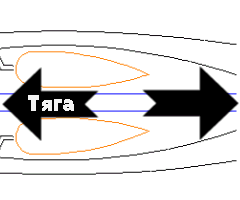
The moment of similarity: fuel burns continuously in the combustion chamber as in a rocket. Expanded gas leaves the combustion chamber through nozzles, forming thrust in the opposite direction.

Differences: On its way out of the nozzle, a certain amount of gas pressure is used to spin the turbine. A turbine is a series of screws connected by a single shaft. Between each pair of screws there is a stator (compressor guide). This apparatus helps the gas to pass through the propeller blades more efficiently.
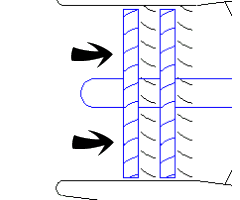
In front of the engine, a turbine shaft spins the compressor. The compressor works similar to a turbine, only in the opposite direction. Its function is to increase the pressure of air entering the engine. The turbine pushes air out and the compressor sucks in.
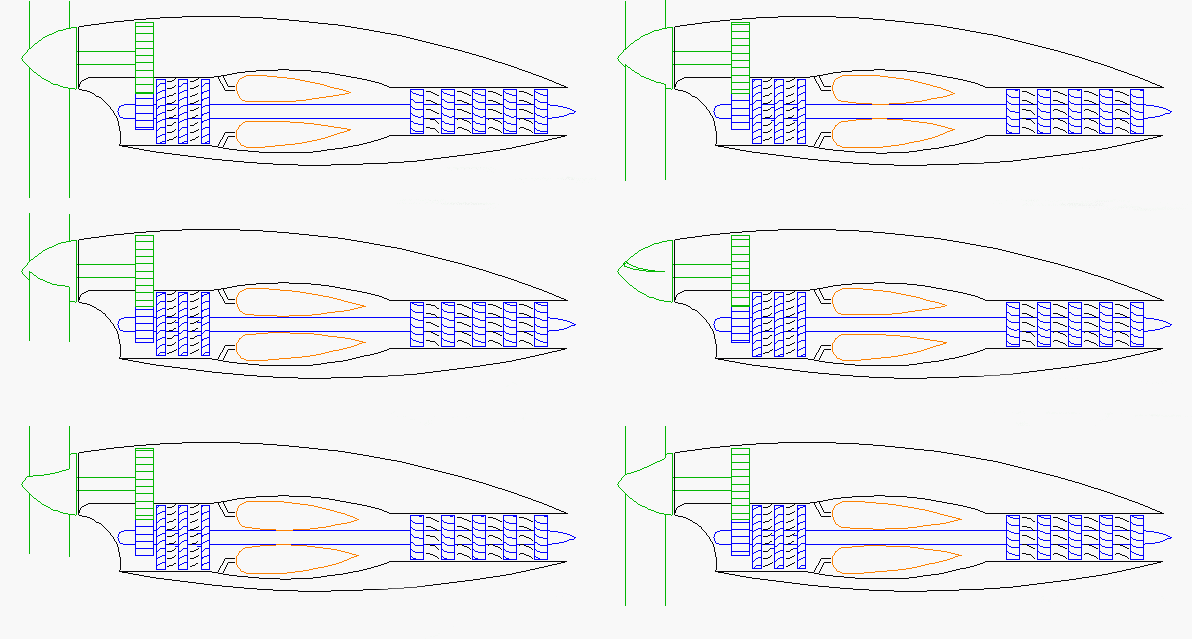
A turboprop engine is similar to a turbojet, with the only feature being that the gas leaving the combustion chamber rotates to a greater extent the turbine, which in turn rotates the screw before the engine. He creates traction. Effective at low altitudes.
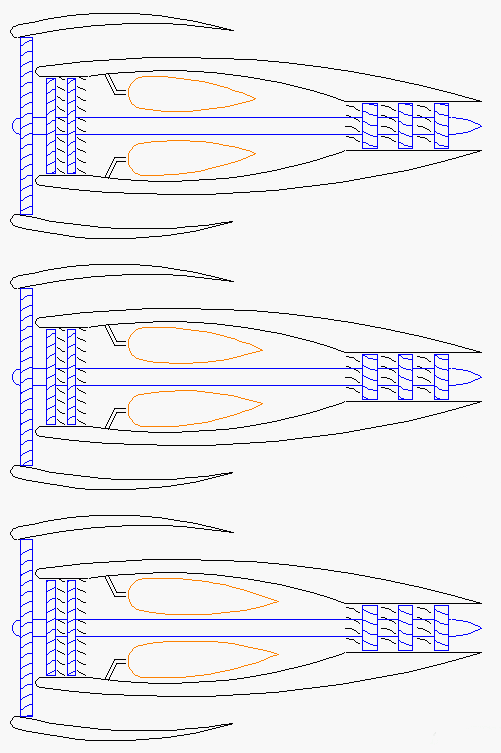
A turbofan engine is like a compromise between a turbojet and a turboprop. It works as a turbojet, but there is one feature: the turbine shaft rotates an external fan, which has more blades and spins faster than the propeller. This helps this engine remain efficient at high altitudes where air is exhausted.
Sources:
www.animatedengines.com
UPD: Added Wankel and CO2 engines, they seemed to me the most interesting and practically useful.
UPD2: Added a description of a whole family of jet engines: rocket, turbojet, turboprop, turbofan.
Can you explain to your girlfriend what the difference between a gas engine and a diesel engine is? Four-stroke and two-stroke engines? Not? Then I invite you to cat.
Four stroke engine
A working four-stroke engine was first introduced by German engineer Nikolaus Otto in 1876, since then it is also known as the Otto cycle. But still it’s more correct to call it four-stroke. A four-stroke engine is probably one of the most common types of engines in our time. It is used in almost all cars and trucks.
By four measures are meant: inlet , compression , stroke , and exhaust . Each cycle corresponds to one piston stroke; as a result, the working process in each of the cylinders takes place in two turns of the crankshaft.
Inlet
During intake, the piston moves downward, drawing a fresh portion of the air-fuel mixture through the intake valve. A distinctive feature of the engine in question is that the inlet valve opens due to the vacuum formed as a result of the downward movement of the piston.
Compression
Torque raises the piston, which in turn compresses the air-fuel mixture. The inlet valve closes with an increasing pressure force resulting from the raising of the piston.
Stroke
At the top of the compression stroke, a spark ignites the compressed fuel. When fuel is burned, energy is released that acts on the piston, causing it to move down.
Release
When the piston reaches its lowest point, the exhaust valve opens and exhaust gases are driven out of the cylinder by a piston moving upward.
Two stroke engine
In a two-stroke engine, the working process in each of the cylinders takes place in one revolution of the crankshaft, that is, in two piston strokes. Compression and working strokes in a two-stroke engine occur in the same way as in a four-stroke engine, but the processes of cleaning and filling the cylinder are combined and are carried out not within separate cycles, but in a short time when the piston is near bottom dead center, using an auxiliary unit - purge pump. Wiki
Since in a two-stroke engine for each movement of the crankshaft there is one working stroke - two-stroke engines are always more powerful than four-stroke ones (if you take engines of the same volume). An important factor in favor of the former is their simpler and lighter design. These engines are widely used in gasoline-powered saws, boat engines, snowmobiles, light motorcycles and aircraft models.
The indisputable disadvantages of this type of engine are their inefficiency, since a significant proportion of the fuel does not burn out and is emitted together with exhaust gases.
Intake The
air-fuel mixture is sucked into the crank chamber due to the vacuum created during the upward movement of the piston.
Combustion chamber compression
During compression, the inlet valve is closed by pressure in the crank chamber. The fuel mixture is compressed at the last stage of the cycle.
Movement of the fuel mixture / exhaust
Closer to the end of the stroke, the piston causes the compressed air-fuel mixture to move along the inlet channel from the crank chamber to the master cylinder. The air-fuel mixture displaces the exhaust gases that leave the master cylinder through the exhaust valve. Unfortunately, a certain amount of unburned fuel also leaves the cylinder, which is why the design of a two-stroke engine is considered less economical.
Compression
After which the piston rises, driven by torque, and compresses the fuel mixture. (At this moment, the next intake stroke occurs under the piston).
Working stroke
At the top of the beat, the spark plug ignites the fuel mixture. The resulting energy causes the piston to move down until the cycle ends. (At this moment, the fuel is compressed in the crank chamber at the bottom of the cylinder).
Four stroke diesel engine
A feature of the diesel engine is a modified fuel ignition system.
Having created his type of engine in 1897, Rudolph Diesel stated that his engine was the most efficient ever created. Until now, his brainchild is among the most economical engines.
Intake The
inlet valve opens and fresh air (without fuel) is sucked into the cylinder.
Compression
When the piston rises, the air is compressed and the temperature in the cylinder rises. At the end of the cycle, the air becomes so hot that the temperature becomes enough to ignite the fuel.
Injection
Near the top of the compression cycle, the fuel injector injects fuel into the cylinder. Contact with hot air ignites the fuel.
Working stroke
When fuel is burned, energy is released that acts on the piston, causing it to move down. Outlet
The
exhaust valve opens, causing exhaust to leave the cylinder.
Rotary piston internal combustion engine (Wankel engine)
The Wankel rotary piston engine is an amazing creation, offering a very intricate redevelopment of four Otto cycle cycles. It was developed by Felix Wankel in the 50s of the last century.
In a Wankel engine, a trihedral rotor with an annular gear rotates around a fixed gear shaft in an elongated chamber.
Nowadays, the greatest efforts to develop and popularize this type of engine are made by Mazda , but still the four-stroke engine remains the most popular. AvtoVAZ also uses this type of engine in gyroplanes .
- Advantages over conventional gasoline engines:
- low vibration. The rotary piston engine is fully mechanically balanced, which improves the comfort of light vehicles such as microcars, motorcars and unicars
- the main advantage of a rotary piston engine is its excellent dynamic characteristics: in low gear it is possible to drive the car above 100 km / h at higher engine speeds (8000 rpm or more) without undue load on the engine than in the case of a conventional piston internal combustion engine .
- High power density (hp / kg), reasons:
- 1.5-2 times smaller overall dimensions.
- 35-40% less number of parts
- Disadvantages :
- Quick wear
- Tendency to overheat
- Difficulty in manufacturing
- Lower economy at low revs
Intake The
air-fuel mixture enters through the inlet valve at this stage of rotation.
Compression
The fuel mixture is compressed here.
Working stroke
Working stroke, the fuel mixture ignites here, rotating the rotor in a circle.
Release
Exhaust gases leave here
Engine on CO 2
This type of engine can be driven by steam, but more often it can be found in small models of aircraft, where it runs on compressed air or carbon dioxide.
This animation shows a CO2 tank. Compressed CO2 is a liquid that, when released, turns into a gaseous state, or in other words, at normal atmospheric temperature and pressure, liquid carbon dioxide boils, therefore, we will not be mistaken if we say that this type of engine runs on a pair of CO2.
Inlet
At the top of the cycle, a piston pin presses on the ball valve to let in high pressure gas into the cylinder.
Stroke
Gas expands moving the piston downwards
Release
When the piston opens the exhaust valve, pressurized gas leaves the cylinder.
End
Torque returns piston up to complete the cycle.
Jet engines
Rocket and turbojet engines, according to the author, are striking in their design, but the animation of their work is too boring in his opinion.
Rocket engine
The rocket engine is the simplest of its family, so let's start with it.
In order to operate in outer space rocket engines for their work require a supply of oxygen, just like fuel. The oxygen-fuel mixture is injected into the combustion chamber where it burns continuously. Gas at high pressure exits through nozzles, causing draft in the opposite direction.
To try this principle yourself, inflate a toy ball and let it out of your hands - the rocket engine works almost the same way;)
Turbojet
A turbojet engine operates on the same principle as a rocket engine, with the only feature that it takes the oxygen necessary for combustion from the atmosphere. By its design, it is most effective at high altitudes with discharged air.
The moment of similarity: fuel burns continuously in the combustion chamber as in a rocket. Expanded gas leaves the combustion chamber through nozzles, forming thrust in the opposite direction.
Differences: On its way out of the nozzle, a certain amount of gas pressure is used to spin the turbine. A turbine is a series of screws connected by a single shaft. Between each pair of screws there is a stator (compressor guide). This apparatus helps the gas to pass through the propeller blades more efficiently.
In front of the engine, a turbine shaft spins the compressor. The compressor works similar to a turbine, only in the opposite direction. Its function is to increase the pressure of air entering the engine. The turbine pushes air out and the compressor sucks in.
Turboprop
A turboprop engine is similar to a turbojet, with the only feature being that the gas leaving the combustion chamber rotates to a greater extent the turbine, which in turn rotates the screw before the engine. He creates traction. Effective at low altitudes.
Turbofan engine
A turbofan engine is like a compromise between a turbojet and a turboprop. It works as a turbojet, but there is one feature: the turbine shaft rotates an external fan, which has more blades and spins faster than the propeller. This helps this engine remain efficient at high altitudes where air is exhausted.
Sources:
www.animatedengines.com
- Ultimate Visual Dictionary, DK Publishing Inc., 1999
- Building the Atkinson Cycle Engine, Vincent Gingery, David J Gingery Publishing, 1996
- The Stirling Engine Manual, James G. Rizzo, Camden Miniature Steam Services, 1995
- Modern Locomotive Construction, JGA Meyer, 1892, reprinted by Lindsay Publications Inc., 1994
- Five Hundred and Seven Mechanical Movements, Henry T. Brown, 1896, reprinted by The Astragal Press, 1995
- Model Machines / Replica Steam Models, Marlyn Hadley, Model Machine Co., 1999
- Air Board Technical Notes, RAF Air Board, 1917, reprinted by Camden Miniature Steam Services, 1997
- Internal Fire, Lyle Cummins, Carnot Press, 1976
- Toyota Web site Prius specifications
- Steam and Stirling Engines you can build, book 2, various authors, Village Press, 1994
- Knight's New American Mechanical Dictionary, Supplement Edward H. Knight, AM, LL. D., Houghton, Mifflin and Company, 1884
- Thomas Newcomen, The Prehistory of the Steam Engine LTC Rolt, David and Charles Limited, 1963
- An Introduction to Low Temperature Differential Stirling Engines James R. Senft, Moriya Press, 1996
- An Introduction to Stirling Engines James R. Senft, Moriya Press, 1993
UPD: Added Wankel and CO2 engines, they seemed to me the most interesting and practically useful.
UPD2: Added a description of a whole family of jet engines: rocket, turbojet, turboprop, turbofan.