January 13, 2012 at 12:33
CES 2012: another “atomophone”, a meeting with Paul Otellini, as well as a number of details about what ultrabooks will be like
CES 2012 continues. The longer I walk on it, the weaker the hope of carefully examining at least half of the stands that stand. Not to mention the opportunity to get around everyone - I think this is simply impossible. And yet, perhaps, I will sit down for a while to talk about the first production smartphone on the Intel Atom, and about three meetings with people who know about Intel's plans a little more than others.
Around the Lenovo atomophone at the Intel booth, there is a real crowd. It’s not a joke, not a sample with a reference design, but a real device that will soon appear on the shelves. How much, however, they don’t say, but, according to insider information, the price tag should be just arch-humane. Everyone understands the importance of a first impression. As for the device itself, it looks like this.
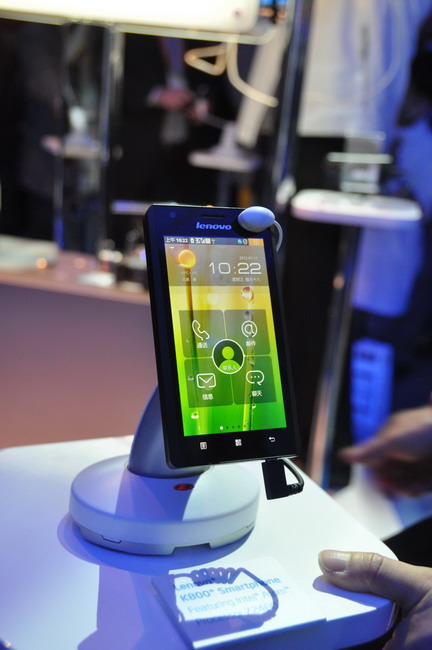

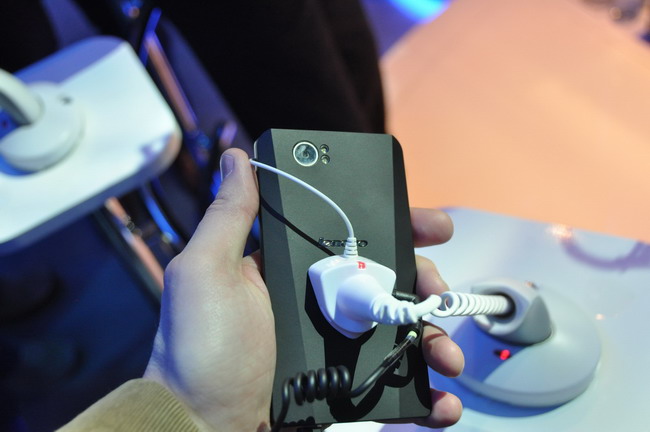
As the owner of the ThinkPad, I cannot but note the general motives in design with Lenovo mobile computers. Someone will say that the device looks brutal, someone will call it angular ... The main thing is that there are no indifferent. But to me personally (to me personally) I prefer the reference design of Intel, whose photos I published in a previous post with CES.
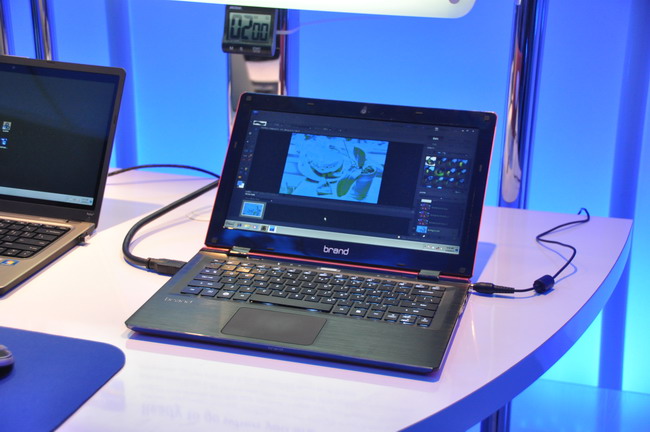
As for the central topic of CES 2012 according to Intel, ultrabooks, there are not just a lot of them at CES, but VERY many. So much so that I will not torment you with photographs of each of them - all of a sudden, who will I miss and will offend you undeservedly? I will limit myself to only one - under the brand Brand. As far as I understand, this model is specially tailored for local manufacturers who will replace this talking name with their own. By the way, Russian companies are already working hard on their own ultrabooks, and in the spring they should appear several at once.
Back in Moscow, I arranged an interview with Renee James, vice president of Intel and CEO of Intel Software and Services Group, responsible for software development and Intel Software Partner Program. When I arrived at the booth at the agreed time, the first person I met was Paul Otellini. The head of the corporation easily walks around the booth, jokes with employees and even a badge on it is exactly the same as on ordinary mortals. It’s a pity that it’s not customary for stars to take autographs in the IT business :)

The conversation with Rene turned out to be quite long, and I will completely decrypt it already in Moscow. Here are just the main points. As you might guess, the conversation revolved mainly around smartphones and ultrabooks. I asked Rene - how is the development of ultrabook software different from what is done for “just computers”? According to my interlocutor, at the moment there is no fundamental difference. However, very soon ultrabooks will not only acquire touch screens, but will also be surrounded by a variety of sensors and additional modules - a gyroscope, GPS-receiver, light and ambient temperature sensors ... Previously, there was nothing similar on the PC (at least in the mass segment). And those developers who will be the first to use new hardware features to the delight of users can get all the laurels, backed by diverse financial support. The latter, in addition to, in fact, software sales, implies some bonuses from Intel. After all, the 300 millionth fund created to support ultrabooks extends not only to the hardware component.
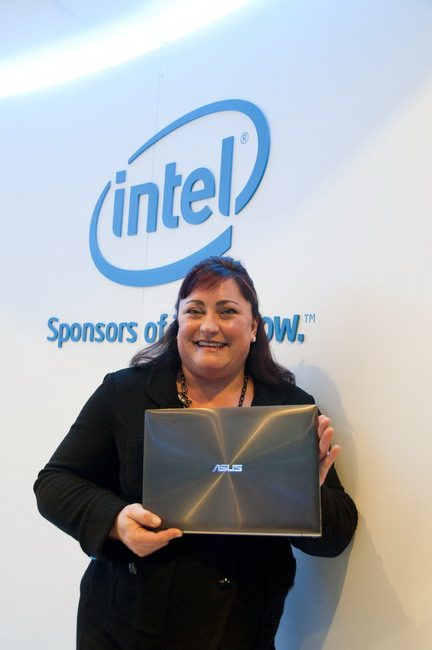
I also showed Rene my Nokia N9 smartphone on MeeGo, complaining that the most interesting developments of this very charming (you can't say otherwise) model have actually sunk into oblivion. Rene consoled me with the promise that smartphones on the Tizen platform will soon appear, incorporating the best features of MeeGo. True, I have gloomy suspicions about the compatibility of software, well, let’s see, see.
At the end of the conversation, Renee once again called for more active participation in the Intel Software Partner program ., because on the other end of the wire there are many Intel experts who are ready to help in almost everything. I myself, unfortunately, am not a programmer, but when - out of sheer curiosity - I registered in the program, they called me back just an hour later and still send me all kinds of interesting offers, which - again, unfortunately - I can’t use for all desire ...
We also spoke with Merlin D. Kister, one of Intel's top people responsible for promoting ultrabooks. True, I immediately started with a slightly different topic. The fact is that a couple of years ago Intel already showed prototypes of smartphones on Atom, and also said that just about, a little more. Could something like this happen now? Merlin expressed confidence that this time there will be no failures. Shortly after Lenovo, Motorola will release its Atom smartphone. Further - everywhere.

And then I remembered how the day before the conversation I went to the Sony brand store. As you know, in the United States, the prices for technology are quite humane, and that’s why our people drive it from here with terrible force (the iPhones have already run out of the main Apple Store in Vegas and now people are getting the latest MacBook Airs). So in this store, the VAIO Z series mobile laptop costs (hold on to what you are sitting on now) $ 4,500. The laptop is luxurious, delightful. But in the store opposite are ultrabooks for $ 800-900 with similar characteristics and, perhaps, a slightly worse level of delight. I asked Merlin - how did Intel manage to push manufacturers to such a tangible reduction in the price of truly mobile models?
Merlin said that before every ultraportable laptop was a piece of work - with its own internal organization, non-standard components (from the case to the battery), with energy-saving mechanisms specially developed by companies and so on. Of course, the result was worth it, respectively. In ultrabooks, Intel helps manufacturers a lot in unifying components. The already mentioned 300 millionth fund was used, for example, to develop technology for the mass production of metal cases for ultrabooks. The availability of ready-made solutions in combination with large circulations allows manufacturers to drastically reduce their margins - to the joy of you and me.
I’m again taking off for a sim so that on the last day before flying to Moscow I’ll run a little more along CES. Feel free to ask questions in the comments: as in the Intel Software Partner, there are smart and funny people who will be happy to answer you :) I will try to keep up the conversation myself, but please do not forget about the 12-hour time difference. When it's noon, I sleep soundly so I can catch a plane in the morning.
Around the Lenovo atomophone at the Intel booth, there is a real crowd. It’s not a joke, not a sample with a reference design, but a real device that will soon appear on the shelves. How much, however, they don’t say, but, according to insider information, the price tag should be just arch-humane. Everyone understands the importance of a first impression. As for the device itself, it looks like this.
As the owner of the ThinkPad, I cannot but note the general motives in design with Lenovo mobile computers. Someone will say that the device looks brutal, someone will call it angular ... The main thing is that there are no indifferent. But to me personally (to me personally) I prefer the reference design of Intel, whose photos I published in a previous post with CES.
As for the central topic of CES 2012 according to Intel, ultrabooks, there are not just a lot of them at CES, but VERY many. So much so that I will not torment you with photographs of each of them - all of a sudden, who will I miss and will offend you undeservedly? I will limit myself to only one - under the brand Brand. As far as I understand, this model is specially tailored for local manufacturers who will replace this talking name with their own. By the way, Russian companies are already working hard on their own ultrabooks, and in the spring they should appear several at once.
Back in Moscow, I arranged an interview with Renee James, vice president of Intel and CEO of Intel Software and Services Group, responsible for software development and Intel Software Partner Program. When I arrived at the booth at the agreed time, the first person I met was Paul Otellini. The head of the corporation easily walks around the booth, jokes with employees and even a badge on it is exactly the same as on ordinary mortals. It’s a pity that it’s not customary for stars to take autographs in the IT business :)
The conversation with Rene turned out to be quite long, and I will completely decrypt it already in Moscow. Here are just the main points. As you might guess, the conversation revolved mainly around smartphones and ultrabooks. I asked Rene - how is the development of ultrabook software different from what is done for “just computers”? According to my interlocutor, at the moment there is no fundamental difference. However, very soon ultrabooks will not only acquire touch screens, but will also be surrounded by a variety of sensors and additional modules - a gyroscope, GPS-receiver, light and ambient temperature sensors ... Previously, there was nothing similar on the PC (at least in the mass segment). And those developers who will be the first to use new hardware features to the delight of users can get all the laurels, backed by diverse financial support. The latter, in addition to, in fact, software sales, implies some bonuses from Intel. After all, the 300 millionth fund created to support ultrabooks extends not only to the hardware component.
I also showed Rene my Nokia N9 smartphone on MeeGo, complaining that the most interesting developments of this very charming (you can't say otherwise) model have actually sunk into oblivion. Rene consoled me with the promise that smartphones on the Tizen platform will soon appear, incorporating the best features of MeeGo. True, I have gloomy suspicions about the compatibility of software, well, let’s see, see.
At the end of the conversation, Renee once again called for more active participation in the Intel Software Partner program ., because on the other end of the wire there are many Intel experts who are ready to help in almost everything. I myself, unfortunately, am not a programmer, but when - out of sheer curiosity - I registered in the program, they called me back just an hour later and still send me all kinds of interesting offers, which - again, unfortunately - I can’t use for all desire ...
We also spoke with Merlin D. Kister, one of Intel's top people responsible for promoting ultrabooks. True, I immediately started with a slightly different topic. The fact is that a couple of years ago Intel already showed prototypes of smartphones on Atom, and also said that just about, a little more. Could something like this happen now? Merlin expressed confidence that this time there will be no failures. Shortly after Lenovo, Motorola will release its Atom smartphone. Further - everywhere.
And then I remembered how the day before the conversation I went to the Sony brand store. As you know, in the United States, the prices for technology are quite humane, and that’s why our people drive it from here with terrible force (the iPhones have already run out of the main Apple Store in Vegas and now people are getting the latest MacBook Airs). So in this store, the VAIO Z series mobile laptop costs (hold on to what you are sitting on now) $ 4,500. The laptop is luxurious, delightful. But in the store opposite are ultrabooks for $ 800-900 with similar characteristics and, perhaps, a slightly worse level of delight. I asked Merlin - how did Intel manage to push manufacturers to such a tangible reduction in the price of truly mobile models?
Merlin said that before every ultraportable laptop was a piece of work - with its own internal organization, non-standard components (from the case to the battery), with energy-saving mechanisms specially developed by companies and so on. Of course, the result was worth it, respectively. In ultrabooks, Intel helps manufacturers a lot in unifying components. The already mentioned 300 millionth fund was used, for example, to develop technology for the mass production of metal cases for ultrabooks. The availability of ready-made solutions in combination with large circulations allows manufacturers to drastically reduce their margins - to the joy of you and me.
I’m again taking off for a sim so that on the last day before flying to Moscow I’ll run a little more along CES. Feel free to ask questions in the comments: as in the Intel Software Partner, there are smart and funny people who will be happy to answer you :) I will try to keep up the conversation myself, but please do not forget about the 12-hour time difference. When it's noon, I sleep soundly so I can catch a plane in the morning.