December 27, 2010 at 08:57
IBM believes in holographic phones
 IBM engineers truly amaze with their techno-optimism. The other day published the results of an annual survey of three thousand scientists and researchers from IBM, what they see as the main technological breakthroughs for the next five years.
 Here are the areas IBM scientists have chosen for 2011-2015 (in decreasing order of importance).
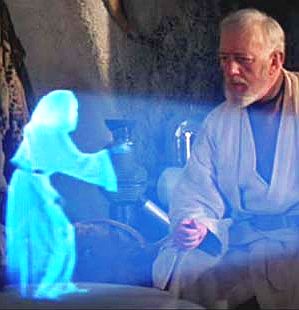
1. Holographic projection 3D mobile phones.
2. Batteries charged from air (IBM is experimenting with metals that change their properties under the influence of O 2 ), as well as from kinetic energy (shaking, walking, etc.).
3. Computer systems for predicting traffic jams.
4. The collection of environmental information by sensors in mobile phones and cars.
5. Heated cities with the heat of servers from computer data centers.
Someone will say that such technologies are just fantasies. But IBM’s financial capabilities make it possible to translate them into reality. Agree that every fantasy has a certain value in dollars. So the visionary scientists just tell business financiers where to invest.
Last year, IBM invested $ 5.8 billion in research and development, which is 6.1% of the company's total revenue. This is more than any nearest competitor. IBM continues to lead in the number of patents received and is considered one of the most innovative companies in the world. At IBM R&D centers, they undertake projects that are unlikely to ever be able to match IBM’s core business.
It should be added that joint research in holographic interfaces to mobile phones was announced by Intel and Nokia back in August 2010. For some reason, they also consider this direction promising (probably, they also love the film "Star Wars"). In general, four of the five technologies selected by IBM this year are related to mobile technology.
And one more fact. Next year, the deadline for the very first five-year forecast, which IBM scientists made in 2006 ( PDF ) , will come . Then they predicted that recognition of continuous speech will become the norm for computer systems, and 3D interfaces in the style of Second Life will spread on the Internet.