How evolution created your fear
- Transfer

The most effective of the fictional monsters reflect the fears of our ancestors in order to exploit the fears of modern people. Some fears are universal, some are almost universal, and some are associated with terrain. Parochial fears - such unique phobias as, for example, the fear of moths - writers, directors and programmers who create works in the horror genre, bypass the party. Creators of horror are trying to use the widest possible audience - and this means working with the most common fears. As the writer Thomas Monteleon noted: “A horror writer must have an unconscious feeling of being a universal trigger” [Wiater, S., Ed. Dark Thoughts on Writing: Advice and Commentary from Fifty Masters of Fear and Suspense Underwood, New York, NY (1997)].
In the process of evolution, humans and their ancestors met with potentially deadly dangers in the following categories: predators, intraspecific violence, contagious diseases, loss of status, inanimate environmental features [Barrett, HC Adaptations to predators and prey. In Buss, DM (Ed.) The Handbook of Evolutionary Psychology, Vol. 1, John Wiley & Sons, Hoboken, NJ (2005); Boyer, P. & Bergstrom, B. Threat-detection in child development: An evolutionary perspective. Neuroscience & Biobehavioral Reviews 35, 1034–1041 (2011); Buss, DM Evolutionary Psychology: Pearl Allyn & Bacon, Boston (2012); Marks, IM & Nesse, RM Fear and fitness: An evolutionary analysis of anxiety disorders. Ethology and Sociobiology 15, 247–261 (1994)]. In other words, they were threatened by predatory animals (starting with carnivorous mammals and ending with venomous animals like snakes and spiders); from hostile members of their own species; from invisible pathogens, bacteria and viruses; from loss of status, exile, social exclusion, which in the conditions of life of our ancestors could be equivalent to death; from injuries and injuries associated with such natural events as severe thunderstorms, falling from a cliff and other dangerous topographic features. The influence of these types of hazards on the selection has led to the fact that the system responsible for fear, has developed a special sensitivity to these hazards. Sometimes this sensitivity allows the fear system to unreasonably expand its category and include an innocent object in it — for example, include moths in the category of "dangerous animals". But in the area of survival, the main rule is “better safe than sorry” [better safe than sorry].
The main, universal, genetically fixed fears are the fear of sudden loud sounds and impending objects. We are trying to call them, hiding behind the door in order to scare an unsuspecting friend, jumping out at him with a cry. Sudden loud sounds and impending objects cause an involuntary startle reaction in humans and in many other species. You can sneak up behind the rat, and shout at her - and her reaction will be similar to yours at the moment when someone crept up to you and shouted at you. This experiment is guaranteed to work with dogs, squirrels and human babies. The startle reflex is primitive and works quickly, effectively preparing the body to face the danger. Video games and horror movies exploit this innate fear when they descend to pugalok with the help of jumping out frightened - for example,
Other fears are universal but impermanent. Specialists in the age of age psychology showed how children develop certain fears, moving along a predictable trajectory of development. Predictable fears are generated when children are most vulnerable to the dangers that these fears aim at — more precisely, children would be vulnerable to such dangers in the environment in which our ancestors lived, and in which our evolution took place. Today’s environment is quite different from those conditions, but fears remain. For infants who are unable to move independently and self-defend, the most dangerous situations - both in earlier times and today - are associated with the absence of people caring for them and the presence of potentially hostile strangers. In this regard, babies are guaranteed to develop anxiety, associated with separation, and the fear of strangers persisting to the age when they start walking [Boyer, P. & Bergstrom, B. Neuroscience & Biobehavioral Reviews 35, 1034–1041 (2011)]. When children begin to move independently, they are guaranteed to acquire a fear of heights. At the age of 4 to 6 years old, starting to explore their surroundings more actively, and being exposed to a greater danger of suffering from predators, they usually become interested in death, fear monsters hiding in the dark, and are addicted to dangerous animals like lions and tigers. From the middle of childhood there are fears of injury, accidents and infections, and by the end of childhood and the beginning of adolescence, social fears begin to play a role - children begin to fear the loss of status, friends, exiles, etc. This happens at this stage of development, when their peers become more important for them than their parents, and when the main task is to search for a certain social niche and build a stable network of mutual cooperation.
The evolutionary logic of such a developmental schedule is clear: as a result of evolution, children have certain fears that appear during those developmental phases in which they would normally meet corresponding dangers or would be especially vulnerable to them. Some people feel that they grow out of these fears - they no longer need to look under bed at bedtime to make sure that there are no monsters hiding there - but most of the fears begin in childhood and remain in a certain altered form for the rest of their lives. Stephen King, in the preface to the collection of stories, informs readers that when he goes to sleep, “I try very hard to put my feet under the covers after turning off the light. I am no longer a child, but I don’t like to sleep with one leg stuck out from under the blanket. Something lurking under my bed, ready to grab my ankle, doesn't exist. I know that, but I also know that if I make an effort to keep my legs covered, it will not be able to grab my ankle. ” King, of course, is joking, but nonetheless - who among us did not succumb to the frightening irrational impulse coming fromthe limbic system , an ancient, disturbing voice from the depths of the brain that requires us to avoid walking straight through the cemetery in the dark or not to put your foot out from under the blanket? Of course, we do not believe in ghosts, monsters, zombies ... But it is better to be safe than to be killed, right? Rationally, we can brush off obviously children's fears - monsters, strange strangers, dangerous animals - but they live in scary stories, even in scary stories for adults, in the form of giant monsters, maniacs in hockey masks and scary dangers lurking in the dark.

Almost universal fears are known as “prepared fears” [Seligman, MEP Phobias and preparedness. Behavior Therapy 2, 307–320 (1971)]. They are not spelled out as deeply as fears of sudden loud sounds and approaching objects. Nobody learns to squint at the sight of a basketball ball flying fast towards him. But prepared fears are nevertheless innate in the sense that they are transmitted genetically, but their activation requires exposure to the environment. The system of human fears in this sense is quite plastic and can be calibrated by the environment. The evolutionary logic of such fears is as follows: people, as a result of evolution, have learned to adapt. Our species thrives in all climatic zones, from tropical to arctic. However, if some hazards do not change in time and space - say, the danger of choking or drowning - there are variations in the distribution of threats. It makes no sense for the Inuit to be afraid of tigers or scorpions, and a child from the rural part of India does not need to worry about polar bears. But since our genes are “unknown” in what climate and ecology we will grow, these genes give us the opportunity to learn about the threats existing in the local environment. People quickly absorb local culture — norms, language, knowledge of hazards, what is considered edible and inedible in this culture, and so on. Learning is an “evolutionarily acquired adaptation to environmental changes that occur during an individual's life, allowing organisms to adjust their behavior to a specific niche they occupy.” and a child from the rural part of India does not need to worry about polar bears. But since our genes are “unknown” in what climate and ecology we will grow, these genes give us the opportunity to learn about the threats existing in the local environment. People quickly absorb local culture — norms, language, knowledge of hazards, what is considered edible and inedible in this culture, and so on. Learning is an “evolutionarily acquired adaptation to environmental changes that occur during an individual's life, allowing organisms to adjust their behavior to a specific niche they occupy.” and a child from the rural part of India does not need to worry about polar bears. But since our genes are “unknown” in what climate and ecology we will grow, these genes give us the opportunity to learn about the threats existing in the local environment. People quickly absorb local culture — norms, language, knowledge of hazards, what is considered edible and inedible in this culture, and so on. Learning is an “evolutionarily acquired adaptation to environmental changes that occur during an individual's life, allowing organisms to adjust their behavior to a specific niche they occupy.” People quickly absorb local culture — norms, language, knowledge of hazards, what is considered edible and inedible in this culture, and so on. Learning is an “evolutionarily acquired adaptation to environmental changes that occur during an individual's life, allowing organisms to adjust their behavior to a specific niche they occupy.” People quickly absorb local culture — norms, language, knowledge of hazards, what is considered edible and inedible in this culture, and so on. Learning is an “evolutionarily acquired adaptation to environmental changes that occur during an individual's life, allowing organisms to adjust their behavior to a specific niche they occupy.”
Since different dangers can occur in different conditions, not all human fears are instinctive and rigidly written in genes. We need to learn what to fear, but such training takes place in a biologically limited space of opportunity. Different threats appear in various environments, but some of them remained there long enough and were serious enough to leave a mark on our genome in the form of prepared fears, potential possibilities that can be activated at some point in the life of an individual in response. on his personal experience or culturally transmitted information. This explains the superficial variations in human fears, with a stable basis for the distribution of fear. In the 2012 report, ChildFund Alliance “Quiet voices, big dreams”, Evaluating children's fears and dreams based on a survey of 5,100 respondents from 44 countries, it is described that the most common fear among children in developing and developed countries is the fear of “dangerous animals and insects” [ChildFund Alliance. Wiseman, H. (Ed.) 2012. Small Voices, Big Dreams 2012: A Global Survey of Children's Hopes, Aspirations, and Richards Richmond, VA (2012)]. Even children growing up in urban, industrial environments where predators are not found (except humans) can easily begin to fear dangerous animals, since such fear is prepared by human nature. In one study, scientists interviewed American children about their fears and found that they “were not afraid of the things they were advised to be careful with,” for example, “traffic”, but “declare that they are afraid of mammals and reptiles total serpents, lions and tigers. "
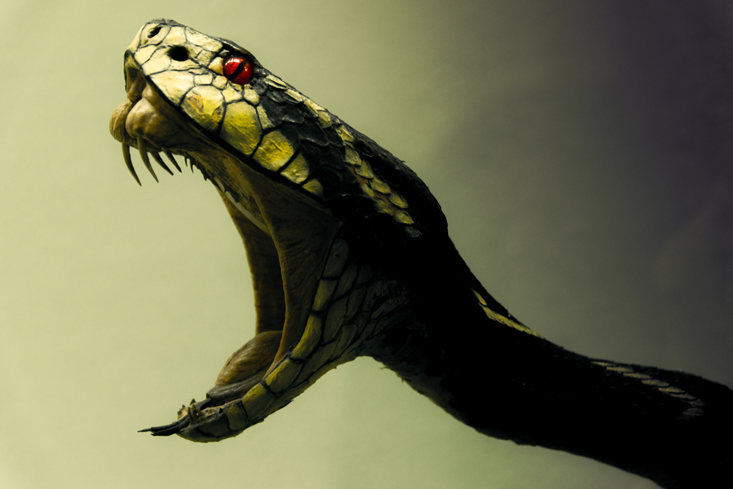
Among the prepared fears are fear of snakes, spiders, heights, blood, enclosed spaces, darkness, thunder, public places and open spaces, social investigations and deep water. These are typical phobic objects that are easy to get and difficult to part with. A phobia can be defined as “a fear of a situation that is disproportionately large compared to a possible danger,” which leads to a strange property of phobias. They are extremely real, sometimes completely disarming the person suffering from them, although they do not correspond to the real dangers or exaggerate them extremely. A very small number of people die from the bites of snakes or spiders - the most common objects of phobias - in the industrialized world.
According to recent statistics from the US National Security Council, the chances of dying in an accident for a person born in 2007 are 1 to 88. At the same time, the chances of dying from the bite of a poisonous spider are 1 to 483,457, and the chances of dying from being bitten by a poisonous snake or lizard are 1 to 552 522. We need to be afraid of cars, and much less worry about snakes and spiders. But since the dangers addressed by phobias threatened us and our ancestors for millions of years, we are still born with an evolutionarily acquired predisposition to the appearance of fear of such objects.
In 1973, Stephen King published a list of personal fears. It surprisingly reflects much better the typical distribution of evolutionarily acquired objects of fear among people than the list of objects that people born in the 20th century in Maine should fear.
1. Fear of the dark.
2. Fear of soft things.
3. Fear of disfigurement.
4. Fear of snakes.
5. Fear of rats.
6. Fear of closed spaces.
7. Fear of insects (especially spiders, flies and beetles).
8. Fear of death.
9. Fear of other people (paranoia).
10. Fear for another person.
Perhaps this is his personal fears, but this list can fit almost anyone - it could be an American list, Asian, African or European. This may be a list of a person who lived 1,000 or 50,000 years ago. Representatives of the species Homo sapiens are prone to being afraid of the same things. People in the industrial world may no longer face the threat of being eaten by a predator, and poisonous spiders and snakes may no longer threaten us, but these animals live like ghosts in the human central nervous system.
Matthias Klasen is an associate professor of literature and media in the English department of Aarhus University.