November 13, 2017 at 17:33
Ask Ethan: How bright does the Earth appear from the moon?
- Transfer

The first image of the Earth visible from the moon, which a man saw. Notice how Earth appears bright compared to the Moon.
When the astronauts from the Apollo flew to the moon, they opened up unprecedented human paintings: a view of the Earth from the nearest world to us. Almost all of us saw the opposite picture - the Moon, as it is seen from the surface of the Earth - only a couple of dozen people (and satellites) saw how the Earth looks from the surface of the Moon. What is the difference? Our reader wants to know:
What will be brighter: full moon or full earth from the moon? Will this brightness remain constant?
If you observed the moon on a dark and clear night, its brightness is already known to you.
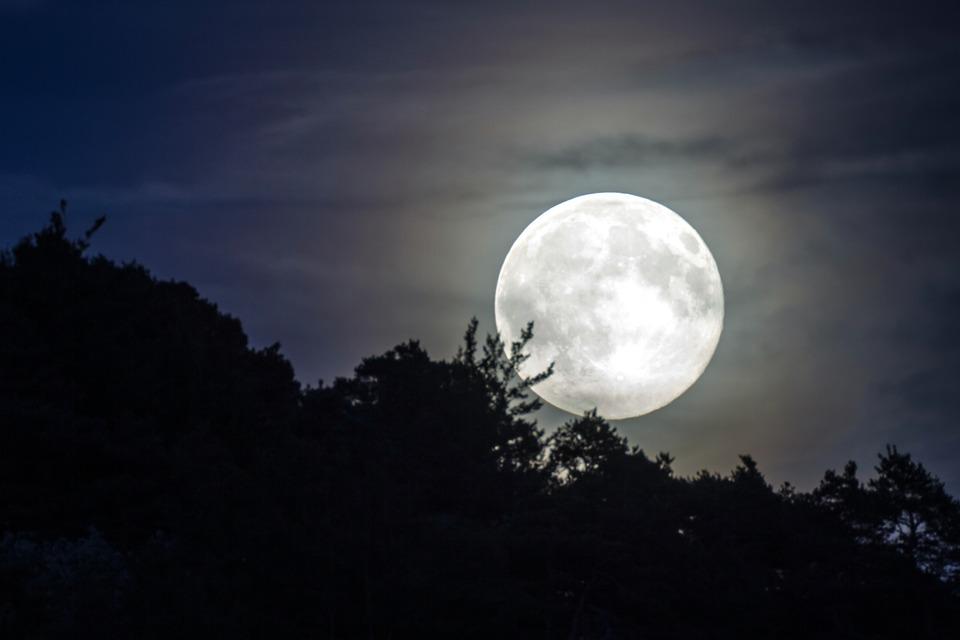
The Full Moon above the trees on a rather foggy night shows how bright the Moon from the Earth seems. The
Full Moon, reflecting sunlight from a distance of only 384,000 km from the Earth, is the brightest object in the night sky. It is 1,500 times brighter than the next brightest object, Venus, and 27,000 times brighter than Sirius, the brightest star in the sky. The full moon illuminates the sky as a large city can do it. This is a serious source of light pollution, glowing 40 times brighter than all other objects of the night sky combined.
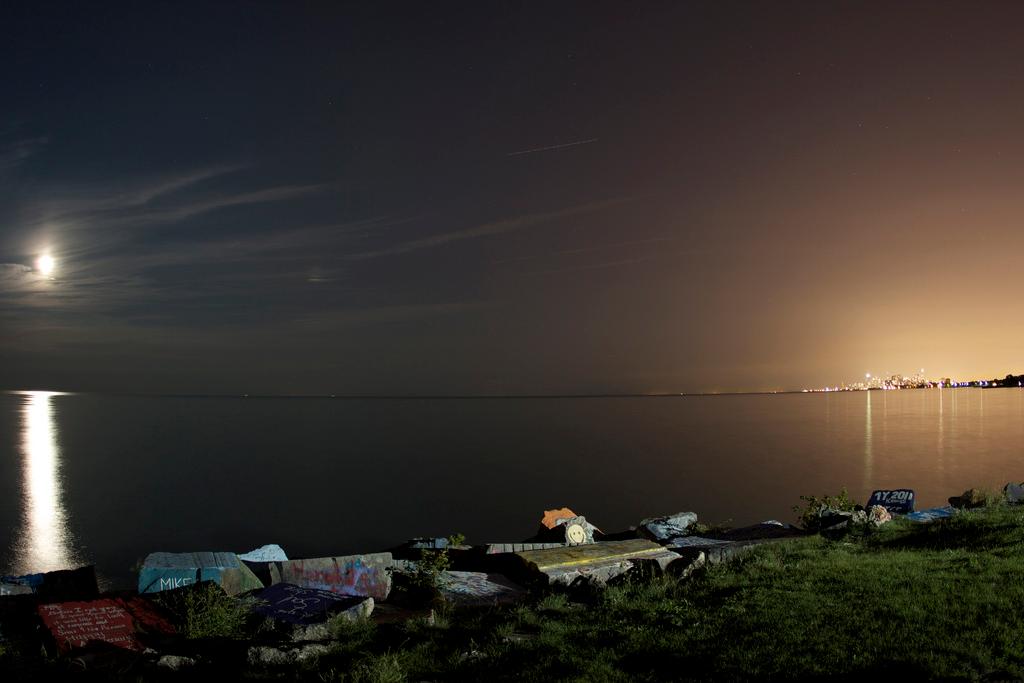
Rising Full Moon over Chicago, View over Lake Michigan from Northwest University Campus
But, no matter how bright the Moon from the Earth, the full Earth from the Moon beats it in almost all respects. The earth is about 3.67 times larger than the moon in diameter, which means that its cross section, that is, the apparent size in the sky, is 13 times larger than the moon. Another parameter also plays a role: reflectivity.
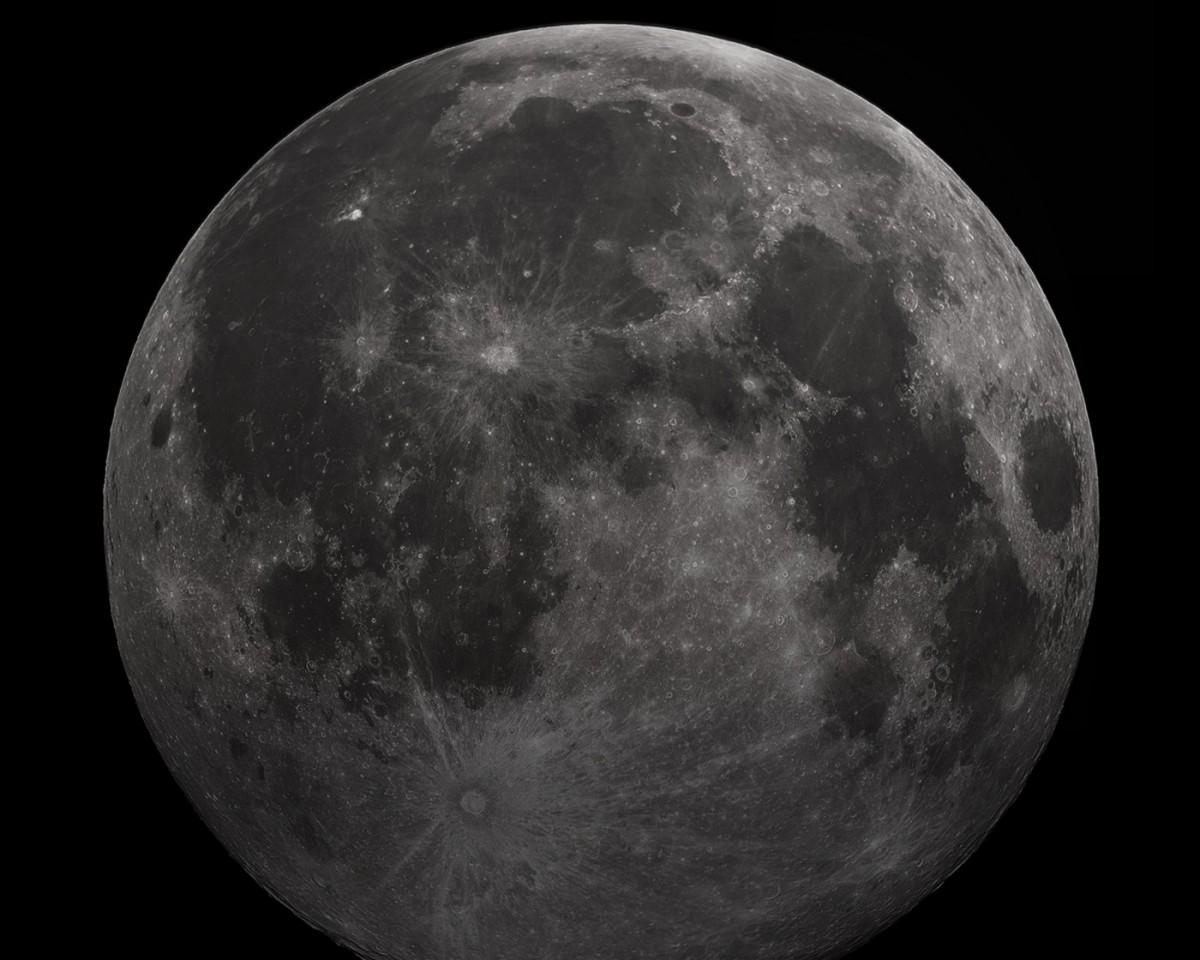
The Full Moon in 2010, edited to demonstrate the real reflectivity of the
Moon and the Earth, are bright thanks to the reflection of sunlight, and although the moon looks gray in the sky, it is closer to the charcoal color. It appears white with a lot of reflected light. The ash, rocky surface of the moon reflects much less, than the earth, green trees and grass on the continents of the Earth. And it’s completely lost in comparison with the bright reflectivity of the earth’s water.
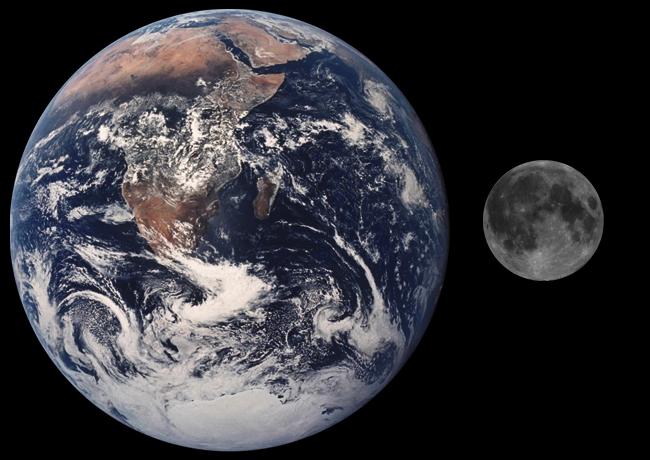
The moon and the earth in scale - both in size and in albedo. The moon seems to be dimmer, because it absorbs light stronger than the Earth
But it is not the dark blue oceans that absorb more light than the rest of the Earth and even the Moon that reflect the light best - it makes water in clouds, ice and shallow reservoirs of rivers and shelves . On average, the Moon reflects only 11% of the light incident on it, and the Earth - about 37%. All this together leads to the fact that the full Earth, visible from the moon, is about 43 times brighter than the full moon, visible from the Earth. With large polar caps and full cloud cover - and also when the sun illuminates the deserts - the earth is the brightest, about 55 times brighter than the moon.
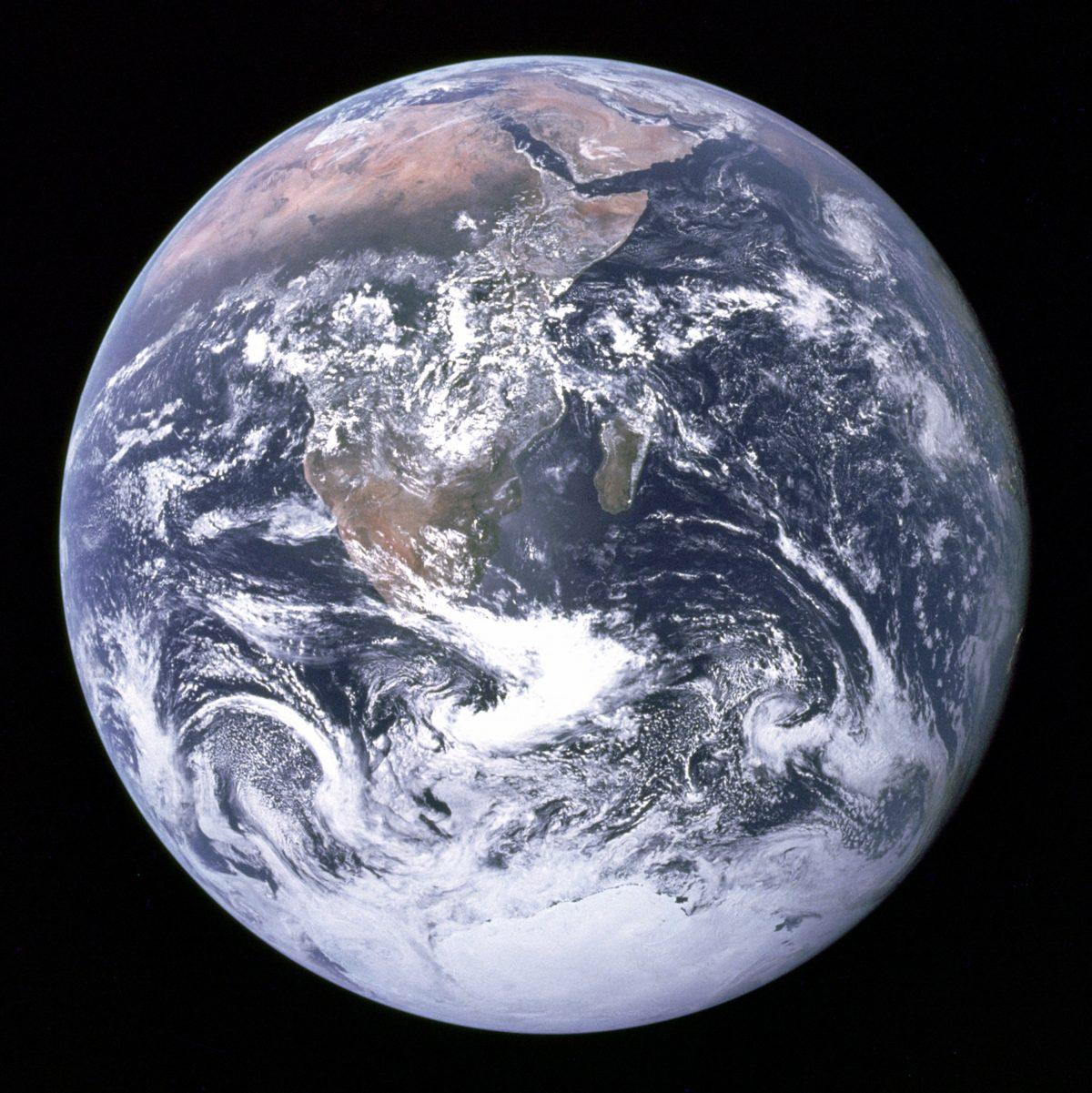
When there are many clouds, the southern polar cap and large deserts, the brightness of the Earth can exceed the brightness of the moon by 55 times
But interesting facts do not end there. Since the Moon is tied to the Earth by gravity, we always see one side of it. The Earth, on the other hand, rotates around its axis; therefore, the Moon is visible on average in our sky 50% of the time. Another 50% of the time the moon is on the other side of the planet. But this is from our point of view; from the point of view of man on the Moon, the Earth is in the sky 100% when viewed from the near part of the Moon, and 0% of the time when viewed from the opposite.
A small exception is the tiny strip on the Moon, with which the Earth is sometimes visible, and sometimes not, due to the swaying movement caused by the ellipse of the moon's orbit: lunar libration.
Day and night on the Moon contain two earth weeks each, and the nearest side of the Moon is the best place to observe the full Earth when the Sun completely illuminates the far part of the Moon. At this moment, the Earth seems 13 times larger, 3.4 times better than the reflective and 43 times brighter than the full Moon visible from the Earth. And although people have never once seen this with their own eyes - we never were on the moon at a time when night was on the near side - the Japanese satellite Kaguya saw it.
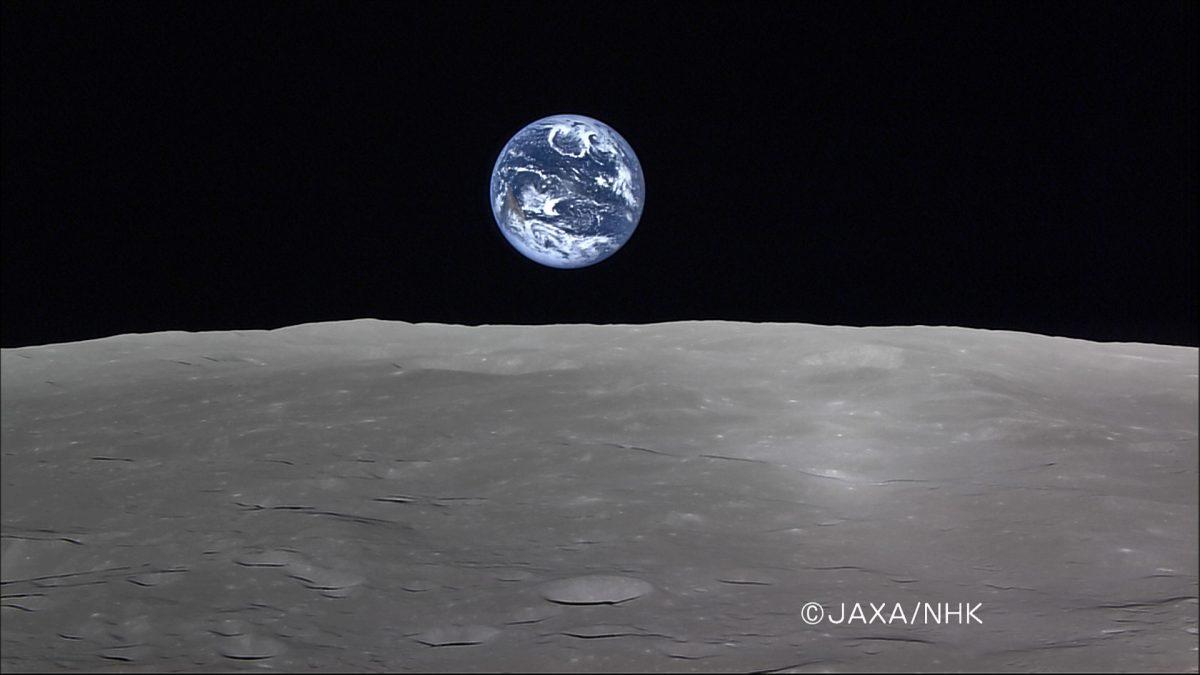
Earth rising over part of the moon where the sun barely hits the lunar surface.
Even when the Sun is not visible, the surface of the Moon is still illuminated thanks to the light reflected by the Earth. It is not as bright as the sun; about 10,000 times dimmer. But light from the earth's surface, reflected to the moon, can still illuminate it. Therefore, on the moon in the crescent phase, you can see the details of the dark part - we call this effect of illumination reflected light the ash light of the moon [Earthshine].
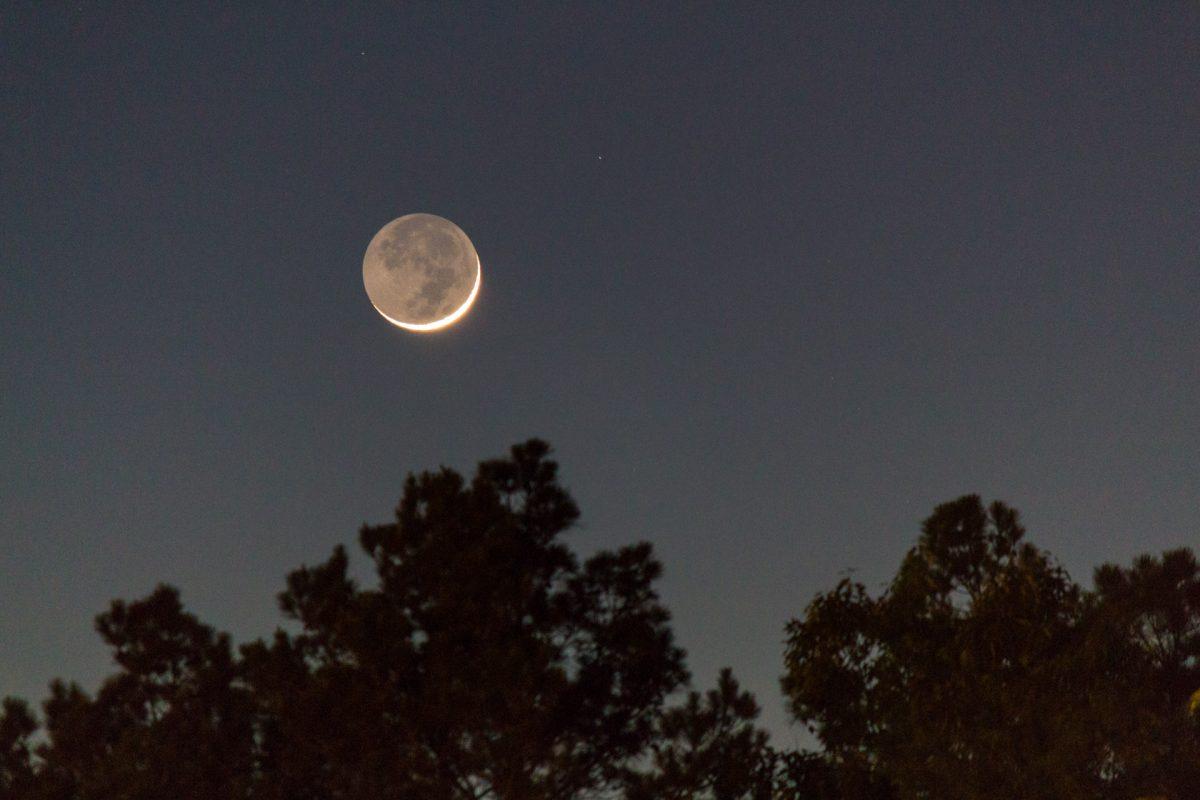
The crescent one day after the new moon, setting in the west. The rest of the disk is still illuminated by the light reflected by the Earth, and incident on the surface of the moon.
In order for the Earth, visible from the Moon, to be dimmer than the full Moon, visible from the Earth, less than 1/40 of the surface must be lit. This happens for 12 hours every month when the light of the Earth, seen from the near side of the Moon, appears dimmer than the full Moon on Earth. But on the Moon there is one phenomenon that allows you to experience the darkness that eclipses any sky illuminated by the Moon on Earth ... A

lunar eclipse is ending, as seen from the Moon when the Sun is behind the Earth, and both bodies look dark.
Moon eclipse! When a part of the Moon is closed by the shadow of the Earth, the Sun and the Earth from it are not visible, and you can see only the ring of the illuminated earth's atmosphere. In addition, only stars and planets are visible from there. Darker than this is only on the far side of the moon during a moonlit night.
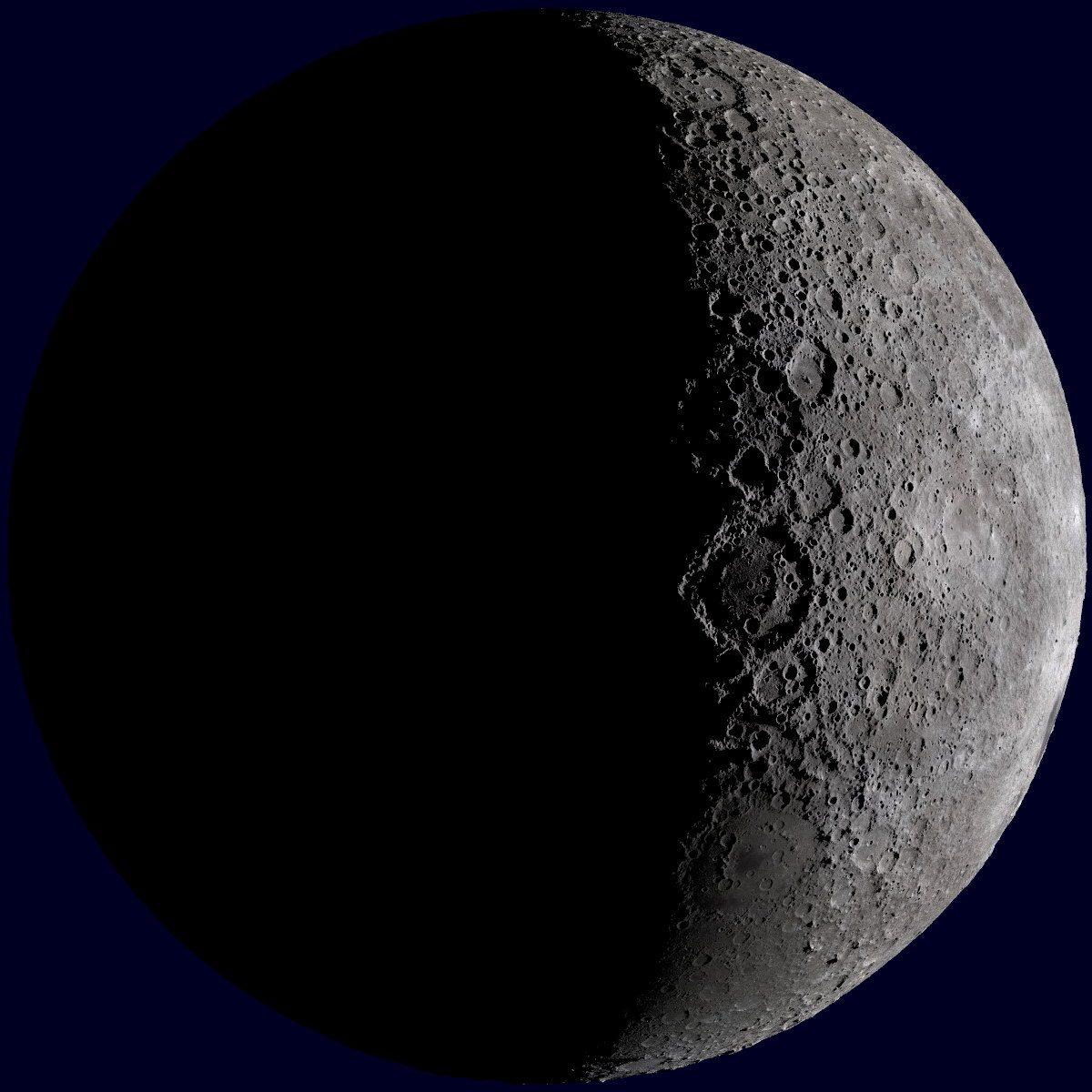
Without atmosphere, Earth and Venus, the night on the far side of the Moon is darker than any dark night on Earth.
The brightness of the full Earth is unstable, it changes with the rotation of the Earth, the change of seasons and weather. Earth is a living planet in every sense. The moon seems to us to change, but if it were as big and varied as the Earth, then changes in seasons, polar caps, cloud cover, flora and desert would change its brightness even more. We consider the moon to be unstable, because we do not see from a different point of view. In fact, the Earth changes much more often!
Ethan Siegel - astrophysicist, science popularizer, author of the Starts With A Bang! He wrote the books “Beyond the Galaxy” [ Beyond The Galaxy ], and “Tracknology: the science of Star Trek” [ Treknology ].