January 8, 2010 at 10:29
Palm: updating devices, opening the App directory
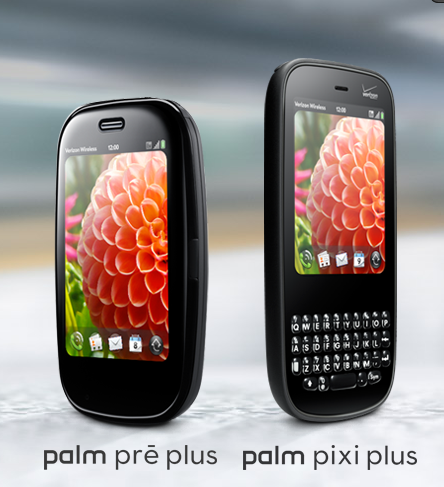
Palm revealed a new version of its Pre and Pixi phones during a press briefing at CES. The company has also expanded its development platform and showcased the new features of its WebOS software.
Palm surprised everyone last year at CES when it revealed the Palm Pre and WebOS and a Linux platform based on mobile software. It was a bold move from the company, at a time when many observers in the industry had already left the game.
The new mobile phones, Pre Plus and Pixi Plus, will also be available later this month from Verizon. Pre Plus received a more simplified design, and also has more memory.
Palm is working on WebOS 1.4, a new version of the software platform that will introduce a number of important new features, including support for recording, editing and downloading videos. Palm also announced the release of the Flash 10 Beta plugin, which users will soon be able to download from the App catalog.
Palm takes a number of important steps to expand its third-party developers and allows programmers to create more powerful and specialized software for the WebOS platform. WebOS is built almost exclusively on the basis of web technology standards, including HTML, CSS and JavaScript. While this approach is highly conducive to rapid development, it does imply some performance limitation.
In order to ensure more efficient execution of the computing load, Palm introduces a new Plug-In Development Kit (PDK), which will allow developers to implement part of their applications in C and C ++.
PDK will help address one of the most glaring shortcomings of third-party manufacturers: the lack of games. A number of well-known game development studios began to make preparations for the Pre version (but not Pixi, unfortunately), including Sims 3 and Need For Speed with real 3D rendering. At a press briefing, EA Travis Boatman's vice president said PDK made it possible to make modern games on WebOS without sacrificing performance, which users expected.
A source