Time to save time: Energy meter from Dadzhet
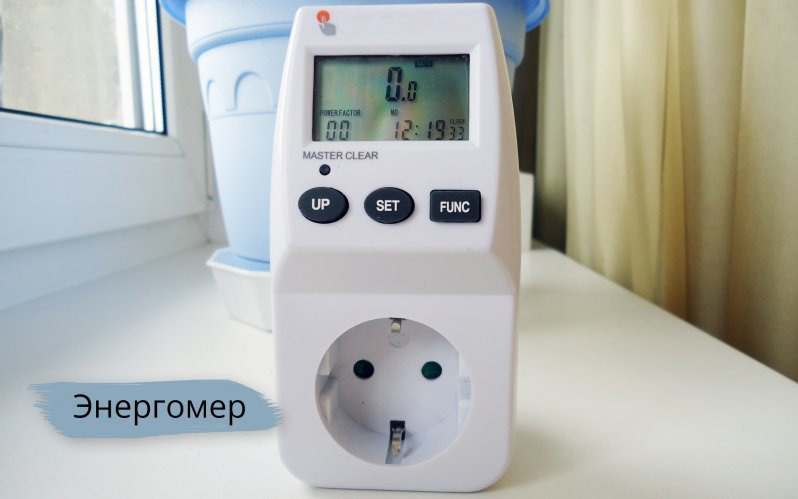
Does the charger that sticks idle in the outlet consume?
How much does "TV By" stand you?
Which is more expensive: use a kettle on gas or electric?
If you have such questions at least once - I ask for a cat. We will get acquainted with Energomer from Dadzhet.
Some background information. The power of electrical energy is usually measured in watts (W). The amount of energy is in Watt⋅ hours (V⋅ch). Well, all that follows with the prefix kWh and kWh - 1000 times more. Power is the rate of energy consumption. It describes the device as "fast consuming" or "slowly." For example, an electric kettle with a capacity of 2000 watts per hour consumes 2000 в1 = 2000 watt hours. A light bulb designed for 60 W power in 30 minutes (0.5 hour) consumes 60-0.5 = 30 Wh or 0.03 kWh.
In Nizhny Novgorod, my place of stay, 1 kWh of energy costs 3.41 rubles from 7 to 23 hours, and at another time - 1.67 rubles. This is subject to consumption within the social norm. Higher - about two times more.
So, for half an hour of work, that very light bulb will cost us 10 kopecks by day and 5 kopecks at night.
Features of the device Energomer

Anything the display can show
Functions of the device (according to the instruction)
- Network voltage
- Current in load circuit
- Power consumed by the load
- Power consumption
- Mains voltage frequency
- Power factor (I think it's cos φ , where φ is the phase shift between current and voltage)
- The total cost of electricity consumed and the time of consumption
- Tariff 1 cost and consumption time in this mode
- The cost of tariff 2 and the time of consumption in this mode
- Current time
Specifications:
Maximum load: 16 A, 3600 W
Measured voltage: ~ 190-276 V
Current measurement range: 0.01-16 A
Power measurement range: 0.2 - 3600 W
Measurement accuracy: ± 1%
Measurement in the frequency range of the network 45-65 Hz
Battery 3x1.5 V LR44 / AG13
Markings on the instrument

The energy meter has batteries inside it, thanks to which it saves the current time and tariff settings.
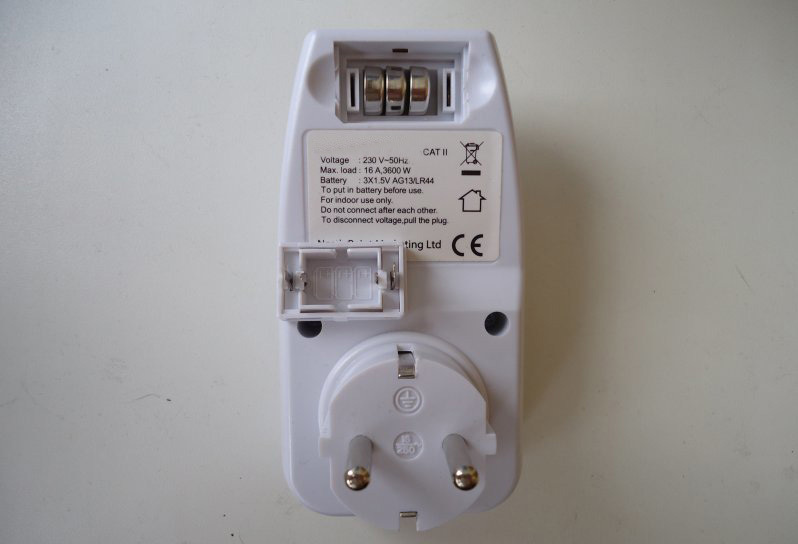
Open battery compartment
I immediately set up the device for my life: a two-tariff mode. I learned the cost and exact time frame on the website of the power supplying organization in my region.
The control takes place with three main buttons. There is still one - to reset everything at once. Typical small Reset button, recessed deep into the case. Driving settings is pretty easy. Step by step, according to the instructions (yes, I read it).
Now you can stick to study everything, with a capacity of up to 3.6 kW, as stated in the instruction manual.
The device remembers the energy consumed and its cost. This is all reset after a long hold on the Func button. Pretty comfortable.
In action
The video shows the measurement of the capacity of the humidifier in different modes. Watch with subtitles
The video shows the measurement of the power of the humidifier in different modes. Watch with subtitles
How to measure more accurately
I didn’t quite like the fact that the minimum measured energy is 0.1 kWh. Anything less is not so easy to measure. But I solved this problem. The device perfectly captures the price of energy consumed with an accuracy of 0.01 rubles. Since I scored a price of 1 kW⋅h in the energy meter equal to 3.41 rubles, by making a simple proportion, we get that 1 kopeck on the dial corresponds to 2.93 Wh. It could be made easier to put the price at 10 rubles. Then the dial of expenses would show 1 Penny in one penny.
The author knows about the existence of errors, all calculations are carried out within the "narrow-minded" error. We consider power only active, because the simple consumer pays only for it.
Let us turn to testing on devices
Coffee machine
DeLonghi Magnifica S 1450 W
This coffee machine is a good machine in terms of price / quality. Of the minuses - except that it does not automatically prepare milk foam. The device corresponds to the energy class A.
In the Stand By mode (just plugged in), the coffee machine operates with a power of 0.2. In the standby mode, when the nozzles are washed and it remains only to press the cooking button - 0.4 watts. In the process of making double espresso, the power jumps to the maximum declared due to the uneven process. So, a double espresso cost 0.1 rubles, which means 29.3 watts of electrical energy spent.
Drip coffee maker
Siemens TC 40207 900 W
For the preparation of two cups of coffee drink (volume as two double espressos from a coffee machine above) with a power of 470-500 W and cos φ = 100, 0.19 rubles and 55.67 Wh⋅ electricity were spent . Almost the same as the coffee machine.
Toaster
Drinking coffee is good when eating crispy hot toast. We charge two slices of bread and cook until barely golden hue. And so, the toasts jumped out, and the energy meter showed a power of 720 W, cos φ = 100, 23.44 WH. And 8 kopecks were written off from my account.Sarcasm: it was necessary to do at night, it would have been 2 times cheaper.
Electric kettle
In childhood, our family had a kettle for a gas stove. And to all my requests my parents said that an electric kettle consumes a lot of energy and to nothing. But then that day came: I have an engineering marvel in my hands, boiling water with electric current and a power meter to measure it all.
Under the hands got Tefal BF56 2000-2400 watts.
In reality, judging by the testimony of Energomer, it works with a power of about 1750-1840 W and cos φ = 100. Boiling 1.7 liters of water took 0.58 rubles. Moving back (see the item “How to measure more accurately” ) we get 170 Wh⋅. That is, about 100 Wh for every 1 liter of water.
Specific heat capacity of water at 20 ° С, 4.182 kJ / kg ° С
Specific heat capacity of water at 100 ° С, 4.216 kJ / kg ° С
Take about 4.2 kJ / kg ° С
Amount of heat to heat 1 kg of water from 20 ° С to 100 ° С = 1 4.2 (100-20) = 336 kJ
1 kWh = 3600 kJ, 1 kJ
= 1/3600 kWh We have: 336 * 1/3600 = 0.093 kWh = 93.3 W Получ h
We got 100 WH, which means 6.7 TW spent on heat loss
Microwave
Prototype LG MS2548DRKS. The tag says "Max. 1250 W 2450 MHz 850 W".
When turned on, the mode is 850 W - in fact, the microwave operated with a power of 1480 W and cos φ = 0.96.
Curiously, if you turn on the cooking power of 340 W, you can hear the on and off clicks of the magnetron. The required cooking power is obtained by intermittent work schedule at full power. At the energy meter, I saw a periodic power of 1480 W, which was replaced by 36 W (apparently so much is needed to rotate the dish, the cooler and all the electronics, without a magnetron).
The microwave in the mode of displaying the current time operates with a power of 0.6 watts. With an average daily cost of electricity of 4 rubles per 1 kWh it costs 21 rubles per year :)
Television
Let's look at the power consumption of the 2011 LG-32LD425 TV. Good old, still "thick" LCD TV with FullHD, not LED (in one of their meanings) .
It has power modes by adjusting the brightness of the backlight. At 100% brightness, the power is 102 W, 73% - 95 W, 50% - 70 W, and 25% - 40 W. In standby mode 0.4 watts.
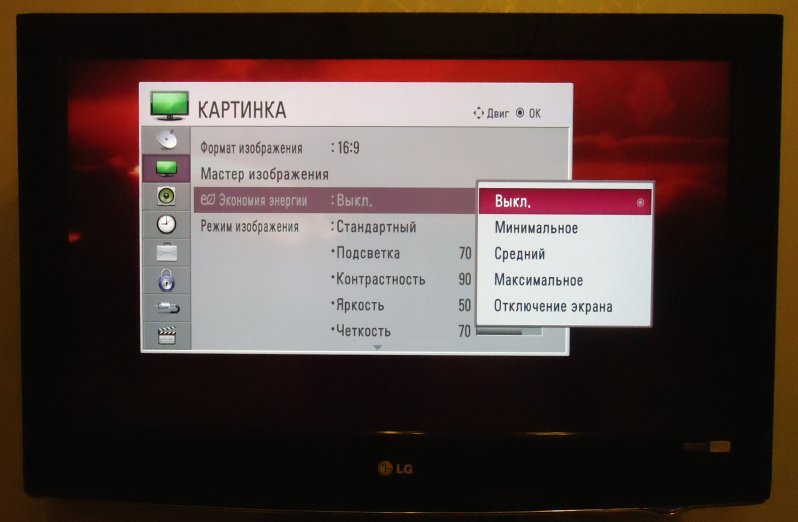
Power Saving Modes
System unit
For personal use I use a system unit that works as a remote server. Without a monitor and other things. They perform simple tasks, no heavy loads.
Блок питания HIPRO HPE400W, 400Вт, 120мм
Материнская плата ASUS H61M-K LGA 1155, mATX, Ret
Модуль памяти KINGSTON KVR16N11S6A/2-SP DDR3 — 2Гб 1600, DIMM, 2х
Процессор INTEL Pentium Dual-Core G2130, LGA 1155
Устройство охлаждения(кулер) DEEPCOOL Theta 21 PWM, 92мм
Накопитель SSD KINGSTON SV300S37A/120G 120Гб, 2.5", SATA III
In the off state, the power of 1.3 watts. In standard sleep mode Windows - 2 watts. When working under a small load (the moment the OS loads or the browser is turned on), the power reaches 31-37 watts. cos φ = 0.56
The interior of the device
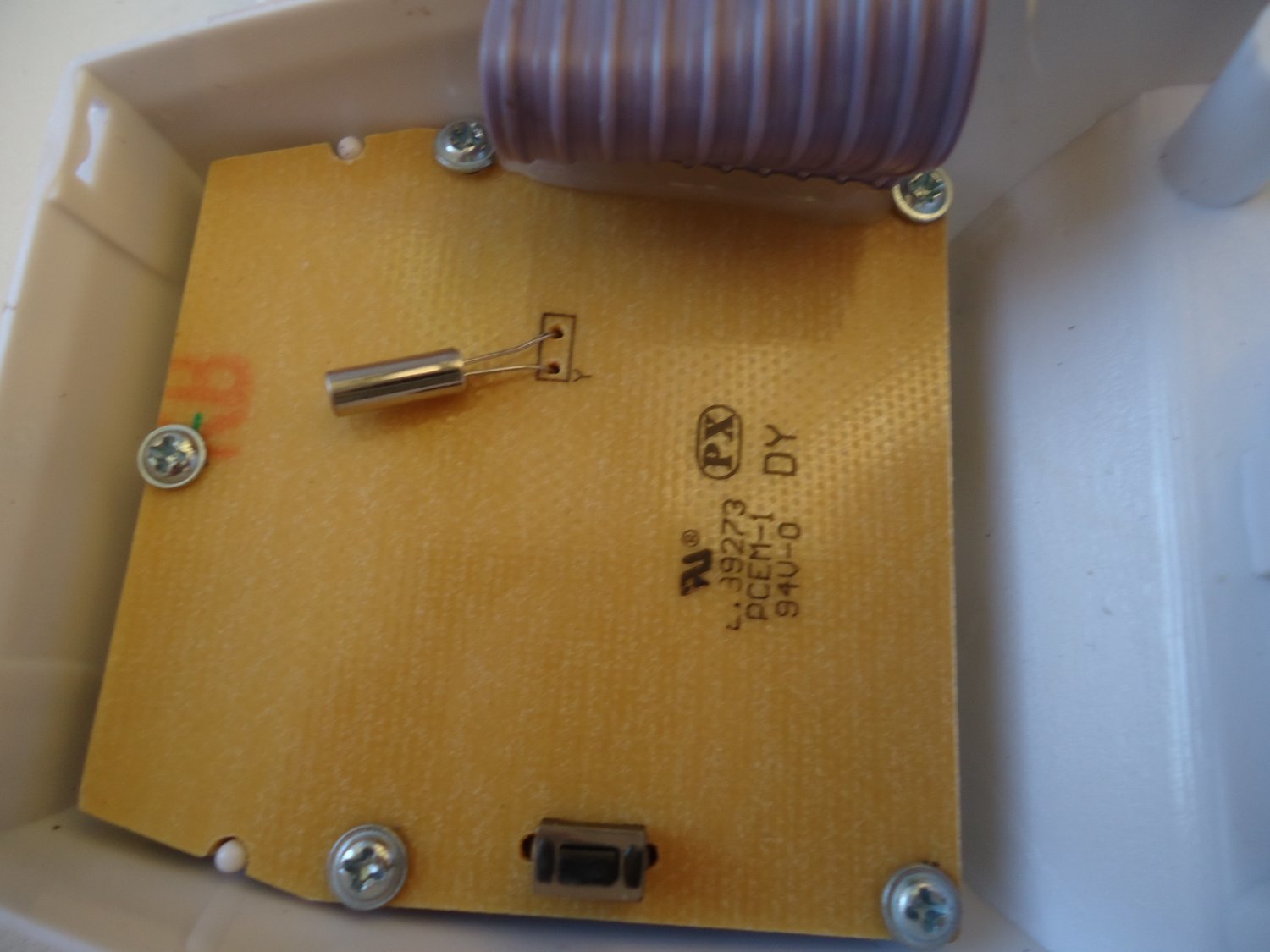
Интересно, что за микрик с обратной стороны дисплея.


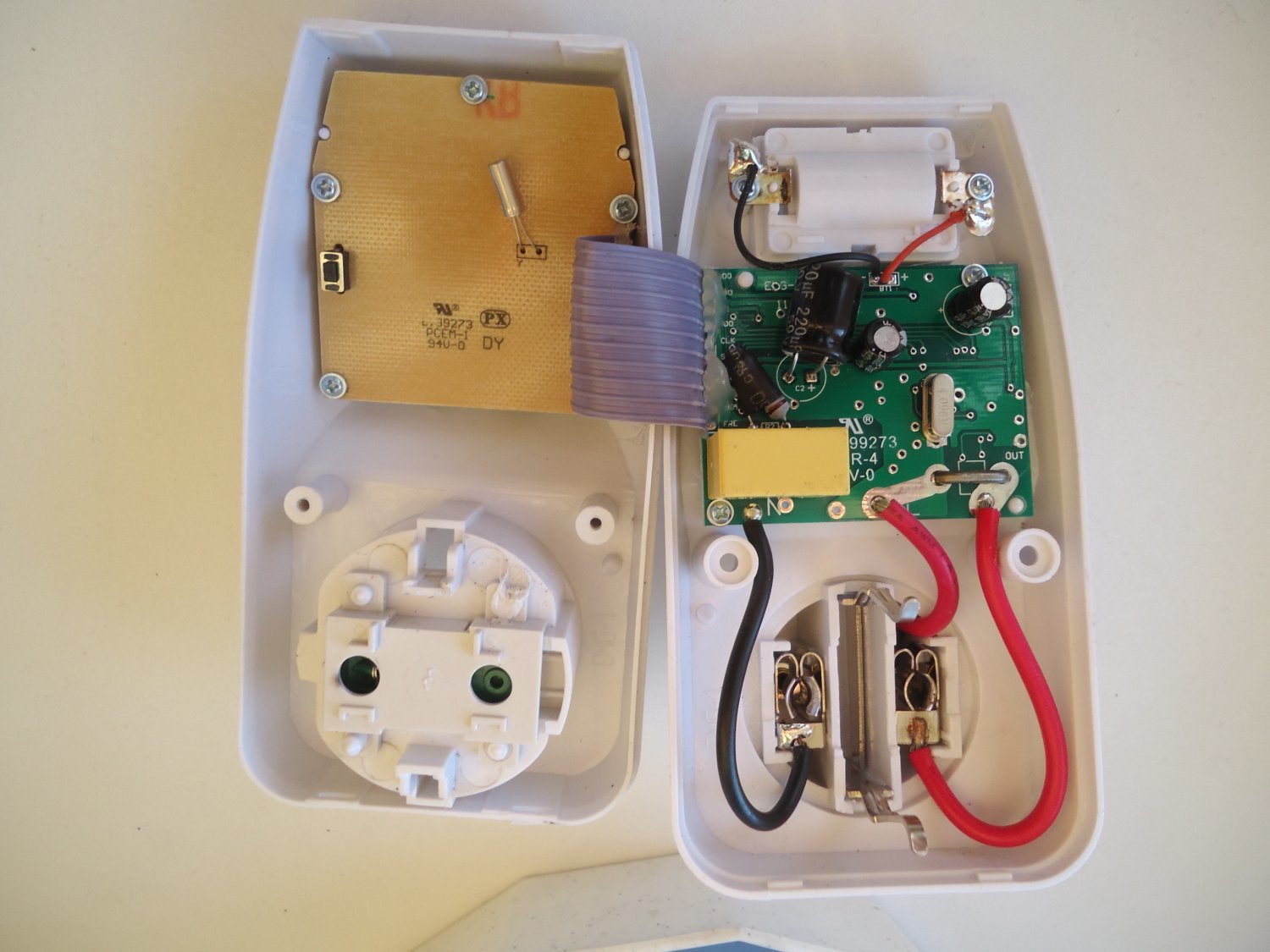
What else do you want to measure
Always worried about the issue with air conditioning. How much does it actually consume, how much is its use, say, a day. I will wait for the summer.
We answer questions
Does the charger that sticks idle in the outlet consume?
No, the chargers I tested for phones with no load showed a categorical 0.
How much does "TV By" stand you?
My 32 "TV costs me about 12 rubles a year (0.4 W * 8760 hours = 3.5 kWh) A
microwave shows a time of about 18 rubles a year.
Which is more expensive: use a kettle on gas or electric?
It all depends on your tariffs. But for the author the answer is "Electric."
Вскипятить 1,2 литра (примерно 3 бокала + немного останется) 0,38 рубля. Будем считать, что в день происходит 4 нагрева. Это примерно 45 рублей в месяц.
The author is not a miser. He just likes to do the calculations.
Results
The device is easy to configure and manage. Measures everything you can and need. The display is very informative, but in some cases there was not enough backlight. The case is made soundly, nothing staggers, so it's not scary to insert it into the outlet.
It has long looked after a similar gadget. I wanted to measure all kinds of energy at home and at work. Therefore, it was very nice to get such a device for testing. Thanks, djadget!
You can buy the “Power meter Energomer” with a 10% discount on the GEEKT-EN promo code within 14 days from the date of publication.
Information for bloggers and authors:
The company "Dadzhet" is interested in publishing independent objective reviews of dadzhetov in various kinds of media. The company “Dadzhet” will gladly provide dadzhetov bloggers and authors who want to test them and write a review.
The device after writing a review remains with the author. The company does not try to tell the author what to write about our product, but asks to show the article before publication. In this case, it is possible to clarify information and prevent errors. Whether to consider company comments or not is always up to the discretion of the author. Read more ...