Nintendo founder's birthday
November 22, 1859 was born Fusadziro Yamauchi, who founded the company Nintendo, which made an invaluable contribution to the gaming industry. The first name of the company sounded like Nintendo Koppai, it was opened in 1889. Of course, it all began not with game consoles and arcade machines. Yamauchi produced a deck of cards that bypassed the ban on gambling in Japan.

 Fusajiro Yamauchi was born in the Japanese city of Kyoto. The main part of his life fell on the Meiji era, which lasted during the reign of Emperor Mutsuhito from 1868 to 1912. During this period, Japan began to move away from self-isolation and become a world power.
Purpose of self isolationJapan, which began in the XVII century, was the preservation of the feudal order. In the XIV century, the Japanese traded with the Portuguese and Spaniards, the Europeans brought firearms from Europe and silk from China, and took away the gold and slaves. Jesuits came to the country and began to preach Catholicism, while the feudal lords allowed them not only to preach, but also to open schools and churches. The feudal lords themselves adopted Christianity, which they hoped to attract more merchant ships and replenish their stocks of weapons. All this led to the development of navigation. But the number of internecine wars increased, and rich people appeared in the ports themselves, who had the power to undermine the feudal system.
As a result, a new stratum of citizens was simply banned from engaging in foreign trade, and the country was closed for almost two hundred years. Such a policy objectively leads to a technological and economic lag, but the Japanese continued to learn thanks to counterfeit.
During the period of isolation, Dutch ships continued to arrive in the country, illegally bringing rangak - “Dutch sciences”. Several generations of translators shifted knowledge to Japanese, and in 1720 the knowledge policy somewhat weakened, and several experts began to deal with it officially. Then the country began to penetrate other achievements of Western civilization, including mechanical watches, telescopes, pumps, magic lights - the first projectors.

Japanese translation of the European anatomical treatise, 1774. Wikipedia
Along with the ban on religion in Japan, card gambling such as the old ombre game also came under the hand. But here, too, the Japanese thought of a way around the ban. They began to invent new maps and games. For example, the Unsun Karut deck was decorated in the Chinese style, the cards depicted warriors, weapons, armor and dragons. The deck consisted of 75 cards. The popularity of Unsun Karut was lower than that of the European options - it was difficult to play. And as soon as the authorities learned about the next deck, it was forbidden. And there was a new one.
In the second half of the XIX century, the authorities gave up the slack, deciding that, since people play some cards, they can be allowed to continue to do so. Gambling often implies a quick game: the more parties pass, the more salary. In the case of the game of Hanafud, there were not even numbers on the cards, and the game took a lot of time. This deck prohibit not see the point.
In 1889, thirty-year-old Fusajiro Yamauchi founded the company Nintendo Koppai and engaged in the manual production of "flower cards" (as translated into Russian Hanafuda sounds) from the bark of the mulberry tree - mulberry.
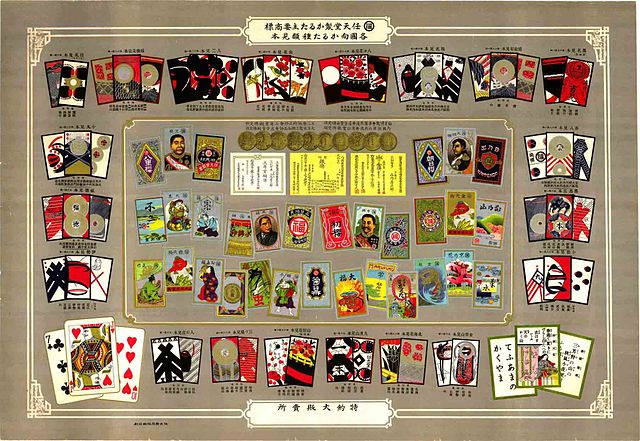
Promotional poster made in the Meiji period
A deck of playing cards Hanafuda consists of 48 cards, it includes 12 suits of 4 cards each. Each suit corresponds to the month of the year, sometimes it is complemented by a plant - a flower. According to the number of points there are 4 groups of cards: 1 point is “simple”, 5 points - “tapes”, 10 - animals and 20 - “noble”. If you are not confused yet, here is an addition: not every suit has cards of all virtues. At the same time, “crane” and “phoenix” refer to “bright”, but not to animals. The "animals" refers to the "sake bowl."
Hanafuda suited for several games, among which - ko-koi .
For almost twenty years, Nintendo Koppai has been producing various legal decks of cards, including “flower” cards. In 1907, the Japanese authorities lifted the ban, which had been in effect for 270 years, and Yamauchi set to work on foreign cards. Interestingly, for the sale of decks, the company entered into an agreement with Japan Tobacco & Salt Public Corporation. Then the cards were sold in tobacco shops. The company remained the leader in the market of playing cards for over 40 years of managing Fusajiro Yamauchi.
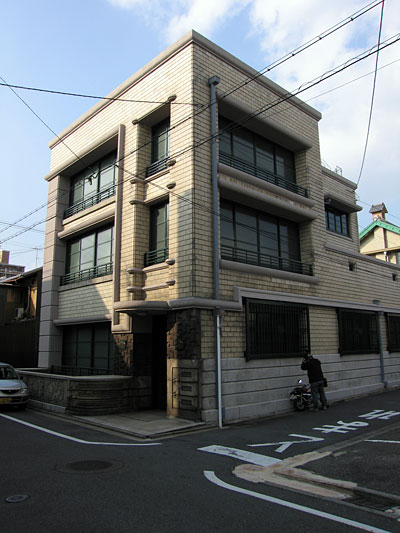
The first office of Nintendo Koppai, 1889
Then he handed over the reins to his son-in-law, who had to change his last name to Yamauchi. Shokire Yamauchi, in turn, in 1949 gave the company to his grandson - Hiroshi, arrogant, careless person who denied corporate anthems and other team building. His management style is called Nintendoism. It was during his time when the company opened a toy factory and entered the market of game consoles .
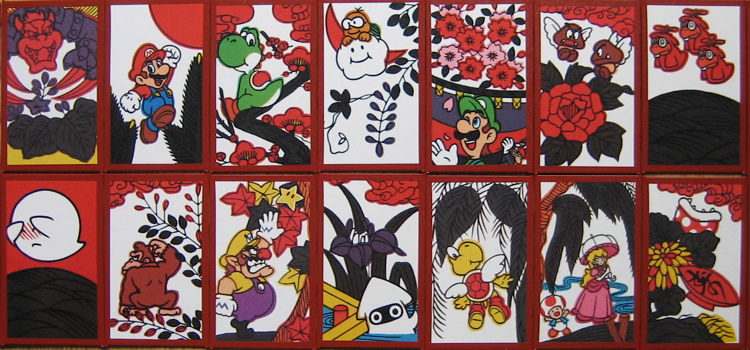
But even now, when Nintendo everyone knows, as a game manufacturer, the company continues to issue cards. Moreover, in the case of Hanafud there is room for imagination, and you can easily transfer characters from a computer game, such as Mario, to cards.
Fusajiro Yamauchi was born in the Japanese city of Kyoto. The main part of his life fell on the Meiji era, which lasted during the reign of Emperor Mutsuhito from 1868 to 1912. During this period, Japan began to move away from self-isolation and become a world power. Purpose of self isolationJapan, which began in the XVII century, was the preservation of the feudal order. In the XIV century, the Japanese traded with the Portuguese and Spaniards, the Europeans brought firearms from Europe and silk from China, and took away the gold and slaves. Jesuits came to the country and began to preach Catholicism, while the feudal lords allowed them not only to preach, but also to open schools and churches. The feudal lords themselves adopted Christianity, which they hoped to attract more merchant ships and replenish their stocks of weapons. All this led to the development of navigation. But the number of internecine wars increased, and rich people appeared in the ports themselves, who had the power to undermine the feudal system.
As a result, a new stratum of citizens was simply banned from engaging in foreign trade, and the country was closed for almost two hundred years. Such a policy objectively leads to a technological and economic lag, but the Japanese continued to learn thanks to counterfeit.
During the period of isolation, Dutch ships continued to arrive in the country, illegally bringing rangak - “Dutch sciences”. Several generations of translators shifted knowledge to Japanese, and in 1720 the knowledge policy somewhat weakened, and several experts began to deal with it officially. Then the country began to penetrate other achievements of Western civilization, including mechanical watches, telescopes, pumps, magic lights - the first projectors.
Japanese translation of the European anatomical treatise, 1774. Wikipedia
Along with the ban on religion in Japan, card gambling such as the old ombre game also came under the hand. But here, too, the Japanese thought of a way around the ban. They began to invent new maps and games. For example, the Unsun Karut deck was decorated in the Chinese style, the cards depicted warriors, weapons, armor and dragons. The deck consisted of 75 cards. The popularity of Unsun Karut was lower than that of the European options - it was difficult to play. And as soon as the authorities learned about the next deck, it was forbidden. And there was a new one.
In the second half of the XIX century, the authorities gave up the slack, deciding that, since people play some cards, they can be allowed to continue to do so. Gambling often implies a quick game: the more parties pass, the more salary. In the case of the game of Hanafud, there were not even numbers on the cards, and the game took a lot of time. This deck prohibit not see the point.
In 1889, thirty-year-old Fusajiro Yamauchi founded the company Nintendo Koppai and engaged in the manual production of "flower cards" (as translated into Russian Hanafuda sounds) from the bark of the mulberry tree - mulberry.
Promotional poster made in the Meiji period
A deck of playing cards Hanafuda consists of 48 cards, it includes 12 suits of 4 cards each. Each suit corresponds to the month of the year, sometimes it is complemented by a plant - a flower. According to the number of points there are 4 groups of cards: 1 point is “simple”, 5 points - “tapes”, 10 - animals and 20 - “noble”. If you are not confused yet, here is an addition: not every suit has cards of all virtues. At the same time, “crane” and “phoenix” refer to “bright”, but not to animals. The "animals" refers to the "sake bowl."
Hanafuda suited for several games, among which - ko-koi .
For almost twenty years, Nintendo Koppai has been producing various legal decks of cards, including “flower” cards. In 1907, the Japanese authorities lifted the ban, which had been in effect for 270 years, and Yamauchi set to work on foreign cards. Interestingly, for the sale of decks, the company entered into an agreement with Japan Tobacco & Salt Public Corporation. Then the cards were sold in tobacco shops. The company remained the leader in the market of playing cards for over 40 years of managing Fusajiro Yamauchi.
The first office of Nintendo Koppai, 1889
Then he handed over the reins to his son-in-law, who had to change his last name to Yamauchi. Shokire Yamauchi, in turn, in 1949 gave the company to his grandson - Hiroshi, arrogant, careless person who denied corporate anthems and other team building. His management style is called Nintendoism. It was during his time when the company opened a toy factory and entered the market of game consoles .
But even now, when Nintendo everyone knows, as a game manufacturer, the company continues to issue cards. Moreover, in the case of Hanafud there is room for imagination, and you can easily transfer characters from a computer game, such as Mario, to cards.