How to change the use of visualization in the design in the era of virtual and augmented reality. Part 2
The virtual reality. Over the past two years, these two words have again attracted much attention. Thanks to the rush around consumer solutions for virtual reality, acquisitions of companies and the general renewal of interest, this topic is widely heard this year and may not lose relevance next year. Interestingly, virtual reality technologies have always been relevant to specialists in the design and development industry. Decisions in this area have been available for decades and have been applied in the world's leading companies. What has changed?
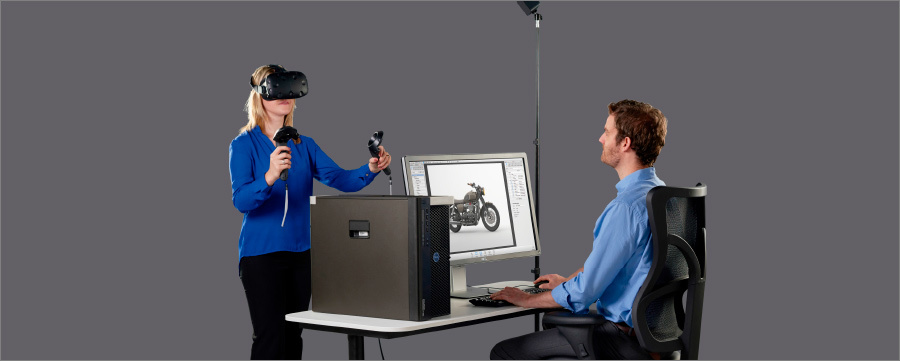
The answer to this question is the cost and destination. Traditional solutions for virtual reality were not available due to the high price, which ranged from tens of thousands to millions of US dollars, not only for installation and configuration, but also for use. After all, rear projection video walls with a resolution of 4K and headsets with motion tracking cost a lot. In any case, it was before.
The newly released HTC Vive headset allows you to use the entire room. It is equipped with a high-resolution full-motion head-mounted display with motion tracking and provides both-handed interaction and sells for less than $ 1,000. This is clear evidence of major changes. But the HTC device is not the only one on the market. Oculus (now part of the Facebook family) launches its own devices on the market, and soon many other solutions will appear.
Due to consumer interest, these new technologies will lead to a significant reduction in input costs. Professionals can take advantage of the potential benefits of these devices in several key areas. In this part we will consider such advantages and find out what to expect in the near future.
If we assume that everyone knows the benefits of three-dimensional modeling, photorealism and simulation in the process of development and design, it is easy to imagine how to complement and improve these processes using virtual reality technology.
Just imagine being able to load a three-dimensional model and switch to a head-mounted display in order to navigate and interact with a visual product model with an effect of presence: you will see it as if you have already really created a product in reality. You can study the product, assemble or disassemble it, hide the outer shell and view the internal components, apply simulations - and all this in an absolutely realistic environment suitable for your workspace. Here is the potential of virtual reality in design and development! The most interesting thing is that this is not science fiction, but the reality of the next two years. However, many of these features are already available today using existing software and hardware configurations. Imagine


Dassault Systèmes recently introduced the Dream Sketcher solution to show how to use virtual reality to create conceptual sketches of any scale.
We looked at the potential of virtual reality for development and design processes, but many of these benefits are also relevant to marketing and sales teams. Virtual reality technology can change the way customers interact with commercial products.
Most often, digital car dealership is mentioned as a vivid example, because many OEMs are willing to introduce such technology, especially in the upper segment of the automotive industry. But the benefits of virtual reality are available to small organizations. The ability to interact with the future product or its full-size version can be very useful both in the consumer environment and in the industrial segment.
An interesting fact is that the technologies necessary for this are rapidly losing the status of costly niche solutions and are becoming publicly available. True, with some reservations. First of all, existing solutions for virtual reality with the effect of presence usually require careful preparation to ensure their proper functioning. The reason is that at the moment the number of ready-made systems with virtual reality support in the field of development or design is limited. As a rule, every implemented solution is made to order, be it a showroom or an exhibition pavilion (an example is the recent Audi project for the CES exhibition).
You also need a higher level of photorealism and realism. While in the field of design, specialists are accustomed to the peculiarities of the display of geometric objects in CAD and interaction with them, in the marketing environment it is necessary to increase the level of realism, be it in the field of visualization, movement or recognition of input. As in the case of visualization and rendering in the field of marketing (as discussed in the first part ), these factors determine the importance of effective high-performance computing systems and the need for them to create the necessary materials.
→ For more information, visit dell.ru/precision
The traditional process of visualization and its potential advantages both in product development and in its preparation for market launch will be relevant for a long time. But for the industry as a whole, the enormous potential of virtual reality technology and the prospects for a significant reduction in the cost of equipment will soon become apparent. However, despite the revival due to the increasing availability for ordinary consumers, do not forget about the facts.
At present, the requirements for equipment specifications for using headsets without a feeling of motion sickness remain quite high: remember that headset and an additional display at 90 frames per second with minimal delay (less than 20 ms) require powerful resources. But not everything is so bad: Dell is already preparing to supply equipment with virtual reality support to solve this problem. Another difficulty lies in software support. Purchasing equipment valued at nearly $ 1,000 is only half the battle. Most modern software is either expensive ready-made solutions, or developed to order, but no less expensive projects.
With this in mind, a virtual reality environment in which users can study, measure, and view product models in the form of technical renderers, or, preferably, in a photorealistic environment, and interact with them, can be an incredibly effective solution. Virtual reality technologies offer new advantages of three-dimensional content created in the design process, which not only affect product decisions, but are also useful for promoting finished products on the market. And these technologies are spreading quickly, without the need for expensive equipment.
In the final part of the series of our publications, we will consider further development paths and finally determine the possible outcome hidden in the field of augmented reality. This will open to us such ways of combining virtual worlds with real ones that most of us could hardly imagine.
→ More details
→ And more
The answer to this question is the cost and destination. Traditional solutions for virtual reality were not available due to the high price, which ranged from tens of thousands to millions of US dollars, not only for installation and configuration, but also for use. After all, rear projection video walls with a resolution of 4K and headsets with motion tracking cost a lot. In any case, it was before.
The newly released HTC Vive headset allows you to use the entire room. It is equipped with a high-resolution full-motion head-mounted display with motion tracking and provides both-handed interaction and sells for less than $ 1,000. This is clear evidence of major changes. But the HTC device is not the only one on the market. Oculus (now part of the Facebook family) launches its own devices on the market, and soon many other solutions will appear.
Due to consumer interest, these new technologies will lead to a significant reduction in input costs. Professionals can take advantage of the potential benefits of these devices in several key areas. In this part we will consider such advantages and find out what to expect in the near future.
The difficulties of implementing virtual reality technology
So, the necessary equipment is almost ready. What prevents to bring these concepts to life? At the moment, the reasons for the problems of effective use of virtual reality technology lie not in hardware, but in software. The main task is to use complex and resource-demanding data of three-dimensional geometry and visualization of CAD in a virtual reality environment with the highest possible efficiency.
For optimal user interaction, you need a high frame rate per second (or more precisely, 90 frames per second, which is much more than 24 frames in normal video). This is necessary not only to reduce the delay and increase realism, but also to eliminate the feeling of dizziness or motion sickness that some people experience when using virtual reality glasses. That is, for the most effective use of these technologies will require powerful computing equipment.
But the most difficult thing is to prepare a huge amount of data for use in the virtual reality environment. So far, there are very few solutions in the field of design and engineering that have been adapted for use with these technologies. Most of them are largely a manual adaptation of gaming technology (which leads to a simplified geometry) and require long and careful preparation.
The real benefits of virtual reality will become available as software makers enter this area. Although most of these companies are already working in this direction, only the Autodesk VRED visualization and rendering system allows you to use Oculus and HTC Vive headsets in production software.
Virtual reality for development and design
If we assume that everyone knows the benefits of three-dimensional modeling, photorealism and simulation in the process of development and design, it is easy to imagine how to complement and improve these processes using virtual reality technology.
Just imagine being able to load a three-dimensional model and switch to a head-mounted display in order to navigate and interact with a visual product model with an effect of presence: you will see it as if you have already really created a product in reality. You can study the product, assemble or disassemble it, hide the outer shell and view the internal components, apply simulations - and all this in an absolutely realistic environment suitable for your workspace. Here is the potential of virtual reality in design and development! The most interesting thing is that this is not science fiction, but the reality of the next two years. However, many of these features are already available today using existing software and hardware configurations. Imagine
Virtual reality headsets: two leading solutions
Oculus rift
The company Oculus has become widely known, providing a kit for developers to its sponsors on Kickstarter two years ago. After releasing two more kits for developers and having survived a large-scale takeover by technology giant Facebook (the amount of the transaction in 2014 amounted to $ 2 billion), the company presented a ready-made full version of the product called Rift. This headset is equipped with a remote control, motion tracking sensor and an Xbox controller for interaction (it will soon be replaced with a set of two “touch” controllers).
The Oculus headset is more designed for use near an Intel Xeon processor-based workstation, rather than for interoperability and tracking throughout the entire room.
HTC Vive
So far, HTC Vive is leading in the market segment, where serious competition will unfold by the end of this year. HTC has the necessary knowledge in the field of mobile technology due to its extensive experience in developing smartphones, as well as formed supply chain. The technical characteristics of the headset are impressive. It can be used within the entire room, as well as standing or sitting in a more limited space.
The display has a clear image, and thanks to the 110-degree field of view, users can fully immerse themselves in the virtual world. Specialized controllers are ideal for all use cases. The front camera opens up the potential for headset applications in the field of augmented reality. HTC Vive can already be ordered at a price of about $ 800.
Dassault Systèmes recently introduced the Dream Sketcher solution to show how to use virtual reality to create conceptual sketches of any scale.
Consumer and professional solutions
The use of professional graphics core instead of consumer-for workflows in the field of development and design associated with the use of virtual reality, allows to improve them in many ways.
The potential of virtual reality technology is enormous, but designers will still use CAD on conventional monitors. Therefore, it is important to choose a graphics processor that is ideal for both environments. Professional graphics processors are optimized for maximum performance, stability and accuracy in CAD systems and certified for various professional applications. Certification of graphics processors for the use of software with virtual reality technology is not yet carried out, but this is only a matter of time, and in the future users will be able to rightly purchase professional graphics processors.
The size of the frame buffer also plays a significant role. Professional boards are much more memory than consumer graphics processors. This can be important for creating content in virtual reality when working with complex models in the field of development and design.
Virtual Reality for Marketing
We looked at the potential of virtual reality for development and design processes, but many of these benefits are also relevant to marketing and sales teams. Virtual reality technology can change the way customers interact with commercial products.
Most often, digital car dealership is mentioned as a vivid example, because many OEMs are willing to introduce such technology, especially in the upper segment of the automotive industry. But the benefits of virtual reality are available to small organizations. The ability to interact with the future product or its full-size version can be very useful both in the consumer environment and in the industrial segment.
An interesting fact is that the technologies necessary for this are rapidly losing the status of costly niche solutions and are becoming publicly available. True, with some reservations. First of all, existing solutions for virtual reality with the effect of presence usually require careful preparation to ensure their proper functioning. The reason is that at the moment the number of ready-made systems with virtual reality support in the field of development or design is limited. As a rule, every implemented solution is made to order, be it a showroom or an exhibition pavilion (an example is the recent Audi project for the CES exhibition).
You also need a higher level of photorealism and realism. While in the field of design, specialists are accustomed to the peculiarities of the display of geometric objects in CAD and interaction with them, in the marketing environment it is necessary to increase the level of realism, be it in the field of visualization, movement or recognition of input. As in the case of visualization and rendering in the field of marketing (as discussed in the first part ), these factors determine the importance of effective high-performance computing systems and the need for them to create the necessary materials.
Dell recommended system configuration for virtual reality
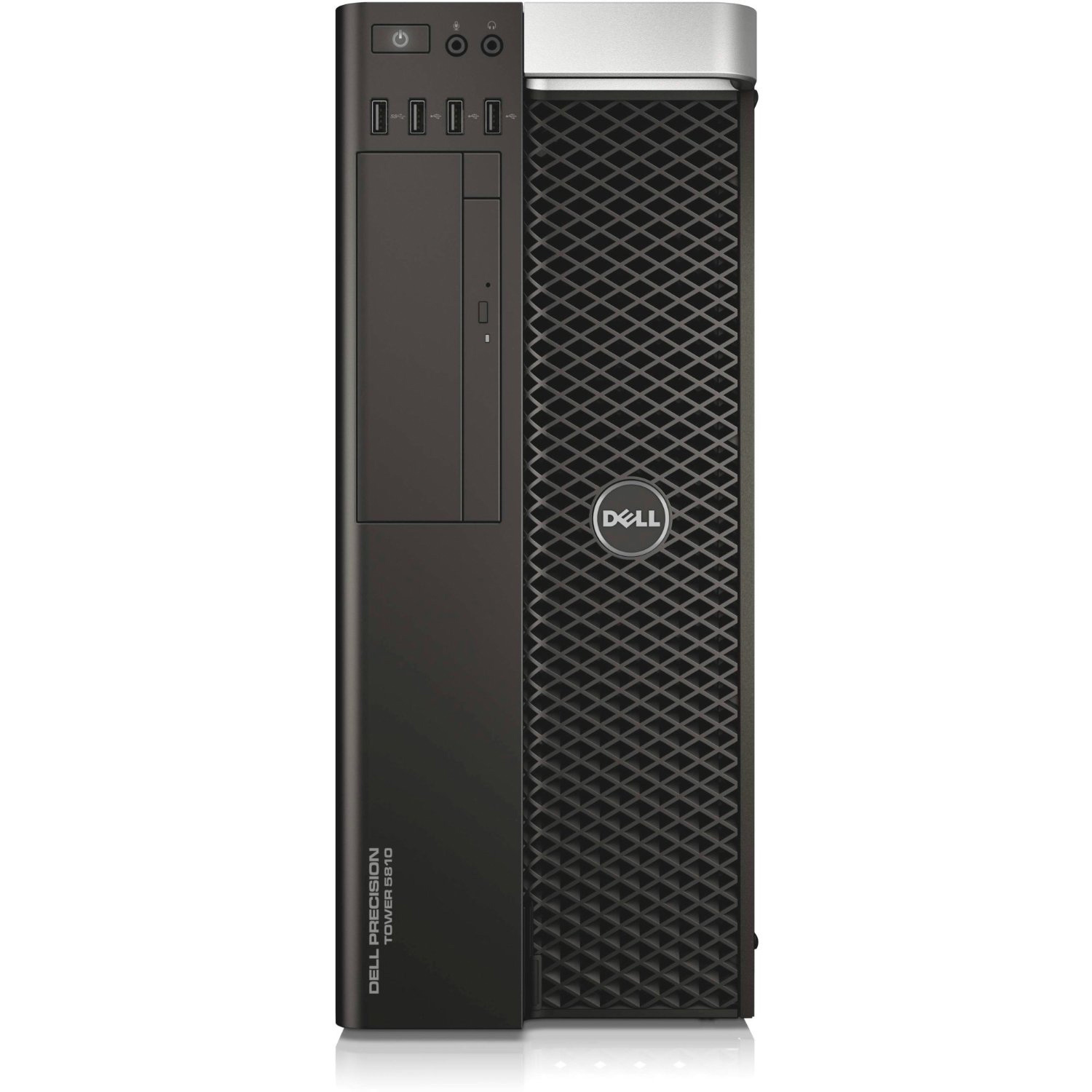 | 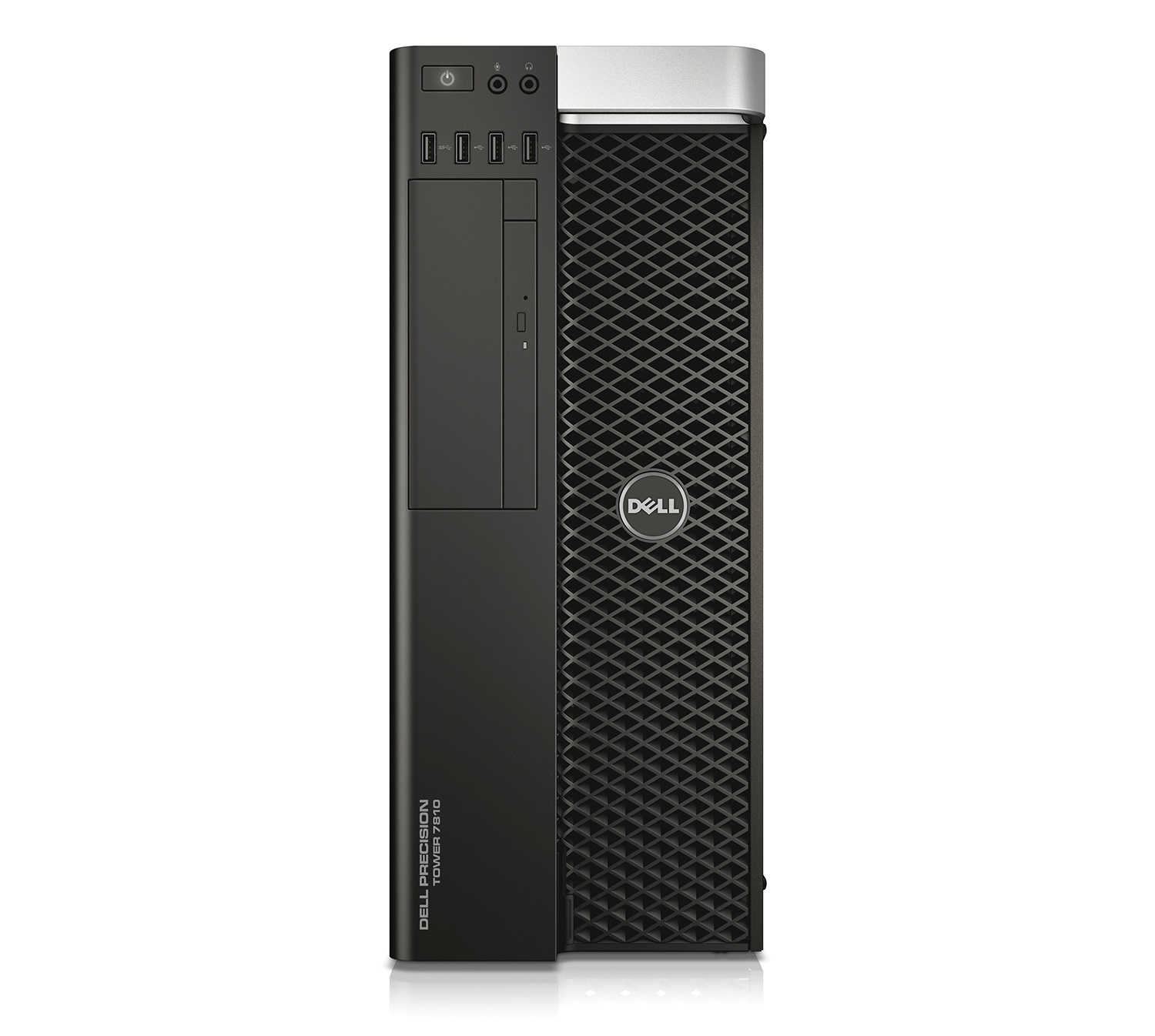 | 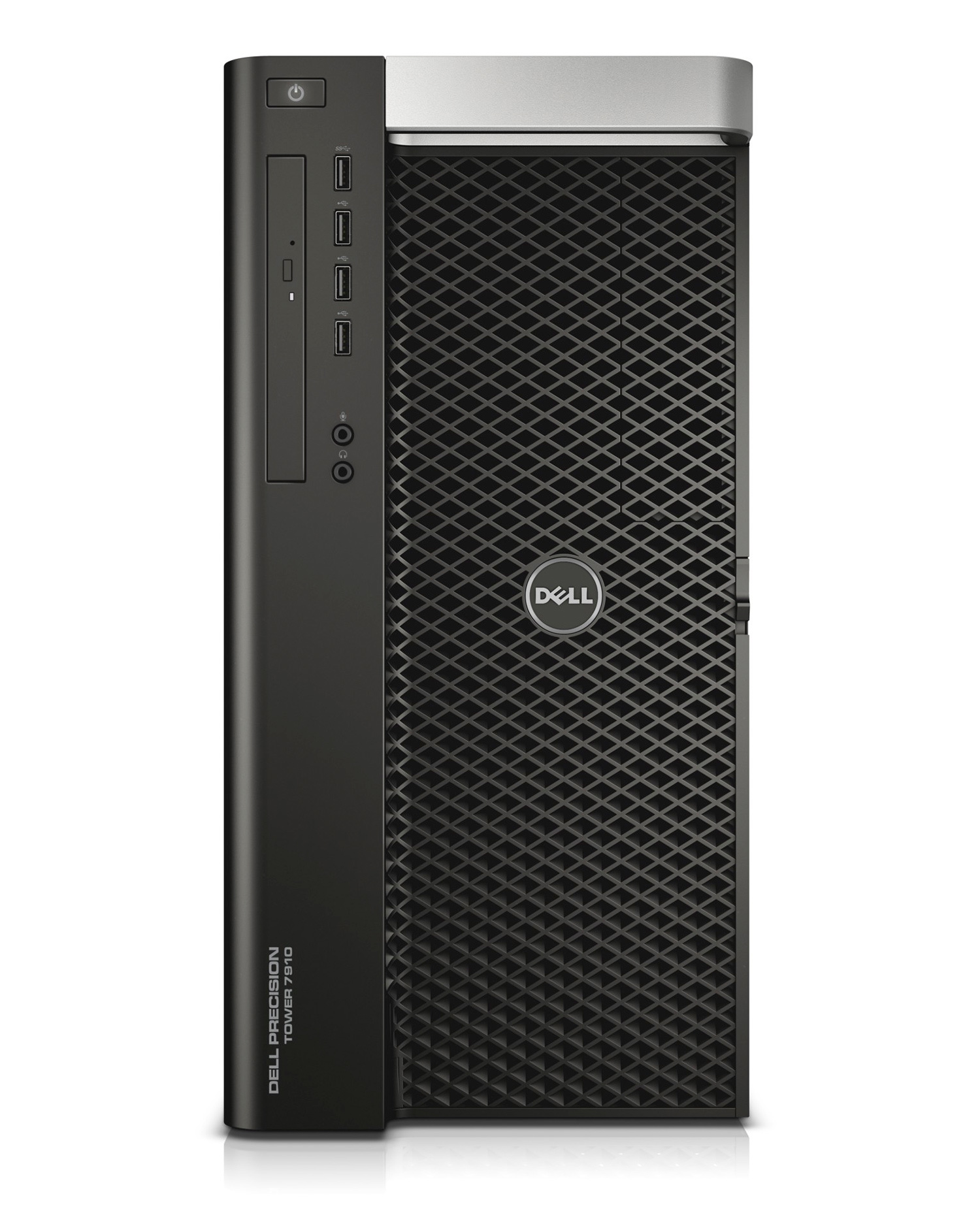 | |
| Dell Precision 5810 Tower | Dell Precision 7810 Tower | Dell Precision 7910 Tower | |
| CPU | Intel Xeon E5-16xx series or E5-26xx HTC Vive: at least 1.6 GHz and 4 Oculus Rift cores : at least 2.5 GHz and 4 cores | ||
| Memory | At least 8 GB; additional storage will be required for processing datasets / contents and working with models | ||
| Video card | NVIDIA Quadro M6000 / M5000 | ||
| Storage device | A solid-state drive with a capacity of at least 256 GB as the paging area of the active storage subsystem. | ||
| Adapters | DisplayPort - HDMI Passive Adapters if Required | ||
Conclusion
The traditional process of visualization and its potential advantages both in product development and in its preparation for market launch will be relevant for a long time. But for the industry as a whole, the enormous potential of virtual reality technology and the prospects for a significant reduction in the cost of equipment will soon become apparent. However, despite the revival due to the increasing availability for ordinary consumers, do not forget about the facts.
At present, the requirements for equipment specifications for using headsets without a feeling of motion sickness remain quite high: remember that headset and an additional display at 90 frames per second with minimal delay (less than 20 ms) require powerful resources. But not everything is so bad: Dell is already preparing to supply equipment with virtual reality support to solve this problem. Another difficulty lies in software support. Purchasing equipment valued at nearly $ 1,000 is only half the battle. Most modern software is either expensive ready-made solutions, or developed to order, but no less expensive projects.
With this in mind, a virtual reality environment in which users can study, measure, and view product models in the form of technical renderers, or, preferably, in a photorealistic environment, and interact with them, can be an incredibly effective solution. Virtual reality technologies offer new advantages of three-dimensional content created in the design process, which not only affect product decisions, but are also useful for promoting finished products on the market. And these technologies are spreading quickly, without the need for expensive equipment.
In the final part of the series of our publications, we will consider further development paths and finally determine the possible outcome hidden in the field of augmented reality. This will open to us such ways of combining virtual worlds with real ones that most of us could hardly imagine.
→ More details
→ And more