Stellaris - a breath of fresh air in the space strategy genre
Foreword
We all love space, and those who say they do not love are just afraid to admit it. Most of those present here, apart from the standard games for children “about the war,” had a painful craving for designers, science fiction and, possibly, role-playing games. And, in my opinion, Stellaris is what unites all of our passions: space, creation, acting out the chosen role and, of course, conquering the world.
The author of this publication, as some may have noticed, is more into Doba 2 and competitive class shooters of the CS class to all kinds of MOBA. However, the path of an avid gamer who spent a solid part of his life on computer games began with strategies like TBS and RTS: HoMM II, HoMM III, Warcraft 3, Stronghold, Red Alert II, Zeus: Master of Olympus(Poseidon: Master of Atlantis) and even Industry Giant II .
The only thing that was not available to the author, due to impatience, is the genre of global strategies , or, as they are also called, 4X-strategies , the brightest representative of which has always been Sid Meier's Civilization.
We passed by Master of Orion and everything else, so we won't go into the history of the genre, but let's talk about the game, which was quiet and without any noise, was released only a week and a half ago - on May 9, 2016. The developer is Paradox Interactive, a company well known in this genre (Crusader Kings, Europa Universalis, Hearts of Iron).
Issue price and system requirements
Now for Stellaris in the CIS, they are asking for a more or less loyal $ 19.99, for the Russian Federation the price is even lower and amounts to 699 RUB or about $ 10.7. The base cost of the game in the US and the EU rises to a more substantial $ 39.99 / euro.

System requirements also look very modest against the background of recent high-profile releases, for example, DOOM .

Surprisingly, the game, judging by the information system requirements, is supported on all operating systems for PCs, including MacOS, Linux and even SteamOS:
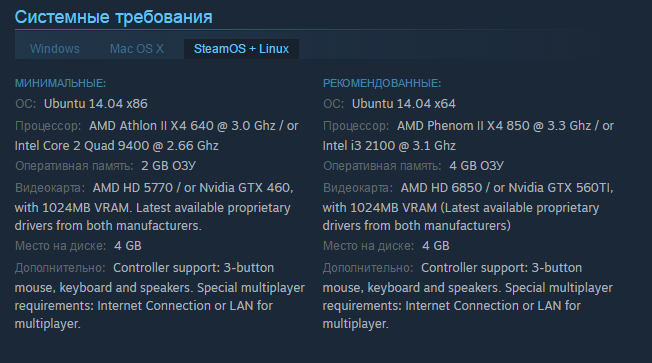
System requirements for the linux platform
Go!
From the very start, the game begins to delight us with customization. The player does not just choose the race / nation he likes, but selects the appearance, emblem, colors, inclinations of the population of the future empire and the civil system. With logic, too, everything is fine, so stay a militant pacifist will not work.
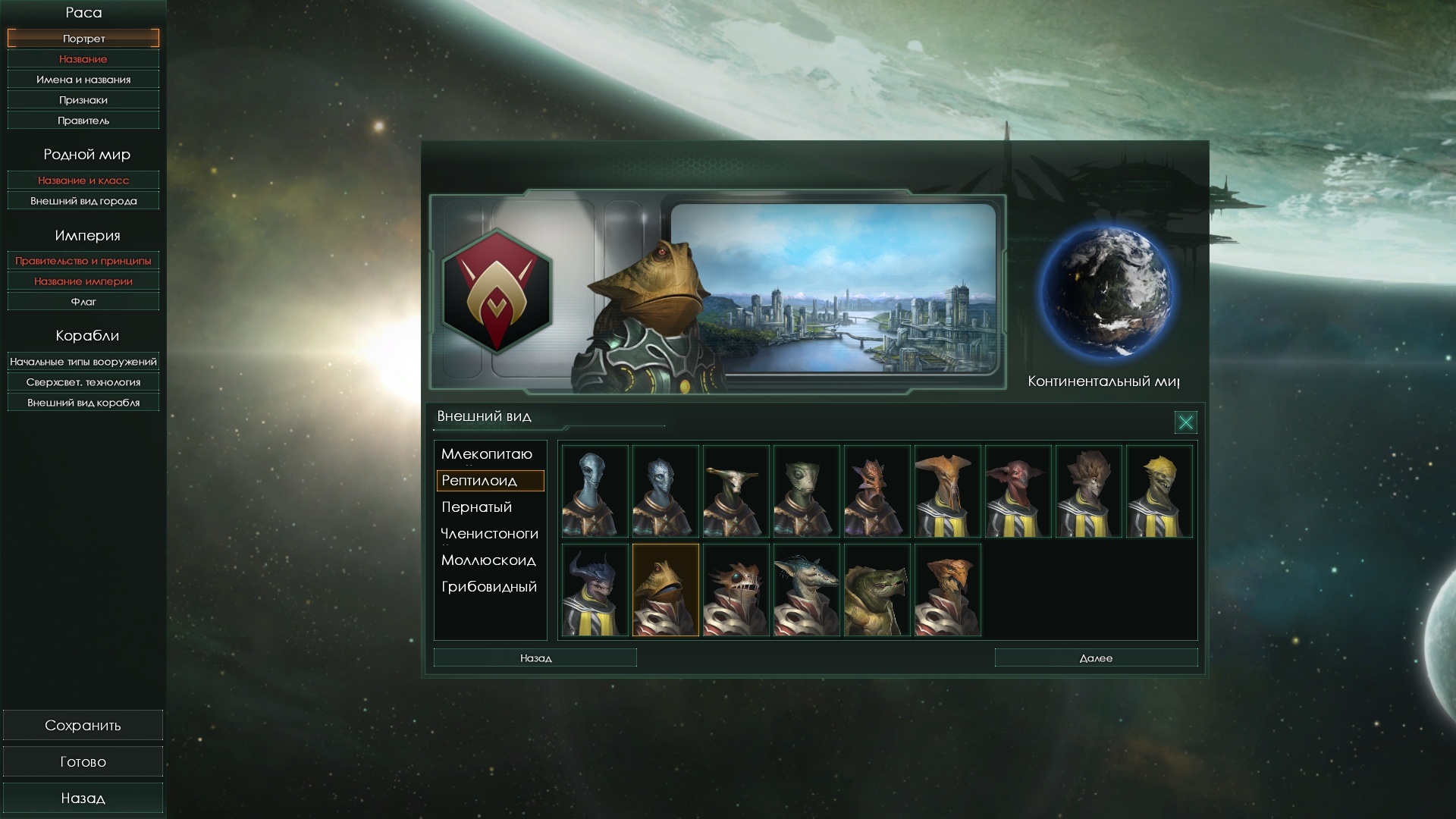
That feeling when playing for REN-TV director
Gameplay
The main difference between Stellaris and everything else is that there is no “everything, I won” in the middle of the game while achieving economic dominance over the galaxy. Constantly something happens, constantly there may be some kind of threat to which a reaction will be needed. There are no two identical games here. © kekekeks
In fact, even at the stage of the formation of your race in the constructor, you can decide which policy the player will follow in the future. Militarism? No problem. Economic development and militarism? Okay. Slavery of the population and militarism? Of course!
The most important difference between Stellaris from the same “tsiva” is the fact that there is no diplomatic way of solving the galactic conflict. Yes, yes, you read it right. Space is a cruel place, and in order to win, you will have to fight and, perhaps, fight a lot.
The mechanics of the game itself breaks up the process into several stages: if the player first engages in a kind of “micromanagement”, then with an increase in the number of resources, attached systems and conquered peoples, the empire's machine grows so much that you are already moving from the micro level to a macro game. And, most importantly, Paradox gave us a toolkit in the form of “sectors”, to which you give some self-government, defining the party line, but not directly interfering - the sectors live their own lives.
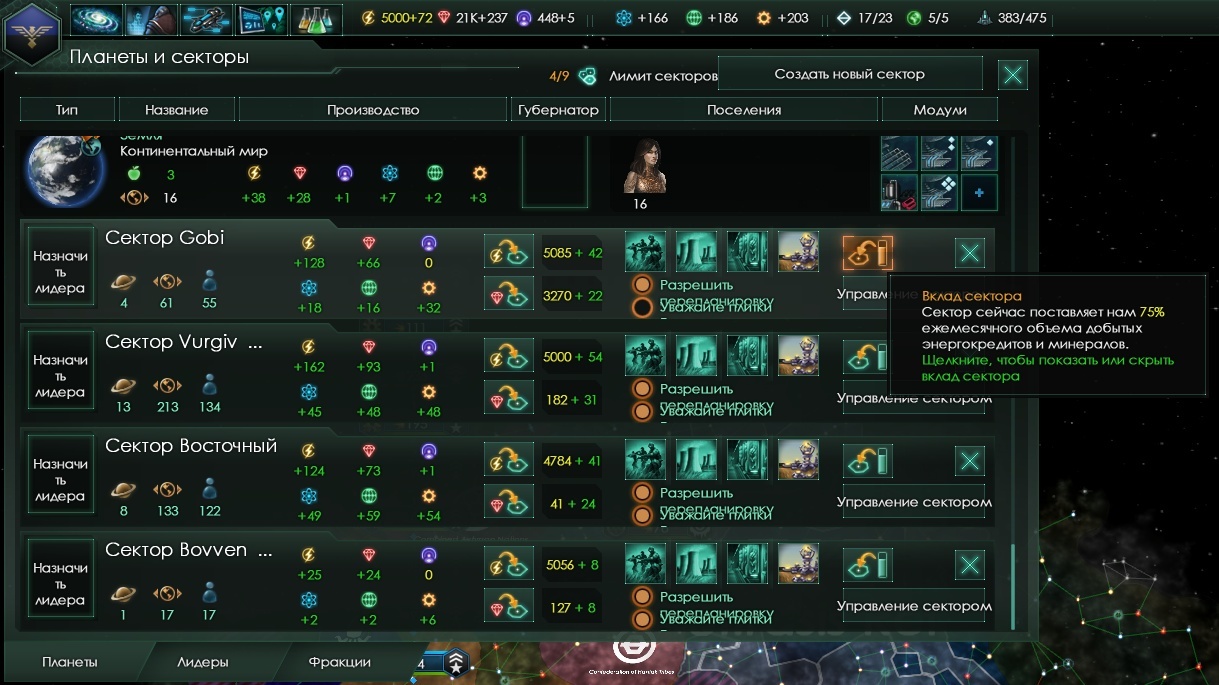
Sector management tab
And you can still make a total genocide, but this is the way for true connoisseurs ...
Very often, strategy uses the blitzkrieg tactic, because it is almost impossible to control a huge machine with hundreds of levers in real-time. But the empire in Stellaris turns into this car, and if it were not possible to throw off at least the economic burden of managing conquered or colonized planets, 99% of the time you would have spent in the "pause" mode, but not to think about the network game worth it.
The mechanics themselves limit us in the number of worlds under control: if you directly control 6 or more planets (the basic value is 5 worlds maximum), then you get considerable economic penalties.
And now they will ask me “oh well, can you not cope with a dozen stars and a pair of flotillas? Nup! If so. The L-size map is designed for 800 stars (XL 1200), all of which can be visited-capture-colonize (if there are suitable worlds). Rarely in what system can you build a station that would get something there. We add to all this planetary management and construction, the colonization of worlds, the management of scientific and construction ships, diplomacy, the clearing of neutral border systems, the hiring of scientists, governors, admirals, generals (for landing armies, who also need to hire!), The designer of warships, the study technology and ...
In short, you can continue for a long time. In general, immersed in the gameplay, you begin to feel like a real ruler, whose attention is required by the problems of his subjects. Nearly 70%, if not 90% of the time of gameplay is spent in a pause in the distribution of tasks, analyzing the situation and finding a weaker neighbor in
Combat module
I will say right away: to engage in microcontrol in battle will not work. When entering the "attack distance" the player loses control over the flotilla and can only watch the course of the battle. The only thing that is available to him is to perform an evasion maneuver and jump out of the battle into the neighboring system with some losses. Therefore, the designer of ships has a huge role.
The game has 4 types of warships, of which your space fleet will be formed: from light corvettes to super heavy battleships.
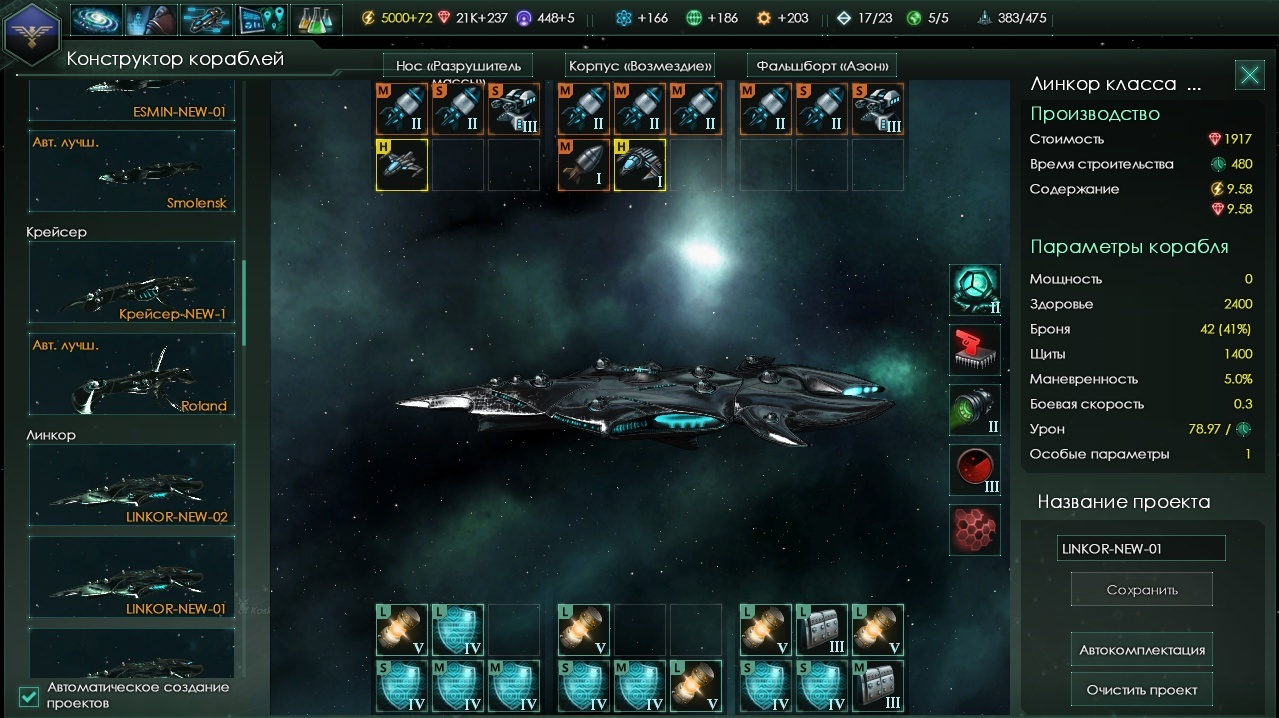
Rocket battleship
And if with linear development from corvettes to battleships everything is clear - a spaceport is needed a higher level, then with technologies in the game everything is not so simple and this particular moment can turn away from the game fans of "total planning", but more on that later.
Another loophole that the designer opens is the ability to reduce construction costs, if fire power is needed. The author was saved a couple of times by the ability to remove the “body kits” of the shields and crush his opponent’s “suicidal meat”.
With the war, too, is not so simple. When declaring war on another state, the player makes demands, i.e. denotes what he wants to achieve with this war. And as soon as he gains an advantage in “points” (battles, occupation of planets, etc.) are taken into account, he can make a demand to surrender or the enemy surrenders automatically when the best result is achieved (total domination and fulfillment of all conditions).
And that's all. For ten game years between empires, peace is signed, if the goal was to conquer certain planets, and not to make the enemy a vassal. At the same time, to establish overlord on someone, you need to make a good effort.
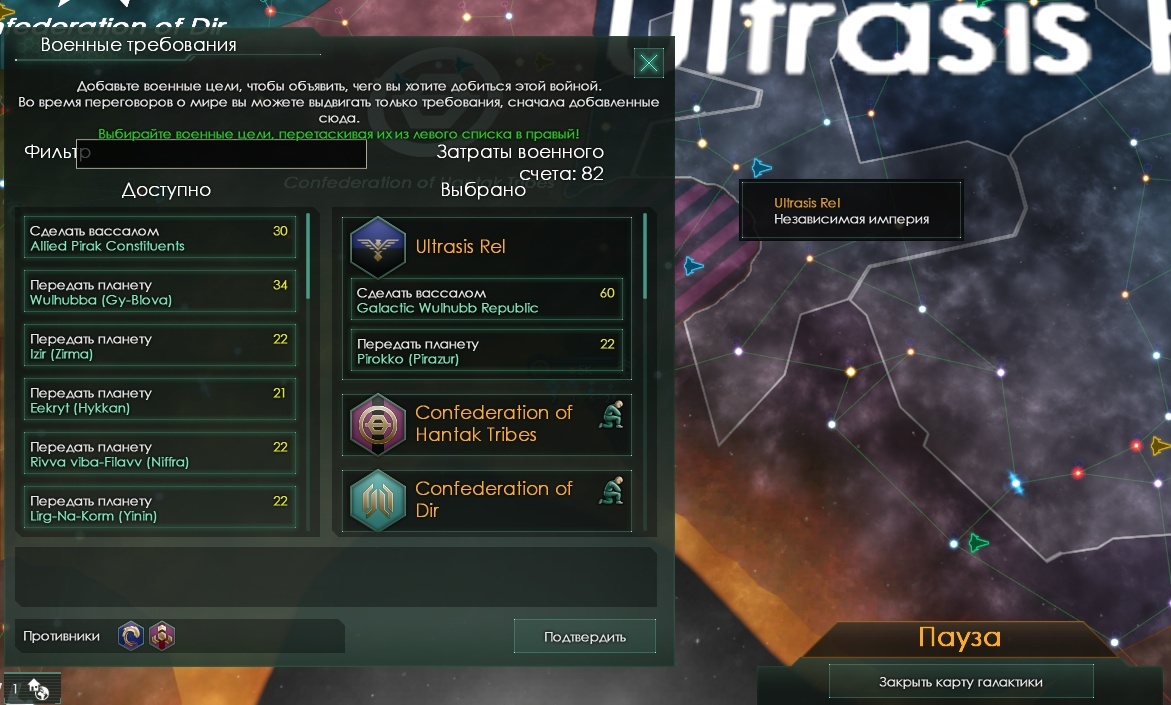
War declaration window
Technology
Also, a huge role in the game has a random and initial technologies: choosing missile or kinetic weapons to quickly “jump over” to the laser branch will not work. Therefore, be careful.
Ask, and where does the random?
There is no technology tree in the game.
He is not.
You play blindly.
Three to choose from, and what will be offered to study further - just pray.
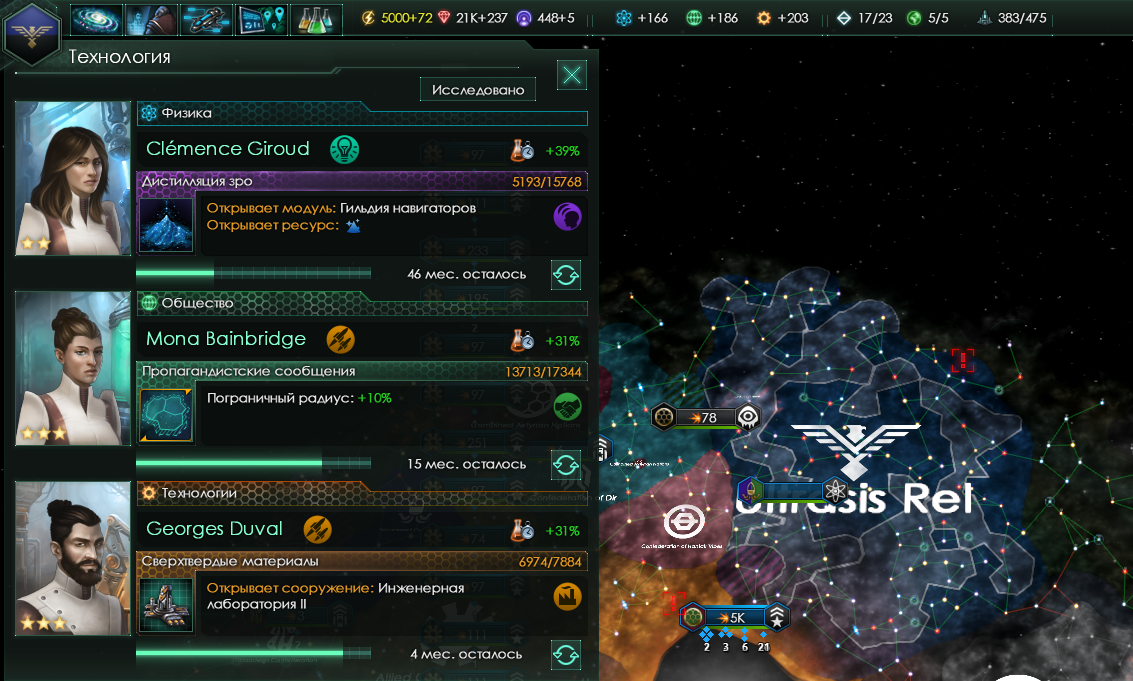
Window Technology Studies
Therefore, getting a quick zababahat huge fleet of the game with the desire to create or economic empire, you can face the fact that you just can not learn the dates of your technology.
Not enough food and heaps of minerals? Need a farm? Hold, mate, improvement of mining plants of the third level.
Sometimes it seems to me that the one who decided to hide the full tree of technologies from the players demonically laughed even a week after this idea was approved in the office.
And here it is necessary to show flexibility. The only thing worth noting is that if you set a certain vector, for example, you prefer to study the "colonial" technologies in the sociological branch, then they will be offered to you with enviable regularity. By the way, research in all three areas (social, engineering and physical) goes in parallel and does not interfere with each other.
At least some plus.
Diplomacy and Trade
In Stellaris, this functionality, in my opinion, is relegated to the background in favor of economic development and wars. Yes, you can join alliances, form federations and establish embassies. You can enter into contracts for the exchange of resources, send credentials, but all this is of little help in the gameplay, if another empire is hostile to you, which often happens. Also, participation in alliances under certain social doctrines (militarism) is subject to heavy fines. True warriors conquer, not make friends, and diplomacy works with trade only in the initial stage of the game.
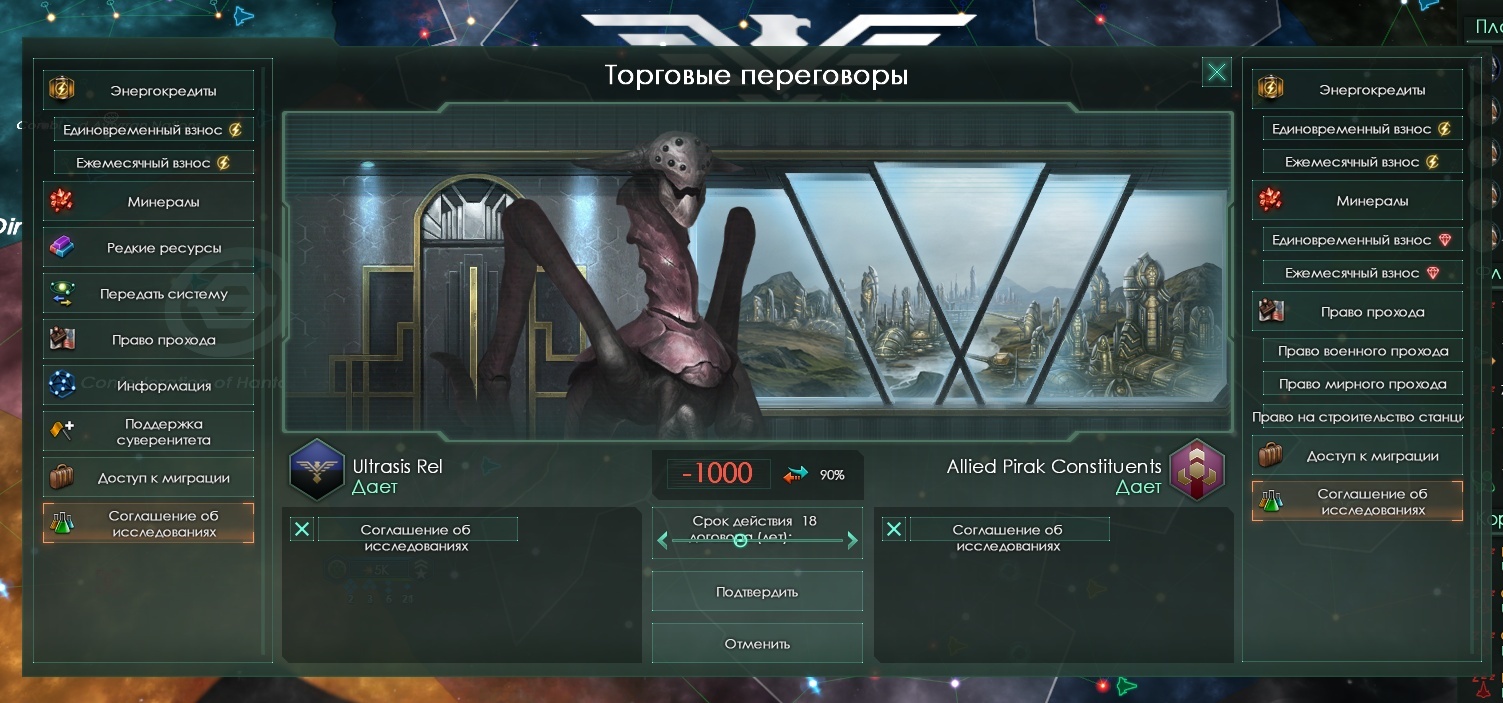
The window of trading
The trading system is similar, according to the players, to the same system in “Civilization” and, often, it is absolutely useless: very often the AI does not agree to give anything in return, not to mention an equivalent exchange.
Total
Stellaris is an excellent representative of its genre, which, in the opinion of many players, has surpassed Master of Orion and other games that were released earlier. The game has a high threshold of entry and is intended for a specific audience, from the very beginning there is little that is understandable and difficult enough to get used to, but after fifteen minutes you will not notice how a half or even three hours passed by.
If you want to immerse yourself in the world of space wars and research, enjoy building your own Empire, which will conquer the entire galaxy, and you are mentally prepared for the fact that after work, sitting down for an hour, you will find that it is dawning, Stellaris - your choice.
Verdict: 10 out of 10 galactic empires.