Viktor Gavrilovich Borisov - the father of the Soviet radio circles
 Today, May 4 - the day of memory of Viktor Gavrilovich Borisov. On May 4, 2007, this amateur radio-creativeist among schoolchildren finished the earthly journey.
 I deliberately do not say "death" - after all, as the famous brain researcher Academician Mikhail Viktorovich Bekhterev said - a person does not die - he lives after death in people's memories, in those works that a person left behind.
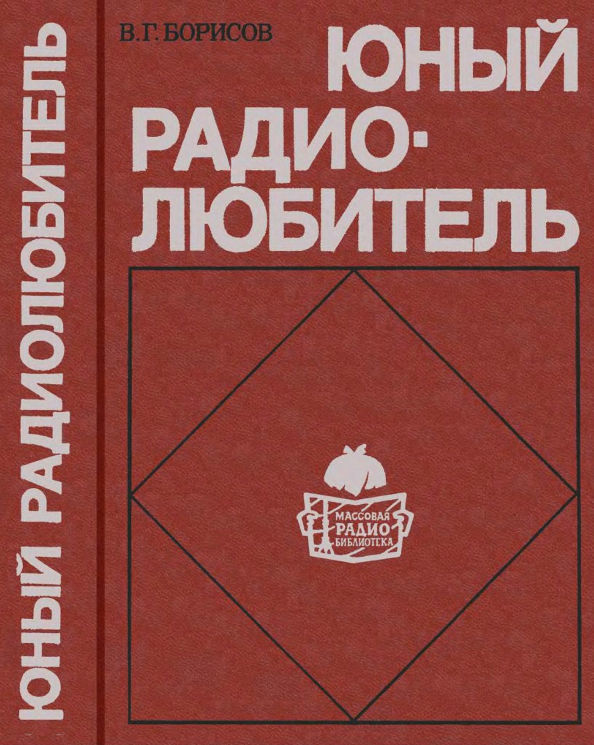
Victor Gavrilovich is the author of the book “The Young Radio Amateur” - published in 8th editions (since 1952), and which gave impetus to the study of radio electronics by many future enthusiasts and professionals. Among them - DIHALT - the founder of one of the most popular resources on electronics in runet (easyelectronics.ru) whose goal is "the development and promotion of electronics hobbies in the mass."
Also, Viktor Gavrilovich created the foundation for organizing children's amateur radio circles - many (if not all the children’s radio circles in the Soviet Union) were engaged in his books. Since 1976, working in the magazine "Radio", led the department for beginners.
We give small fragments of his memories and reviews of people who read his books.
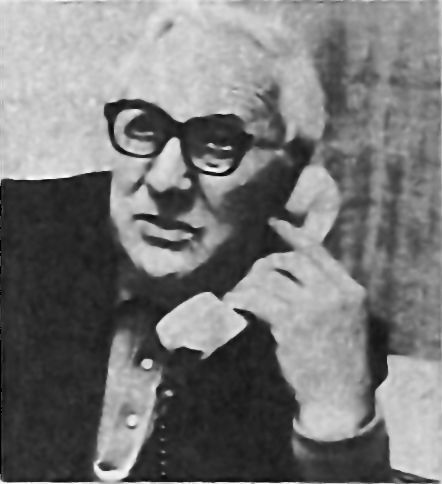
(memoirs from 1994) Victor Gavrilovich: “I am a native Muscovite. Born in Moscow in January 1915. It so happened that I often had to be at the Sennoy Market (this is in Moscow) on Miusskaya Square. This was due to the fact that I helped my father there. So, one day some guys put up huge masts, pulled the wire and organized a queue of those who wanted to listen to the transmitting radio stations on their headphones. The interest was huge.
I, of course, was terribly amazed when I suddenly heard a voice and immediately captured me. It happened again that one friend was found who helped me to get the phone, helped me to make the first coil, the first receiver and to get success.
Here, strictly speaking, it was the main impetus to the fact that I got carried away quite seriously. "
"... I was drawn and pulled not only to radio engineering, but in general to modeling, designing, and here again there were a lot of friends and friends who were also fond of various designs. So I went to work to somehow satisfy my interests, to the station young technicians. At that time, though, several were probably called not stations. They were called children's technical stations, although there were usually young ones there. It was there that I had the opportunity not only to design myself, but again there were comrades already, about work, with some of which I am friends now, they are already at the same age as I. Helped me to study. Helped with details and lamps at that time. The lamp technique was then the main thing. A little later, it was somewhere, I don’t remember exactly the year now
It is here, perhaps, that my future and labor was determined, and call it your own, as you wish. I found a good helper and teacher there. Rather, I came to him. It was Alexander Filippovich Shevtsov, one of the editors of the first amateur radio magazine. "

My little book came out, the first edition of the" Young Amateur Radio "in 1952.
This was the first edition. The edition that sold out instantly and did not have time to disperse, as the applications started , to republish it, and reprinting began. Just recently, about the sixth edition of this book came out half a year ago. The book. It is popular not only with us. It was republished in a number of countries (China, Bulgaria, Czechoslovakia, Yugoslavia, in Ukraine, in Estonia).
These books, as a memory, I have on the shelf and, of course, I am pleased that the books are a success.
Somewhat later, after the publication of the first edition, I happened to work as the director of the Central Station for Young Technicians (years 5). As a director, of course, I promoted radio circles that developed there. "
" ... the work at the Central Station once again prompted me: We must pay more attention to eliminating such amateur radio as I have always called. It was with this mood in 1976 that I came to work at Radio magazine. Organized the department of beginners.
Work until retirement age. Before I retired, I was looking for a deputy for myself, and then we became close to Ivan Sergeyevich Ivanov, who became my receiver in Radio magazine.
I first met Ivanov when he began writing brochures for the Detsky Mir publishing house and I had to edit his brochures. There we met him. So he began working in the magazine "Radio".
Being retired, I continued to work. He wrote, reworked "Young radio amateur", enriched these books with new materials on a modern element base. "
" Here I work today [1994] in the editorial office of the magazine "Radio". I try to prepare materials in the journal so that they are popular, interesting and more and more they attracted a lot of radio amateurs and, above all, the beginner boys of today's, girls, those to whom I dedicated my entire working life, to radio amateur.
Well, that’s all short. ”
/ fragments from a meeting with Viktor Gavrilovich Borisov, April 21, 1994 in the editorial staff of the magazine "Radio" /
Reviews
 Dihalt
Borisov’s book was a starting point for me. She accidentally fell into my hands along with a stack of other books on electronics that my stepfather had brought. Together with an oscilloscope, a multimeter with a "thousand holes" and a half-dozen boxes with radio parts. I was then in the third class, I read everything that came to hand, and then I got a taste of Borisov. Immediately caught fire to collect something. This is what the detector radio has become. Fortunately, all that is needed for him was found in those boxes with radio components. And the trimmer capacitor (the same as in the picture), and the same diode, headset, capacitors and jacks. I even wound a coil on a sleeve from an old hunting cartridge, just like in a book. It turned out one to one. And immediately earned. Everything, it was impossible to stop me ...
Alexey
My best friend in the 7m class was fond of electronics for this book! At first I took in the library of the old edition, the seventies, in a red cover. Then a friend appeared in the late eighties edition ... And she suffered ... Nostalgia.
Enigman1982
I also have a red cover! I remember the whole fifth class spent in this book:) ... the detector receiver ... what kind of luck it was to hear the radio of Russia in the antediluvian ears of the TON-2 :)
Alexander
I received this book for my birthday at the age of 6, which determined my future life in electronics.
RK6AUI Andrey
Very grateful to the author for this book. This book was for me an alphabet in the world of electronics. Thanks to this book, I achieved a new one. Yes, it has schemes that are outdated, but in it the basics that will always provide the foundation! It would not have stepped forward electronics
Radio circles
By the way, vv_kuznetsov, the author of publications on the simulator of electronic circuits Qucs - was engaged in the radio circle according to the book of Borisov (there was one book for the whole circle).
Of course, now radio circles are no longer so relevant - everything is evolving, but electronics has become a part of robotics - the development of which in the form of TsMITs, FabLabs, Hackspaces, etc. - contributes to the same task - the popularization of technical creativity among schoolchildren.
Unfortunately, there are no books on how to “Organize a circle of robotics” - after all, it’s not easy - to prepare a methodology, a program, a lesson. I will cite a fragment from VG Borisov’s book “The Circuit of Radio Engineering Design” from 1986, about the organization of the educational process in the circle, the basic principles of working with schoolchildren in teaching, have not lost their relevance even now, after 30 years.
By the way, the book contains a program for 144 hours of work circle:
The proposed program, designed for 144 hours of work of the circle, provides for the formation of theoretical knowledge of the basics of electrical and radio engineering and practical skills in circles, sufficient for meaningful use of measuring devices, prototyping, mounting and setting up transistor receivers of direct amplification of varying complexity.
Fragment from the book:
General questions about conducting classes
Приведенная далее программа занятий в кружке рассчитана на подготовку кружковцев к самостоятельному конструированию несложной радиотехнической аппаратуры. Она предусматривает изучение необходимых теоретических сведений по радиотехнике и выполнение монтажных, сборочных и наладочных работ по изготовлению радиоустройств. Содержание теоретических сведений должно согласовываться с характером практических работ по каждой теме программы.
Последовательность прохождения тем в кружке может отличаться от указанной в программе, а некоторые темы являются сквозными на все время работы кружка. К сквозным для кружка 1-го года занятий относятся, например, темы «Элементы электро- и радиотехники», «Пайка и приемы монтажа». Теоретические сведения по каждой из указанных тем надо сообщать применительно к конкретным практическим работам, выполняемым по другим темам. Тема «Полупроводниковые диоды и транзисторы» в значительной степени так же является сквозной, потому что имеет прямое отношение почти ко всем другим темам программы кружка радиотехнического конструирования.
Перечень практических работ не следует считать исчерпывающим; вполне допустимо включение в план работы кружка конструирование приборов и устройств, не предусмотренных программой, но соответствующих той или иной теме. Так, в тематику практических работ кружков 1-го и 2-го годов занятий, кроме приемников и усилителей, пробников и измерительных приборов, может быть включено конструирование разных по сложности мегафонов, переговорных устройств для школы, внешкольного учреждения, туристского или пионерского лагеря, учебно-наглядных пособий для кружка.
Как показывает опыт, теоретические знания и практические навыки, приобретаемые учащимися в кружках радиотехнического конструирования, оказываются значительно более широкими, глубокими и разнообразными, чем предусматриваемые программой. Объясняется это, тем, что для многих ребят радиолюбительство не ограничивается занятиями в кружке, а продолжается в виде самостоятельной работы по конструированию того или иного устройства дома, в процессе чтения популярной радиотехнической литературы, общения с товарищами по интересам. Сказывается также тяга к познанию непрерывно изменяющейся элементной базы радиотехники, интерес к новизне схемных и конструктивных решений промышленной и любительской радиоаппаратуры.
Занятия в кружке не следует перегружать беседами по основам электро- и радиотехники, устройству и работе деталей, приборов. В течение, учебного года на сообщение познавательных сведений надо отводить не более 25—30% общего бюджета времени, остальное время посвящается практической, радиоконструкторской работе. Причем конструирование, являющееся основой всей деятельности кружка, должно начинаться возможно раньше, уже с третьего, самое позднее — с четвертого занятия. Промедление с началом практических работ может ослабить интерес ребят к кружку, вызвать отсев из него.
Теоретические сведения сообщаются ребятам в форме познавательных бесед продолжительностью не более 15...20 минут на каждом двухчасовом занятии. Это должны быть именно беседы (а не лекции) с демонстрациями деталей, приборов» опытов, с вопросами и ответами, спорами кружковцев. Большую же часть необходимых теоретических знаний учащиеся получают при разборе принципиальных схем планируемых к изготовлению усилителей, приемников, измерительных приборов, в процессе выполнения практических работ. Некоторые беседы могут проводить сами кружковцы, подобрав с помощью руководителя кружка соответствующую литературу. Вообще, научить радиолюбителей пользоваться технической литературой, и особенно справочной, — одна из важнейших задач, стоящих перед кружком.
Планируемая практическая работа не должна являться самоцелью. Выбирая, разрабатывая и монтируя те или иные конструкции, кружковцы должны иметь четкое представление о принципе их действия, назначении отдельных деталей и узлов» методике налаживания, поиска и устранения неисправностей. Только тогда занятия в кружках принесут учащимся пользу. К сожалению, иногда в погоне за эффектными конструкциями (для выставки) некоторые кружковцы, нередко с позволения руководителя, берутся за сложные для них радиотехнические устройства по имеющимся описаниям. Это приводит к слепому копированию незнакомых конструкций. Руководитель кружка вынужден уделять работе с этими ребятами больше внимания, нанося тем самым ущерб основному составу кружка, иногда ему приходится самому доводить до конца такие конструкции. Подобное «радиолюбительство» приносит вред всему кружку. Поэтому надо планировать изготовление лишь тех устройств, которые от начала до конца могут быть смонтированы и налажены самими учащимися, только в осознанной работе над конструкциями кружковцы в полной мере проявляют свои творческие способности.
Кружок радиотехнического конструирования не должен оставаться в стороне от общественно полезных дел и мероприятий, проводимых внешкольным учреждением или школами, в которых учатся эти ребята. Например, для полевого стана ученической производственной бригады в радиокружке можно смонтировать приемник, обеспечивающий достаточно громкий прием местной радиовещательной станции, для самодеятельного туристского лагеря — радиоузел, для проведения военно-спортивной игры «Зарница» — имитаторы радиостанций, переговорные устройства и многое другое. Кружковцы сами определяют степень и форму участия в том или ином мероприятии. Руководитель принимает активное участие в проводимом обсуждении, вносит предложения, но не навязывает их. Вопрос об участии в какой-либо выставке или в радиоспортивных соревнованиях также должен решаться и осуществляться самими кружковцами.
Среди кружковцев всегда находятся желающие строить радиотехнические устройства для личного пользования ими в домашних условиях. Это желание надо поощрять, если, конечно, задуманные конструкции соответствуют или близки тематике кружка. Монтировать их ребята будут на занятиях кружка, но из своих деталей.
Последовательность прохождения тем в кружке может отличаться от указанной в программе, а некоторые темы являются сквозными на все время работы кружка. К сквозным для кружка 1-го года занятий относятся, например, темы «Элементы электро- и радиотехники», «Пайка и приемы монтажа». Теоретические сведения по каждой из указанных тем надо сообщать применительно к конкретным практическим работам, выполняемым по другим темам. Тема «Полупроводниковые диоды и транзисторы» в значительной степени так же является сквозной, потому что имеет прямое отношение почти ко всем другим темам программы кружка радиотехнического конструирования.
Перечень практических работ не следует считать исчерпывающим; вполне допустимо включение в план работы кружка конструирование приборов и устройств, не предусмотренных программой, но соответствующих той или иной теме. Так, в тематику практических работ кружков 1-го и 2-го годов занятий, кроме приемников и усилителей, пробников и измерительных приборов, может быть включено конструирование разных по сложности мегафонов, переговорных устройств для школы, внешкольного учреждения, туристского или пионерского лагеря, учебно-наглядных пособий для кружка.
Как показывает опыт, теоретические знания и практические навыки, приобретаемые учащимися в кружках радиотехнического конструирования, оказываются значительно более широкими, глубокими и разнообразными, чем предусматриваемые программой. Объясняется это, тем, что для многих ребят радиолюбительство не ограничивается занятиями в кружке, а продолжается в виде самостоятельной работы по конструированию того или иного устройства дома, в процессе чтения популярной радиотехнической литературы, общения с товарищами по интересам. Сказывается также тяга к познанию непрерывно изменяющейся элементной базы радиотехники, интерес к новизне схемных и конструктивных решений промышленной и любительской радиоаппаратуры.
Занятия в кружке не следует перегружать беседами по основам электро- и радиотехники, устройству и работе деталей, приборов. В течение, учебного года на сообщение познавательных сведений надо отводить не более 25—30% общего бюджета времени, остальное время посвящается практической, радиоконструкторской работе. Причем конструирование, являющееся основой всей деятельности кружка, должно начинаться возможно раньше, уже с третьего, самое позднее — с четвертого занятия. Промедление с началом практических работ может ослабить интерес ребят к кружку, вызвать отсев из него.
Теоретические сведения сообщаются ребятам в форме познавательных бесед продолжительностью не более 15...20 минут на каждом двухчасовом занятии. Это должны быть именно беседы (а не лекции) с демонстрациями деталей, приборов» опытов, с вопросами и ответами, спорами кружковцев. Большую же часть необходимых теоретических знаний учащиеся получают при разборе принципиальных схем планируемых к изготовлению усилителей, приемников, измерительных приборов, в процессе выполнения практических работ. Некоторые беседы могут проводить сами кружковцы, подобрав с помощью руководителя кружка соответствующую литературу. Вообще, научить радиолюбителей пользоваться технической литературой, и особенно справочной, — одна из важнейших задач, стоящих перед кружком.
Планируемая практическая работа не должна являться самоцелью. Выбирая, разрабатывая и монтируя те или иные конструкции, кружковцы должны иметь четкое представление о принципе их действия, назначении отдельных деталей и узлов» методике налаживания, поиска и устранения неисправностей. Только тогда занятия в кружках принесут учащимся пользу. К сожалению, иногда в погоне за эффектными конструкциями (для выставки) некоторые кружковцы, нередко с позволения руководителя, берутся за сложные для них радиотехнические устройства по имеющимся описаниям. Это приводит к слепому копированию незнакомых конструкций. Руководитель кружка вынужден уделять работе с этими ребятами больше внимания, нанося тем самым ущерб основному составу кружка, иногда ему приходится самому доводить до конца такие конструкции. Подобное «радиолюбительство» приносит вред всему кружку. Поэтому надо планировать изготовление лишь тех устройств, которые от начала до конца могут быть смонтированы и налажены самими учащимися, только в осознанной работе над конструкциями кружковцы в полной мере проявляют свои творческие способности.
Кружок радиотехнического конструирования не должен оставаться в стороне от общественно полезных дел и мероприятий, проводимых внешкольным учреждением или школами, в которых учатся эти ребята. Например, для полевого стана ученической производственной бригады в радиокружке можно смонтировать приемник, обеспечивающий достаточно громкий прием местной радиовещательной станции, для самодеятельного туристского лагеря — радиоузел, для проведения военно-спортивной игры «Зарница» — имитаторы радиостанций, переговорные устройства и многое другое. Кружковцы сами определяют степень и форму участия в том или ином мероприятии. Руководитель принимает активное участие в проводимом обсуждении, вносит предложения, но не навязывает их. Вопрос об участии в какой-либо выставке или в радиоспортивных соревнованиях также должен решаться и осуществляться самими кружковцами.
Среди кружковцев всегда находятся желающие строить радиотехнические устройства для личного пользования ими в домашних условиях. Это желание надо поощрять, если, конечно, задуманные конструкции соответствуют или близки тематике кружка. Монтировать их ребята будут на занятиях кружка, но из своих деталей.